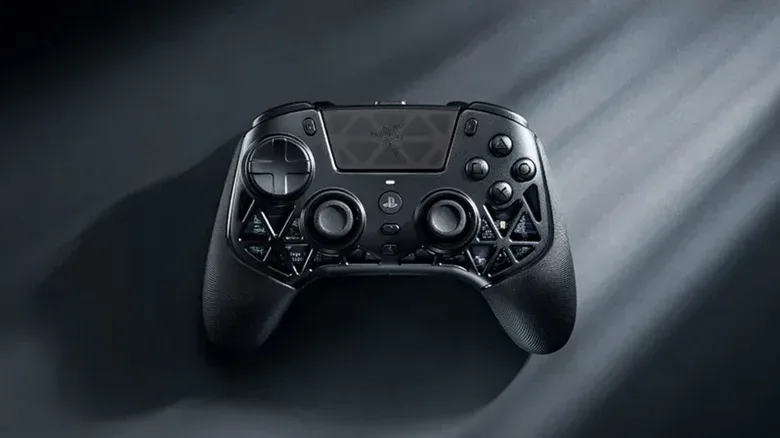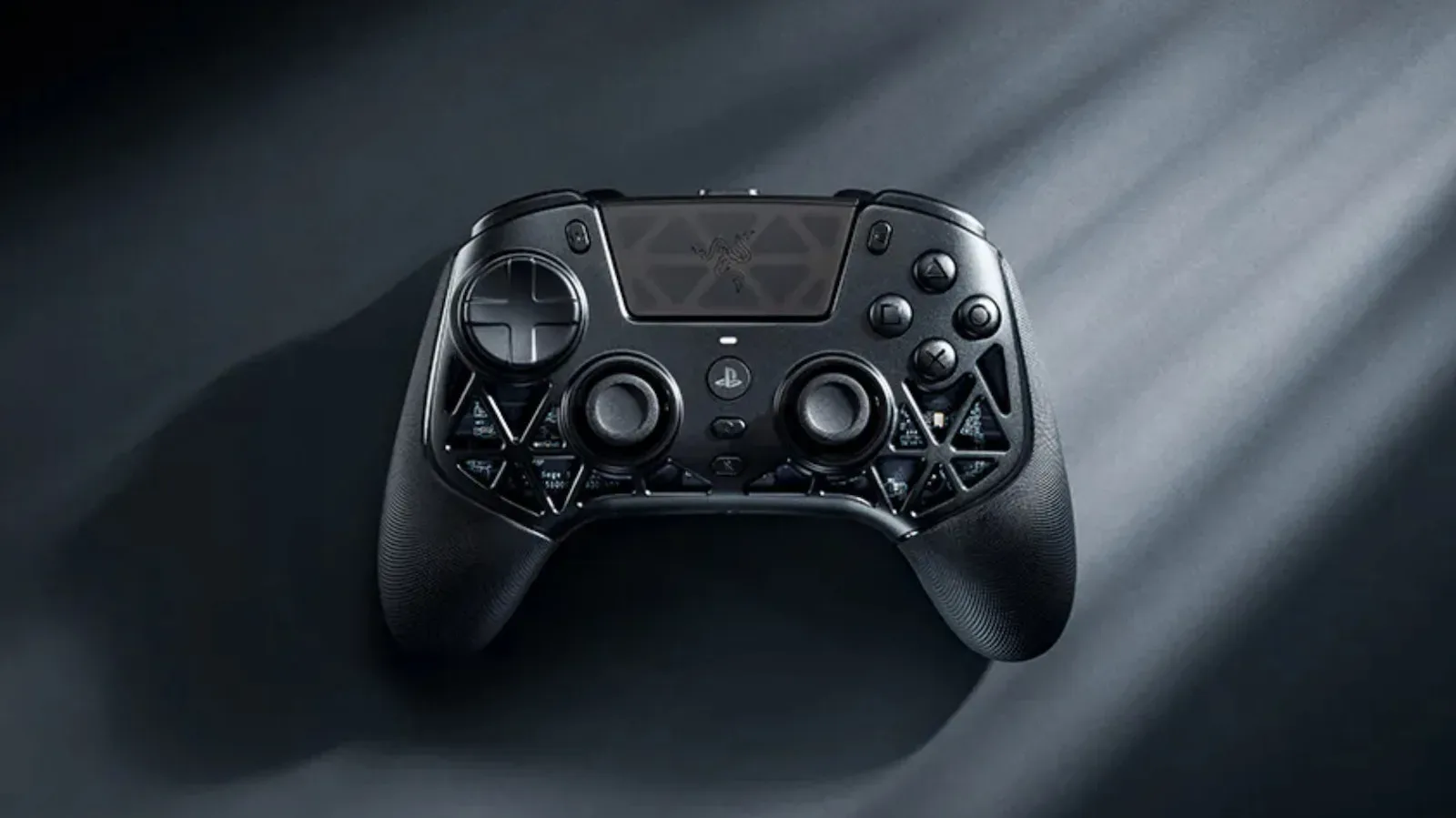
Razer has revealed the Raiju V3 Pro Signature Edition, a flagship controller designed for PS5 that is making a loud first impression before anyone has even pressed a face button. Its defining feature is visual: a black, magnesium-alloy exoskeleton wraps an open-shell design that leaves the controller’s internal structure visible. The touchpad is semi-transparent too, using laser-etched glass, while PlayStation and Razer branding are prominently placed on top.
That is a considerable amount of theatre for a controller, and it is plainly intentional. This is not being positioned as a standard accessory that will sit unnoticed beside a console. Razer says only 1,337 units will be made, turning the “1337” leetspeak reference into the production number. The Raiju V3 Pro Signature Edition is scheduled to be available on November 10, but the company has not announced a price.
The important caveat is equally clear: limited production and premium materials do not, by themselves, establish how a controller feels in a player’s hands or how it performs over time. Those questions will depend on practical use. What Razer has disclosed, however, shows a device aimed at people who care about both competitive-minded inputs and the object itself.
An open-shell design, but not an unprotected one
The Signature Edition’s structure is described as a black magnesium-alloy exoskeleton. Magnesium alloy is a metal-based material, and its appearance here is part of the controller’s pitch: it gives the exterior a more engineered, skeletal look than the opaque plastic shell associated with a conventional pad.
Razer also says the internal area has a nano coating intended to keep debris out. That is a sensible concern for an open-looking design. A visible interior can make a product feel more distinctive, but it also naturally makes prospective owners think about dust, grime and long-term maintenance. The coating is presented as a protective measure, though there is not enough information yet to determine the extent of protection in everyday conditions.
The semi-transparent, laser-etched glass touchpad adds another layer to the visual concept. On PS5, the touchpad is more than decoration in games that use it for gestures, map functions or additional commands. Glass also makes this component a visual focal point. Whether it offers a functional difference beyond its finish is not specified, so it is best understood as part of a wider premium-material package rather than a confirmed gameplay advantage.
Razer lists the controller at 260 grams, describing it as lighter than a standard DualSense controller. Weight is a personal preference rather than a universal win: a lighter pad can reduce the sense of bulk during longer sessions, while other players may prefer a heavier controller’s planted feel. Still, putting a metal exoskeleton around a 260-gram controller makes the weight figure notable. The design is chasing an unusual combination of premium construction, exposed styling and reduced mass.
TMR sticks and remappable inputs: the performance-focused hardware
Beneath the collector-facing exterior is a feature set built for customization. The Raiju V3 Pro Signature Edition uses contactless TMR thumbsticks. TMR, or tunneling magnetoresistance, refers to a magnetic sensing approach. The key practical phrase here is “contactless”: the stick input is measured without the kind of direct physical contact associated with more traditional sensing mechanisms. Razer says the design should aid aiming precision.
That claim should be read precisely. A controller can provide responsive stick hardware, but precision is also shaped by a game’s aiming settings, dead-zone options, sensitivity, player habits and the person holding the pad. There is no single stick technology that automatically improves every player’s aim. The prospective appeal of TMR is that it is a modern sensor choice in a controller explicitly targeted at demanding users.
The controller includes six mappable buttons: two claw-grip bumpers and four mouse-click back buttons. “Mappable” means a player can assign another command or hotkey to that physical control. This can matter because it moves actions away from the controller’s front face, potentially allowing a player to keep their thumbs on the sticks while accessing a command.
The two claw-grip bumpers are especially aimed at a particular control style. A claw grip generally involves using an index finger in a way that reaches extra front controls while the thumbs remain available for movement and camera input. It is not a required technique, and it will not be comfortable for everybody, but dedicated controls designed around it show the intended audience. The four rear buttons provide another route to putting regularly used actions on the back of the controller.
Razer describes those rear controls as mouse-click buttons. In plain language, that signals a click-style button response rather than a broad, soft press. The value of that approach depends on the user’s preferences and the commands they assign, but the broad goal is clear: give players more accessible inputs without forcing them to abandon stick control at a crucial moment.
The buttons use polybutylene terephthalate, more commonly shortened to PBT. PBT is a rigid, durable plastic. Material names can easily become spec-sheet decoration, but there is a straightforward practical reason to mention it here: a premium controller that advertises a finite, collector-style run must also contend with expectations around the controls that receive constant physical use. Razer is presenting PBT as part of its durability case.
PS5 branding, plus an explicit PC use case
The oversized PlayStation button makes the console association difficult to miss, but Razer says the Raiju V3 Pro Signature Edition can also be used with other devices. PC is the platform where the most striking technical figure applies: the controller offers a wireless HyperPolling rate of up to 2,000Hz on PC.
Polling rate describes how frequently a device sends input data. At 2,000Hz, the stated rate means communication occurs up to 2,000 times each second. It is a specification enthusiasts often watch because input devices exist to turn a physical action into an on-screen response as quickly and consistently as possible.
It is also worth separating the specification from an all-purpose promise of better results. A high polling rate is one part of an input chain that includes the game, display, computer setup, wireless conditions and the player’s own execution. The figure is nevertheless significant because it makes the PC angle more than a compatibility footnote. Razer is selling a PS5-focused controller that also carries a PC-centric performance credential.
That cross-device positioning may broaden the controller’s appeal, but prospective buyers should pay attention to the wording. The disclosed 2,000Hz wireless figure is specifically tied to PC. It should not be assumed to describe every supported platform or every connection scenario.
What arrives in the collector’s package
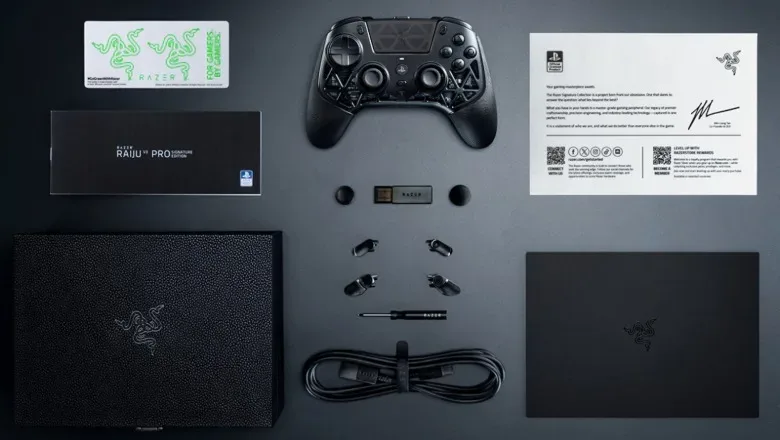
The “Signature Edition” designation is not just applied to the controller. The package includes a leatherette carrying case, alternate thumbstick caps, back-button covers, a wireless dongle and tools intended for replacing parts.
Those inclusions point in two directions at once. Alternate thumbstick caps and back-button covers give owners options to adjust the physical setup. The dongle supports the wireless PC use case. Meanwhile, the carrying case and tools make the package feel closer to a specialty hardware kit than a bare controller box.
For collectors, completeness will be unusually relevant here. With only 1,337 units planned, the case, caps, covers, dongle and replacement tools are part of the defined edition rather than disposable afterthoughts. For players, they are simply accessories that may make storage, transport and configuration easier. The two perspectives can coexist, although a buyer planning to use the controller heavily should be realistic about the trade-off: this is a limited physical item designed to be handled, clicked and carried, not merely displayed.
A scarce controller with one major unanswered detail
The limited quantity will inevitably draw attention, but it should not be confused with a measure of performance. The number is a deliberate nod to leetspeak, an old internet habit of substituting numbers for letters, rather than a technical benchmark. Its purpose is personality and scarcity.
The more practical unknown is price. Razer has not supplied one. That means buyers cannot yet weigh the magnesium construction, glass touchpad, TMR sticks, extra mappable controls, PC polling claim and bundled accessories against a final cost. It also prevents a clear value comparison with other premium controller options.
For now, the Raiju V3 Pro Signature Edition is best viewed as a narrowly targeted piece of hardware: a PS5-branded controller that leans into transparent, display-worthy industrial design while providing the configurable controls and PC polling specification expected of a pro-oriented gamepad. It is a more interesting proposition than a normal cosmetic limited edition because the hardware details are substantial. Whether those details justify the eventual asking price remains the decision Razer has left for November.
For more PlayStation-adjacent context on the people and projects behind major games, see our coverage of how Uncharted 4’s revised story took shape.