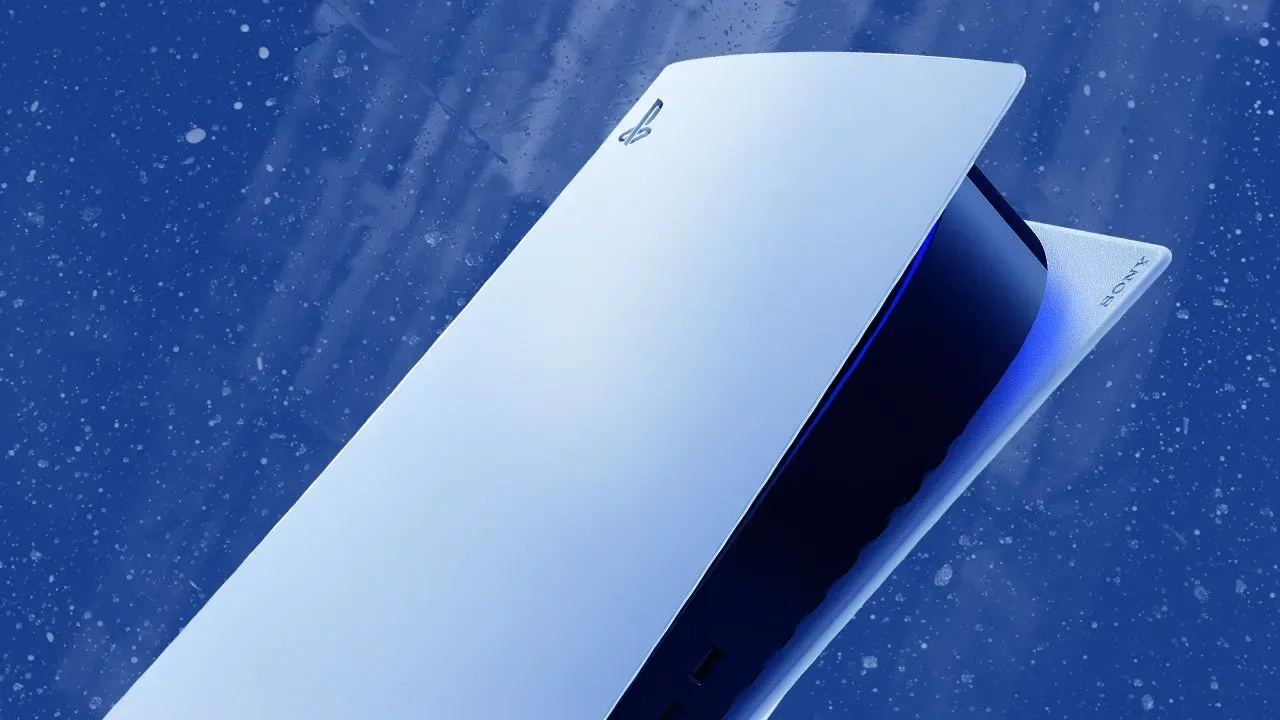
PlayStation 5 system software version 26.06-14.00.00 is now rolling out with a mixture of image-quality, social, discovery and venue-management changes. The headline feature for PS5 Pro owners is that Enhance PSSR Image Quality is switched on automatically after the update. Every PS5 owner also gets a new way to identify people speaking in a voice chat, while the Welcome Hub gains a Community Activity widget designed to point players toward busy multiplayer games.
It is not an update built around one giant new console capability. Instead, it makes several everyday parts of the PS5 interface more informative: visual settings on PS5 Pro, on-screen voice-chat feedback, and a more visible view of what others are playing locally. There is also a narrowly intended Bluetooth control for esports venues and similar setups, with important trade-offs for ordinary home users.
Enhanced PSSR is now the PS5 Pro default
The new default applies only to PS5 Pro. Once version 26.06-14.00.00 is installed, Enhance PSSR Image Quality is enabled automatically. The setting allows the enhanced form of PSSR to be used even in games that support the earlier version of PSSR.
PSSR, short for PlayStation Spectral Super Resolution, is an image-upscaling technology. In plain language, upscaling is a method that uses a lower-resolution rendered image as a starting point and reconstructs it for display at a higher output resolution. The objective is to preserve a sharp, stable picture while leaving more rendering resources available than a game might have if it rendered every frame natively at the higher resolution.
The practical promise of the enhanced setting is a sharper and clearer visual presentation in compatible titles. That promise should be understood within the stated scope: this setting does not turn every PS5 Pro game into a newly enhanced title, and it is specifically intended to extend enhanced PSSR to games built around the previous PSSR support. Results can vary from game to game because an individual title’s rendering approach, its existing PSSR implementation, and a player’s display all affect what is noticeable.
Anyone who prefers the prior presentation, or simply wants a straightforward way to compare their own image preferences, can disable the option at Settings > Screen and Video > Video Output > Enhance PSSR Image Quality. The update’s important usability point is that this is a default rather than an irrevocable change: PS5 Pro users retain control over the setting.
Voice chats gain a visible speaker indicator
Version 26.06-14.00.00 also adds the ability to see who is talking during a voice chat. Players can enable Display Names through the voice-chat card in Control Center: select More > Display Who’s Speaking, then turn on Display Names. The same area includes a Position option for choosing where the speaker indicator sits on screen.
This is a small quality-of-life addition, but its usefulness is easy to understand in an active party. Audio alone can make it difficult to match a voice to a PSN name, particularly when players are new to a group, when several people speak over one another, or when a multiplayer match demands attention. A movable visual cue provides identification without forcing a player to leave the game view and inspect a party screen.
Position control matters because overlays compete with gameplay interfaces. HUDs can already occupy the upper corners, lower corners and screen edges with maps, objectives, subtitles, health information, chat text and accessibility features. Being able to choose the location means players can put the speaker label somewhere less intrusive for the game they are playing rather than accept one universal placement.
Welcome Hub gets a look at multiplayer momentum
The update adds a Community Activity widget to Welcome Hub with two views: Trending Now and Top 10. Both are multiplayer-focused discovery tools, but they answer slightly different questions.
Trending Now: what is gaining momentum
Trending Now displays 10 multiplayer games or multiplayer modes that are surging in popularity. The intended use is to surface fresh releases and games receiving major content updates. This is potentially useful when a player wants to know where activity is building rather than only which titles are already established as the biggest.
The distinction between a game and a mode is notable. A major update may bring people back to a specific multiplayer activity rather than cause an entire game to rise evenly across every mode. For players deciding whether it is worth returning for an update, that detail can make discovery more actionable: activity may be concentrated where the newest content actually lives.
Top 10: a recent regional popularity snapshot
Top 10 lists the 10 most popular games from the previous week in a player’s country or region. Its stated purpose is to help players find games with a large community they can join. Unlike the surge-oriented Trending Now list, this view is a one-week popularity snapshot.
There is an important limitation: the update does not explain the methodology behind “most popular.” It does not say whether the ranking is based on the number of accounts playing, total time played, a peak concurrent-player measure, or another calculation. That uncertainty means the lists should be read as console discovery signals, not as a definitive measurement of the entire games market or a full population count.
The regional framing is also meaningful. A game with a large global audience may not necessarily be among the most visible multiplayer communities in every country or region at a particular moment. Conversely, a regional Top 10 may be more immediately useful to someone hoping to find active sessions, teammates, opponents or friends in their own area.
For years, platform holders have had a clearer view than players of broad activity patterns across their ecosystems. Community Activity brings a portion of that visibility directly into the PS5 interface. It does not reveal the full data behind the rankings, but it may give players a quicker starting point than browsing a library without any clue which communities are particularly active.
That kind of interface-level discovery sits alongside wider conversations about how platforms balance community features, safety controls and user choice. PlayStation users following the policy side of gaming platforms can also read about the proposed EU Kids Act and its potential age-check and parental-control requirements.
Bluetooth shutoff is for managed competitive settings, not everyday play
In certain countries or regions, PS5 and PS5 Pro consoles now include a Turn Off Bluetooth option at Settings > Accessories > General > Advanced Settings. The feature is intended for managing controller connections at esports venues and comparable locations.
The wording around this addition is unusually direct: it is not meant for other purposes. Selecting Turn Off Bluetooth also prevents the console from entering Rest Mode and stops HDMI Device Link from functioning.
Rest Mode is the console’s low-power state, while HDMI Device Link refers to control coordination through a connected display setup. The update does not provide more detail on why those functions are unavailable while Bluetooth is disabled, but the practical implication is clear. Home players should not treat this as a general troubleshooting toggle or a power-saving preference, because doing so changes expected console behavior beyond wireless connections.
The esports-venue focus suggests a controlled environment where organizers need to manage which controllers can connect to which station. That is a very different requirement from a living-room console, where wireless controllers, Rest Mode and display-device integration are generally ordinary parts of use. Players who encounter the feature should keep its stated intended use in mind.
Performance and stability, plus a quieter PS4 update
As with many firmware releases, the PS5 patch notes also include broad system software performance and stability improvements. The update does not provide a detailed list of individual fixes under that heading, so it would be speculative to assign it to any particular bug, game or hardware behavior.
PlayStation 4 has received an update as well. PS4 system software version 14.00 lists performance and stability improvements, without the expanded feature set included in the new PS5 software.
What to check after installing version 26.06-14.00.00
- PS5 Pro owners: Check Enhance PSSR Image Quality under Screen and Video if you want to confirm that the new default is active or compare it with the option disabled.
- Voice-chat regulars: Open the voice-chat card in Control Center, then enable Display Names through More and Display Who’s Speaking. Adjust the indicator position if it overlaps a game’s HUD.
- Multiplayer players: Add or open the Community Activity widget in Welcome Hub to inspect Trending Now and the regional Top 10.
- Venue operators: Use Turn Off Bluetooth only for the specified managed-controller scenarios, and account for the loss of Rest Mode and HDMI Device Link.
The update is therefore best viewed as a refinement pass with distinct audiences. PS5 Pro players get a new image-quality default, party-focused players gain clearer chat feedback, multiplayer explorers get activity-led recommendations, and organized competitive spaces receive a specialized controller-management option. The Community Activity rankings will likely attract the most curiosity over time, particularly because the visible results may reveal which multiplayer games and modes are currently drawing players in each region—even if the exact ranking formula remains undisclosed.