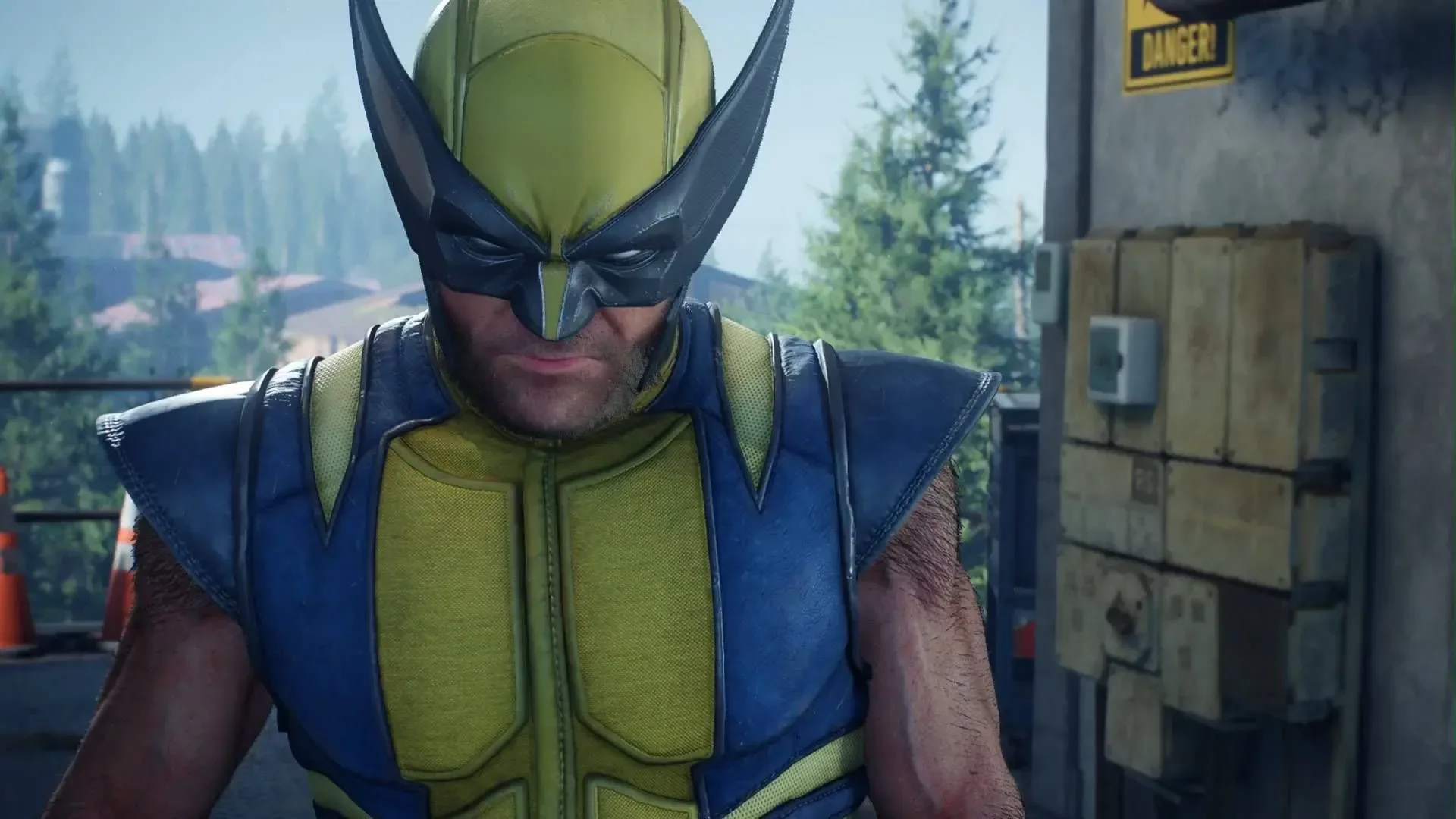
Marvel’s Wolverine has received a hotfix aimed at a visual feature that became an unusually prominent point of debate: Logan’s Scent Trails. Update 01.001.005 reduces the opacity of both Scent Trail and Audio Sense indicators, making them less visually forceful, while also addressing common crashes reported by a small percentage of players since launch.
The change does not remove the tracking system. Instead, it adjusts its presentation. That distinction matters. Insomniac has framed the trails as part of Wolverine’s superhuman senses and tracking ability, used when Logan is following a particular person, item, sound, or other clue. The studio also says it is evaluating further improvements to the game’s Senses systems, including toggleable options in a future update. That is an exploration rather than a confirmed feature or timetable, but it directly addresses the central request from players who would rather navigate without the visual aid.
What the Wolverine hotfix changes
The official notes for version 01.001.005 are brief, but clear on the two areas affected:
- It tackles some common crashes experienced by a small portion of the player base.
- It lowers the opacity of Scent Trails and Audio Sense indicators so the visuals are less intense.
- It confirms the team is considering additional Senses improvements, including future toggle options.
Opacity is the amount of visual transparency applied to an on-screen element. Lower opacity generally means an effect is more see-through and less likely to dominate a scene. In practice, this should preserve the information conveyed by a scent or sound cue while reducing the bright, obvious look that inspired the mocking “fart gas” nickname online.
That nickname is a joke about how the effect appears behind a tracked character, not a description of what the system is meant to represent. The intended fiction is that Logan has detected a scent or audible clue and can use it to pursue a lead. Still, the joke caught on because a gameplay system can be understandable in narrative terms while also looking awkward or overly conspicuous in motion.
Why players objected to a seemingly small visual aid
The debate is not simply about whether Wolverine should have heightened senses. That part is foundational to the character. The disagreement is over how explicitly a game should translate those senses into player-facing information.
In a game, an ability can be accurate to a character yet still create a tension between clarity and discovery. A highly visible trail can prevent a player from losing a target or missing the intended route. It can also streamline moments that might otherwise ask the player to read the environment, follow movement, listen for a cue, or experiment with possible paths.
Critics argued that the prominent trails can reduce the skill or uncertainty in chase sequences, and can make exploration feel pre-solved when they point toward a collectible or clue. Comparisons emerged with the broader argument around conspicuous environmental guidance in other games, such as brightly marked climbable surfaces. The common concern is not that games should offer no help; it is that an aid becomes less satisfying when it is always visually louder than the world around it.
Related coverage includes Marvel's Wolverine Hotfix Softens Scent Trails as Insomniac Considers Toggle Options.
Supporters of overt guidance would reasonably point out the other side. A game with frequent pursuit, mission tracking, or optional discoveries needs to communicate its objectives reliably. Players have different needs, different familiarity with navigation systems, and different tolerance for getting lost. A visual trail is a fast, readable way to translate an invisible power—smell or heightened hearing—into something controllable through a screen and controller.
The hotfix’s opacity reduction is therefore a middle-ground response. It does not abandon the information design behind the feature. It attempts to stop that information from overwhelming the scene. If a later toggle arrives, the game could offer a stronger version of that compromise: assistance for players who want it, and a more self-directed route for those who do not.
Scent Trails are not always active
One important clarification from Insomniac is that Scent Trails are not permanently switched on as Logan moves through the game. The effect is tied to situations where he is tracking a specific scent or sound. Examples cited include pursuing a person, whisky, or another clue scent, during story and mission moments, and when Logan detects a collectible.
That makes the system more than a general navigation line painted across the entire game. It is a contextual representation of a particular lead. The implementation, however, is exactly what shaped the discussion: even a contextual effect can become familiar enough to affect the perceived challenge of exploration or pursuit if it appears frequently and points the way too plainly.
Audio Sense indicators are part of the same update. The supplied patch information does not detail every situation in which they appear, but their inclusion alongside Scent Trails suggests the adjustment is aimed at the overall visual language used to communicate Logan’s sensory abilities. Reducing both effects at once should make the change more consistent than altering only the trail while leaving other sensory prompts equally assertive.
Accessibility options and optionality are not the same thing
Some confusion around the debate came from the belief that the trail could already be disabled through accessibility settings. The available information does not support that. Wolverine includes a setting called Chase Assist, which can reduce target movement speed during chase sequences, but it does not turn off Scent Trails. Other navigation-related toggles likewise do not disable the trail.
This distinction is useful because accessibility settings are often discussed as if they serve one single purpose. They do not. A setting that makes a chase target slower changes the mechanical demand of the sequence. A setting that removes a visual layer changes the presentation and the amount of guidance on screen. Both can be valuable, but they address different player preferences.
A future Scent Trail toggle would not necessarily mean the existing system was a mistake. It would mean more people could tailor Wolverine’s sensory feedback to how they prefer to play. For some, clear direction may be essential or simply more enjoyable. For others, less direction can make a successful pursuit feel more earned. Good optionality recognizes that these preferences can coexist without treating one approach as the only legitimate way to play.
That broader push toward adjustment after launch is visible elsewhere in gaming, including updates that emphasize quality-of-life changes and player choice. Wuthering Waves 3.7’s planned quality-of-life additions, for example, reflect how live game support increasingly includes refinement alongside new content.
What players should expect now
Players who disliked the intensity of Wolverine’s visual tracking should see an immediate difference after installing 01.001.005: the indicators are intended to be more transparent and less in the player’s face. Those who want no trail at all should keep expectations measured. Insomniac says it is exploring toggleable options, not that a full disable switch is already available or guaranteed for a particular date.
The crash fixes may be just as important for affected players, though the notes deliberately describe the impacted group as a small percentage of the audience. No complete list of specific crash causes is provided, so it would be premature to claim every stability issue has been solved. The practical takeaway is simply that the update targets some commonly reported crashes in addition to the sensory-visual changes.
Marvel’s Wolverine is a PlayStation 5 exclusive. Sony has not published an official sales total. Early data has suggested 1.9 million copies sold in three days and roughly $130 million in revenue, but those figures should be treated as estimates rather than confirmed platform-holder results.
The larger lesson from the “fart gas” moment
The nickname may be silly, but the response is substantive. A strong character fantasy depends on players being able to understand it. Wolverine’s smell and hearing are not naturally visible, so the game needs some way to communicate them. Yet an effect can successfully communicate an ability and still be distracting, aesthetically unconvincing, or too directive for some players.
Insomniac’s first move is deliberately modest: make the current feedback less visually opaque rather than restructure the tracking system. Its possible next move—an optional toggle—would give the debate a more flexible answer. That is often the productive route for disputed guidance mechanics. Preserve a feature for players who benefit from it, reduce its visual footprint for players who find it overwhelming, and, where the design permits, let others turn it off.
For now, Logan’s trails remain part of Marvel’s Wolverine. They should simply be harder to mistake for the main event.