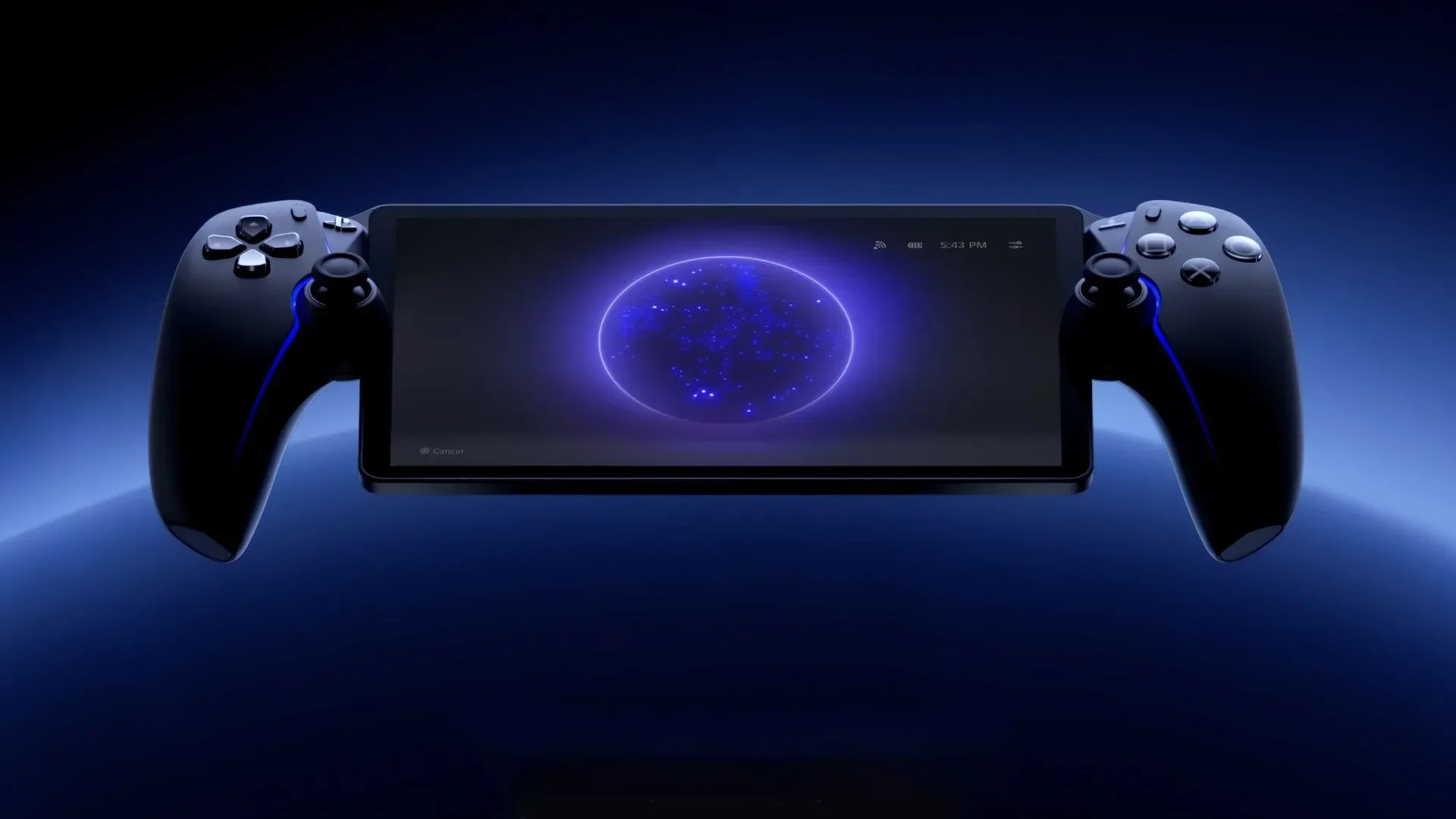
Sony is preparing a new PlayStation Portal model for Japan that carries one particularly consequential hardware change: internal storage. It is an addition that immediately raises questions because the regular Portal is built around streaming rather than downloaded, locally installed games. Sony has not yet explained what the new storage will be used for, saying only that future functionality will be confirmed later.
That makes the Japan-only Portal a concrete product announcement with an unusually important blank space at its center. The device is planned to arrive on December 10, with pre-orders opening Thursday. It will cost 39,980 yen, listed as $252, matching the price of the worldwide Portal model. It will be sold in Midnight Black, also the color used for the recently introduced Japan-only PlayStation 5 model.
The basic hardware proposition otherwise remains familiar. Sony says the new Portal has the same 1080p LCD display and general feature set as the version sold elsewhere. Storage, then, is not a small cosmetic revision or a bundle change. It is the notable difference—and one whose value cannot be fully judged until Sony describes the software plans behind it.
What PlayStation Portal does now
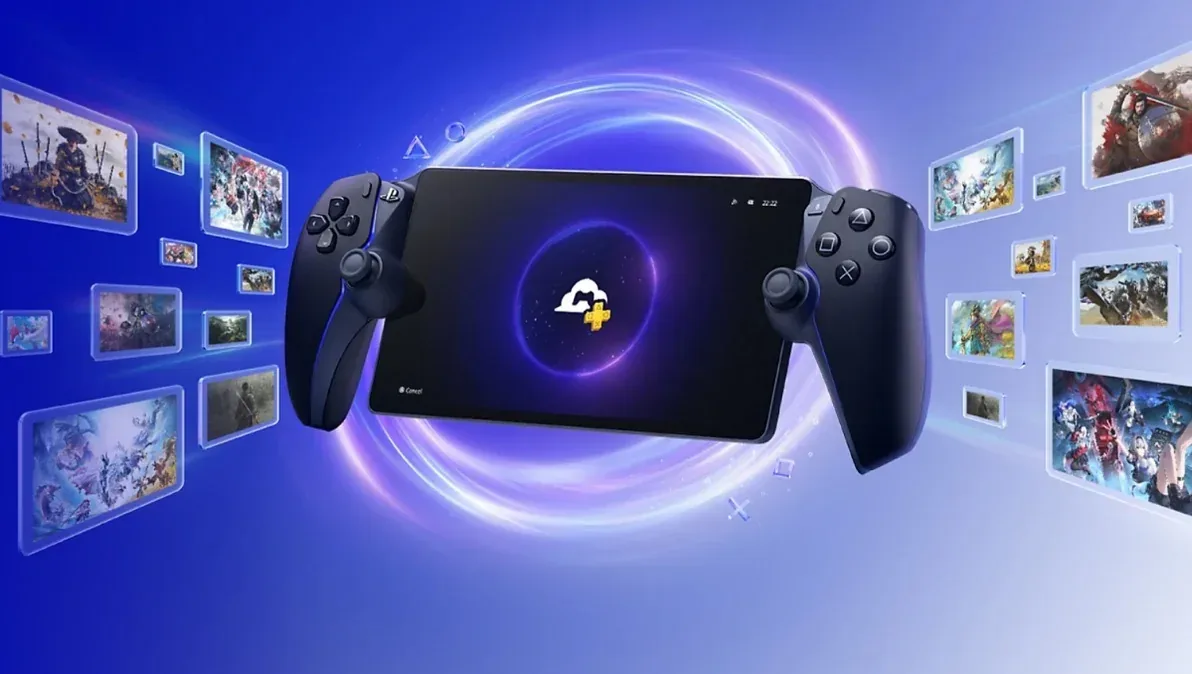
The current PlayStation Portal is a streaming device. It can stream games directly from a PlayStation console, or through the cloud. In practical terms, the game is not described as being downloaded and installed to Portal storage for the handheld to run by itself. The Portal receives the game over a network connection, while the console or cloud service provides the game processing.
That distinction is essential to understanding why internal storage is attracting attention. A streamed game and a locally run game can look similar from the player’s perspective—both appear on the same screen and use the same controls—but they rely on different places to do the work.
- Console streaming means a PlayStation console is running the game and sending its video output to the Portal.
- Cloud streaming means the game is run remotely and delivered over the internet.
- Local play would mean the Portal itself runs software installed on the device.
The regular Portal’s lack of internal storage has prevented downloaded games from being placed on the device. The newly announced model changes that hardware limitation, but it does not, by itself, confirm local game support. Storage can serve several purposes, and Sony has not identified which one it intends to enable.
Storage is a capability, not a confirmed feature set
It would be easy to treat internal storage as proof that Portal is becoming a conventional portable console. That conclusion goes beyond what has been announced. Storage is necessary for downloadable games, but it is not sufficient on its own. A platform also needs compatible software, a way to acquire and manage that software, and technical support for running it on the device.
The Portal has its own mobile chipset, though it is different from the hardware inside a PS5. That creates the theoretical possibility that it could run some games locally. “Theoretical” matters here. Sony has not said that the Japan-only Portal can currently install games, which games might be supported, how compatibility would work, or whether any future local-play option would extend beyond Japan.
Related coverage includes Sony Unveils Japan-Only PlayStation Portal With Internal Storage.
Until those details arrive, several key questions remain unanswered:
- Will the storage hold downloadable games, system software, cloud-streaming data, media, or something else?
- If games become installable, would they be limited to selected titles rather than the broader PS5 library?
- Would locally run games require an internet connection, a PS5 console, or cloud access?
- How much storage does the new model contain?
- Will an equivalent Portal reach markets outside Japan?
None of those questions has a confirmed answer. The most accurate reading is narrower: Sony has added a component that could support an expanded role for Portal later, while withholding the details needed to define that role.
Why this version is specific to Japan
The new Portal follows Sony’s earlier Japan-only PS5 approach. Last November, Sony released a digital-only, region-locked and language-locked PS5 for the Japanese market. Its price was reduced from 73,000 yen, listed as $461, to 55,000 yen, listed as $347.
That PS5 model was a market-specific affordability move. Sony is again making a Japan-only PlayStation product, but the Portal strategy is different in one meaningful respect: its listed 39,980-yen price matches the global Portal despite the added internal storage. Rather than positioning the unit as a lower-cost local alternative, Sony appears to be maintaining the existing price while changing the hardware.
The broader background is competition in Japan. Nintendo Switch has been successful there, while PlayStation platforms have faced pressure from their cost relative to wages and the cost of living. Sony’s earlier domestic PS5 also echoed Nintendo’s choice to make a cheaper, region-specific Nintendo Switch 2. For readers following Nintendo’s hardware ecosystem as well as Sony’s, the company’s Japan-focused choices remain an important part of the market conversation, alongside projects such as the teased large LEGO Yoshi display build.
That market context helps explain why Sony may be using Japan as the place to test or introduce a differentiated Portal. It does not prove that the storage feature is an experiment, nor does it establish that the model will remain exclusive to Japan indefinitely. It simply shows that Sony has recently been willing to tailor PlayStation hardware for its domestic market.
A possible hybrid direction—still only a possibility
The strongest implication of the internal-storage addition is not that Portal has already changed categories, but that Sony may be considering a device that blends streaming with some form of local functionality. A hybrid approach could mean different things. At one end, Portal could remain fundamentally a streaming machine while using storage for supporting functions. At the other, it could eventually support a limited local catalog alongside console and cloud streaming.
The latter possibility would be particularly notable because it could make the handheld useful in situations where streaming is less appealing. Streaming depends on the quality and availability of a connection. Local execution, if Sony enables it, would move more of the experience onto the handheld itself. But the announcement does not establish performance expectations, game scope, battery behavior, download sizes, or offline operation. Those are precisely the details that separate a suggestive hardware component from a meaningful new game platform.
There are also reports and discussion around a next-generation PlayStation portable, but nothing in this Portal announcement confirms such a product or ties the two together. The new unit can reasonably be viewed as evidence that Sony sees value in keeping portable play under consideration. It should not be treated as an announced successor, a roadmap, or confirmation of native PS5 games on handheld hardware.
What prospective buyers can responsibly take from the announcement
Japanese buyers can make decisions based on what is known now: the new Portal is scheduled for December 10; it costs 39,980 yen; it comes in Midnight Black; it retains the 1080p LCD and general Portal feature set; and it includes internal storage. People considering it specifically for downloaded games should be cautious. Sony has not promised that capability, named a supported catalog, or set out a timetable for explaining the storage.
For current Portal owners outside Japan, there is likewise no confirmation of a storage-equipped international model, nor any indication that existing devices will gain a comparable capability. The announcement identifies the feature as exclusive to the domestic edition for now.
The most interesting part of this story is therefore not a finished feature, but a deliberate piece of future-facing hardware. Sony has placed internal storage in a device previously defined by streaming, then deferred the explanation. Whether that eventually results in local software, an enhanced streaming ecosystem, or a more limited function will determine whether this Japan-only Portal is a curious regional variant or an early sign of a broader portable-play strategy.