Warning: This article discusses a major story event in Final Fantasy VII Remake and the original Final Fantasy VII.
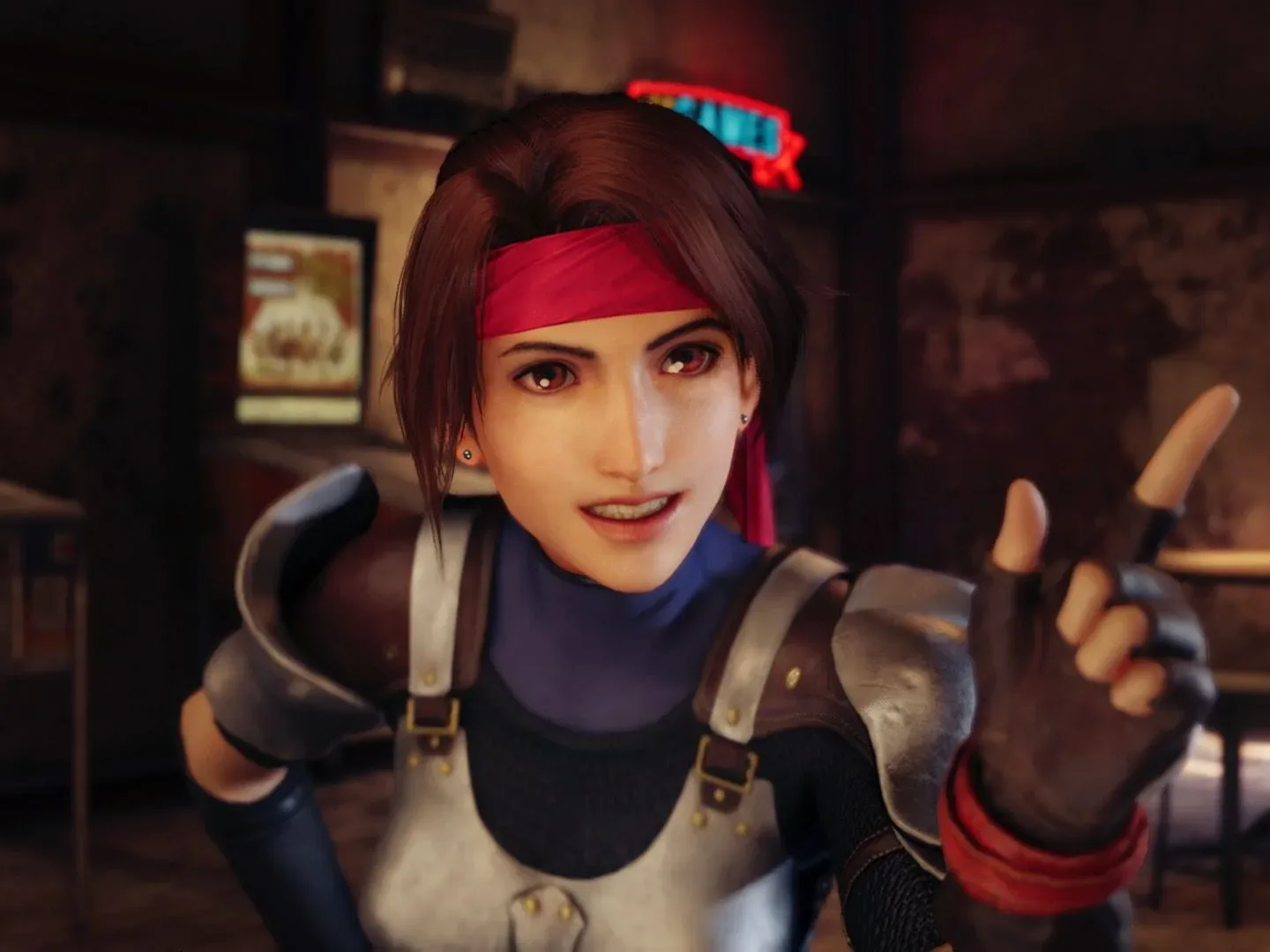
For Erica Lindbeck, playing Jessie in Final Fantasy VII Remake was not simply another voice role. The actor has described it as a dream-level opportunity: an early major booking in her career and the chance to contribute to a series with enormous cultural weight. That makes her reaction to Jessie’s fate especially understandable. Lindbeck says she was “devastated” when the remake committed to the character’s death—and, in her view, made the emotional blow land even harder.
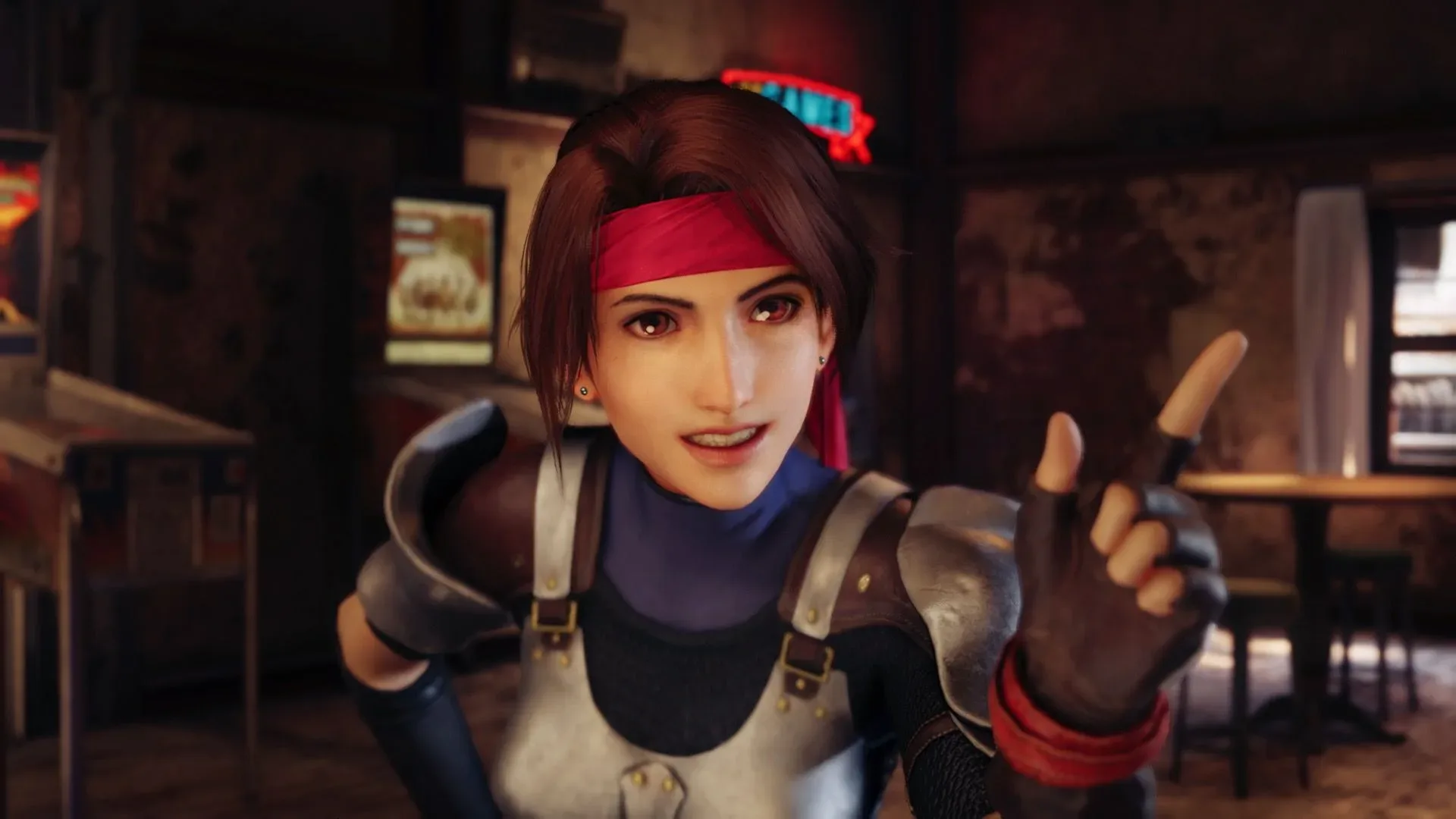
Jessie’s outcome follows the broad path established by the 1997 original, but Final Fantasy VII Remake gives the Avalanche member more time, personality, and space within its version of Midgar. That expanded attention changes the impact of a familiar plot point. A death that was already part of the story’s foundation can feel newly immediate when a remake asks players to spend more time with the character beforehand.
An early career role with unusually high stakes
Lindbeck was cast as Jessie for the project’s 2015 PSX trailer, a booking she remembers as one of the first major milestones of her acting career. Even after being selected, however, she recalled carrying two understandable uncertainties: whether she would remain in the role and whether the long-awaited game would ultimately be completed.
The game did arrive in 2020, and Jessie became one of the remake’s most visibly expanded supporting characters. Lindbeck has also voiced Futaba in Persona 5 and Black Cat in Marvel’s Spider-Man games, but she characterized Final Fantasy VII as a particularly meaningful assignment. For an actor, a role in a beloved series can be a professional landmark while still leaving the performer with limited visibility into every later story decision.
That distinction matters. Voice actors help define a character’s presence through performance, timing, and emotional texture, but the larger plot is built across writing, direction, design, animation, and production. Lindbeck said she did not know what would happen to Jessie when she first accepted the part. Her eventual response therefore comes from both sides of the work: pride in having played the role and disappointment at losing a character she had come to care about.
“When they dug the knife—and they chose to dig the knife in even further, so to speak—I was devastated. I mean, I was just devastated.”
Why Jessie’s death hits differently in the remake
In the original Final Fantasy VII, Jessie is part of Avalanche, the resistance group initially working alongside Cloud and his allies against Shinra. Her death is one of the events that establishes the cost of the conflict in Midgar. Final Fantasy VII Remake retains that tragedy, but its longer, more detailed Midgar story gives Jessie a stronger individual identity before the loss occurs.
Related coverage includes Erica Lindbeck Reflects on Jessie's Heartbreaking Final Fantasy VII Remake Fate.
That is the key difference between preserving a plot event and merely repeating it. A remake can return to a known destination while reshaping the road there. In Jessie’s case, the additional character work makes the stakes more personal. Players are not simply told that Avalanche has suffered; they have more opportunity to understand what has been taken away.
The result also demonstrates why supporting characters are so important to a large-scale role-playing game. They make a setting feel inhabited rather than functional. Jessie is connected to the game’s rebellion, but she is not valuable only because she advances its conflict. Her presence gives the group a distinct human dimension, which makes her absence meaningful once the story turns.
This is not necessarily a question of whether a remake should spare a character because audiences have grown attached to them. Rather, it is a question of what the story asks that attachment to accomplish. The remake’s added detail does not remove the harshness of Jessie’s fate; it makes that harshness more consequential.
Lindbeck’s case for permanence in storytelling
Despite her personal sadness, Lindbeck offered a clear-eyed interpretation of why such a loss can matter. She argued that some deaths are necessary in fiction because a world without death can make events feel less permanent and less heavy. Put another way, consequences create narrative gravity.
That perspective does not mean every character death automatically works. A death has to be supported by the story around it: the character needs presence, relationships, and a role that cannot be erased without changing the emotional shape of the world. Jessie’s expanded material in Final Fantasy VII Remake is central to that equation. The game invests in her as a person, then asks players to feel the cost of the conflict that claims her.
“Permanent” is especially important in a series built around memory, grief, and resistance against overwhelming power. If every painful development could be casually undone, the danger facing the characters would lose force. Lindbeck’s comments point to the difficult balance at the center of dramatic storytelling: audiences may wish a character had survived precisely because the narrative made them worth missing.
There is also an actor’s dimension to that idea. Performance is often an act of building connection quickly. A voice actor may record lines in a controlled production process rather than experiencing a game’s full final rhythm as a player would, yet the role still becomes personal. Lindbeck’s description of being devastated speaks to that connection without suggesting the result was a mistake. Her view is that the hurt serves a purpose.
A remake that expands rather than simply reproduces
Final Fantasy VII Remake is the first part of a planned three-part project, a structure its director has described as risky: if the first game had been received poorly, the path forward would have been far less clear. That production decision also helps explain why even familiar early events are treated with such care. Midgar is not only a short opening stretch here; it is the setting of an entire game.
Expansion can be a risky creative tool. More scenes and more dialogue can flatten a story if they only delay the next plot beat. But when the added time gives secondary characters sharper identities and relationships, it can make established events resonate in a new way. Jessie is one of the clearest examples of that approach. Her role is still tied to the original story’s tragedy, but the remake gives the tragedy more room to breathe.
The wider lesson is relevant beyond this series. Remakes are often judged by what they preserve and what they alter, but emotional effectiveness depends on how those two choices interact. Preserving Jessie’s fate honors a defining consequence of the original. Expanding her characterization changes the audience’s proximity to that consequence.
Creative work can also be full of uncertainty long before an audience sees the final product. Lindbeck’s recollection that she wondered whether the game would be made at all is a useful reminder that major productions can take years to move from an initial trailer and early casting to a finished release. Discussions of game development frequently focus on projects and companies; perspectives from performers show the human uncertainty within those long timelines. For another example of creators discussing how development choices shape a game’s experience, read this look at Mark Darrah’s comments on Dragon Age: Origins’ Fade sequence.
Jessie’s place in Final Fantasy VII Remake’s emotional architecture
Jessie’s story is painful because it is not framed as an abstract cost. It is the loss of an individual who has been allowed to matter. Lindbeck’s reaction mirrors the intended effect: the performance and the remake’s broader characterization make the character’s fate feel more immediate than it did in a less expansive version of the same section of the story.
Her comments also avoid the easy assumption that emotional pain and artistic dissatisfaction are identical. Lindbeck was devastated by the fate, but she still sees value in stories that allow consequences to remain consequential. That is a generous reading of material that clearly meant a great deal to her.
For players revisiting Final Fantasy VII Remake—or approaching it with knowledge of the original—Jessie remains an example of how a supporting character can carry disproportionate emotional importance. The destination may be known, but the remake’s investment in her voice, personality, and relationships ensures that the loss does not feel routine. It feels earned, and it hurts.