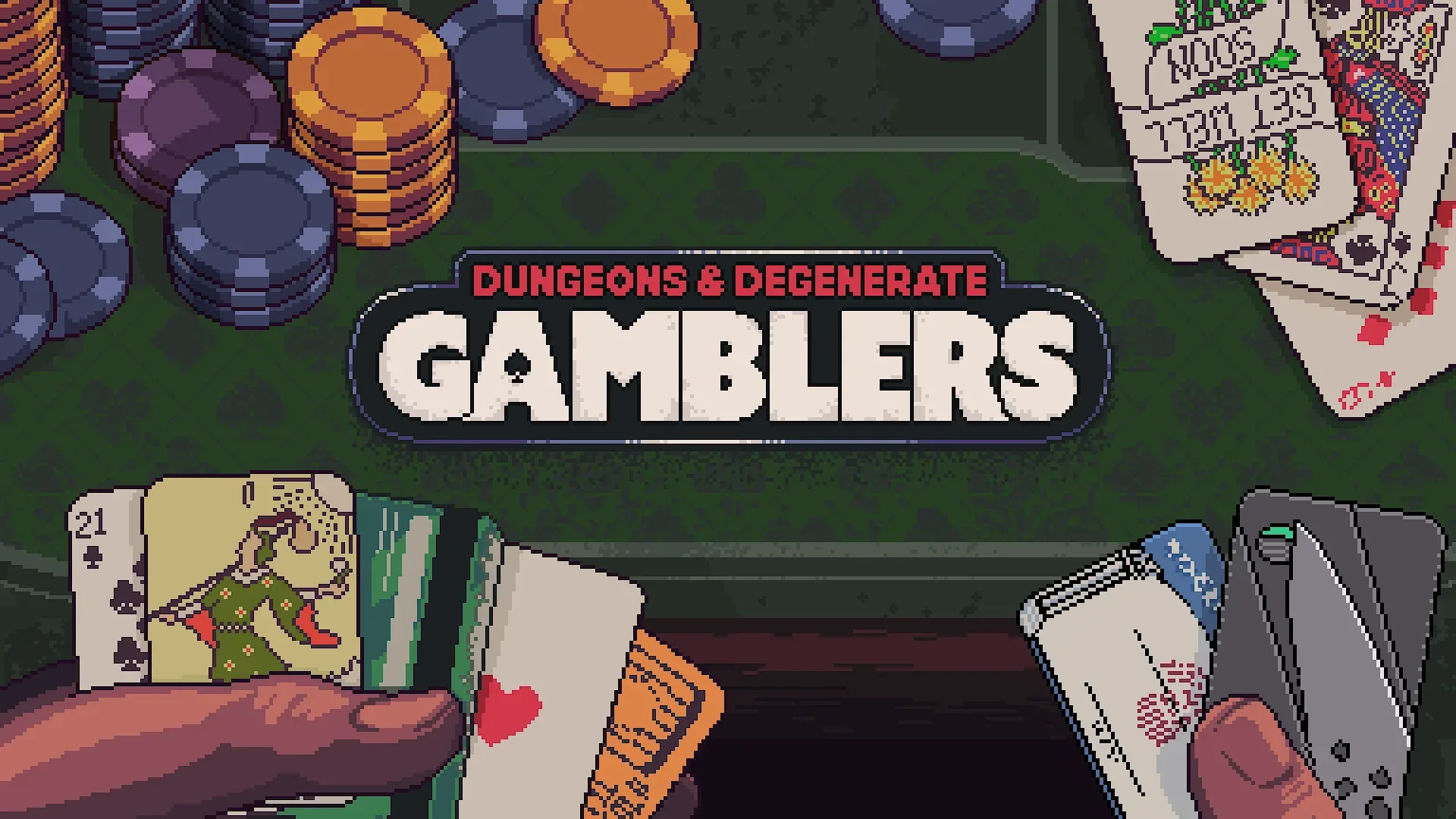
Dungeons & Degenerate Gamblers is set to shuffle onto PlayStation 5 and Nintendo Switch on October 9, 2026. The console versions will arrive with the game’s 2.0 Doubling Down update and the PC improvements already in place, rather than asking new players to wait through a post-launch catch-up period.
Developed by New Zealand studio Purple Moss Collectors and published by Yogscast Games, the game turns blackjack into a roguelike deckbuilder set amid a tavern full of corrupt high-rollers. Its PC debut generated more than $1 million in gross revenue during its first month, and the console launch brings that established version of the game to two new platforms.
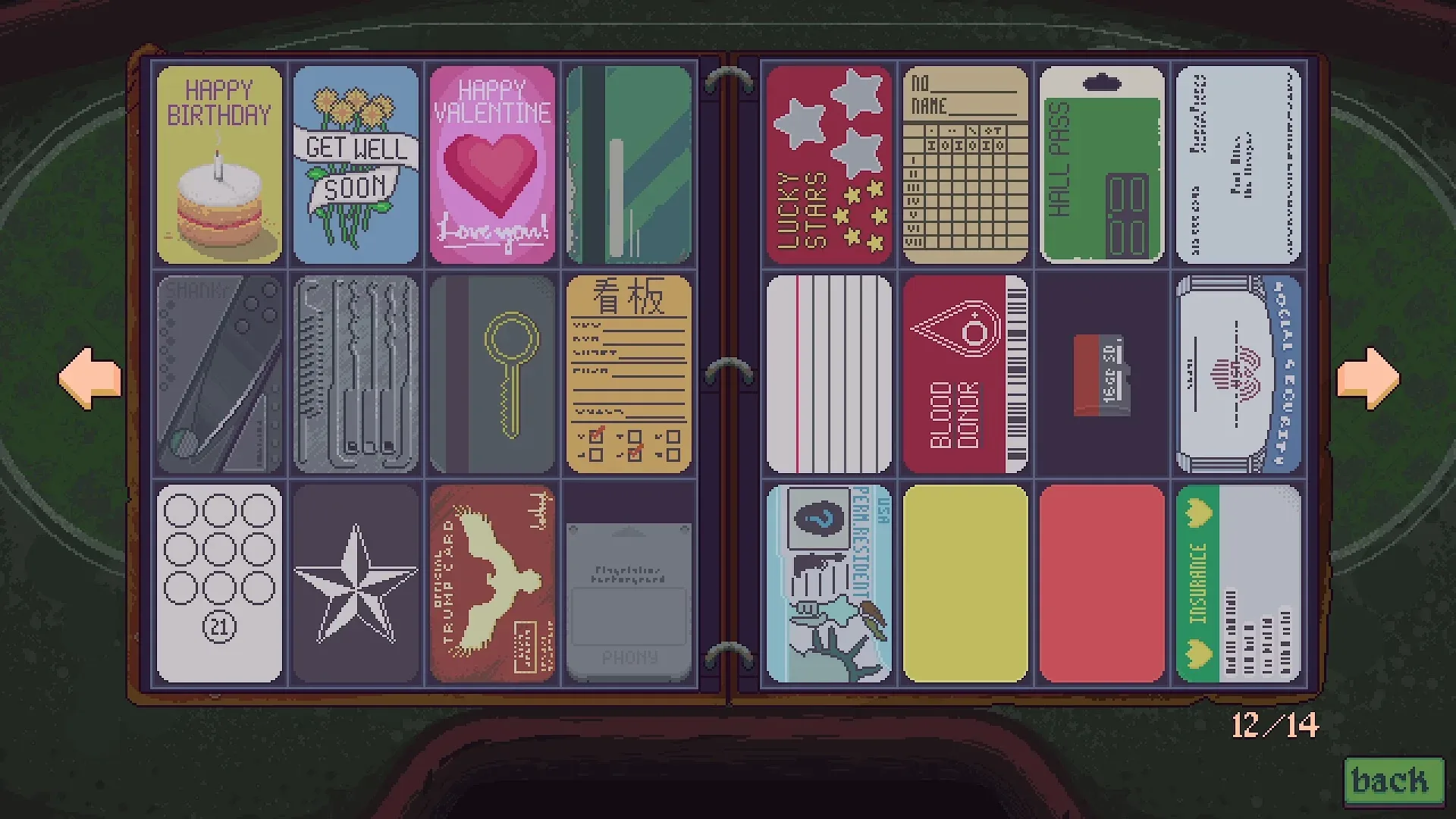
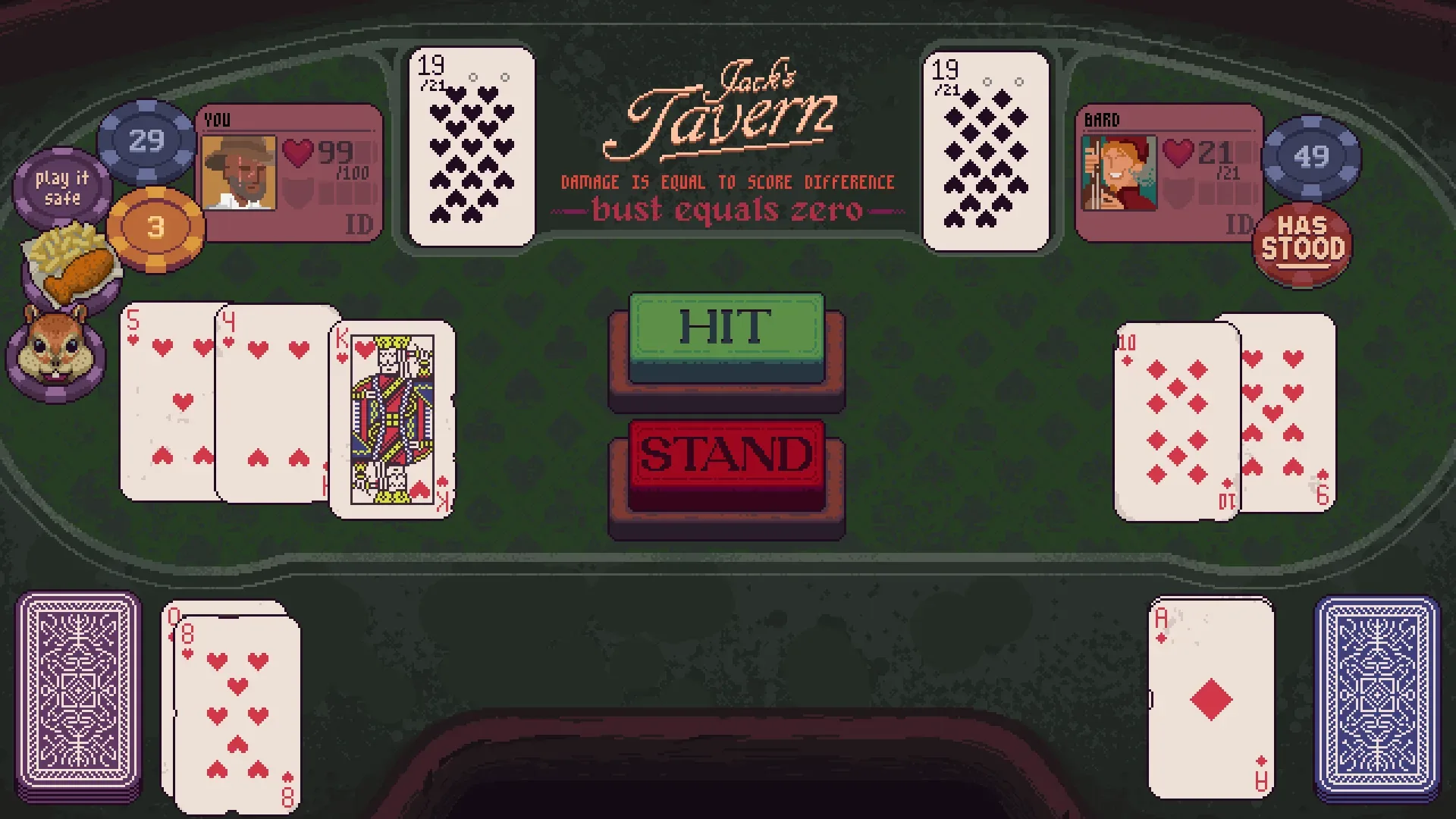
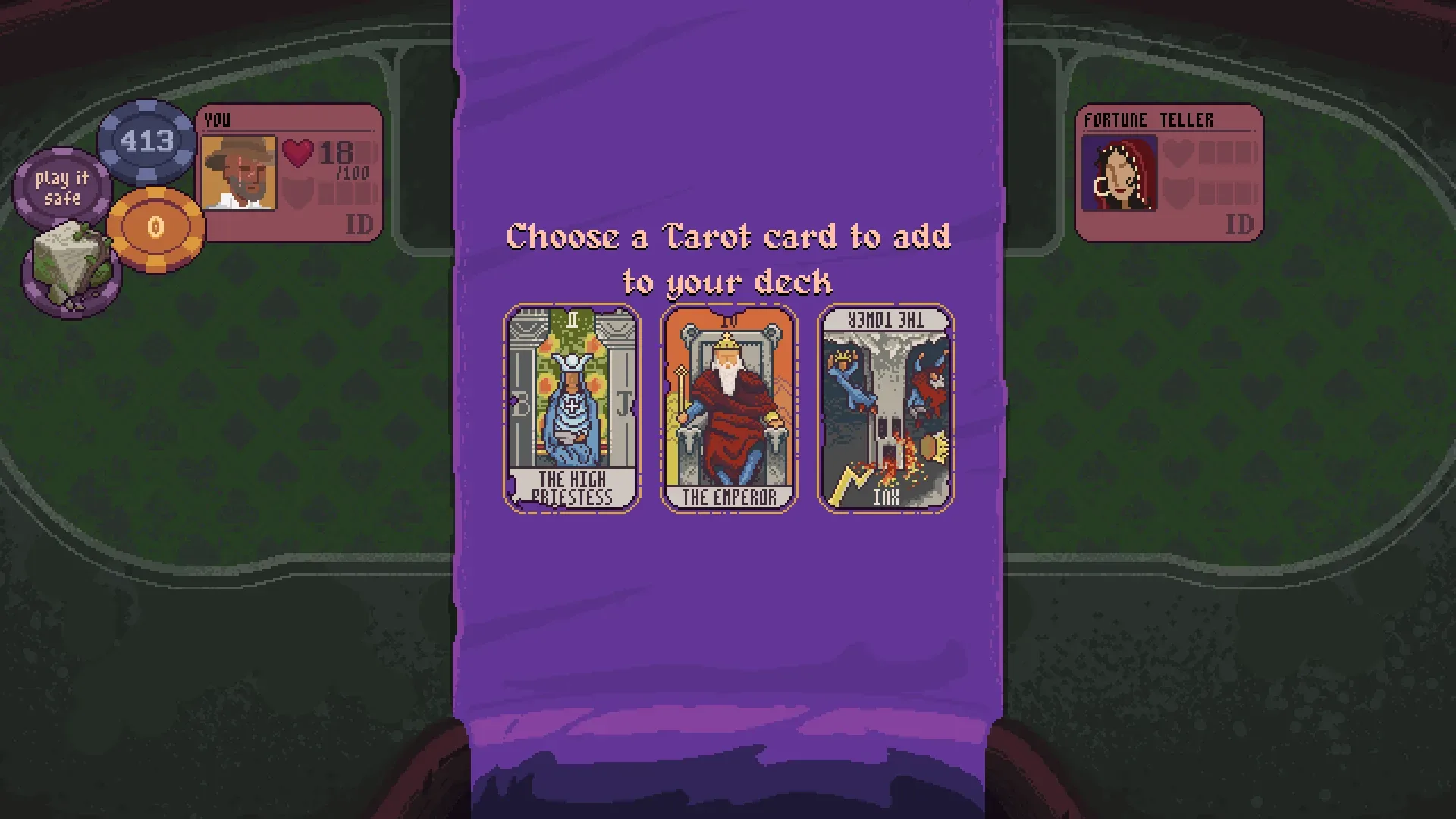
The basic hook is deliberately recognizable: the game begins with blackjack’s push-and-pull over point totals. But conventional playing-card suits are replaced by strange, highly manipulable card types, including tarot cards, business cards, loyalty punch-cards, hall passes and birthday cards. That premise gives the game room to use the familiar language of cards and gambling without remaining bound to a normal blackjack table.
A blackjack premise built for deckbuilding chaos
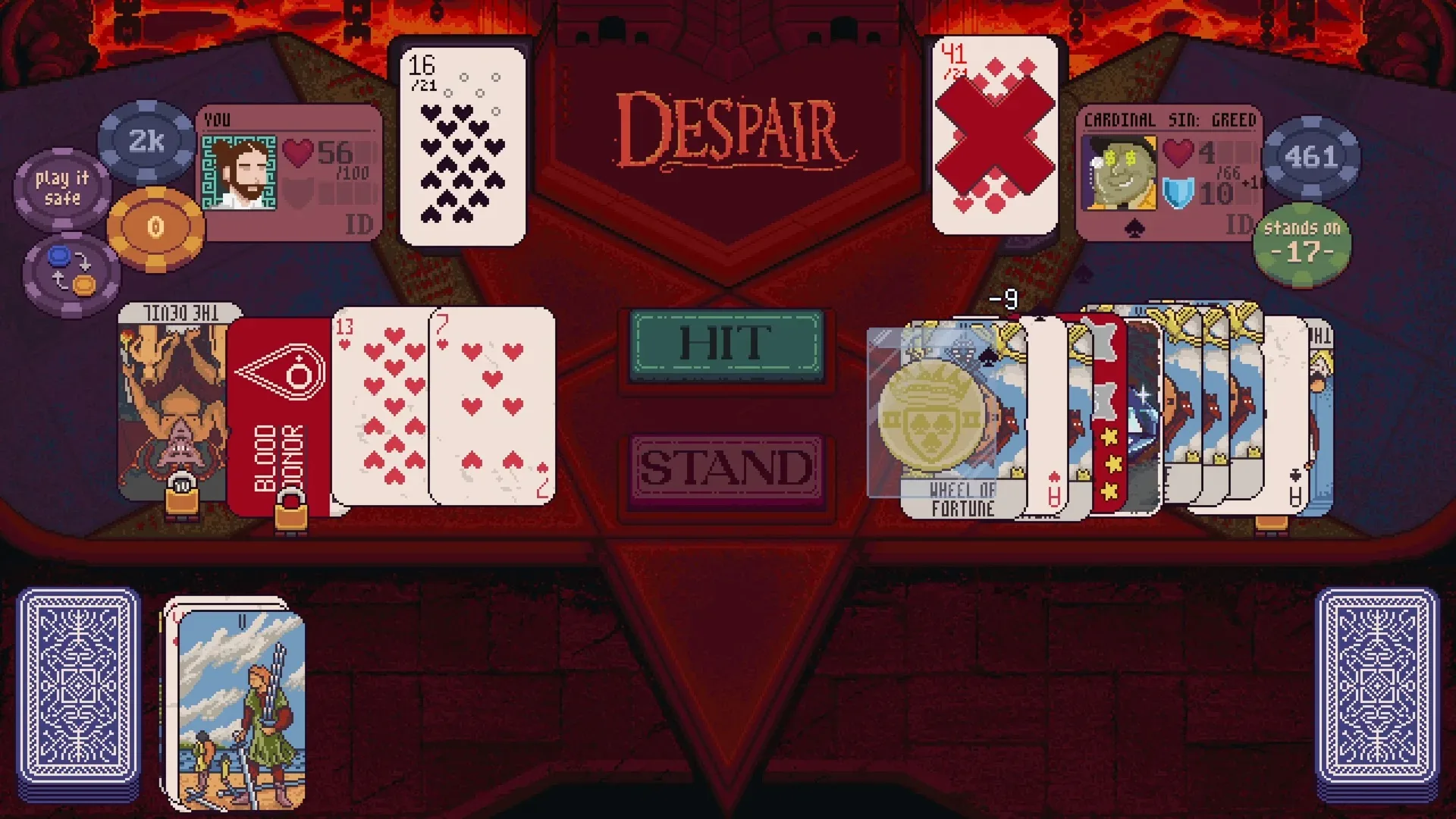
A deckbuilder is a game where the cards available to a player become a major part of their strategy. Instead of simply receiving a fixed hand and making the best of it, players build combinations over time. In Dungeons & Degenerate Gamblers, those combinations can alter point totals, damage opponents directly, or take their chips.
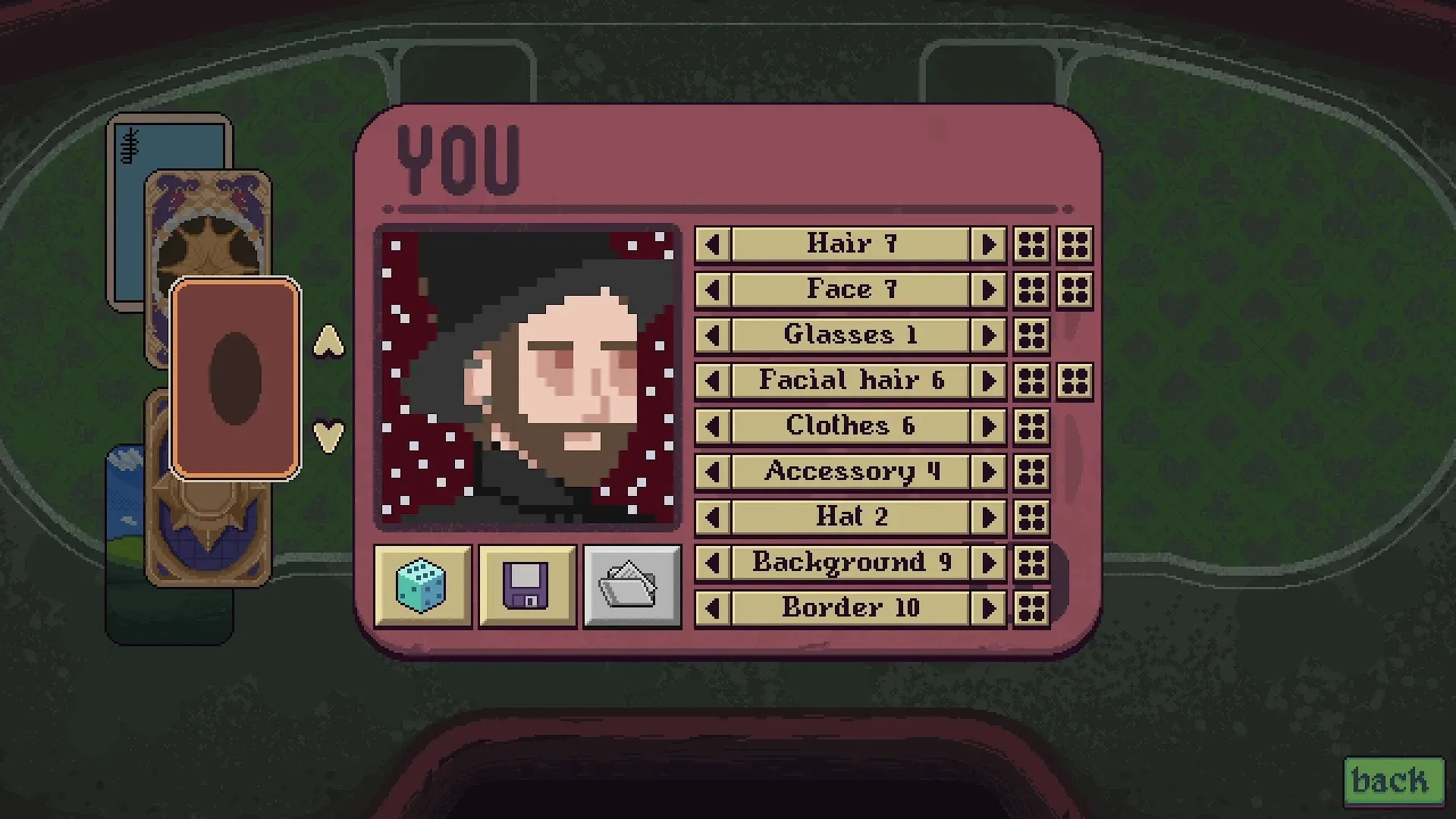
That distinction matters because it shifts the focus from blackjack as a single decision—hit, stand, and hope the next draw is kind—to blackjack as the foundation for a larger run. A run is one attempt through the game’s route of encounters. The player selects a starter deck, equips Lucky Charms, then advances through branching dungeon floors while weighing risks against rewards.
The branching structure is another key roguelike term. Rather than following one identical sequence of opponents, a player chooses between routes. The available choice can matter as much as the next hand: one path may offer a chance to improve a strategy, while another can bring an encounter that better suits the deck already assembled. The supplied details do not spell out every type of reward or consequence, but the game’s stated risk-and-reward structure makes clear that route selection is part of the intended strategic tension.
Its cards are designed to create synergies. In deckbuilding language, a synergy is an interaction where parts of a build become stronger or more useful together than they would be alone. Here, the relevant effects include manipulating totals, inflicting direct damage and stealing chips. The result is a framework in which a player is not only trying to land on the right number, but also trying to construct a deck that breaks or bends the table’s normal expectations.
That is the game’s central joke and its core tactical identity: blackjack is the starting point, not the final rulebook. The tavern’s gambling metaphor gives the action a clear vocabulary—chips, draws, high-rollers and doubling down—while the cards themselves provide the room for wildly different approaches.
Related coverage includes Dungeons & Degenerate Gamblers Bets on PS5 and Switch Release This October.
What Doubling Down adds to the console edition
The 2.0 update is the major content package included with the PlayStation 5 and Switch release. Its headline addition is four new floors: Surveillance, Laboratory, Anxiety and Apathy. Each floor has its own events and foes.
Floors are the broad stages of the game’s dungeon progression. Adding four of them expands the places where a run can unfold, but the meaningful part is that they are not described as simple visual backdrops. New events and enemy rosters mean the game’s decision-making and opposition can change alongside the setting. Players entering a floor should therefore expect more than a renamed hallway on the way to another card table.
The update also adds more than 50 Lucky Charms. These are persistent items that stay active throughout a run. Persistent effects are particularly important in a roguelike because they can influence multiple encounters rather than paying off only once. A charm can therefore become a major consideration when deciding how to develop a deck, even though the specific effects of individual charms have not been detailed.
Three new cards and one new Unique Chip are also part of the update. Existing cards and Unique Chips have been reworked, and new enemies have been added to floors already in the game. Reworks deserve attention alongside outright additions: a deckbuilding game is shaped by interactions, so changing a pre-existing card or chip can alter the value of strategies players may already know.
Unique Chips appear to be a distinct category of game element, but their exact rules and effects have not been specified. It is safest to read their inclusion as part of the game’s expanding strategic pool rather than assume precisely how they are earned, used or combined.
Custom Runs and a shared daily challenge
Two modes in the console package should give players different ways to approach the tavern. Custom Runs let players adjust parameters to tailor an attempt. Parameters are the settings that define how a run is configured; the announcement does not provide a complete list of what can be changed. Still, the purpose is straightforward: Custom Runs offer an option for players who want more control over the circumstances of a session.
Daily Run Mode, meanwhile, takes the opposite approach. It presents a fixed starter deck and pre-selected modifiers for a daily challenge. A modifier is an additional rule or condition that changes how a run plays. Because the opening deck and modifiers are fixed, the mode establishes a common scenario rather than leaving every player to begin from a fully personal setup.
That makes Daily Run Mode useful for the kind of discussion that can surround a strategy game. When the starting conditions are shared, the question becomes less about who happened to find a particular combination during a separate run and more about how players reacted to the same set of restrictions and opportunities. The announcement does not describe leaderboards, rewards or online features, so those should not be presumed; the confirmed feature is the daily fixed-deck, modifier-led challenge itself.
What the launch means for PS5 and Switch players
The most practical news is that the October 9 release is not positioned as a bare console port trailing behind the PC game. The PlayStation 5 and Nintendo Switch editions include the 2.0 content from the start, alongside the PC improvements that have already been made. For players deciding whether to wait for a particular platform, that removes the expectation that the new versions will launch without the four added floors, Lucky Charms, Custom Runs or Daily Run Mode.
It also gives newcomers an unusually clear starting point. Instead of learning a version of the game before a major update changes its available routes, items and modes, console players will begin with the current expanded package. That does not guarantee every version will feel identical in every respect—the provided details do not address platform-specific performance, controls, pricing, cross-progression or physical editions—but it does establish content parity at launch with the recent PC update.
For Switch players, the appeal is the arrival of a run-based card game on Nintendo’s platform; for PlayStation 5 players, it adds another strategy-focused independent release to the console’s upcoming schedule. Readers tracking other PlayStation announcements can also see the announced PS5 plans for Lollipop Chainsaw 2 Back2Back.
Risk, rewards and suspiciously powerful stationery
The eccentric card list is more than a visual gag. Tarot cards, business cards, loyalty cards, hall passes and birthday cards place the game’s card effects outside the narrow imagery of a standard 52-card deck. In practical terms, that means players should approach it as a strategy game that borrows blackjack’s tension around totals, rather than as a faithful digital blackjack simulator.
Standard suits being discarded is a useful signal of that intent. The game wants players to think in terms of effects and combinations: whether a card changes a number, turns a hand into damage, interferes with an opponent’s chips, or works especially well beside another card. Choosing a starter deck and maintaining Lucky Charms across a run add further layers before the player has even accounted for floor events and enemies.
The game’s title signals an appetite for excess, and the confirmed systems support that: a card game about gambling where loyalty punch-cards and birthday cards can become tools against corrupt high-rollers is not presenting the casino floor as a place of orderly restraint. But the release details also point to a structured strategic game beneath the nonsense. Players will have starter-deck choices, branching routes, persistent charms, curated daily conditions and configurable custom attempts to contend with.
Dungeons & Degenerate Gamblers launches for PlayStation 5 and Nintendo Switch on October 9, 2026. Its console debut includes the fully updated 2.0 Doubling Down content, bringing the new floors, more than 50 Lucky Charms, additional cards and enemies, Custom Runs and Daily Run Mode into the tavern on day one.