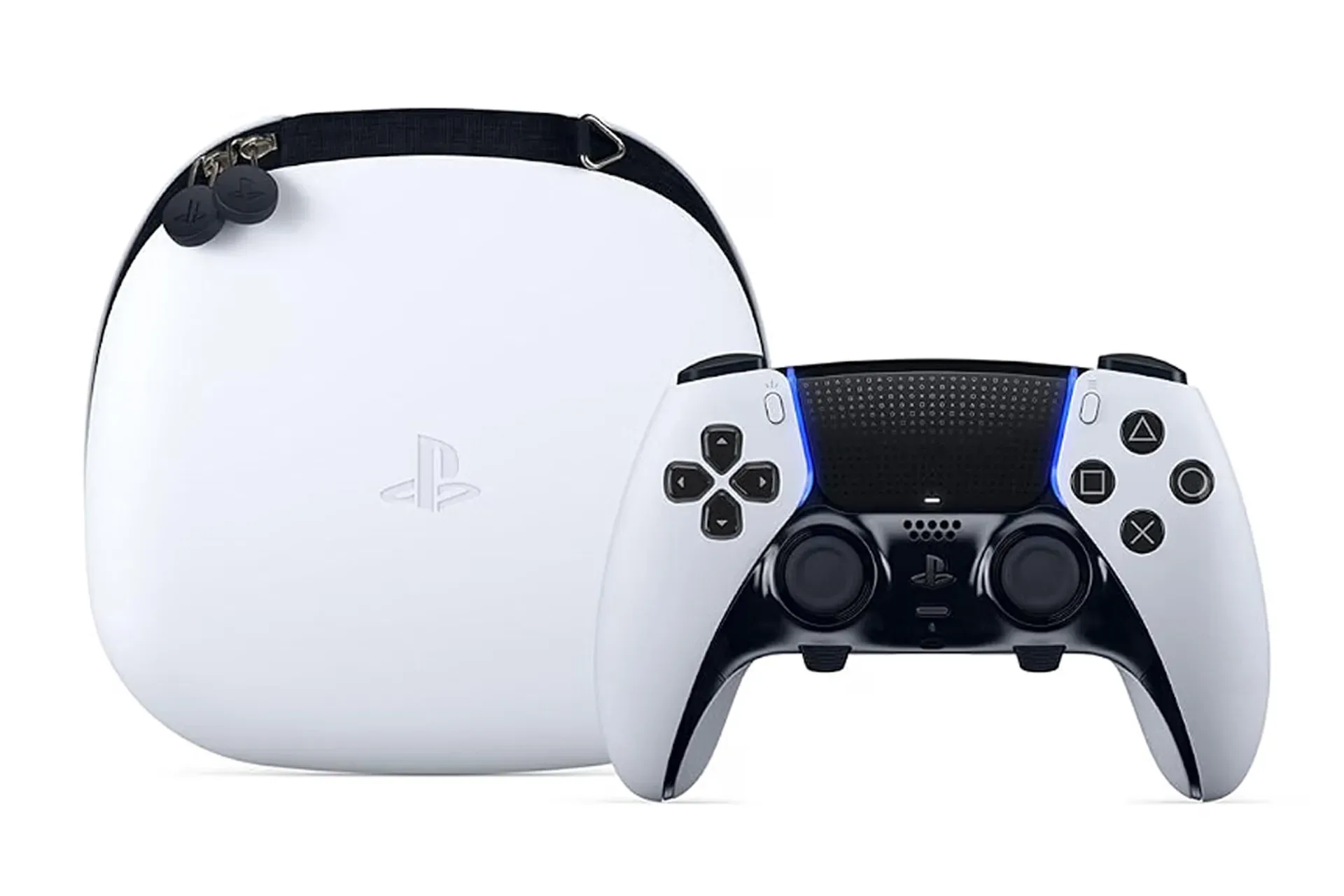
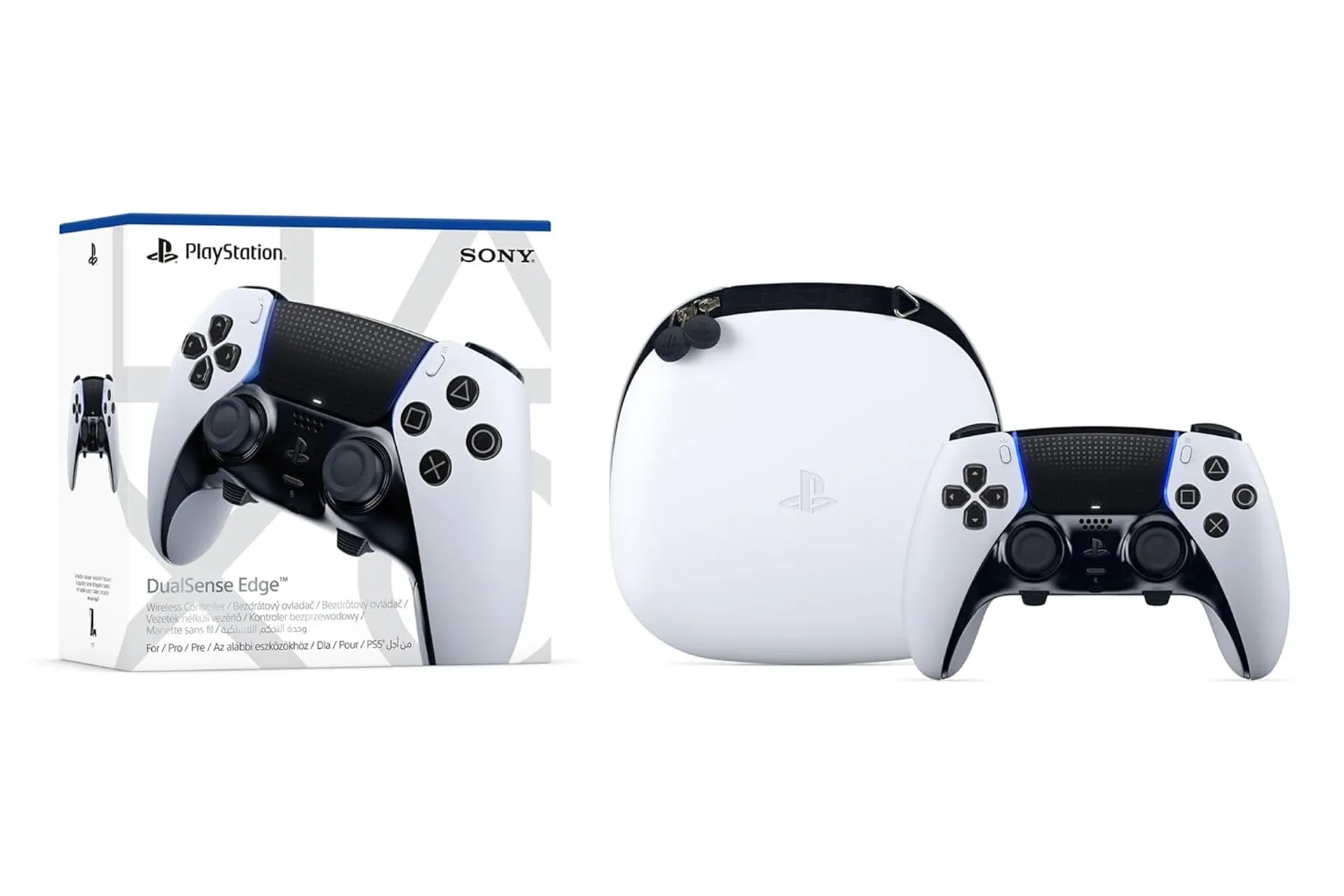
The Midnight Black version of Sony’s PlayStation DualSense Edge wireless controller was listed at $169 during a Cyber Monday promotion, compared with Sony’s stated $199.99 price. That is a $30.99 difference, and the listing’s price-history information characterized it as the lowest price seen in the previous 90 days.
That makes the offer notable for a very specific kind of PlayStation 5 owner: someone who already knows why they want Sony’s premium controller. The DualSense Edge is not simply a spare pad in a fancier color. Its core pitch is customization, including remappable back buttons, interchangeable stick caps and stick modules, adjustable trigger travel, and the ability to save control profiles on the controller.
Those additions can solve real control-layout frustrations. They can also become expensive furniture if a player does not have a clear use for them. A temporary price cut does not turn a specialist controller into the obvious choice for every PS5 household, particularly when a standard DualSense costs substantially less.
What the $169 listing actually establishes
The important detail is scope. The $169 figure applied to the Midnight Black DualSense Edge listing during the Cyber Monday promotion. Sony’s $199.99 price provides the comparison point, while the retailer page reportedly displayed the discounted price and a discount marker rather than the list price itself.
Retail stock and promotional pricing can change quickly, especially when a page says inventory is limited or a deal is ending. Treat the number as a reported listing price, not as a standing price or a promise that every color, seller, or future checkout will match it. Before purchasing, the practical checks are simple:
- Confirm that the product is the DualSense Edge, rather than a standard DualSense in the same color family.
- Check the price at checkout, not just the price shown in a search result or promotional badge.
- Verify the seller and the exact color variant.
- Read the current product details for the package contents and warranty information.
- Check the current battery information if long wireless sessions are important to you.
That last pair of checks matters because the listing information described here did not specify battery-life figures, and it did not spell out what is included in the box. A buyer should verify those details directly with Sony or the live retailer listing rather than assume a particular accessory or carrying case is included.
Shoppers can also keep the wider rule in mind: a countdown or low-stock message is not, by itself, proof of an exceptional deal. Checking price history instead of trusting the countdown badge is useful whether the product is a controller or something far less likely to need a firmware update.
Why the DualSense Edge costs more than a standard PS5 controller
The DualSense Edge is a pro-style controller, meaning it is designed to let players alter inputs and physical controls around the needs of particular games. Its value is less about doing a completely different job from the ordinary DualSense and more about making that job configurable.
Related coverage includes PS5’s Midnight Black DualSense Edge was listed at $169 on Amazon.
Back buttons and remapping
Back buttons are additional inputs positioned on the rear of the controller. Sony says they can be mapped to other inputs. In plain terms, that can allow a player to activate a command without taking a thumb away from an analog stick.
That is the clearest use case for players who regularly juggle aiming, movement, jumping, reloading, shifting, or other time-sensitive commands. In a shooter, for example, a mapped rear input may let a player keep their thumb on the right stick while using a different command. In a racing game, a player may simply prefer a layout that feels more natural to them.
The benefit is not automatic performance. A rear button only helps if the player has an input worth moving there and can build the muscle memory to use it reliably. For someone who is comfortable with the default layout and plays occasionally, extra inputs may have little practical value.
Trigger stops
Trigger stops adjust how far the controller’s triggers travel. Shortening that travel means the trigger can reach its input point with a shorter pull. The immediate application is a shooter, where players may prefer a quicker trigger press for actions such as firing.
It is helpful to separate this from a claim of universal competitive advantage. A shorter pull changes the feel and travel of the input; it does not make every game better, and different genres can call for different preferences. The key distinction is that this adjustment is a feature of the Edge rather than the standard DualSense.
Swappable stick caps and stick modules
Sony lists swappable stick caps and stick modules among the controller’s customization options. Stick caps are the thumb-contact surfaces on top of the analog sticks, so changing them can alter feel and grip preference. Stick modules are the larger replaceable analog-stick assemblies.
For buyers, these are different ideas and should not be treated as interchangeable terms. The source material establishes that both can be swapped, but does not provide a current price for replacement components, their availability, or a reason to assume they are packaged with every retail listing. Those are details to confirm before basing a purchase decision on them.
Saved controller profiles
The DualSense Edge can save customized control profiles on the controller and switch between them. A profile is simply a stored set of settings: a player could make one arrangement for a shooter and another for a racing game, then switch without rebuilding the layout every time.
Saving profiles on the controller is a meaningful convenience feature. The chosen setup follows the pad when moving between games, rather than requiring the player to regard every session as a tiny administrative project. It is most valuable for people who rotate among genres or who know their preferred layouts differ substantially from game to game.
Who is likely to get real value from it
The strongest case for the Edge is a PS5 player with an identified control problem or a regular use for configurable inputs. Competitive shooters are an obvious fit because rear-button mapping and shortened trigger travel address the kind of actions that can demand simultaneous stick control and button presses. Fighting-game players and racing-game players may likewise have reason to value a layout tailored to their habits.
Accessibility and comfort preferences can matter, too. The useful question is not whether the controller is labeled “pro,” but whether remapping inputs and changing physical controls would make a specific game easier or more comfortable to play. The available information supports the Edge’s customization features, but a buyer should consider their own needs rather than presume that the most expensive option is inherently the most suitable one.
It is also sensible for a player who already intended to buy an Edge and had been waiting for a price reduction. At $169, the discount reduces the premium without removing it. In other words, it improves the value proposition for a decided buyer; it does not necessarily create one for everyone else.
Who should probably stick with the regular DualSense
A standard PS5 controller remains the more sensible choice for many casual players. If the controller is primarily used for a game or two each week, couch co-op, or as a backup pad, there may be no reason to spend extra for remapping, trigger stops, and profile management that will rarely be used.
The same applies to buyers who are still trying to determine whether a pro-style controller suits them. The sale price is lower than Sony’s $199.99 figure, but $169 is still a substantial purchase. A good deal on a specialized product is only a good purchase when the specialization matches the buyer’s habits.
There are a few unresolved practical details worth treating cautiously. The platform information identifies PlayStation 5 support. The listing information did not mention PC or other devices, so buyers seeking multi-device use should not infer it from this promotion. Likewise, long-session wireless players should seek current battery information rather than rely on assumptions, because no battery-life figure was supplied on the retailer listing described here.
A quick decision checklist
- Name the feature you will use. If you can point to back-button mapping, trigger travel, stick options, or saved profiles, the Edge has a clearer case.
- Match it to the games you play. Frequent shooters, fighting games, and racing games are more likely to make its customization relevant.
- Confirm the live listing. Price, stock, seller, contents, and color can all change.
- Check the omissions. Verify battery details, in-box accessories, and platform compatibility that matter to your setup.
- Compare against the standard controller honestly. If the ordinary DualSense already does everything you need, the lower-cost option remains the rational one.
The reported $169 Cyber Monday listing made the Midnight Black DualSense Edge less costly than Sony’s $199.99 price and marked a 90-day low in the cited price history. For PS5 players who will use its rear inputs, trigger adjustments, swappable stick options, and saved profiles, that is a meaningful reduction. For everyone else, it is a reminder that a controller can have boss-level features without being a mandatory boss fight for the wallet.
Shop the products
Check current price, model and availability at the retailer.