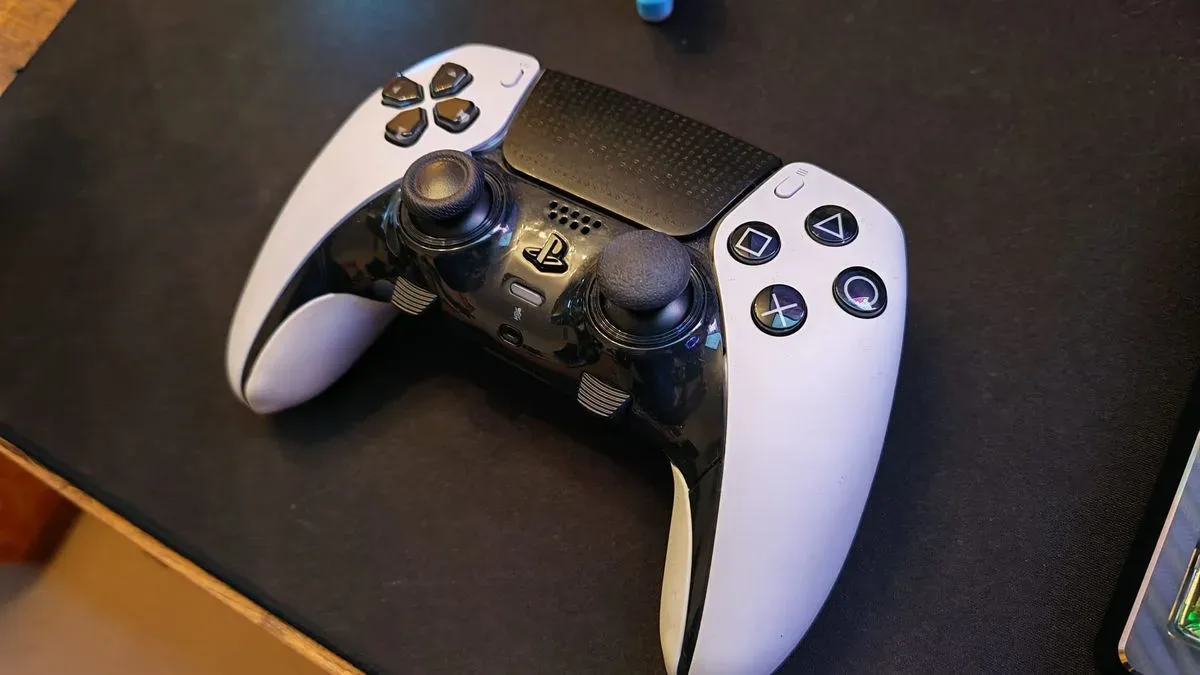

The PlayStation 5’s DualSense Edge controller is reportedly selling for $169 in the US, a $30 reduction from its usual $200 price, with both black and white versions included. The same $169 figure has been reported at Walmart, while the UK price has been listed at £149.99 through Amazon.
The timing places the price reduction alongside the reported November 19 console availability of Grand Theft Auto VI. That does not automatically make a premium controller essential for an open-world game, of course. But the Edge is one of the few first-party PS5 options that combines the standard DualSense feature set with physical customization, replaceable stick components, rear inputs and adjustable trigger travel.
For anyone weighing a purchase, the key point is simpler than the GTA-sized marketing orbit around it: $169 is a meaningful reduction on a controller that has not often been deeply discounted, but it is still a premium-priced accessory with compromises that the sale does not erase.
Why this price stands out
The $169 price is reported to match a level last seen in June. The controller’s recorded low is said to be $159.99, putting this deal just $10 above its best observed price. It has apparently reached $169 only a handful of times since arriving in stores in 2023, after spending much of its earlier discount history close to its standard price.
That context matters more than a “sale” label on its own. A reduction from $200 to $195 barely changes the value calculation for a specialist controller. A $30 cut does not transform the Edge into a budget choice, but it does narrow the gap between “wait for a real deal” and “buy if the features are useful now.”
Availability and delivery estimates can change quickly around a major release and a seasonal promotion. Shoppers who care about a particular color, retailer pickup, or having the controller before a specific date should check the retailer’s live listing rather than treating the reported pricing as a guarantee.
What the DualSense Edge adds over a regular DualSense
The Edge is built around the familiar DualSense layout and its PlayStation-specific capabilities, while adding a collection of physical and software controls intended for players who want more adjustment options.
- Interchangeable thumbstick caps: These let players alter the shape or feel of the sticks without replacing the whole controller.
- Replaceable stick modules: The controller uses removable thumbstick modules, making the sticks a serviceable component rather than a permanently fixed part of the pad.
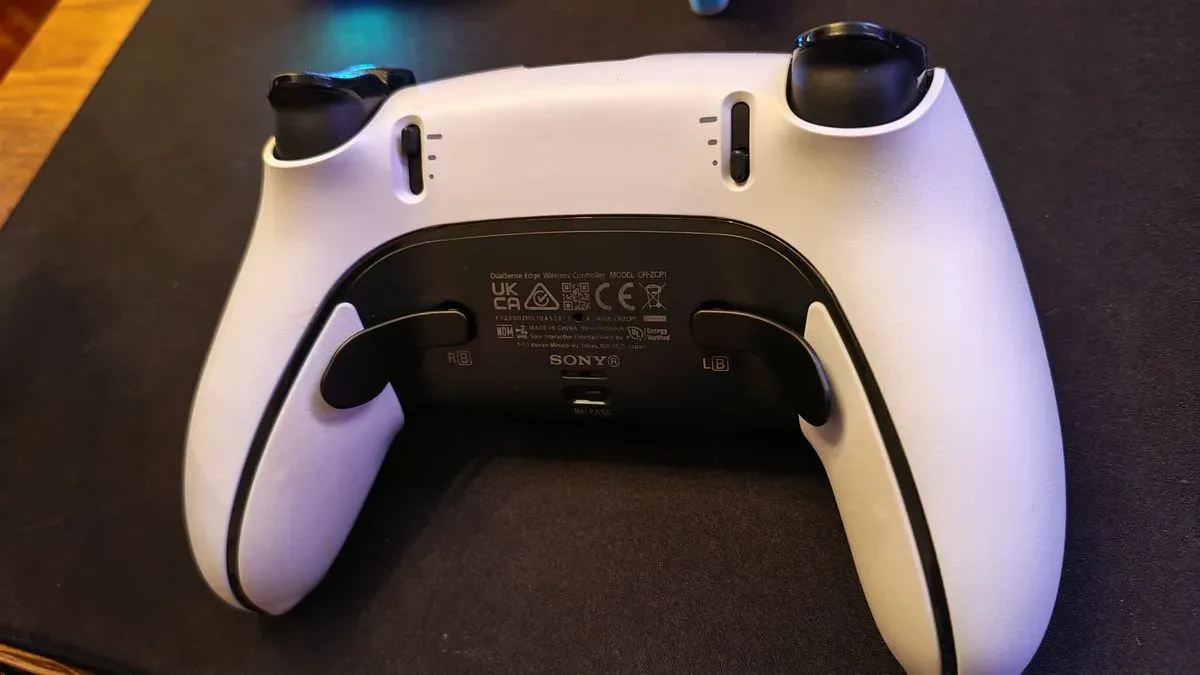
- Two magnetic rear buttons: The supplied paddles come in multiple shapes and can provide extra inputs without forcing a player to move a thumb off a stick.
- Trigger-stop switches: These change the travel of the triggers, allowing a shorter or longer squeeze according to preference.
- Profile controls: Buttons below the thumbsticks allow access to controller profiles, which can be useful for changing button assignments or settings between games.
- Charging case: A carrying and charging case is included.
The controller also has more rounded lower grip corners than the ordinary DualSense. Comfort is subjective, but the revised shape and rear-input options are the kinds of changes that can be meaningful across long play sessions. Unlike a cosmetic special edition, the Edge’s case for its higher price rests on these tangible modifications.
Related coverage includes DualSense Edge Drops to $169 Ahead of GTA 6's Console Launch.
Technical terms that matter before buying
Adaptive triggers and haptic feedback
The Edge retains the core DualSense features: adaptive triggers and haptic feedback. Adaptive triggers can vary the resistance felt when pressing the L2 and R2 triggers. Haptic feedback is the controller’s more detailed vibration system, designed to communicate effects through touch rather than simple rumble alone.
These are important distinctions in the broader controller market because not every third-party PS5-oriented pad supports them. The Edge is a first-party PlayStation controller, so it remains within the DualSense ecosystem while adding its higher-end controls. Whether a particular game makes extensive use of those functions is a separate question; the controller can support the features, but it cannot make every game use them in the same way.
Trigger stops
A trigger stop is a physical adjustment that limits how far a trigger can travel. A shorter pull can make the input feel quicker for actions that do not require a full analog range. A longer pull preserves more travel where gradual control is preferable.
This is primarily a preference feature. It is not an automatic performance upgrade, and its usefulness depends on the game and a player’s habits. The value is in having the option to tune the feel rather than being locked into one trigger response.
Back paddles
The Edge includes two rear buttons that attach magnetically. Their practical appeal is straightforward: an action can be assigned to the back of the controller, potentially allowing a player to keep both thumbs on the sticks while activating another command. In a game with driving, aiming and frequent on-foot actions, some players may appreciate fewer awkward hand movements. Others may never incorporate rear inputs into their muscle memory.
That is a recurring theme with premium controllers. Additional inputs are valuable only when a player uses them consistently. If the paddles, profiles and trigger settings will be left untouched, the standard DualSense may be the more sensible purchase—especially if it is discounted too.
The significant caveats: battery life and stick drift
The reported deal does not address two of the Edge’s less attractive traits. It does not offer improved battery life over the regular DualSense, so buyers should not expect this more expensive model to solve the charging-frequency concern associated with the standard controller.
It also uses potentiometer thumbstick modules. A potentiometer is a component that detects stick movement through physical contact. Over sustained use, wear can contribute to inaccurate inputs, commonly known as stick drift: the game registers motion even when the player is not moving the stick.
Replaceable stick modules are helpful because they offer a route to replace the affected portion of the controller rather than the full unit. But repairability is not the same thing as immunity. The modular design reduces the pain of a potential failure; it does not eliminate the underlying possibility of drift.
This is the clearest reason to avoid treating the sale price as an uncomplicated bargain. A buyer paying $169 is purchasing a configurable, first-party PS5 controller, not a controller with categorically better endurance or drift-proof stick technology.
Does the GTA 6 connection change the recommendation?
Not by itself. A game release can be a useful deadline for someone already planning to upgrade their PS5 setup, but it should not manufacture a need for a premium gamepad. The standard DualSense is still the baseline controller experience, and the Edge’s price premium is best justified by comfort preferences, rear-button use, profile customization, trigger adjustment and the appeal of replaceable stick modules.
For a player who already knows they prefer a more customizable controller, the reported $169 price is close enough to the Edge’s observed low to be worth serious consideration. For someone buying solely because a big game is arriving, it is worth pausing over the basics: Will the paddles actually be used? Does the existing controller feel uncomfortable? Is frequent charging already a frustration? Is the potential value of replaceable stick modules meaningful?
Those questions should matter more than the release-week association. Premium accessories are easiest to regret when bought for a single launch rather than for the habits they improve across an entire library.
A wider PlayStation and PC consideration
The report also frames the console launch as distinct from PC availability. Players who primarily play on PC may want to keep platform timing in mind before buying hardware specifically for one release. More broadly, PC game releases and platform support continue to be a live part of the industry conversation, as seen in recent PC game updates.
For PS5 owners, however, the decision is more concrete. The DualSense Edge at $169 remains expensive, yet the discount is unusually close to its reported all-time low. It is a compelling deal for players who will genuinely use its customization, not a blanket recommendation for every person preparing to play the next major release.
Shop the products
Check current price, model and availability at the retailer.