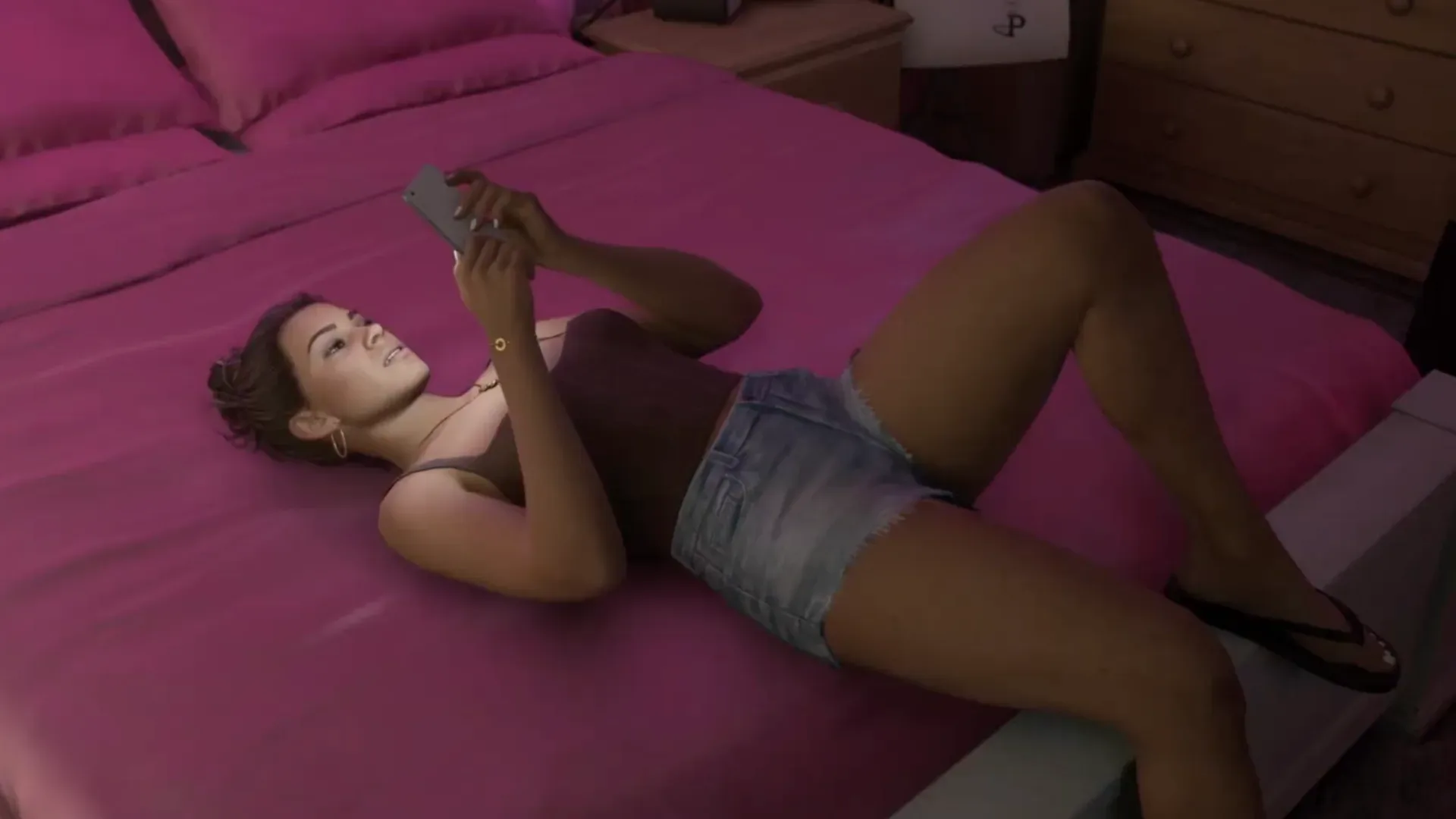

Grand Theft Auto 6 may permit players to encounter adult material inside its fictional world, but that does not necessarily mean the same material is safe to send through PlayStation Network. A player using the X account @derrickgott007 says they received a 30-day suspension from PSN social features after sharing an image of nudity captured with GTA 6’s in-game camera.
The player says the image came from a nudist resort discovered in the game and was sent to another person over PSN. A notice attributed to PlayStation Safety reportedly classified the issue under rules concerning pornographic or obscene material. The incident has not established every detail of the moderation decision independently, but the reported notice and the player’s description raise an important distinction for anyone using console sharing tools: a game’s permitted content and a network’s permitted user-shared content can be governed by separate rules.
What the reported PSN restriction means
The reported penalty was a temporary suspension from social features for 30 days, rather than an indication that the player had lost access to every game on their account. That wording can sound narrower than it is in practice. Social functions commonly cover the ways players communicate and interact through the network, and the player says the restriction also prevented them from playing Call of Duty online during the suspension.
That practical consequence matters. For a player whose regular routine includes multiplayer games, a social-feature restriction can affect far more than messages or image sharing. It may interrupt the ability to join friends, take part in online matches, or use other network-dependent elements that sit under the platform’s social umbrella.
The reported case is therefore not just a story about an awkward screenshot. It is about the boundary between a single-player or game-world experience and the moment content is distributed through a platform service. Capturing an image turns a scene encountered in a game into user-shared material. Sending it via PSN makes the platform’s conduct rules relevant alongside the game’s own design and age classification.
Why the distinction feels confusing
There is an understandable reason players might find this confusing. GTA 6 is available to play on PS5, and its game world can include mature subject matter. The user in this case says they used a camera feature provided within the game rather than importing an unrelated image. From a player’s perspective, it can seem intuitive that material visible during ordinary gameplay should be shareable when it has been captured through an in-game tool.
Platform rules can treat the two situations differently, however. The game itself is a product accessed under its own rating, terms, and content framework. PSN messaging and other sharing surfaces are spaces where users distribute material to other users. Moderation systems and codes of conduct may impose limits on what can be sent or stored there even if similar content appears within a game sold through the same ecosystem.
In the reported notice, the relevant conduct language prohibits users from sharing, requesting, accessing, distributing, or storing material deemed obscene, pornographic, or illegal. The wording described is broad. It does not appear, from the information available here, to create an explicit exception for a screenshot or photograph that originated inside a game.
Related coverage includes GTA 6 PSN Social Ban Raises Questions Over Sharing In-Game Nudity.
That does not make the distinction feel elegant. It can create the appearance of a contradiction: mature content may exist within a commercially available game, while a player who redistributes a capture of that content can face an account action. But it does illustrate a familiar moderation principle. Context and delivery channel can matter as much as origin. A scene inside a game is one kind of content experience; an image intentionally delivered to another account is another.
Technical terms: camera mode, screenshots, and social features
Several everyday gaming terms are doing a lot of work in this situation:
- In-game camera feature: A tool inside a game that lets the player frame and capture an image of the virtual environment. It is distinct from the console’s system-level screenshot button, though either can produce visual material that may then be shared.
- Screenshot or capture: A saved image of what appears on screen. A capture can document gameplay, a visual bug, a scenic view, or material that a platform may classify as sensitive or prohibited for sharing.
- PSN social features: Network functions connected to communication or interactions with other players. The player’s report indicates that losing these functions may affect online multiplayer access, not solely direct messages.
- Code of conduct: The behavior and content rules linked to a platform account. These rules can apply to activity using the service even where the underlying game permits the depicted material.
- Terms of service and EULA: Terms of service set conditions for using an online service. An end-user license agreement, often shortened to EULA, sets conditions around use of licensed software. Both are agreements people frequently accept quickly, although the consequences can reach well beyond an initial setup screen.
The technical point is simple: neither a built-in photo mode nor a console capture button is an all-purpose permission slip to transmit every image through every service. Capture is one action; distribution is another. A user should consider the rules of the destination they intend to use, whether that is a console network, a messaging service, or a public social platform.
What PS5 and GTA 6 players can take from it
The safest practical approach is to separate what is fine to view in a mature-rated game from what is prudent to share through account-linked services. If a GTA 6 scene includes explicit nudity or other potentially obscene material, do not assume that an image of it is acceptable for PSN messages or other social functions.
Players can reduce the risk of an avoidable moderation issue with a few common-sense habits:
- Pause before sending a capture. If an image contains nudity, sexualized content, or anything that could reasonably be viewed as obscene, treat it as unsuitable for platform messaging.
- Remember that intent may not remove the risk. A player may mean an image as a joke, a curiosity, or evidence of an unusual location. The reported case suggests that the content category itself can be enough to create trouble.
- Use the game’s camera carefully. Photo tools are excellent for cars, scenery, missions, character moments, and GTA 6’s dense parody-filled setting. They can also preserve a moment that should stay on the player’s own screen rather than enter a networked sharing channel.
- Review the platform rules tied to the account. The relevant question is not only whether a game lets you see something. It is also whether the social service allows you to send, distribute, or store a capture of it.
- Consider the multiplayer impact. A restriction described as social can still matter enormously if online play is part of the affected account’s normal use.
This does not mean players need to avoid all GTA 6 photography. There is plenty in Vice City and its surrounding world to capture without venturing into clearly sensitive material, including the game’s many entertainment references. For more on that side of the world design, see GTA 6’s movie and TV nods.
The larger account-rights issue
The controversy also points to a broader reality of modern gaming: players often treat a console, a digital game library, and an online account as one seamless purchase. They are not always seamless in the rules that govern them. A person can buy or access a game, play its mature content as intended, and still be subject to distinct service restrictions when using network-connected features.
That arrangement is easy to overlook because terms of service and EULAs are routinely presented during setup or purchase flows. They can be lengthy, technical, and difficult to absorb when someone simply wants to start a game. Yet they establish what a platform can moderate and what functionality may be limited following an alleged breach.
The reported GTA 6 situation makes those agreements feel less abstract. The account consequence described was not confined to the image itself; it allegedly extended into a separate online game. Whether players consider that outcome proportionate is a separate debate from the central caution: platform conduct rules can apply to player-distributed captures, including captures of content that exists inside a game.
For now, the clearest lesson is a narrow one. GTA 6’s mature scenes may be part of the game world, but sharing a picture of those scenes through PSN can carry a different set of risks. When the possible downside is a month without key social or multiplayer functions, the low-risk choice is to leave explicit captures out of PSN messages altogether.