Warning: this article discusses story and encounter spoilers for Grand Theft Auto 6.
Grand Theft Auto 6 is reportedly using familiar film and television language as part of its worldbuilding: not merely dropping an object that resembles a famous prop, but staging situations, camera compositions and mission beats that invite players to recognize the joke. The references identified so far range from action and crime cinema to horror, superhero films and prestige serial-killer television.
That approach is a natural fit for a series built around parody, but the reported examples suggest a broader tactic than a simple celebrity wink. Jason and Lucia’s story can shift from a diner robbery modeled on a crime-film moment to an air-duct action sequence, a shark-movie-style survival aftermath or a training montage. In other words, the allusions appear embedded in gameplay and mission presentation as well as in the open world.
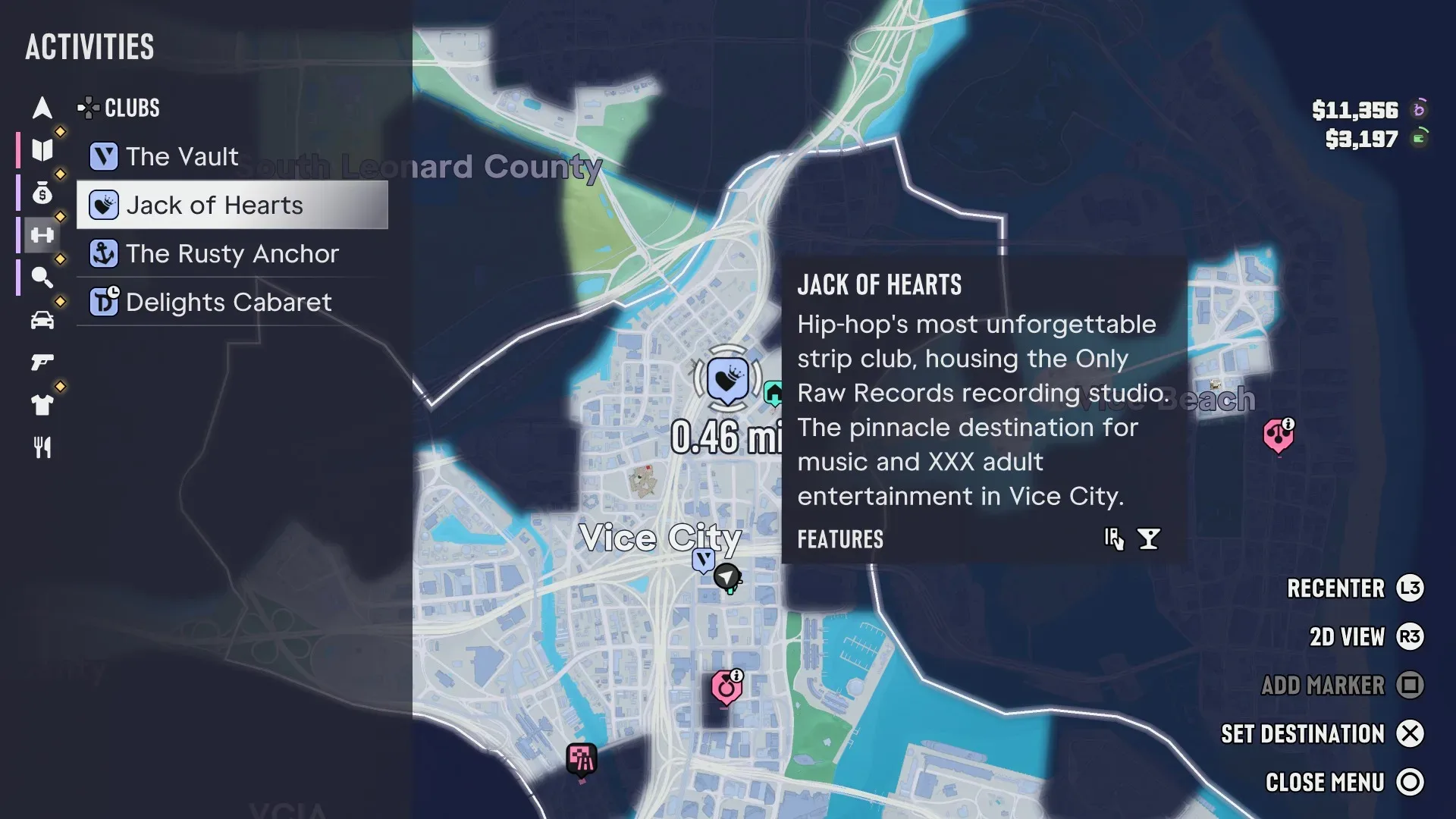
The game released November 19, and its main story has been reported to run for roughly 80 hours. That scale leaves considerable room for players to encounter details in different orders, particularly where references are attached to optional activities, particular locations or choices. A separate GTA 6 strip clubs guide also illustrates the larger point: Vice City is designed with many spaces and diversions beyond the critical path, making close observation part of the experience.
Crime movies supply the clearest shared vocabulary
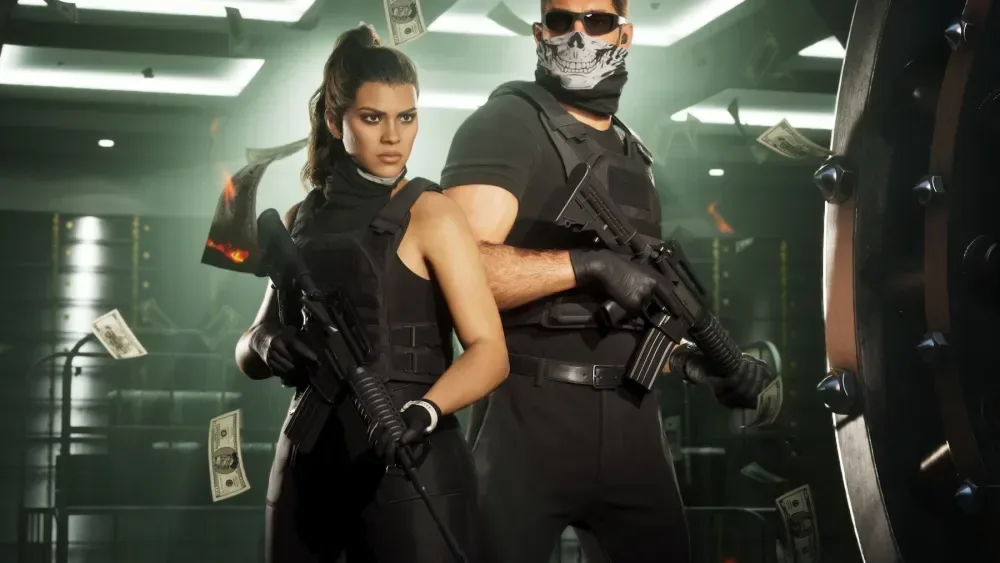
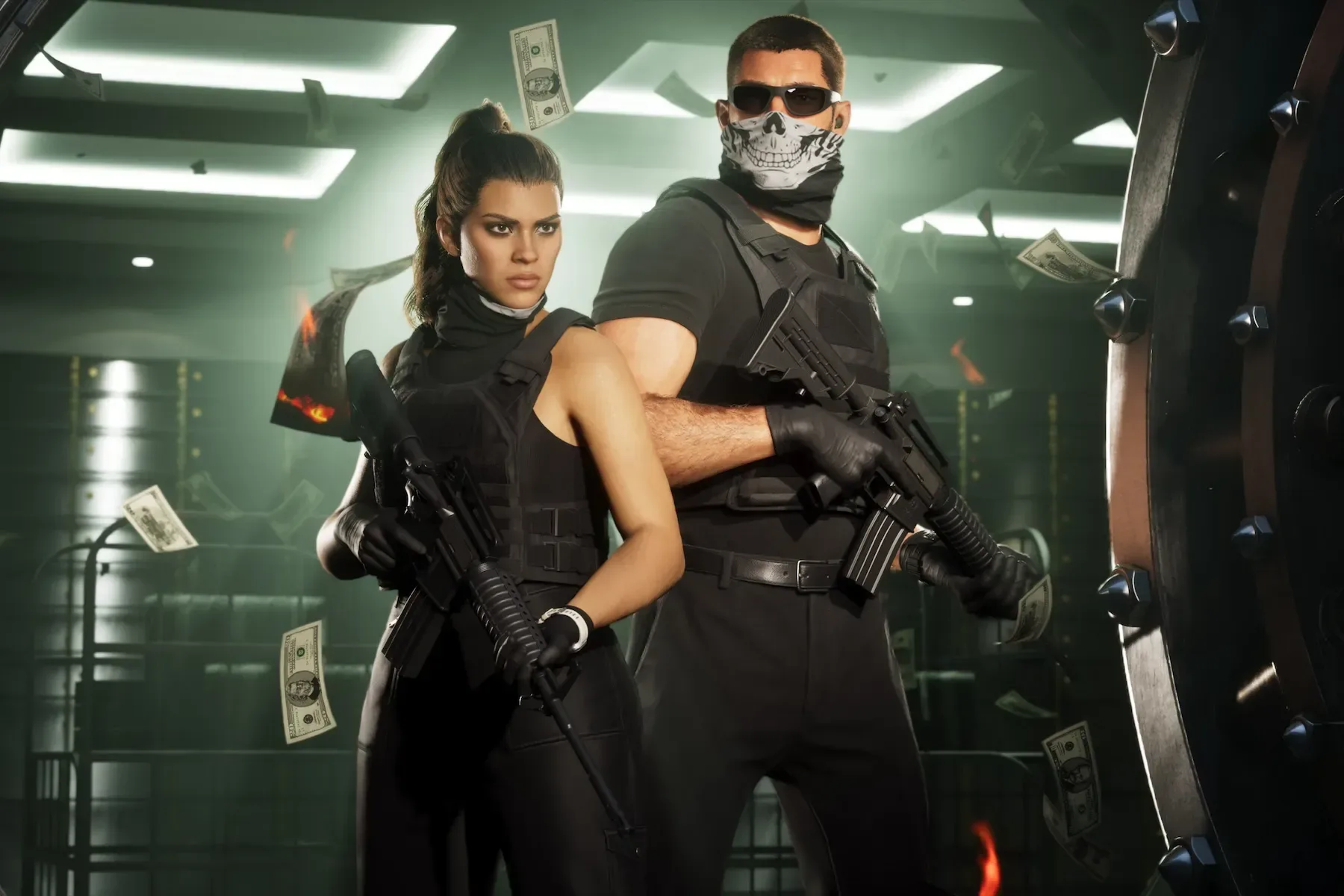
Pulp Fiction seems to be one of the most direct touchstones. A low-angle shot of Jason and Lucia retrieving weapons from their vehicle recalls the visual setup used for Vincent Vega and Jules Winnfield. The point is not just that characters have guns near a car—hardly an unusual thing in GTA—but that the camera angle itself carries recognition. This is an example of a visual homage: a reference conveyed by framing, composition or staging rather than dialogue alone.
Another reported scene has Jason and Lucia robbing a diner in a manner reminiscent of Honey Bunny and Pumpkin. Pairing that situation with the weapon-grab composition makes the reference feel less like a lone Easter egg and more like a recurring cinematic vocabulary for the protagonists. An Easter egg is generally a hidden or optional nod for attentive players; an homage can be much more conspicuous and can sit directly inside a major sequence. These Pulp Fiction parallels sound closer to homage because the game reportedly places them in story scenes.
Scarface is represented more brutally. Entering a particular crime-scene location can trigger what has been described as a near-recreation of the chainsaw sequence from the 1983 film. The reported setup matters. Players are not simply told about the reference through a poster or a line of dialogue; they find a location that restages an infamous screen moment. GTA’s open-world structure gives that kind of nod an investigative flavor: an individual who reaches the scene may recognize it immediately, while another may pass through without seeing its context.
There is also a vehicle nod to the Fast & Furious series. A car inspired by Brian O’Conner’s Mitsubishi Eclipse can reportedly be found in a garage. Car culture is central to GTA, so a recognizable automotive tribute is especially appropriate. It lets the reference reside in the activity players already perform—finding, driving and admiring vehicles—rather than interrupting the game with an explanation.
Set pieces borrow the rhythm of blockbuster cinema
The reported Jaws sequence is perhaps the most elaborate film callback in the current list. After Jason rescues his friend Kenton, who owns a boat charter and dive shop, the two end up dog-paddling toward shore while supported by debris. The situation and accompanying dialogue reportedly parallel the closing stretch of Jaws, in which Brody and Hooper make it back after the shark is killed and their vessel is destroyed.
What makes this an especially useful example is that it reflects how a reference can do several jobs simultaneously. It provides an outcome to a rescue mission, establishes Kenton’s connection to the water, supplies a moment of decompression after danger, and taps into a deeply recognizable movie finale. A reference does not need to pause the plot to be legible. When it is attached to the emotional rhythm of a sequence—panic, survival, exhausted relief—it can reinforce the scene even for players who do not identify its origin.
Die Hard offers a more knowingly comic action template. Lucia is reportedly forced to crawl through an office-building air vent while she and Jason work to save people from terrorists. Her complaint about the predicament echoes John McClane’s famous ventilation-crawl misery. The joke works because the situation is now one of the most familiar action-film images: an ordinary or ill-equipped person squeezed through ducts while an escalating hostage crisis unfolds nearby.
In GTA terms, the setup also allows the game to vary its pace. Open-world crime games are often associated with vehicles, gunfights and crowded streets. An air-vent sequence narrows the space and changes the player’s relationship to danger. The reported Die Hard parallel is therefore not just decorative; it signals a shift toward enclosed, cinematic tension.
Optional missions appear to make the references more playful
One optional activity reportedly begins with helping a farmer crop-dust strawberry plants. The pesticide has an unexpected effect: the farmer becomes a raging, Hulk-like figure. Players can then attempt to calm the “big guy,” echoing Black Widow’s approach to Hulk in the Marvel Cinematic Universe.
This is a clear case of genre parody. The activity begins with an everyday rural task, swerves into a comic-book transformation and then plays with superhero-team dynamics. The reference is not reported as a literal Marvel crossover; it is a superhero-shaped scenario using a recognizable dramatic beat. That distinction is important. GTA’s satire has often depended on evocation rather than direct adaptation, allowing it to bend popular imagery into its own exaggerated setting.
Lucia’s bodybuilding mission similarly appears to use cinematic shorthand. Its training montage reportedly brings Rocky and Million Dollar Baby to mind. A montage is a sequence that compresses time through a chain of short images, frequently used to show practice, physical change or mounting preparation without depicting every session in full. It is efficient storytelling, but it also brings a lot of cultural baggage: perseverance, pain, repetition and the promise of transformation. Putting Lucia through that format positions physical preparation as an event in itself rather than a background stat increase.
Horror and TV references make side content feel unsettling
The most ominous reported encounter takes cues from Saw. Certain poor decisions can apparently result in the player being kidnapped, waking in an anonymous room with a collar around their neck. A captor appears on a television screen and sets the player a survival challenge on a private deserted island.
That structure mirrors Saw’s basic dramatic machinery: confinement, a remote voice or image issuing rules, and survival framed as a test. Its practical implication is more interesting than the reference by itself. If the encounter can be triggered by player choices, it turns the familiar GTA freedom of action into a possible liability. Choice-driven consequences are not new to games, but the Saw framing makes the consequence feel deliberately punitive and theatrical.
Dexter enters the game through the environment. Players have reportedly found a replica of Dexter Morgan’s apartment, along with additional locations associated with the Miami-set television series. Environmental references reward players who explore without demanding that everyone understand them. They can operate as convincing pieces of a coastal city even before the viewer recognizes their television significance.
That is especially fitting for GTA 6’s setting. A recreated apartment or location can be read two ways at once: as part of the city’s lived-in architecture and as a carefully planted signal to people familiar with Dexter. It is a less disruptive kind of allusion than a full mission recreation, but perhaps a more durable one for explorers who revisit neighborhoods.
What the growing list says about GTA 6’s reference style
The references reported so far are broad in genre but consistent in method. Pulp Fiction and Scarface turn up in crime-focused scenarios. Jaws emerges through a waterborne survival beat. Die Hard provides an architecture-specific action gag. Rocky and Million Dollar Baby inform a training montage. Saw defines the rules and mood of a capture scenario. Dexter becomes part of the city’s geography. Each is placed where its most recognizable elements make sense inside a GTA mission or activity.
That is more purposeful than simply stacking recognizable names. The references use cinematic shorthand: a compact signal that lets a scene communicate tone quickly. Air ducts imply desperate action-movie improvisation; a training montage implies hard-won preparation; a television-bound captor implies a rigged horror game. Players who know the original works gain another layer of humor or tension, while players who do not can still understand the scene on its own terms.
There is room for caution, too. The currently identified material represents only what players have found so far, and several examples are tied to particular choices, garages, locations or optional missions. That means the catalog is inherently unfinished. It is sensible to separate reported discoveries from firm claims that every player will see every reference in a single run.
Still, the early pattern is clear: GTA 6 appears to treat pop culture as part of its mission design toolkit. The result is a Vice City where a vehicle, a camera angle, a familiar room, a training sequence or an ill-advised side job can suddenly turn into a punchline aimed at decades of movies and television.