World of Warcraft: Forever is taking aim at one of the most deflating moments in an MMO group: everyone is completing a drop-collection quest except the person who has apparently offended the loot gods. The game is not abandoning the old-school structure of repeatedly defeating enemies for quest items. Instead, Blizzard says it has added a behind-the-scenes system intended to make those drops distribute more evenly among players who are grouped.
Senior game designer Josh Greenfield described the adjustment as part of the team’s “Pro-social” approach. The key distinction is important: quest drops are not becoming guaranteed, nor is the familiar grind being removed. The new functionality is designed to make item acquisition more predictably round-robin for a party, particularly when one player has gone a long stretch without receiving the items needed for their own quest progress.
What is changing—and what is staying the same
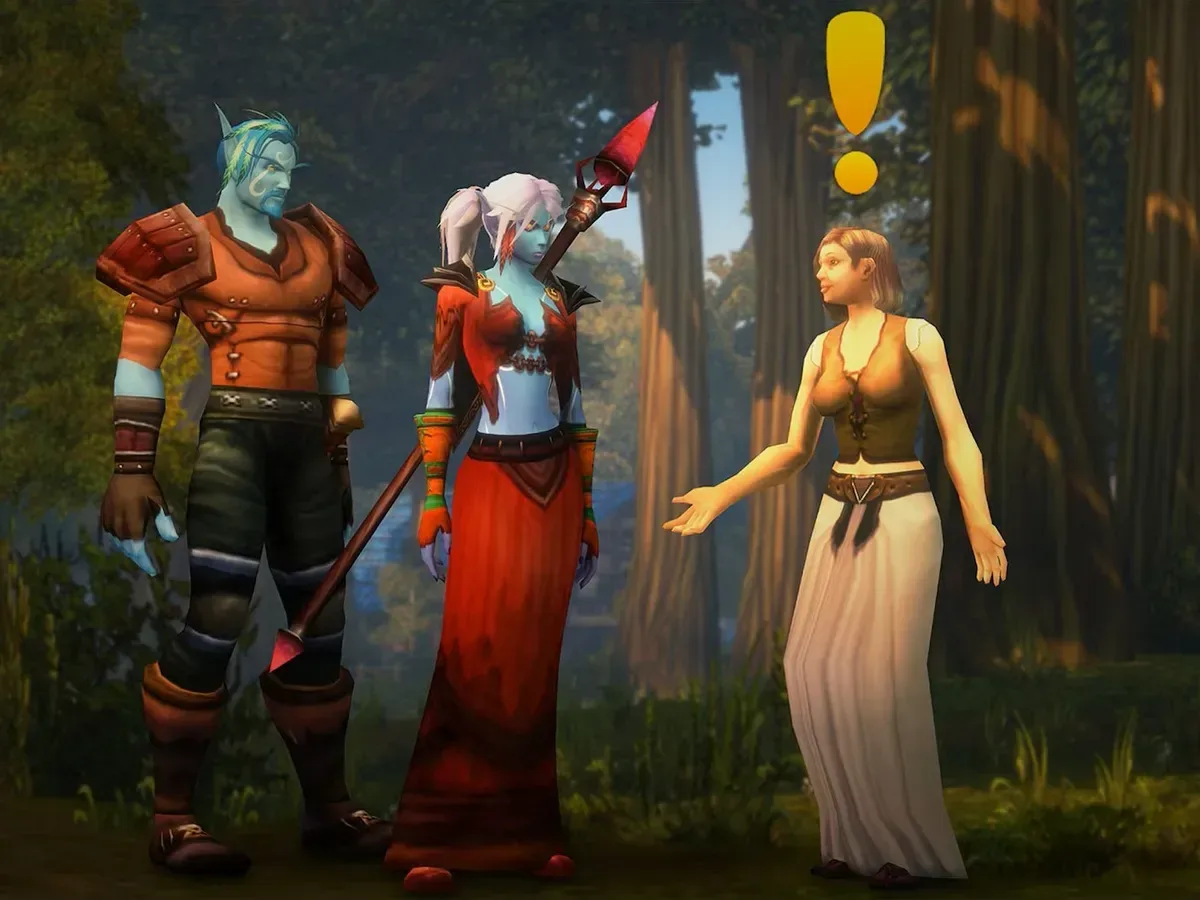
Quest drop objectives ask players to collect a specified quantity of an item from defeated creatures. In a fully random system, two people on the same objective can have sharply different results over the same number of kills. One player may be close to finishing while another remains stuck near the starting total. That result may be statistically possible, but it can make grouping feel counterproductive for anyone who draws the short straw.
Forever’s new system appears intended to soften that extreme divergence. Greenfield said the team has implemented functionality to “more predictably round-robin” quest items among grouped players. In practical terms, that suggests the game is tracking the group’s recent outcomes and using that information to give players who are lagging behind a better chance to catch up.
It is not a literal equal-share system, based on the details shared so far. Greenfield clarified that randomness remains. The closest description is bad-luck protection: a mechanic that responds when a player has not seen a needed drop for a while while other party members continue making progress. Rather than eliminating chance, bad-luck protection limits how punishing an extended cold streak can become.
“A bit of grind on these drop quests are part of the vanilla magic we are maintaining, but we can do small things to help it feel more natural and encourage grouping while still maintaining that original design, and that's our goal.”
That framing places the adjustment firmly in the quality-of-life column rather than the overhaul column. Forever has been presented as a modernized take on the early World of Warcraft experience, with refreshed visuals and selected conveniences alongside its classic-minded foundations. The developers’ stated objective here is not to make every objective quick. It is to make cooperative play less likely to create a frustratingly uneven workload.
Why uneven quest drops can discourage grouping
MMOs are at their best when joining other players feels beneficial, or at least does not create a new problem. Killing enemies as a group is typically faster and safer than doing it alone. Yet a random individual quest-drop model can introduce a frustrating social wrinkle: players may worry that joining a party will leave them watching teammates finish first, then leave, while they stay behind to complete their own remaining items.
Greenfield used a deliberately ridiculous example involving furbolg body parts to illustrate the gap the system is designed to address: one person with eight of ten required items and another with only one. The specific creatures are less relevant than the underlying scenario. When a party is fighting the same enemies for the same goal, large differences in individual progress can turn a shared task into a race against bad luck.
A more consistent distribution should make the advantages of grouping easier to trust. Players can still expect to spend time on the objective, but they should be less concerned that a run of poor drops will separate their progress dramatically from everyone else’s. That matters because the party is still clearing enemies more quickly, which Greenfield specifically highlighted.
There is also a social benefit beyond pure efficiency. When everyone’s counters are rising at a broadly similar pace, there is less pressure on a player who finishes early to decide whether to wait around. Groups can remain focused on the same shared endpoint instead of splitting into people who are done and people who are left with a disproportionately long cleanup job.
Round-robin and bad-luck protection, explained
The terminology deserves a little care because neither term necessarily means every player receives one item in a strict, visible rotation.
- Round-robin: In this context, it describes a distribution tendency that moves quest-drop opportunities around the group more predictably than pure independent randomness. It does not necessarily mean the game assigns every single item in a fixed sequence.
- Bad-luck protection: A safeguard that improves a player’s prospects after an unusually long dry spell. It is designed to curb streaks in which a player continues failing to get drops while peers pull well ahead.
- Under-the-hood functionality: Logic operating invisibly in the game’s systems rather than a prominent player-controlled setting. Players may notice the outcomes without being shown the calculation behind them.
These approaches can preserve uncertainty while making the worst outcomes less common. A player may still receive several items in short order; another may still have to keep fighting after a teammate completes the objective. What should change, if the system performs as described, is the frequency and severity of the most demoralizing gaps.
That is a meaningful design compromise for a project trying to preserve an older MMO rhythm. Completely deterministic quest drops would remove much of the uncertainty tied to collecting the objective. But leaving every player entirely at the mercy of independent rolls can create an experience where cooperative play feels less fair than solo play. The stated solution is to retain the time commitment and chance while making the group outcome more balanced.
The system is still being tuned in beta
Players should not treat the current behavior as final. Greenfield said the team is still “dialing in” the system, and Forever remains in beta. That means the precise threshold for assistance, the strength of the catch-up effect, and the feel of the resulting drop cadence could change as feedback arrives.
For anyone taking part in the beta, the useful practical takeaway is simple: do not avoid a group solely because the quest requires enemy drops. The system is expressly meant to make those parties a more appealing proposition. It will still take time to gather the required items, but groups should clear enemies faster and, ideally, avoid the lopsided results that turn a collective grind into an individual punishment.
Players should also keep expectations calibrated. “More consistent” does not mean identical progress after every pull. Greenfield has emphasized that randomness survives in the system. A party may still see one player temporarily ahead, and the beta will likely produce edge cases as the developers continue to refine the tuning.
A narrow change with a broader design message
The quest-drop adjustment is small in scope, but it says a great deal about the balancing act Forever is attempting. Classic-inspired MMOs often ask players to accept inconvenience as part of the journey: travel takes time, repeated fights are expected, and collecting drops can involve a grind. The challenge is deciding which frustrations create atmosphere and which ones merely make players less willing to play together.
Forever’s answer, at least for this system, is that the grind itself remains valuable. The game is not promising to shortcut a collection quest or guarantee instant completion for a full party. Instead, it is addressing the distribution of that grind. Everyone should still have to put in the work, but no one should be stranded far behind because the dice kept favoring their companions.
That is a modest intervention, and its success will come down to tuning. Too weak, and grouped players may still perceive the same feast-or-famine problem. Too strong, and the drop hunt could become so predictable that it loses the texture the team is trying to retain. Greenfield’s comments suggest the intended middle ground is a system players feel mostly when they would otherwise be having exceptionally bad luck.
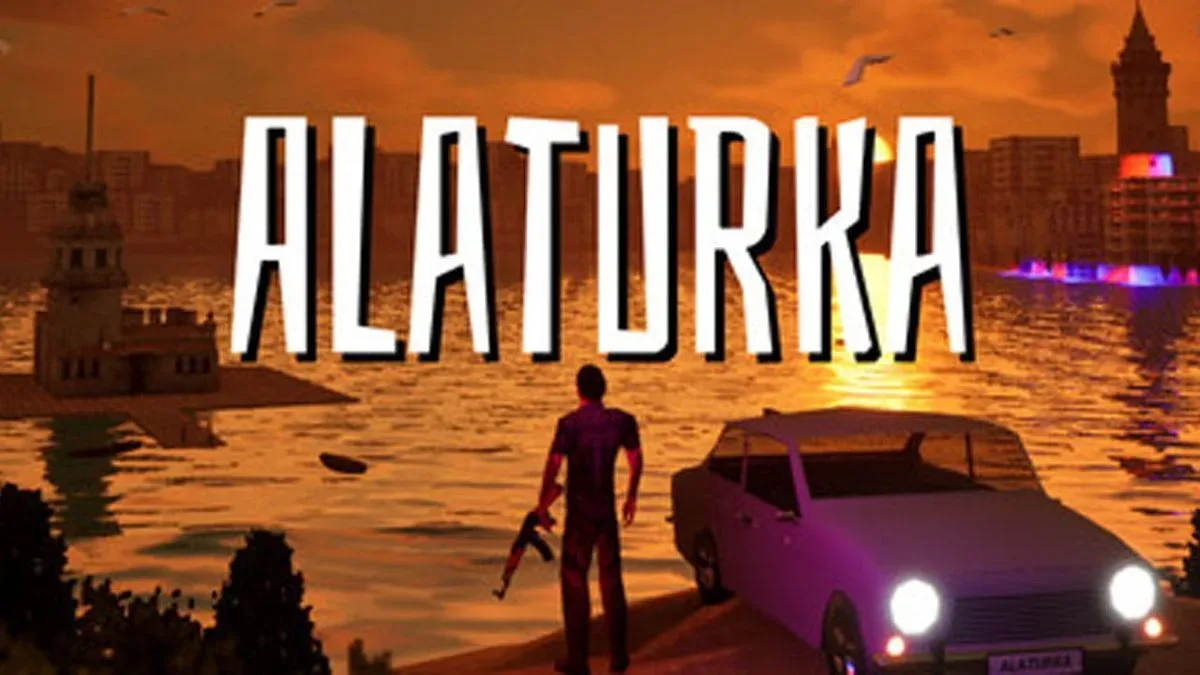
The result could be one of the more sensible forms of modernization for a classic-minded MMO: a change that does not erase the old objective, but makes the social answer to that objective feel like the obvious one. For a separate PC gaming story built around a deliberately retro visual language, ALATURKA’s PS2-era-inspired presentation shows another way games are revisiting older design sensibilities.
For Forever, the immediate message is straightforward. Group up for drop quests if you want to, expect the familiar time investment, and know that the game is being built to reduce the chance that one party member spends the whole session staring at an almost-empty quest counter. The beta will determine how naturally that invisible helping hand fits into the game’s version of the vanilla experience.
More detail on the group-drop focus is also available in this directly related report on Forever’s approach to fairer quest drops.