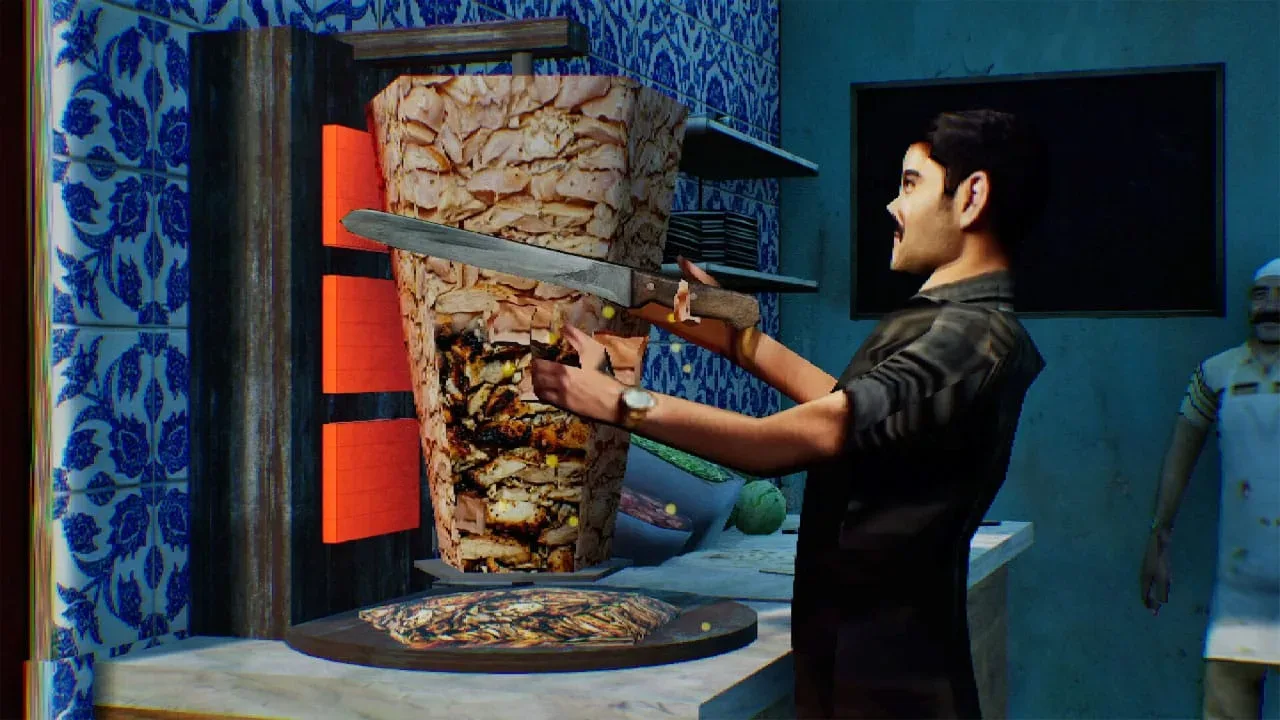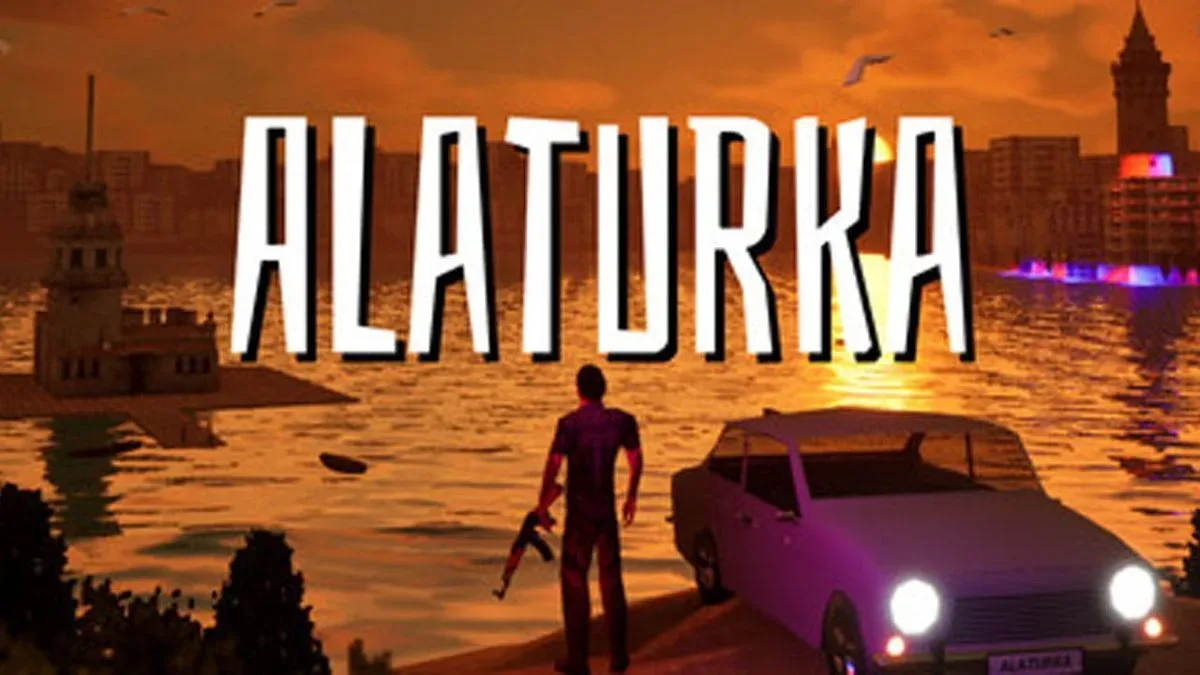
ALATURKA is an upcoming PC game from solo developer bufuakgames that pairs an open-world, driving-heavy structure with a deliberately low-poly, PlayStation 2-era visual identity. Its premise is wonderfully workaday: players arrive in Bosforus as an apprentice to their uncle, need to earn money, and take on döner kebab deliveries in a city where traffic is a problem and the seagulls are even louder.
The project has reportedly occupied the developer’s spare time for two years and has been created without a budget. It is planned for Steam, where it can be wishlisted now, though a release date has not been provided.
An open-world game built around the delivery shift
The broad comparison attached to ALATURKA is an Istanbul-set, retro-styled take on the kind of open-world driving game many players associate with the Grand Theft Auto series. That shorthand communicates the apparent focus on moving through a city and taking part in activities, but it should not be mistaken for an official connection to Rockstar Games or Grand Theft Auto.
What distinguishes ALATURKA is the specific framing around work. Rather than presenting its protagonist as a larger-than-life criminal or action hero, the game’s Steam description introduces someone with empty pockets trying to save money while apprenticing in a kebab business. The routine itself is described as “simple and miserable,” which suggests the game is willing to make the frustrations of traffic, errands and city noise part of its comedy.
“You came to Bosforus as a döner kebab apprentice to your uncle. Pockets empty. Goal: save money. The city sits on two continents. Traffic does not move. Seagulls do not shut up. Your job is simple and miserable.”
That setup matters because it gives the driving a practical reason to exist. Deliveries are not merely a minigame pasted onto an open map; they appear central to the character’s attempt to make money. Exactly how progression, missions, vehicles, weapons or other activities will work has not been detailed, so prospective players should treat the available material as a tone-and-premise introduction rather than a full feature list.
The PS2 look is an intentional design choice
ALATURKA is described as using PS2-esque graphics. In this context, that means a contemporary PC game styled to evoke the visual language associated with that console generation, rather than a game confirmed to be running on PlayStation 2 hardware or releasing for the original system.
“PS2-style” is a loose term, but it generally points audiences toward simplified 3D models, assertive shapes, less photorealistic materials and a presentation that values atmosphere and readability over modern visual density. For ALATURKA, the choice appears intertwined with its 1970s-inspired setting. A deliberately retro game aesthetic can create distance from the present-day city and help turn a potentially familiar urban environment into a stylized place with its own identity.
Related coverage includes ALATURKA Brings 1970s-Inspired Istanbul Open-World Driving to Steam.
The developer has also pushed back on a suggestion that the game should be modernized with Claude. That response is notable less as a debate about any one tool than as a clear statement of intent: the older-looking presentation is not an accidental limitation to be smoothed away. It is part of what ALATURKA is trying to be.
For players, that distinction is useful. A retro visual approach does not automatically mean retro controls, restricted scope or low system requirements. Conversely, modern hardware requirements do not mean the art direction has abandoned its older-game inspiration. ALATURKA’s published specifications make that gap especially clear.
Recommended PC requirements
The current recommended requirements listed for ALATURKA are:
- Operating system: Windows 10 or Windows 11, 64-bit
- Processor: Intel Core i5-8400 or AMD Ryzen 5 2600
- Memory: 16 GB RAM
- Graphics: NVIDIA GeForce GTX 1050 Ti (6 GB) or AMD Radeon RX 480
- DirectX: Version 11
- Storage: 4 GB available space
These are recommended specifications, which usually indicate the configuration a developer expects to provide a preferable experience. They are not the same thing as minimum specifications, and no minimum requirements were provided in the available details. In practical terms, someone considering the game should not assume that a PC below these recommendations cannot run it, nor assume a particular resolution, frame rate or graphics preset from this list alone.
The 4 GB storage figure is modest, but storage capacity is only one part of the equation. The listing’s 16 GB RAM recommendation and dedicated graphics-card suggestions show that a game can use a throwback aesthetic while still targeting a conventional modern Windows PC setup.
A solo project made in public
One of the more unusual aspects of ALATURKA’s development is how much of it has been visible. Bufuakgames has made the game across more than 50 livestreams, all in Turkish. For Turkish-speaking viewers, that creates an opportunity to follow the project’s construction rather than only seeing polished trailers or screenshots after decisions have already been made.
Public development does not by itself reveal the final quality or scope of a game, but it gives this project a different kind of context. A solo developer working without a budget must make choices about where time goes: driving, city layout, missions, visual character, performance and all the smaller connective pieces that make an open world feel coherent. The available description indicates that bufuakgames has committed significant time to realizing a very particular mixture of city driving, delivery work and period-inspired comedy.
It also helps explain why the game’s personality is so important. A large studio can compete through sheer scale; a smaller project is more likely to stand apart by establishing a premise people can immediately remember. “Döner kebab apprentice trying to survive traffic and seagulls” is far more specific than simply calling something an open-world driving game.
What remains unknown
There is enthusiasm around ALATURKA’s setting and the implication that weapons may be present, but details around those elements have not been established. The available information does not confirm the story structure, the full range of vehicles, whether delivery jobs form the entire gameplay loop, the size of the map, controller support, language options or the exact role of combat.
There is also no release window. Wishlisting the game on Steam is currently the practical way to track it until bufuakgames shares a launch date or more concrete gameplay information.
For fans of driving-focused independent games, it is an interesting addition to a PC landscape that also includes projects such as Keep Driving. ALATURKA’s hook, however, is distinctly its own: a 1970s-inspired Istanbul, an intentionally older-looking 3D world, and the promise that making a living one kebab delivery at a time can be a suitably chaotic open-road adventure.