World of Warcraft: Forever is beginning with a notably PC-shaped question hanging over it: why build out gamepad support so deliberately if the long-term plan is only a keyboard-and-mouse MMO? Blizzard is not confirming a console edition today. It is, however, talking about a future in which players can access the game more freely across devices—and it has identified controller functionality as the first practical step toward that goal.
Holly Longdale, the series’ executive producer and vice president, described the ambition in broad terms: “Play it wherever you want, and at some point on whatever you want.” She also made clear that the immediate priority is getting gamepad play working properly in World of Warcraft: Forever. That distinction matters. A well-supported controller is not the same thing as a confirmed Xbox, PlayStation or Nintendo release, but it is foundational work for any game that wants to reach beyond a traditional PC setup.
For now, players should treat this as a meaningful signal of direction rather than a platform announcement. There is no confirmed Xbox version, no declared date, and no stated commitment to PlayStation 5 or Nintendo Switch 2. The wording leaves room for a very broad range of devices, including PC handhelds, rather than promising a conventional console-port rollout.
Gamepad support is more than a new input option
In a gamepad context, an MMO has to translate a large number of actions into a controller with fewer immediately available buttons than a keyboard. The solution is usually not simply mapping a few abilities to face buttons. It involves button modifiers, such as holding a trigger while pressing another button, along with action-wheel or radial-menu systems, context-sensitive controls and layouts that can be adjusted for different character roles.
That is why Longdale’s emphasis on making gamepad control work “really well” is more significant than a checkbox feature. The challenge is usability. Players need to move, target, activate abilities, manage menus and communicate without the game becoming cumbersome. An MMO built around deep character toolkits needs interfaces that make many choices accessible while keeping the moment-to-moment flow understandable.
The potential benefit reaches beyond a living-room console. Strong controller support can make the game more approachable on handheld PCs, on a desktop from the couch, or for players who simply prefer a pad to a keyboard and mouse. Longdale specifically said the work gives players flexibility that extends beyond consoles.
That flexibility is already part of how some players approach the game. Longdale pointed to people getting World of Warcraft: Forever running on handheld hardware including the ROG Ally X, as well as on a modified Nintendo DS. Those examples should not be read as support announcements for either device. They do illustrate the breadth of the “anywhere” idea Blizzard is discussing: the developer is watching how players adapt the MMO to portable and unconventional hardware.
Why Forever is a logical place to start
World of Warcraft: Forever is described as a new entry point for the long-running MMO, which has been around for 22 years. Starting a gamepad effort with a new doorway into the broader experience makes practical sense. A new player-facing entry point can be designed with controller usability in mind instead of asking newcomers to learn an older, PC-first interaction model without that consideration.
Related coverage includes World of Warcraft: Forever's Gamepad Push Points Toward a Wider Platform Future.
Nothing in Blizzard’s comments establishes precisely how the control scheme will work, which parts of the game it will cover, or whether it will be available at launch. What the comments do establish is that gamepad quality is being treated as a priority, not as an afterthought. That is the key development to watch before drawing conclusions about where Forever may ultimately appear.
There is a useful distinction here between device compatibility and native platform availability. A title may run on a handheld PC because it is still a PC game being used on portable hardware. A native console edition is a separate undertaking, involving platform-specific technical work, interface design, certification and service considerations. Blizzard’s present comments gesture toward flexibility but do not say which of those paths, if any, have been formally chosen.
The Xbox connection makes the question unavoidable
The absence of an announced Xbox version is especially conspicuous because Blizzard is owned by Microsoft. Longdale’s comments also referenced Project Helix in the context of platforms becoming more ubiquitous. No details were provided about what that reference means for World of Warcraft: Forever, so it should not be treated as confirmation of a product plan.
Still, the language broadly resembles Xbox’s familiar push to let people play across console, PC and handheld environments without necessarily buying a game separately for each. That model naturally makes an MMO with credible controller support a more interesting prospect. A player who can comfortably use a gamepad on a handheld or PC is closer to the experience expected on a console, even if the actual platform release has not been announced.
The strategic appeal is easy to understand without assuming an outcome. MMOs depend on accessible, sustainable player communities. Broadening the set of devices that can offer a comfortable experience could lower the friction for returning players and make it easier for new players to find a preferred way in. It could also give existing players more options for routine play away from a desk.
But ambition and availability are different things. Microsoft ownership does not, by itself, confirm an Xbox release. Likewise, the possibility of a future Xbox version does not answer whether World of Warcraft: Forever would also come to PlayStation 5 or Nintendo Switch 2. Those remain open questions, and Blizzard has not confirmed even the first console step.
What players can reasonably take from the comments
- Gamepad support is a stated priority. Blizzard sees controller work as the first leg of a wider accessibility and device-flexibility effort.
- Handheld play is part of the conversation. The ROG Ally X and a modified Nintendo DS were cited as examples of players taking the game beyond a standard desktop setup.
- Console versions are plausible, not official. The comments support the idea that Blizzard is preparing for more ways to play, but they do not announce Xbox, PlayStation or Switch editions.
- Platform details are still missing. There are no confirmed target platforms, release dates, cross-progression details or purchasing terms in the available information.
The cautious read, then, is also the most useful one. World of Warcraft: Forever is being positioned around better controller play and greater hardware flexibility. That is substantial groundwork for a wider-platform future. It is not yet a promise that players will soon be raiding from an Xbox or another console.
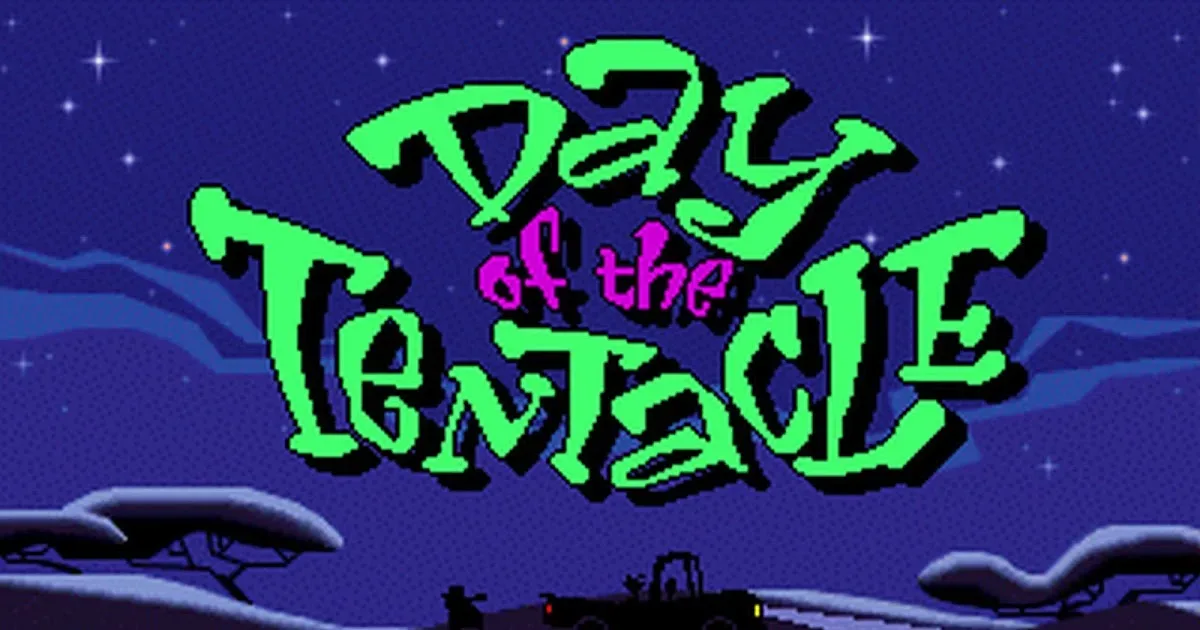
For a reminder that bringing a game to different hardware can involve very specific technical choices, see our coverage of a native Amiga port of Day of the Tentacle. The scale and circumstances are very different, but the central point holds: “running on a device” and delivering a tailored native release are not interchangeable achievements.
Blizzard’s next meaningful update will need to be more concrete than an aspiration. Players will want to know what controller support looks like in practice, which devices are officially supported, and whether the company’s “whatever you want” vision eventually includes dedicated console versions. Until then, the gamepad initiative is best understood as a strong indicator of intent—and not a platform confirmation.