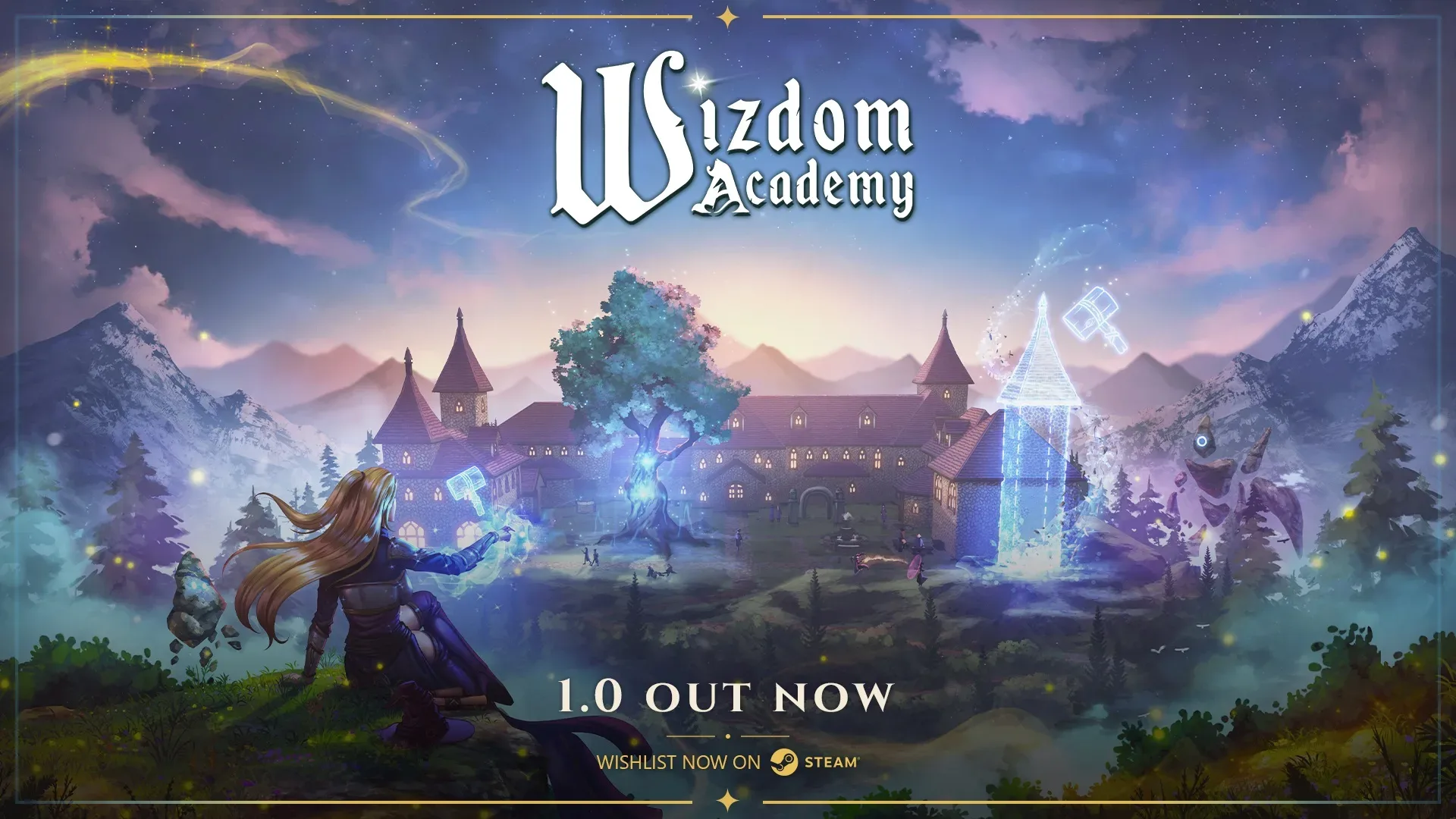
Wizdom Academy has reached version 1.0 on Steam. The magical-school management game from Kipwak Studio and Lake On Fire leaves Early Access after three years of development, including 18 months in Early Access. Its full release puts players in charge of an academy where the jobs range from the expected—building classrooms, hiring staff and training apprentices—to the distinctly alarming, such as managing recurring mana droughts while investigating a wider mystery threatening the world.
The setup makes the player the Headmaster rather than another student with a wand and an attendance problem. The academy must grow floor by floor, students must be recruited and educated, resources must be watched, and mana production has to remain in step with consumption. The game’s central institutional goal is to uncover the next Wizdom, while its day-to-day decisions appear to focus on keeping the school functional long enough to achieve it.
A school builder where mana is a practical problem
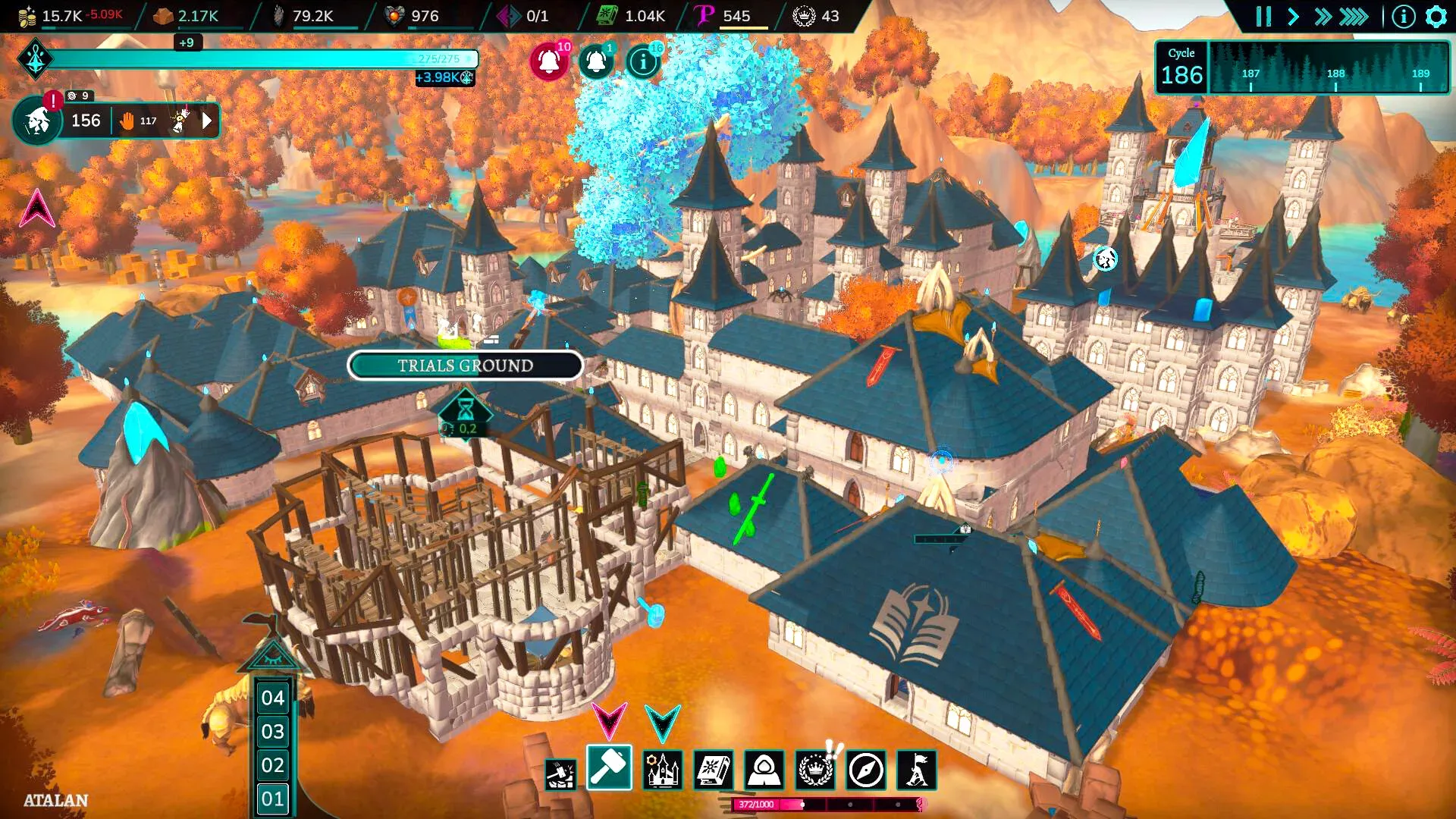
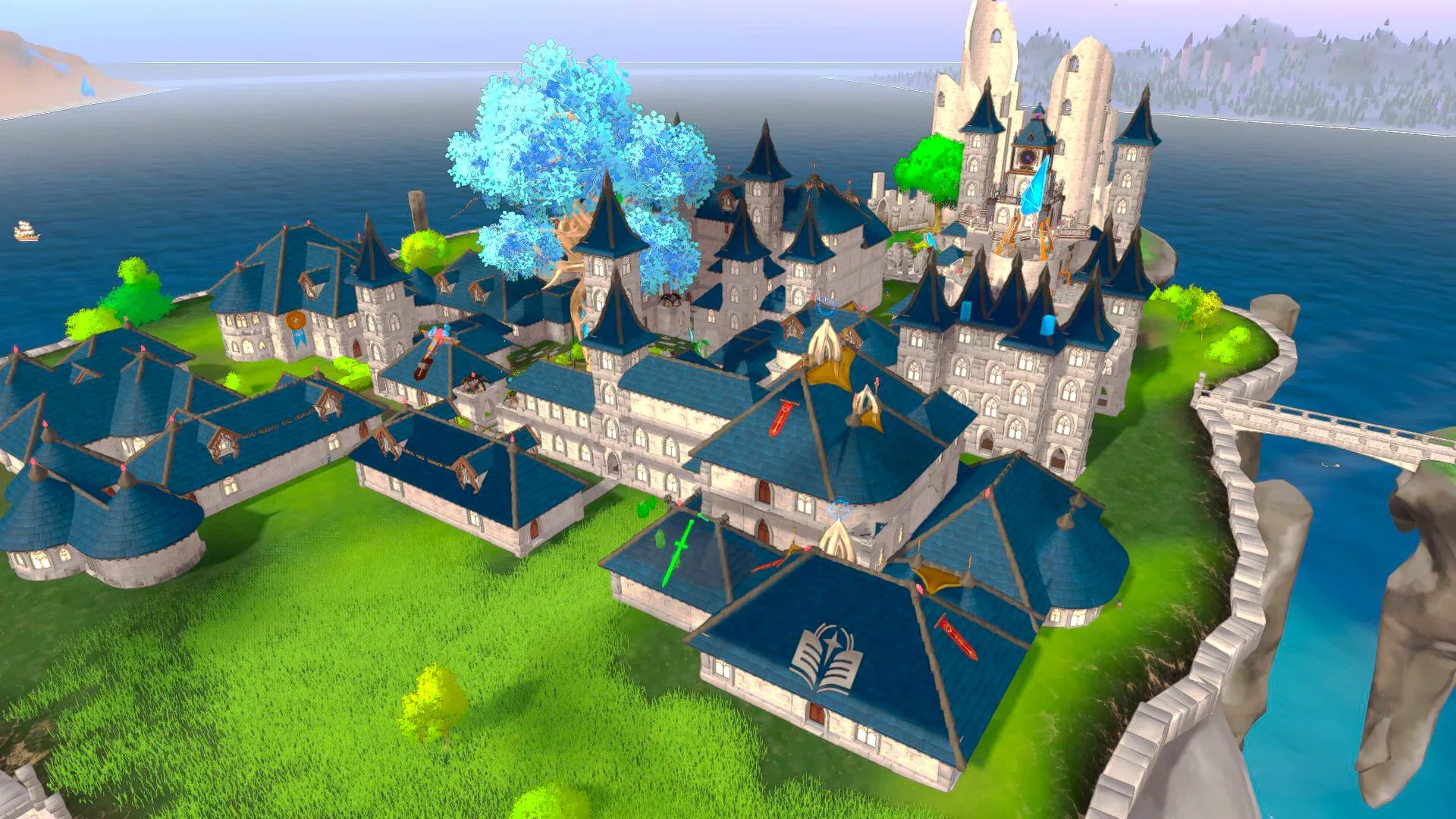
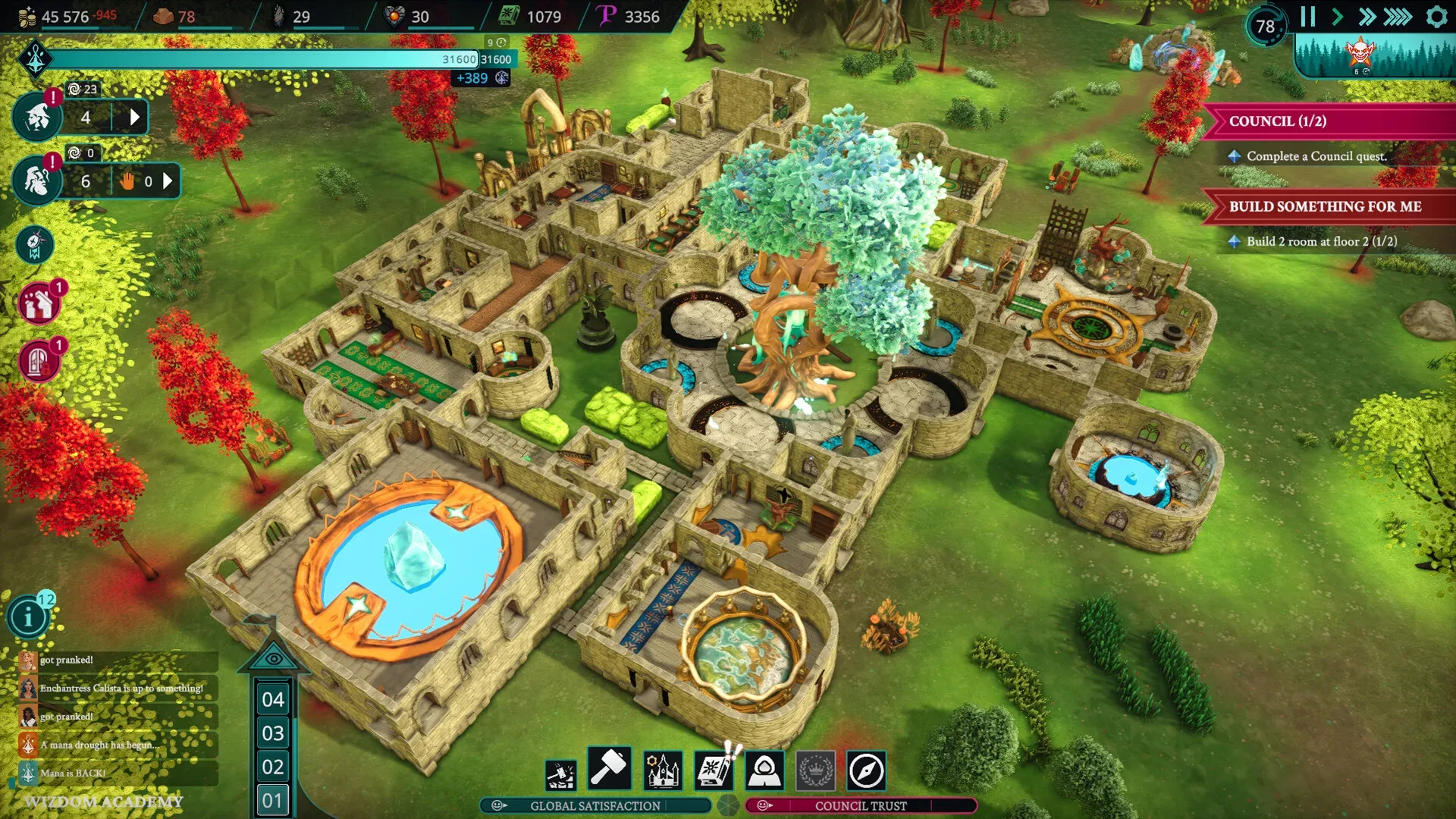
At its foundation, Wizdom Academy is a management game: players construct, customize and decorate a magical academy, with a fully free camera for viewing and arranging the castle. Classrooms are not merely scenic rooms in this premise. They are part of an academy built to receive students, train them and guide them from apprentices toward skilled wizards.
Its resource layer revolves in part around mana, a familiar fantasy term given a management-game role here. Mana is both produced and consumed, so it functions as something the academy needs to budget rather than an unlimited magical backdrop. That creates a practical connection between building out the school and sustaining it: growth can bring more capacity, but the operation still needs enough magical energy to support its needs.
The recurring mana droughts add pressure to that balance. A drought, in this context, is not simply a story detail; it is a challenge that affects a resource the school depends on. Players are also tasked with investigating why those droughts are happening, tying the system-level problem to the game’s broader mana mystery. Professors can be sent on expeditions beyond the academy as part of the available tools, giving the school’s staff responsibilities outside the castle walls as well as within them.
What the Headmaster is responsible for
- Designing, expanding and decorating the academy.
- Recruiting students and following their development from apprentice to wizard.
- Managing staff and resources.
- Balancing mana generation against the academy’s mana use.
- Responding to mana droughts and investigating their cause.
- Sending professors on expeditions.
- Working toward the revelation of the next Wizdom.
That mix gives Wizdom Academy a clear split between construction and stewardship. A castle can look impressive, but the Headmaster also has to account for people, staffing and a resource system vulnerable to shortages. The stated design suggests that success is less about placing rooms in isolation than making a school operate as a connected whole.
Students are meant to drive variation between runs
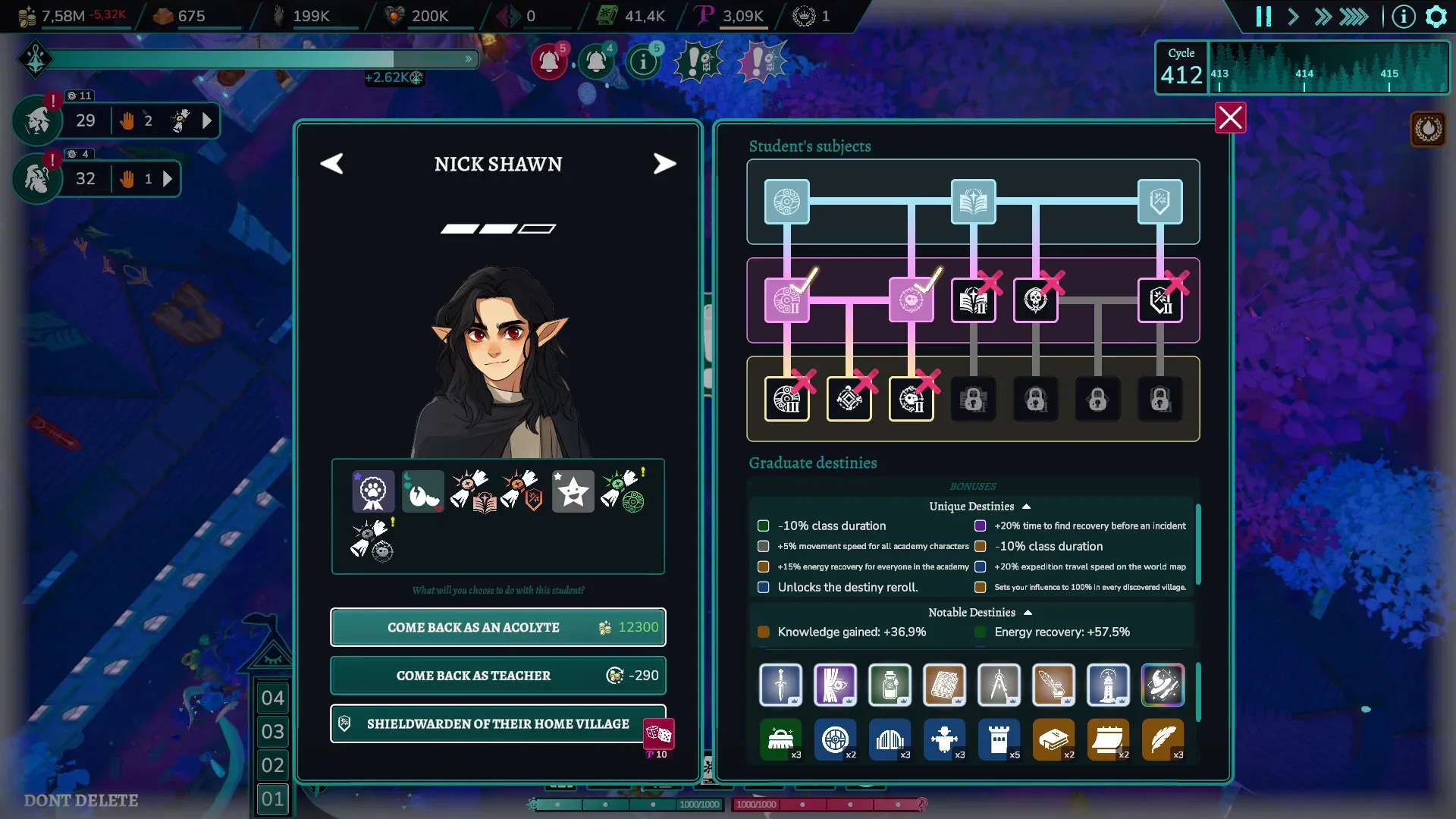
The game places considerable emphasis on its students. New arrivals have distinct origins and individual traits, and the Headmaster is positioned as someone who can train them, observe their journeys and influence their eventual destinies. More than 100 unique traits, over 50 Destinies and more than 400 student portraits are included.
Traits are characteristics attached to students, while Destinies describe the different eventual paths available to them. The developers have not detailed every possible interaction between those systems here, so it would be premature to assume exactly how any given trait changes a student’s performance or outcome. What is clear is the intended scale: students are not presented as a single interchangeable pool. Their origins, traits and possible destinies are designed to give each academy population more identity.
For a management game, that approach matters because it shifts attention from buildings alone to the people using them. Players are asked not just to recruit students but to follow their progression across the academy’s life. The substantial portrait count reinforces that character variety is an explicit part of the package, although it should not be confused with a promise that every portrait represents a wholly separate ruleset.
Legacies, enchantments and maps support repeated schools
Wizdom Academy’s 1.0 release also arrives with systems intended to make repeat play worthwhile. Different maps, varying village profiles and distinct inhabitants can alter the setting around an academy. Each playthrough can also have its own enchantments, while Legacies are unlockable progression elements. Challenges provide another reason to approach future runs with a different plan.
In straightforward terms, replayability means the game aims to avoid every new academy unfolding in exactly the same way. The maps, surrounding villages, enchantments and challenges are the stated sources of that variation. A run is a single attempt or campaign; an enchantment is a magical modifier or effect associated with a particular playthrough; and Legacies are rewards or progression unlocked over time. The specific mechanical effects of individual Legacies and enchantments have not been outlined, but their inclusion signals that knowledge and unlocks are expected to carry some significance beyond one school.
The result is a structure that may appeal to players who want a management game with both a long-term mystery and reasons to restart. One academy might call for a strategy shaped by its map, village or available magical effects, while another could make different challenges more pressing. That is the promise of the design, rather than a guarantee that every combination will feel equally dramatic.
What version 1.0 means after Early Access
Early Access is a release model in which a game is sold and developed before its formal full-release version, with updates arriving over time. Wizdom Academy entered Early Access in April 2025. During that period, the teams added major updates, new systems, more content and balance changes shaped by player feedback.
Balance changes are especially relevant in a game built around resources, staffing, students and recurring shortages. They generally refer to adjustments intended to keep systems, choices or challenges from becoming disproportionately effective or punishing. The release information does not provide a complete list of every revision made during Early Access, but it establishes that feedback was part of the game’s development process.
Version 1.0 is therefore a milestone, not a claim that work has ended. Kipwak Studio and Lake On Fire intend to continue supporting and improving Wizdom Academy, with further work planned for 2027. Players should read that as an ongoing-development intention rather than a detailed roadmap: no specific future additions, timing or platforms beyond Steam have been identified.
The Steam launch lands amid a steady stream of smaller PC projects pursuing distinct mechanical hooks; for another upcoming example on the platform, see CoreRunner’s planned Steam debut. Wizdom Academy’s hook is much less about reflexes than responsibility: keeping a magical institution supplied, staffed and stable while trying to solve the force putting it under strain.
Who the 1.0 release is for
The strongest fit appears to be players who enjoy building layouts while also responding to interconnected operational demands. The free camera and decoration tools speak to players who want to shape a castle visually. Staff management, student training and mana reserves speak to those who prefer systems that need continued attention. The student traits, Destinies, maps, enchantments, Legacies and challenges are aimed at players who expect more than a single fixed scenario.
At the same time, the game’s core premise is notably specific. You are not managing a generic fantasy settlement: you are overseeing an academy whose students must be trained across generations, whose professors can travel on expeditions, and whose mana supply is affected by a world-threatening mystery. Version 1.0 gives that premise its formal Steam release, after an Early Access period used to expand and refine the school’s many moving parts.