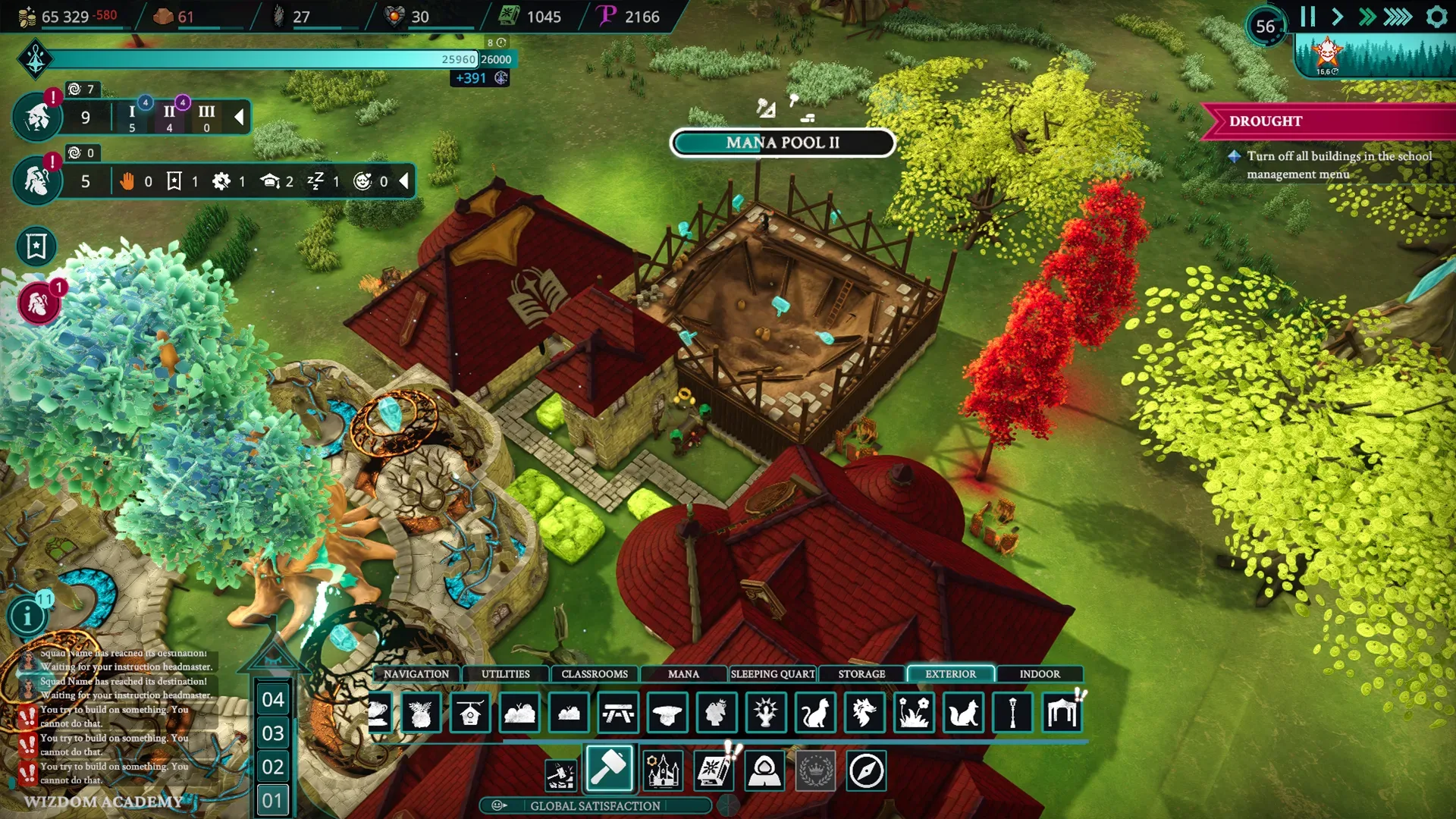
Wizdom Academy, a 3D wizard-school builder and management game from Kipwak Studio in co-production with Lake On Fire, is scheduled to leave Steam Early Access on November 16, 2026. The full launch follows an Early Access period that began in April 2025.
The central fantasy is less about personally casting spells and more about keeping an entire magical institution operational. Players take the role of Headmaster, constructing an academy room by room and floor by floor while recruiting students, managing the school’s mana supply, handling staff demands and facing oversight from the Directorium.
That makes Wizdom Academy a management sim in which the castle is not simply scenery. Its layout, staffing and resources are part of the ongoing task of operating a school where the curriculum, the pupils and the magical infrastructure all appear to be moving at once.
A wizard school run from the Headmaster’s desk
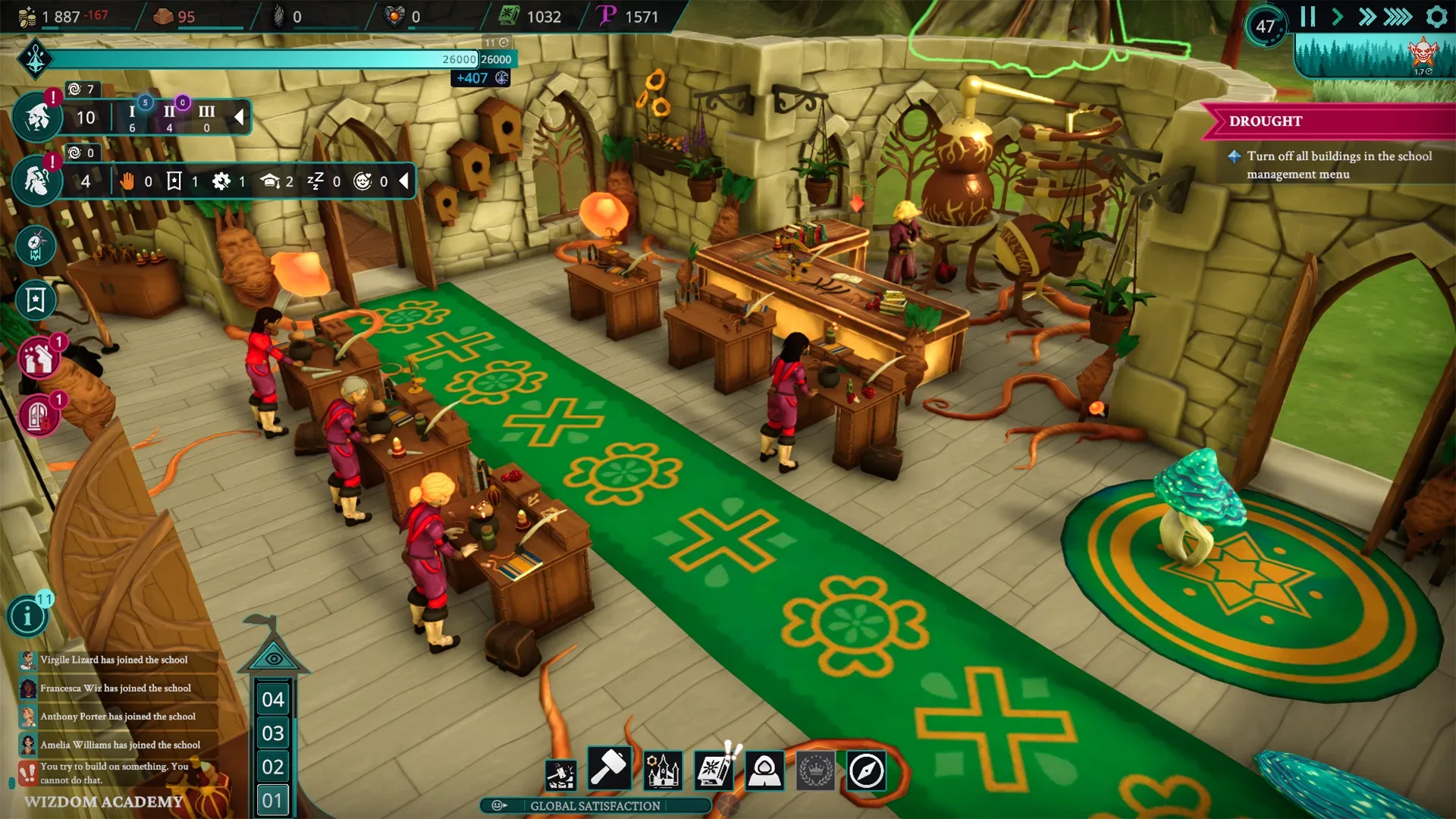
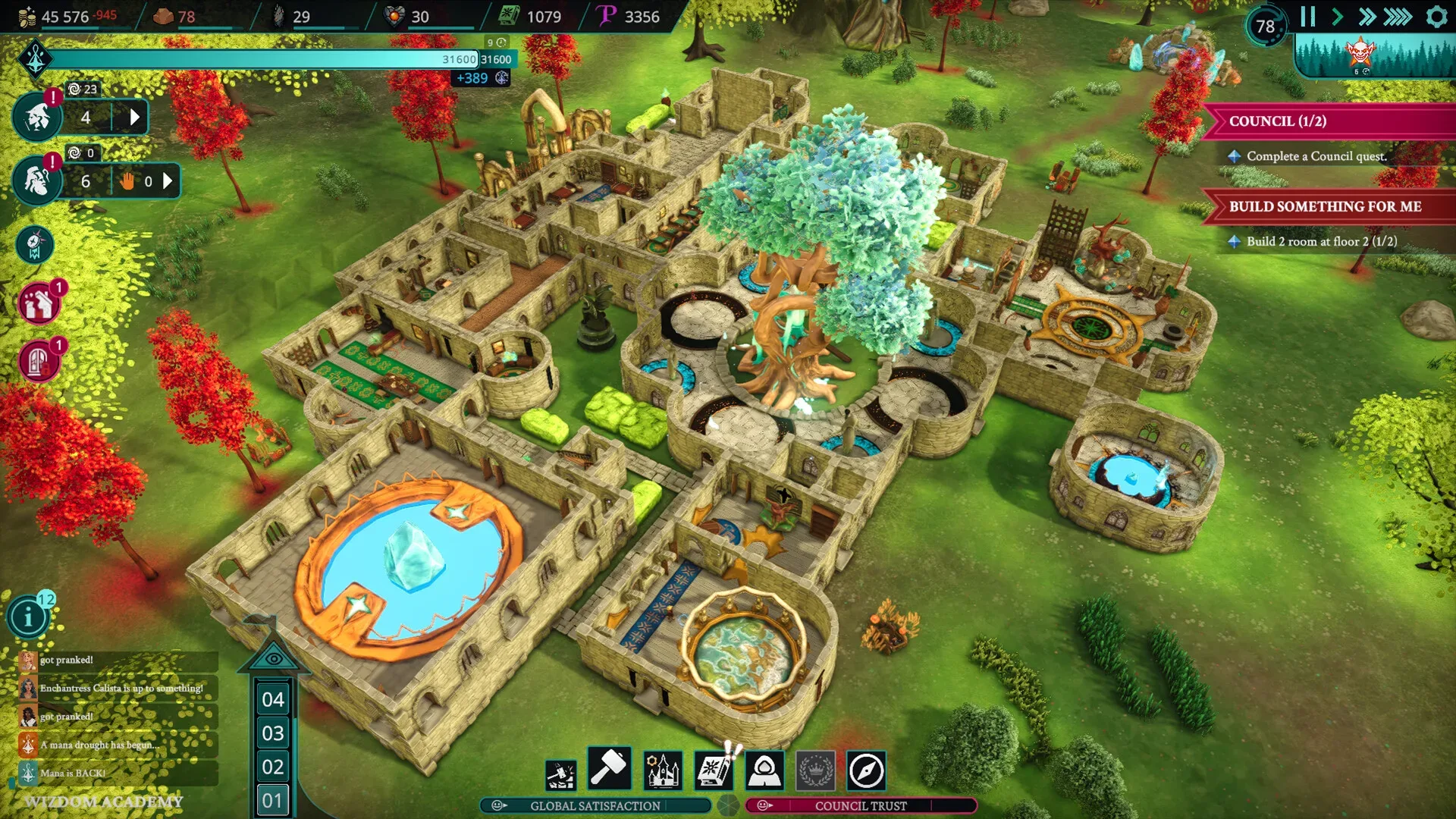
Building is one of the game’s clearest pillars. Rather than placing a prebuilt academy on a map, players design its rooms across multiple floors. The supplied details do not specify every room type or construction rule, but the floor-by-floor approach suggests that expansion and organization will be fundamental considerations rather than one-off opening chores.
Management games often turn a building into a practical diagram: the player is arranging space to support the people and systems inside it. In Wizdom Academy, the academy has another obvious job beyond looking suitably enchanted. It must accommodate students and staff while supporting the magical school’s continuing development.
The Headmaster role also includes responding to staff demands. This gives employees a stated presence in the management layer instead of treating them as mere decorations attached to classrooms. Meanwhile, the Directorium is the magical authority that both funds and inspects the academy. Funding and inspection can create competing pressures: the institution needs resources to grow, but accepting outside support means being answerable to an organization with standards and the ability to scrutinize the result.
The precise consequences of Directorium inspections have not been detailed, so it would be premature to assume particular penalties or rewards. What is clear is that the school is not presented as completely independent. Players will be operating under institutional expectations as well as their own ambitions for the academy.
Mana is a resource, and droughts raise the stakes
Mana management is identified as a major system, including the possibility of mana droughts. In fantasy fiction, mana commonly means a reserve of magical energy. Here it functions as an operational resource that the academy must manage, and a drought indicates a period in which that resource becomes constrained.
That distinction matters. A resource-management system asks players to account for supply and demand rather than assume magic is limitless. The announcement does not establish exactly which activities consume mana, how droughts begin, or every tool available to recover from them. But the inclusion of droughts signals that a school’s normal plans can be disrupted by a wider resource problem.
For prospective players, this places Wizdom Academy closer to a sim built around balancing pressures than a purely decorative magical campus creator. Building rooms and recruiting students are likely to be intertwined with the practical question of whether the academy can sustain its operations.
Students can develop across repeated study cycles
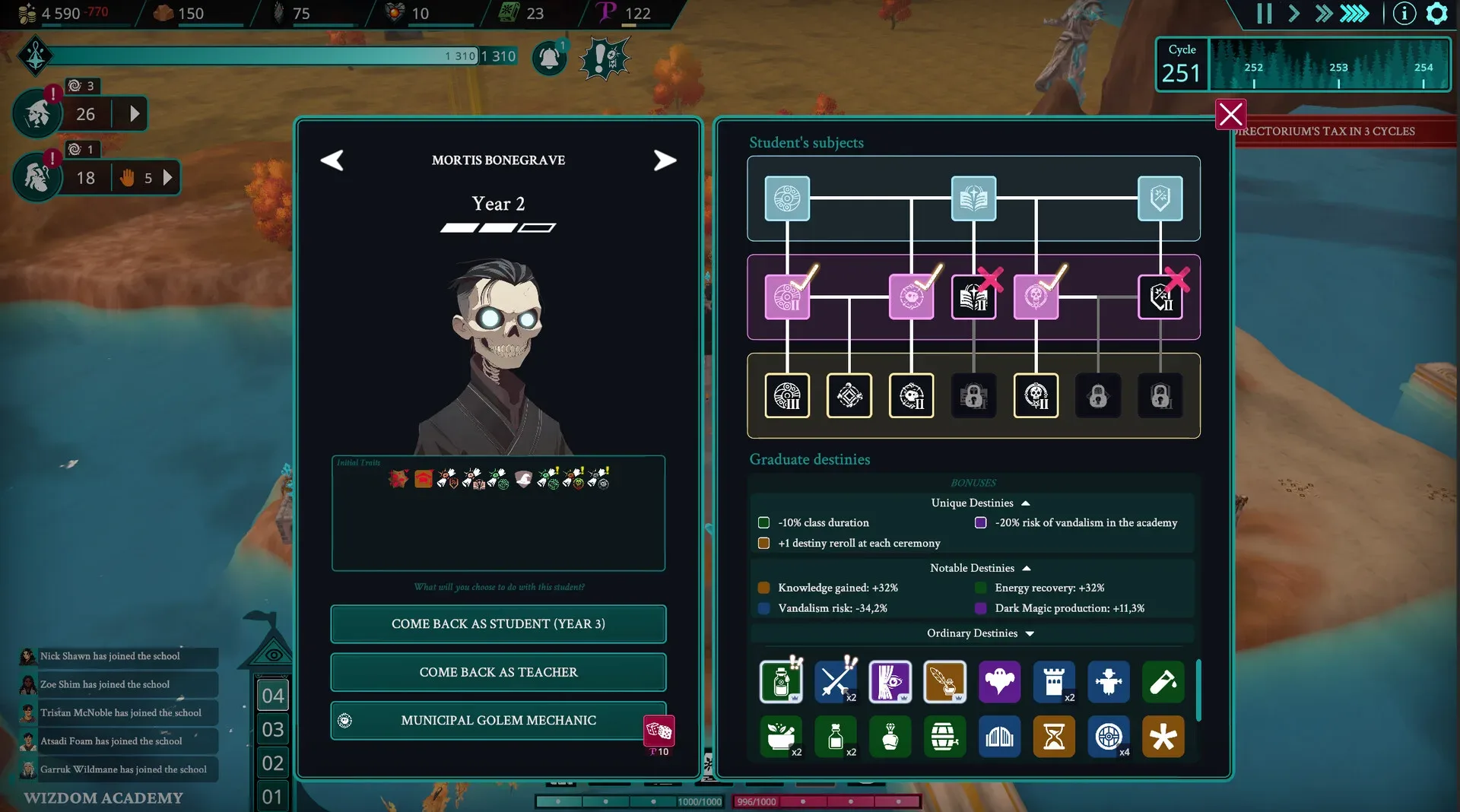
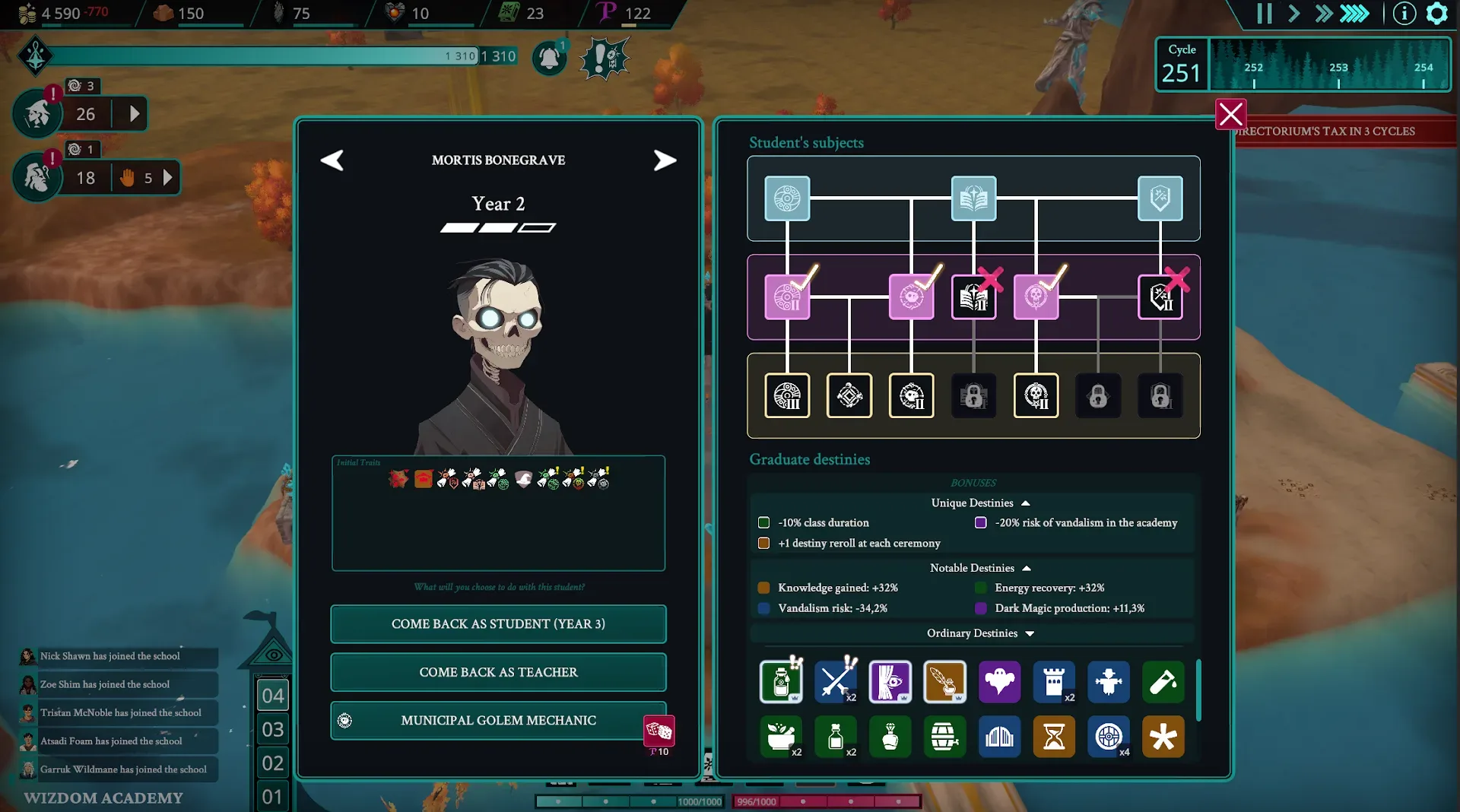
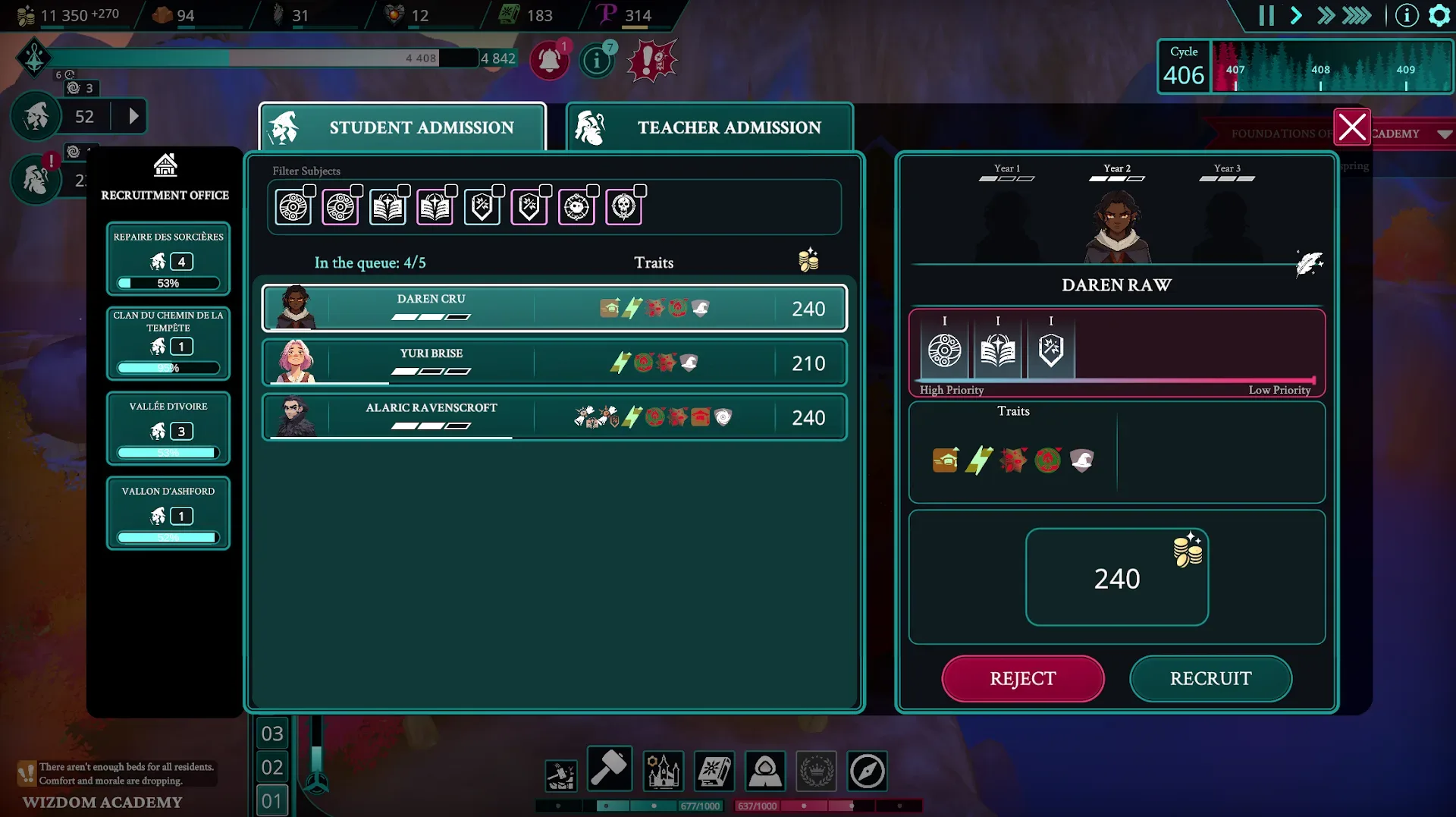
The game’s student system is designed to support long-running stories. Students can accumulate more than 100 unique traits and unlock more than 50 Destinies. A trait is generally a defining characteristic that can distinguish one individual from another, while a Destiny here refers to a larger eventual path or outcome available to a student.
Those numbers alone do not guarantee a particular level of strategic complexity, and the available information does not list the individual traits or Destinies. Still, the framework points toward a school population that can change over time rather than remain a fixed roster of interchangeable names.
Students may return to study multiple times before graduating. That is an important wrinkle in the academy premise: education is not necessarily a straight line from enrollment to a single final exit. Multiple study cycles imply that players may be following the same pupils over extended periods as they continue to develop.
Outstanding graduates can remain at the academy as teachers. This creates a generational loop in which students who succeed within the system can eventually help instruct later cohorts. It is a particularly fitting use of the setting: the school’s prior decisions can feed back into its future staff and student body, rather than treating graduation as the end of every character’s relevance.
The practical appeal of that loop is continuity. A Headmaster may be making choices with consequences that outlive a pupil’s initial enrollment, especially if a student ultimately becomes an educator. The game does not provide a formula for how those teaching roles are selected or how former students affect instruction, but its stated goal is that each generation can shape the next.
Rivals, expeditions and research broaden the management brief
Wizdom Academy’s listed major systems also include rival academies, professor expeditions and a comprehensive technology tree. Together, these suggest that a player’s attention will extend beyond classroom construction and day-to-day student administration.
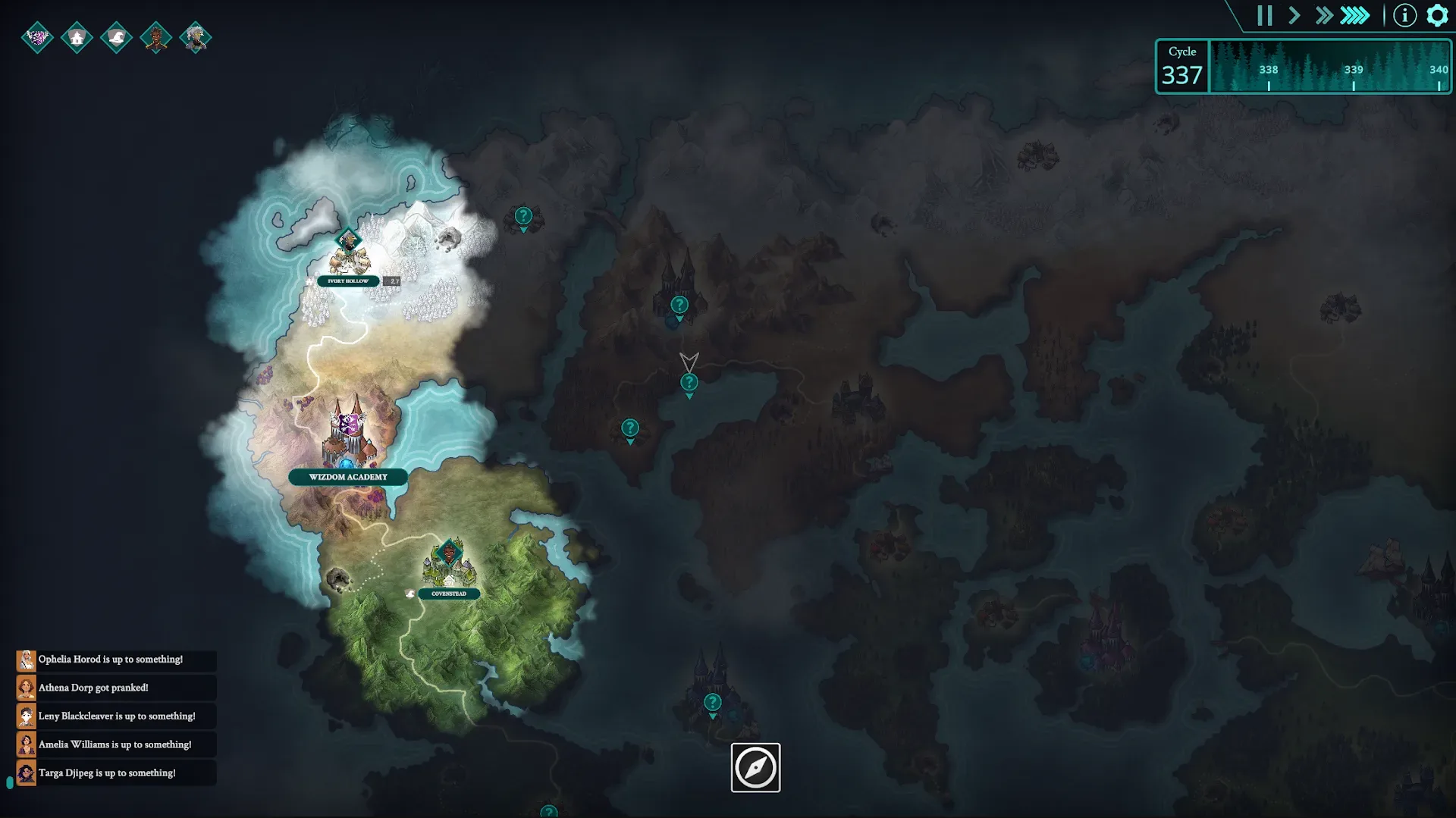
Rival academies introduce the idea that the school exists among competitors. The announcement does not define whether rivalry is expressed through direct contests, comparative standing or other mechanics, so those specifics remain unknown. At minimum, the term indicates that the academy will not be framed as the only magical institution of consequence.
Professor expeditions point outward from the campus. An expedition is an organized journey undertaken for a purpose, and assigning professors to them gives the faculty a potential role beyond remaining in the academy. No destinations, rewards or dangers have been confirmed, but expeditions commonly serve a management-game purpose of opening a separate planning decision: who can be sent away, and what does the institution gain while they are gone?
The technology tree is another term worth defining. In strategy and management games, a technology tree is an interconnected progression structure through which players unlock developments over time. Calling it comprehensive establishes it as one of Wizdom Academy’s significant systems, though the announcement does not list its branches or unlock conditions. The basic implication is sustained progression: academy development will involve more than placing rooms, with advancement structured across linked improvements.
These systems could give the game several overlapping rhythms: expand the physical school, look after mana, guide students through their studies, satisfy the Directorium, develop new capabilities and account for developments beyond the grounds. Exactly how tightly those pieces connect will be clearer at full release.
What the 1.0 date means
Early Access began in April 2025, with development taking place alongside the game’s community. The November 16, 2026 date marks the planned transition to version 1.0 on Steam, rather than the beginning of the game’s public life.
For players who track upcoming PC management games, it is another dated Steam release on the horizon alongside projects such as Pera Coda’s planned Steam debut in 2027, albeit in a very different genre and setting.
Wizdom Academy’s confirmed pitch is specific: build and run a vertically organized wizard school, oversee a changing student body, contend with magical resource pressure and answer to an authority that supplies money while checking the books—presumably the magical books. The full release is set for Steam on November 16, 2026.