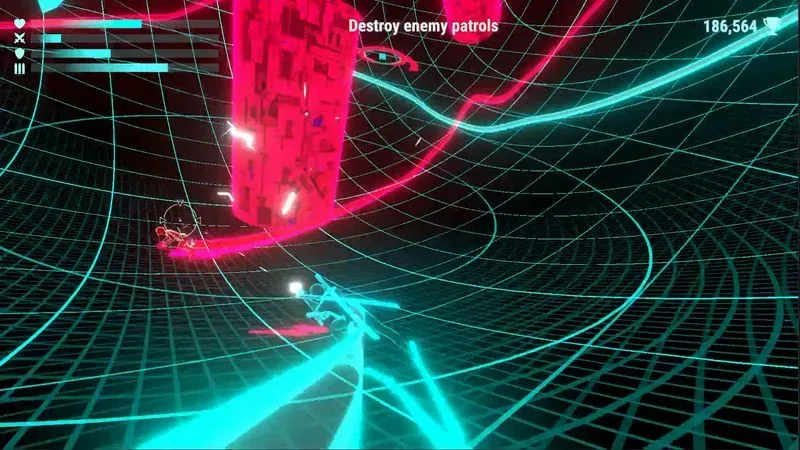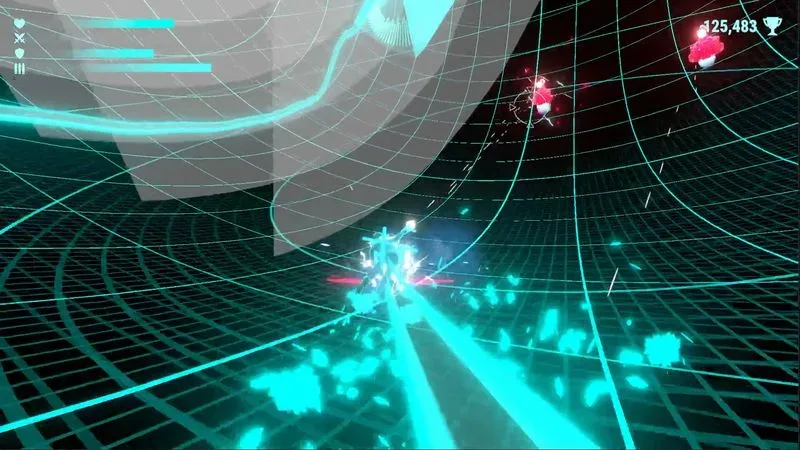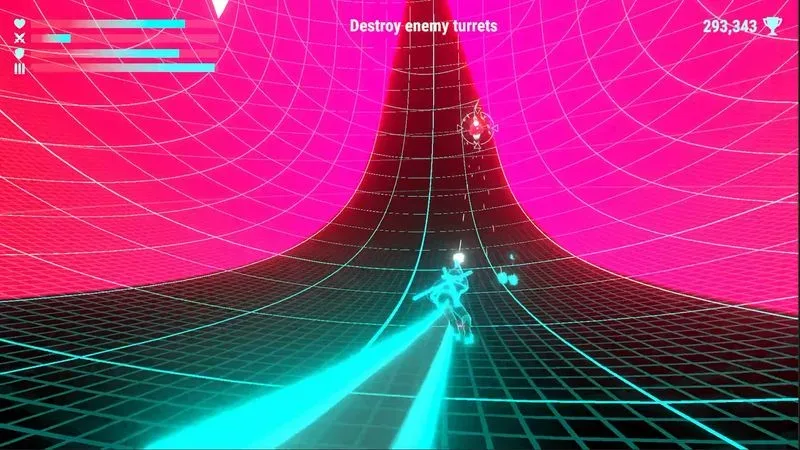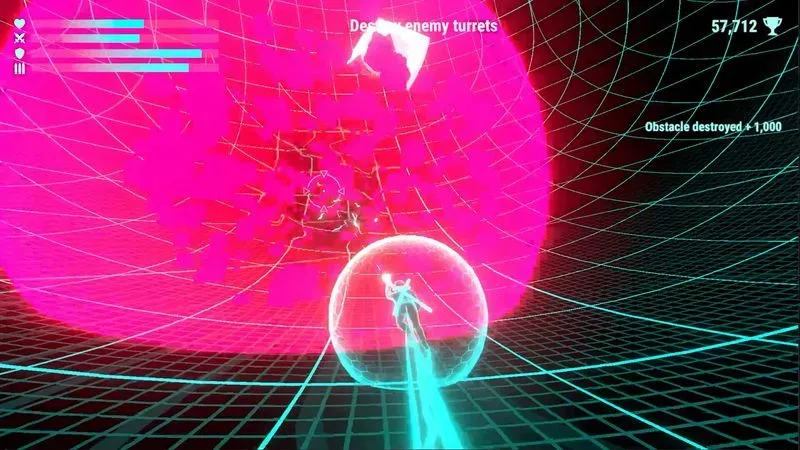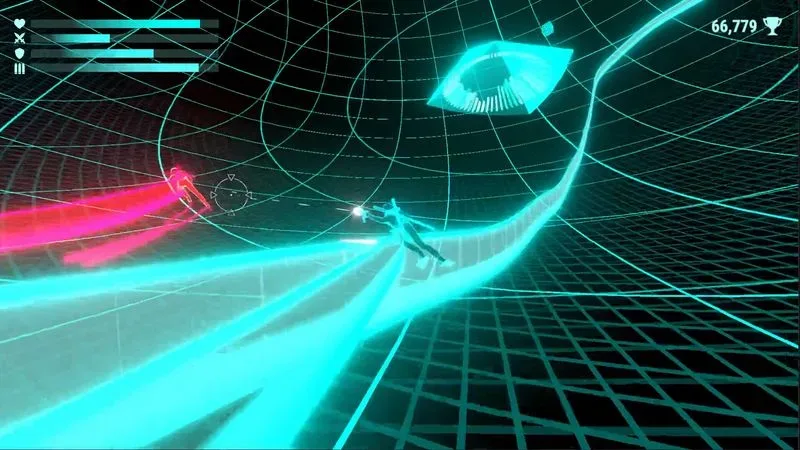
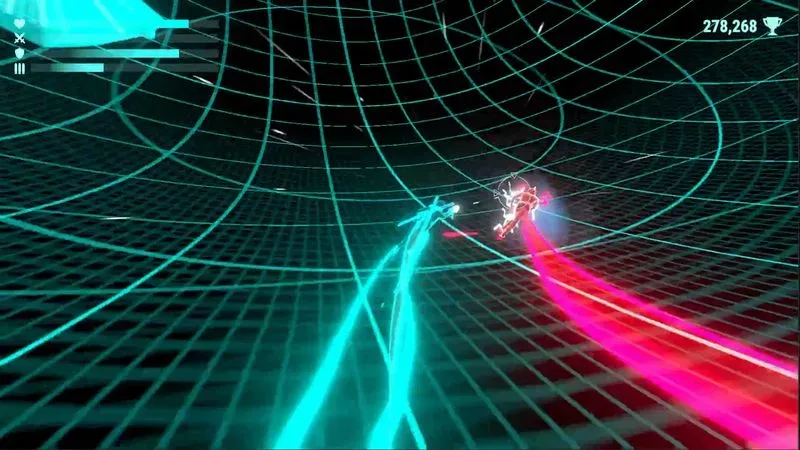
CoreRunner, a third-person skater shooter from developer Garland and publisher indie.io, is scheduled to launch on Steam on January 19, 2027. Its central premise is both simple and unusually tactical: escape a cyberspace prison while skating at speed, shooting guardians, wielding katanas and using the glowing line left behind by the player’s movement as a weapon.
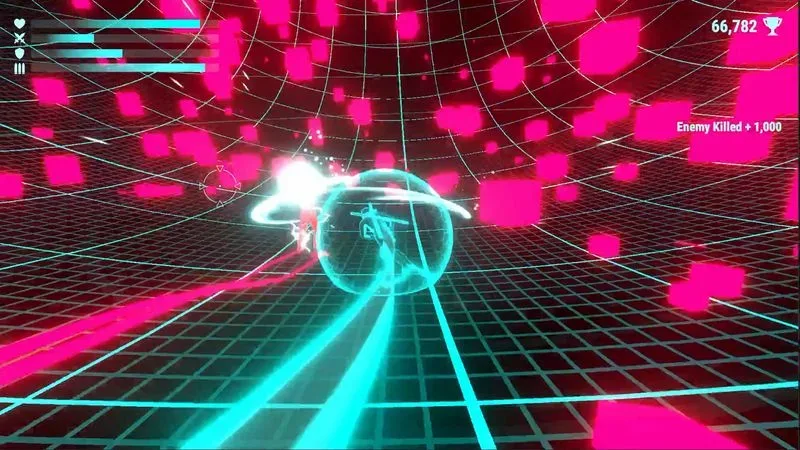
The setting is the Core, a network of spherical prisons suspended in cyberspace. That establishes the game’s escape objective, but the more consequential idea is in how players move through its arenas. Skating creates a light trail, and enemies caught inside that trail become trapped. They remain contained until they collide with the line and dissipate. In practical terms, CoreRunner is not only asking players to aim weapons at threats; it is asking them to shape the arena into a danger of their own making.
A free Steam demo containing more than 30 stages is available ahead of launch. That gives interested players a substantial opportunity to examine how its movement, combat and beat-synced presentation work before the full release arrives.
A trail is not just a visual effect
Many action games treat movement primarily as a defensive tool: get out of the way, create space, find a better firing angle. CoreRunner’s light trail makes movement an active part of the attack plan. The path a player chooses can enclose, funnel or delay enemies, turning a route through the arena into something with direct combat consequences.
The supplied description says opponents caught within the trail are trapped until they crash into it and vanish. That makes the line less like an ordinary projectile and more like a persistent hazard. A persistent hazard is an effect that stays in play rather than striking once and disappearing. Here, its placement depends on where the player skates, so positioning and route planning are inseparable.
That distinction matters when arenas fill up. A straight dash away from danger may create distance, but a curved route around incoming enemies could potentially create a boundary they must contend with. Likewise, circling can have a different purpose from simply evading: it may be a way to turn enemy pursuit into containment. The game’s stated emphasis on carving a route suggests that the best response to pressure will not always be maximum speed in one direction.
CoreRunner also supplies conventional direct-combat tools in the form of guns and katanas. Ranged weapons should matter when a threat needs attention at a distance, while melee combat implies a closer, more committed option. The important point is not that either tool replaces movement. The game explicitly frames success around balancing ranged attacks, melee attacks, skating and trail strategy as the escape pushes deeper into the Core.
The Core’s guardians are designed to make momentum matter
The prison’s defenders include turrets, drones, homing missiles and patrols. These names indicate several distinct kinds of battlefield pressure without requiring the game to be a stationary cover shooter. Turrets suggest fixed points of threat. Drones can imply mobile targets. Homing missiles are specifically built to follow the player, meaning continued movement is likely to be essential. Patrols add another source of opposition moving through the arena.
Enemy numbers and aggression increase during each run. The arenas themselves also become hostile farther into the escape. Garland has not detailed every system behind that escalation, but the overall structure is clear: later sections are intended to demand more than quick reflexes alone. Players will need to manage threats while preserving enough space and momentum to make their light trail useful.
“Aggression” in this context means more than a higher enemy count. It describes enemies applying more active pressure, whether through pursuit, attacks or less room to reset a fight. When that is paired with homing missiles and arena hazards, a player’s route becomes a resource. A poorly placed trail, or a route that leaves no room to redirect, can be as costly as missed shots.
There is a useful tension in that setup. To deploy a trail effectively, players need to move through the arena with purpose. Yet the same movement may attract pursuit, pull players toward hazards or bring them close to patrols. Combat decisions therefore appear likely to involve timing: when to keep skating to build a useful path, when to fire from range, and when closing in with a katana is worth the added danger.
Synthwave is part of the game’s rhythm, not only its aesthetic
CoreRunner is framed through neon retrowave landscapes and a synthwave soundtrack, with every arena synced to the music. Synthwave is a style associated with electronic sounds and retro-futuristic imagery; “retrowave” similarly points to neon-drenched, nostalgic visions of digital futures. In CoreRunner, those labels describe more than the visual palette because arena action is said to move to the beat.
Beat synchronization means the game connects its arena flow to musical timing. The available details do not specify whether individual player attacks must be performed on beat, so it would be premature to call CoreRunner a rhythm game. What is supported is that the soundtrack is designed to provide the tempo of a run. That can give movement and escalating encounters a stronger sense of pace, especially in a game already built around continuous skating.
Timing is particularly important in fast action design because a small delay can change whether an enemy attack is avoided, a weapon connects or a route remains safe. That broader concern with immediate input and response also appears in discussions around the split-second demands of fighting games, though CoreRunner’s design focus is distinctly different: sustained movement through arenas, rather than head-to-head matches.
For CoreRunner, the music-driven structure may be especially useful as a way of making a run readable under pressure. Escalating arenas can become visually and mechanically busy. A defined musical pulse can help establish a sense of forward motion even as turrets, drones, missiles and patrols complicate the route.
What the demo can establish before release
The free demo’s more than 30 stages are the clearest currently available route into the game. The stage count is notable because it should let players encounter more than a single introductory arena and gain a better feel for the game’s central loop: skate, create a trail, contain enemies, use guns and katanas, then adapt as threats increase.
It is also the appropriate place to assess the questions left open by the announcement. The details establish the categories of enemies and the role of the trail, but do not lay out weapon variety, progression systems, run length, difficulty settings or the exact rules governing the soundtrack synchronization. Players interested in the game’s tactical possibilities should avoid assuming features beyond what has been described and use the demo to see what is actually present.
What is clear is that CoreRunner’s identity rests on making motion do double duty. Skating is traversal, evasion and arena construction at once. The prison was built to contain its occupants, but CoreRunner’s premise is that a skater can turn the very space of confinement into an escape tool. Steam players will be able to take that route through the Core when the game launches on January 19, 2027.