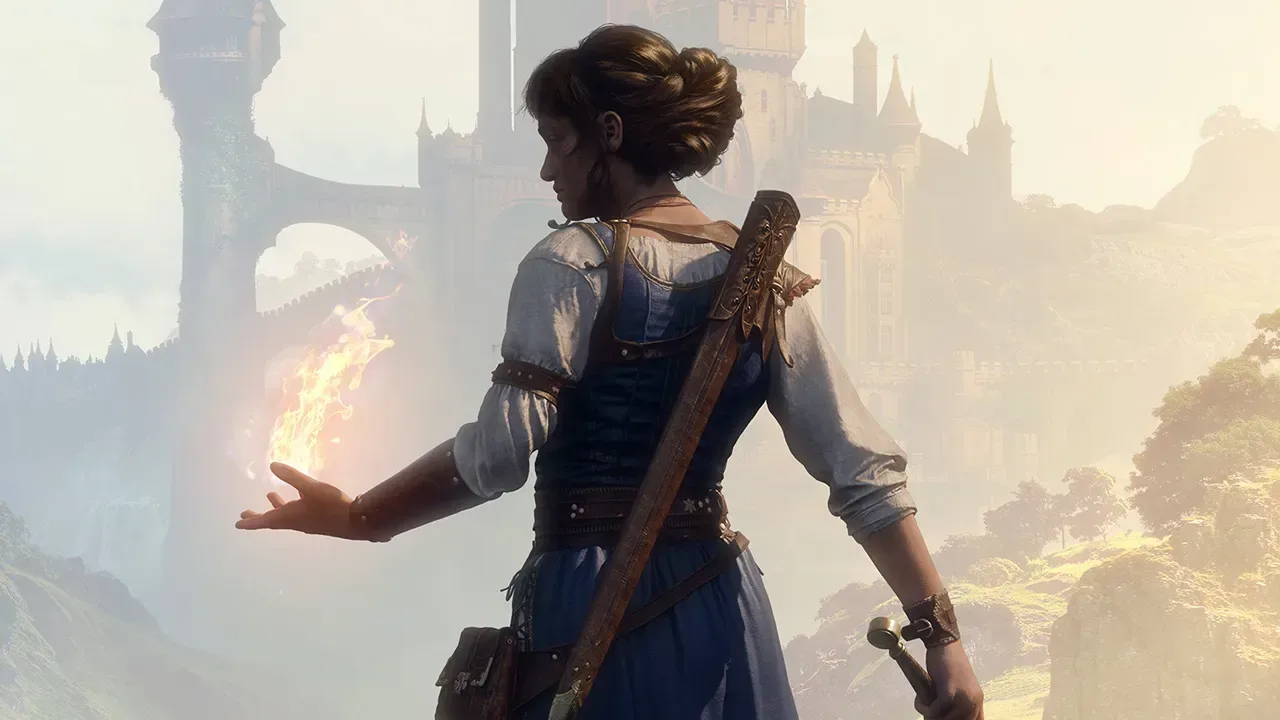
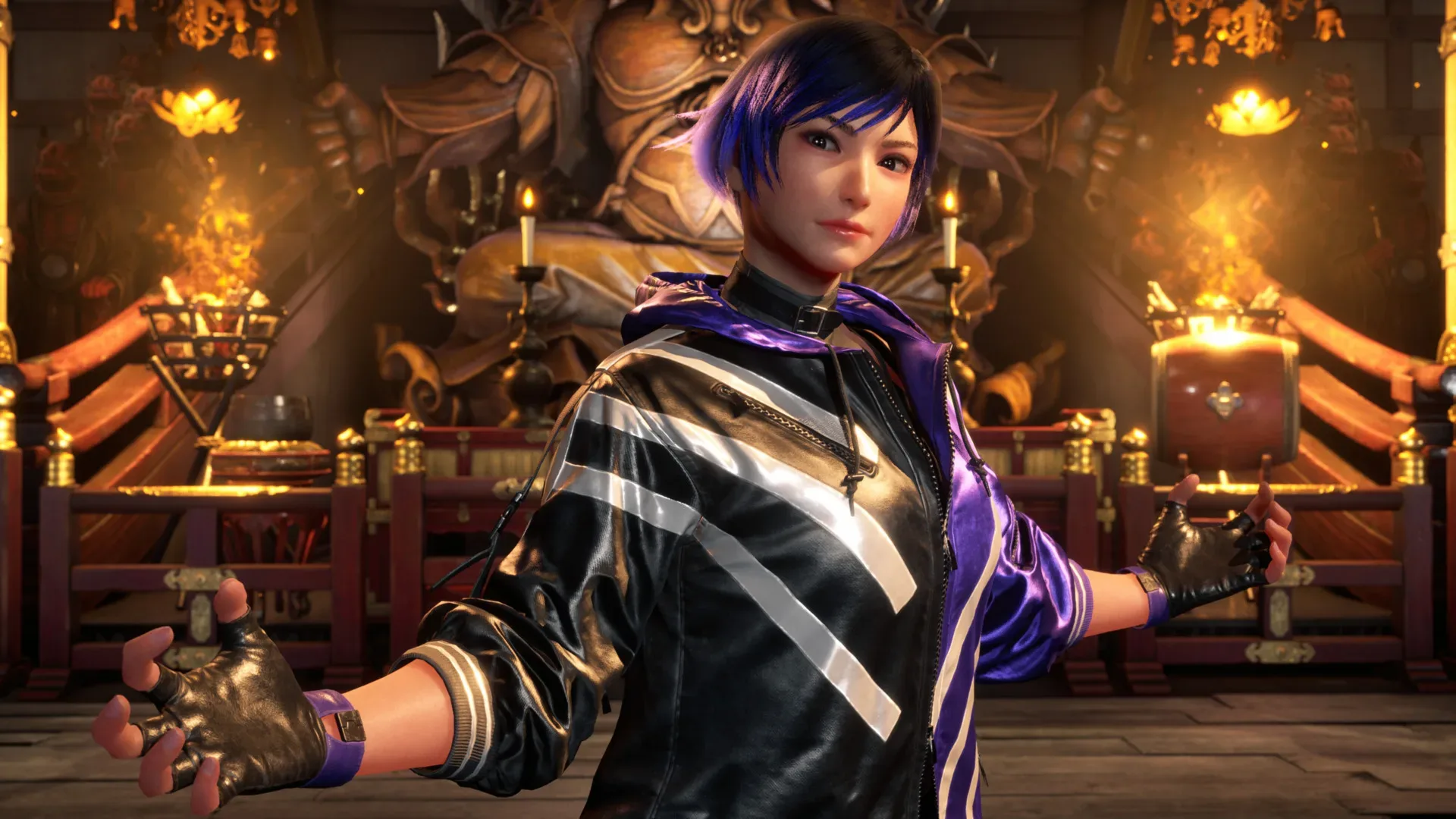
Bandai Namco is making a clearer case for why it has invested in its own game technology. The company has highlighted SOL-AVES, its internally developed game engine, as a platform with rendering-speed optimizations it considers essential for fighting games, while also positioning it for role-playing games and other genres.
That does not confirm a particular future Tekken or Tales of project will use SOL-AVES. It does, however, establish where Bandai Namco sees the engine fitting: productions where technical responsiveness, high-speed visuals and tools shared across its studios are important enough to justify maintaining proprietary technology rather than depending entirely on third-party software.
What SOL-AVES is, and where it has been used
SOL-AVES was announced in 2022, though development began in 2019. Its first publicly discussed use came through the 2026 co-development of Kirby Air Riders with Nintendo and Masahiro Sakurai.
The project gave the engine team a difficult performance target. A fast-moving game has to communicate motion convincingly while preserving visual clarity, and the early version reportedly struggled to reach 15 frames per second at 720p. During the same development process, the game and engine were improved together. New lighting and rendering techniques, combined with upscaling, ultimately brought the reported result to 60 FPS at 1440p.
Those figures describe a particular development journey rather than a universal promise for every SOL-AVES game. Performance depends on the hardware, art direction, scene complexity, effects, design targets and many other choices. Still, the change is a meaningful illustration of the work the engine was built to support: finding enough efficiency to make a demanding visual concept run smoothly at a substantially higher resolution and frame rate.
Why frame rate matters so much in fighting games
A frame rate is the number of complete images a game presents each second. At 60 FPS, a new frame is shown every 1/60th of a second. That cadence matters in nearly every kind of game, but it has special importance in fighters because their action is commonly designed around precise, repeatable timing.
Attacks, blocks, movement, recovery and inputs can all be measured in frames. A player may be trying to react to an animation, perform a narrow combo sequence, or identify whether a move is safe or punishable. In that environment, consistent frame delivery is not merely a visual luxury. It supports readability and helps a game behave as players expect from one moment to the next.
There is an important distinction here. Rendering performance and gameplay responsiveness are related, but they are not identical. Rendering is the work of drawing the image: characters, environments, lighting, shadows and effects. Input handling, animation updates, collision checks, game logic and online synchronization are separate parts of the broader technical picture. Bandai Namco’s comments specifically emphasize rendering-speed optimizations. That is significant for a fighter’s presentation and consistency, but it should not be read as a detailed claim about every element of a future game’s online performance or input latency.
Related coverage includes Bandai Namco Highlights SOL-AVES Engine Optimizations for Future Fighting Games.
Even so, better rendering efficiency can give developers more room to pursue a stable visual target. That room can be used in several ways: holding frame rate when the screen fills with effects, increasing visual detail without overwhelming the hardware, or reserving resources for the systems surrounding the match. The exact trade-offs will vary by project, but the basic advantage is flexibility.
The Kirby Air Riders result explains the company’s confidence
The early Kirby Air Riders performance report is useful because it puts a number beside the broader statement about optimization. Moving from 15 FPS at 720p to 60 FPS at 1440p represents more than a modest tuning pass. It reflects an iterative process in which the game’s needs helped shape the engine itself.
Upscaling is one of the technical terms worth separating from native rendering. In simple terms, upscaling means producing an image at one resolution and using processing techniques to display it at a higher output resolution. Done well, it can reduce the amount of rendering work required while preserving a sharper-looking final image than a basic low-resolution output. It is one tool among several; it does not by itself explain the reported improvement. Bandai Namco also pointed to changes in lighting and rendering.
Lighting governs how a game simulates or approximates illumination across scenes and objects. It can be expensive because it influences the look of characters, materials, shadows and environments. Rendering is the wider process of turning game data into the picture on screen. Improvements in either area can be especially valuable for games that need a strong sense of motion without sacrificing the ability to read the action.
A high-speed racing-style project and a one-on-one fighting game are not interchangeable technical problems. Their cameras, arenas, player counts and effects budgets can differ radically. Yet both benefit from a reliable presentation of motion. The former asks players to feel speed; the latter asks them to parse speed. SOL-AVES’ work on Kirby Air Riders therefore offers a credible foundation for Bandai Namco’s view that its rendering tools can matter in a fighting-game context, while stopping short of proving how any unrevealed game will look or perform.
An in-house engine is also a production strategy
Bandai Namco has framed SOL-AVES as more than a graphics solution. The engine is intended to reduce reliance on third-party software and consolidate in-house tools created by different studios across the company. That makes its value partly organizational.
A game engine is the foundational technology used to build a game. It can include rendering systems, animation tools, asset workflows, audio hooks, debugging features and ways for designers and artists to assemble content. A third-party engine can save a studio from building all of that from scratch, but a company with many teams may have reasons to develop shared internal systems. It can tailor tools to its own game types, retain direct control over its technical roadmap and potentially reuse improvements from one project on another.
The trade-off is substantial. Proprietary engines require long-term investment, technical staff and continuous maintenance. They must evolve as target hardware changes and as creative teams ask for new capabilities. A proprietary engine only earns its keep if the company can use it widely enough, or gain enough project-specific benefits, to offset those costs.
Bandai Namco’s stated ambition to cover a broad range of genres is therefore central. An engine used on only one game can still be worthwhile, but an engine that supports fighters, RPGs and other projects has a stronger case as shared infrastructure. The company’s recent comments suggest SOL-AVES is being shaped toward that wider role rather than remaining a one-project technology experiment.
What this could mean for Tekken and Tales—and what remains unconfirmed
Bandai Namco is closely associated with the Tekken fighting series and the Tales of RPG franchise, making both natural examples when it describes SOL-AVES as suitable for fighting games and RPGs. But an implication is not a product announcement. No specific future entry, release window, platform target or feature set has been confirmed through these engine comments.
For Tekken, the clearest potential relevance is the company’s emphasis on processing and rendering speed. A modern fighter needs characters, stages, effects and animations to remain legible under pressure. A purpose-built internal technology stack could allow a development team to prioritize exactly those needs, especially if it can carry lessons from prior work forward.
For an RPG, the advantage may look different. Role-playing games often bring different demands, such as larger environments, more varied locations, extensive menus, party systems or cinematic presentation. The meaningful point is not that SOL-AVES will automatically solve all of those challenges; it is that Bandai Namco believes the engine can be adapted across projects with different technical profiles.
That adaptability will be the real test. Engine talk can be abstract until players see the games built with it. For now, the public evidence is a technical success story from Kirby Air Riders, plus a company statement that the resulting advances are applicable to future fighting games, RPGs and other genres. Readers tracking the industry’s larger push-and-pull between internal tools and outside engines can also see how individual game projects continue to reveal technical priorities, much as new game details can reveal design priorities in Fable’s Bowerstone map reveal.
The practical takeaway
SOL-AVES is not yet a consumer-facing promise of a particular game, nor is it proof that every Bandai Namco release will move to one engine. It is a signal that the company is building and refining technology around performance-sensitive development rather than treating engine selection as a purely external procurement decision.
The most concrete reported result remains the transformation of an early Kirby Air Riders build from 15 FPS at 720p to 60 FPS at 1440p through engine and game optimization, including new lighting, rendering and upscaling work. The most strategically important statement is Bandai Namco’s belief that these capabilities are essential to fighting games and useful across genres.
For players, the immediate effect is expectation rather than a confirmed feature list: Bandai Namco is investing in the technical foundation it believes can support faster, smoother and more adaptable future games. Whether SOL-AVES becomes a defining part of the company’s next era will depend on the projects that eventually carry its name behind the scenes.