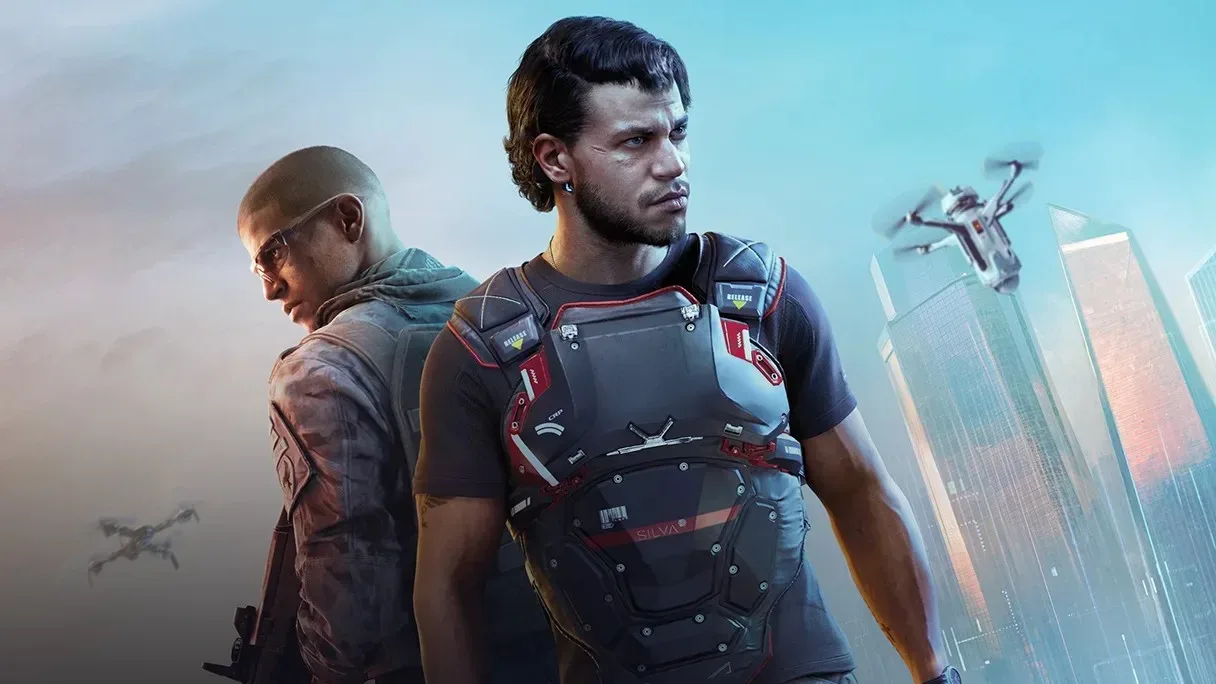

Bandai Namco is shutting down Reflector Entertainment, the Montreal-based studio responsible for Unknown 9: Awakening. The closure ends the run of a developer founded in 2015 and acquired by Bandai Namco in 2020.
Unknown 9: Awakening, released on October 17, 2024, remains Reflector’s only released game. It was the most visible interactive piece of the larger Unknown 9 universe, a transmedia project that also includes a book trilogy, comics, and a web series. The game’s performance had already led to workforce reductions and the cancellation of an unannounced project; the studio’s dissolution now makes the outcome final.
Bandai Namco expects an extraordinary loss of roughly €21 million in its third-quarter financial results for the fiscal year ending March 31, 2027 as a result of Reflector’s closure.
A single released game at the center of the closure
Reflector had been building toward Unknown 9: Awakening for years. The game was first revealed at Gamescom in 2020, then launched four years later as a third-person action title. Its protagonist is Haroona, portrayed by Anya Chalotra, who is known for her work in The Witcher.
Haroona’s defining ability is traveling into the Fold, a separate dimension within the game’s fiction. That supernatural premise places her in conflict with a hostile secret society while the story moves through India and other locations around the world. The Fold is not merely background lore: it is the central concept used to distinguish Haroona and the game from a conventional action-adventure protagonist.
The broader Unknown 9 plan is important context. A transmedia franchise is an entertainment property told across more than one format, such as games, books, comics, and screen-based series. In principle, that structure can give audiences several ways into the same setting and characters. It can also create a difficult challenge for a new game: it has to work as a self-contained product for players who know none of the adjacent material while still carrying the expectations of an interconnected universe.
Nothing in the closure announcement establishes which parts of the wider Unknown 9 franchise, if any, will continue. What is clear is that Reflector itself will no longer be the studio developing its game component.
The warning signs came quickly after launch
The game did not find a strong critical or player-reception foothold after release. It holds a 59 Metascore and has “Mixed” reviews on Steam. Those measurements are different, and neither on its own is a complete business report.
A Metascore is an aggregated critics’ score, intended to summarize published reviews rather than sales or player retention. Steam’s review label, meanwhile, reflects user feedback posted on that PC storefront. A 59 Metascore and a Mixed user-review classification describe muted reception, but they do not reveal a game’s budget, unit sales, development costs, or the precise target Bandai Namco had set for it.
Bandai Namco did confirm the most consequential part: Unknown 9: Awakening failed to meet expectations. That confirmation arrived alongside a further round of layoffs in January 2025 and the cancellation of an unannounced Reflector project.
The sequence began even earlier. In November 2024, about a month after Unknown 9: Awakening launched, Reflector laid off 18 percent of its staff. The timing matters because it shows that the studio’s difficulties became public shortly after its sole shipped title reached players. January’s additional layoffs and project cancellation then indicated a broader retrenchment, rather than a short-term adjustment around a launch.
With the shutdown, there is no longer room to interpret those cuts as a reset for a future internal slate. The studio’s reported progression is stark: launch, layoffs, confirmation that the release missed expectations, cancellation of work that had not been announced, and closure.
What the extraordinary loss means
Bandai Namco has said it expects to record approximately €21 million as an extraordinary loss in third-quarter results for the fiscal year ending March 31, 2027. In financial reporting, an extraordinary loss is a separately identified charge tied to an exceptional event rather than ordinary ongoing business activity. Here, it is associated with the dissolution of Reflector.
The figure should not be read as a direct statement of Unknown 9: Awakening sales, nor as a simple price tag for making the game. The provided information does not break the amount into development costs, assets, severance, cancelled work, or other accounting elements. It does, however, put a concrete financial number alongside the decision to wind down the subsidiary.
That distinction is useful because game-industry headlines can flatten several separate ideas into one. Critical reception addresses how reviewers responded. Steam reviews capture a particular audience’s user feedback. Meeting expectations refers to a publisher’s internal commercial and strategic goals. An extraordinary loss is an accounting disclosure related to the closure. All four are connected in this case, but they are not interchangeable measures.
Why the result carries weight beyond one title
For Reflector’s employees, the immediate consequence is the closure of the studio. For players interested in the game, the news raises practical questions about the future of the franchise’s interactive ambitions, though no further details about support, future games, or the wider property’s plans were provided.
The story also underscores how narrow the margin can be for a studio built around a major first release. Reflector was not a newly created team at the moment of launch: it had existed since 2015 and had been part of Bandai Namco since 2020. Yet its only released project ultimately did not clear the publisher’s expectations, and the studio’s next unannounced project was cancelled before it could be revealed.
For audiences, this is a reminder to separate the scale of an idea from proof that it has become a sustainable game business. Unknown 9 had a cross-media setting, a recognizable lead performer, supernatural fiction, and a third-person action game designed to introduce Haroona’s abilities. Those elements describe ambition and positioning. They did not guarantee a favorable reception or sufficient commercial outcome.
That tension sits behind plenty of current discussion about games with large creative aspirations. Technical debates—such as the question of performance versus visual ambition explored in the ongoing conversation around GTA 6 and 30 FPS—are highly visible, but commercial expectations, audience response, and a publisher’s internal plans can prove just as decisive for a project’s future.
What is known, and what remains unanswered
The confirmed facts are limited but meaningful. Bandai Namco is closing Reflector Entertainment. Reflector was based in Montreal, founded in 2015, and acquired by Bandai Namco in 2020. Its only released title was Unknown 9: Awakening, launched in October 2024. The game did not meet expectations, and the studio experienced layoffs in November 2024 and January 2025. An unannounced project was cancelled. Bandai Namco expects about €21 million in extraordinary loss connected to the dissolution.
Many other details have not been specified. There is no stated breakdown of the expected loss. There is no announced successor studio, no identified future game assignment for former Reflector staff, and no stated roadmap for the larger Unknown 9 property. There is likewise no basis to draw conclusions about the availability or support status of the existing game beyond its release.
For now, the closure leaves Unknown 9: Awakening as both Reflector Entertainment’s debut and its final released game. The studio’s end is also the clearest indication yet that the publisher’s plans for the property, at least through this developer, did not deliver the result Bandai Namco was seeking.