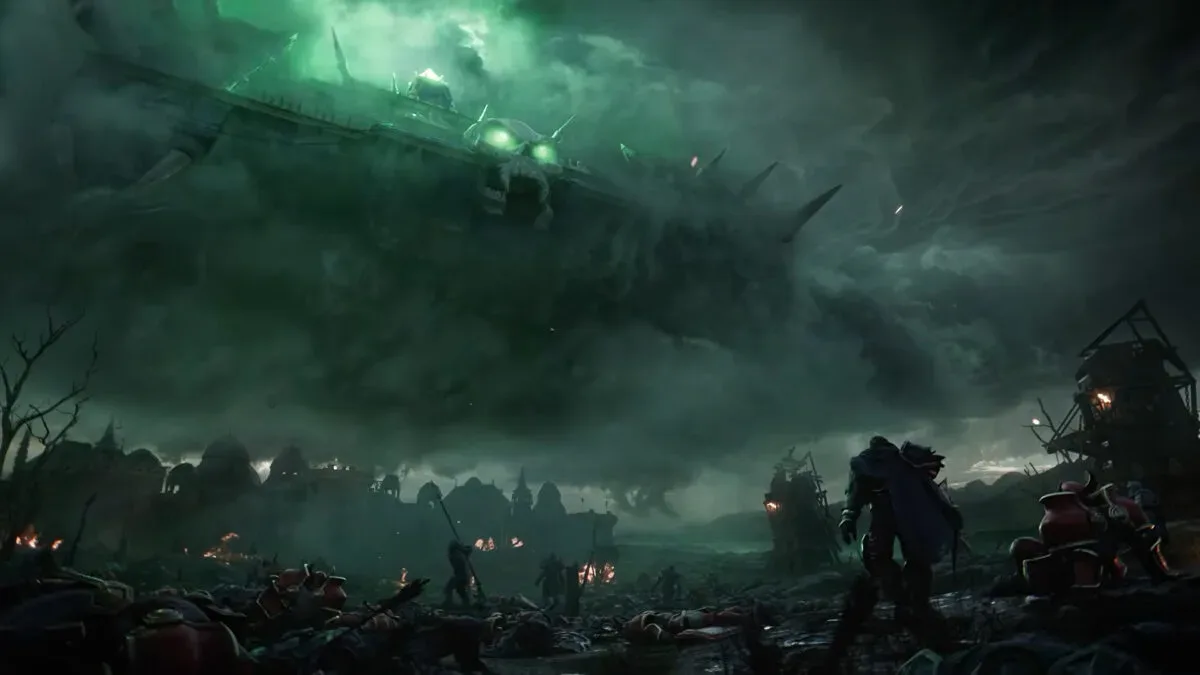
Warcraft III: Reforged has received a substantial new campaign in The Forsaken Kingdom, and the timing was clearly part of the plan: it was revealed and released alongside BlizzCon 2026. The expansion-sized campaign promises more than 30 hours of new gameplay, covering the sacking of Lordaeron and the formative period of the Undercity while connecting the era of Warcraft III to World of Warcraft.
That is a meaningful return to the real-time strategy space for a remake whose 2020 launch was met with widespread criticism from players and critics. The release is also accompanied by new Definitive graphics and quality-of-life updates intended to renew attention around Reforged. Yet the immediate launch has created an awkward issue for anyone approaching Warcraft III as one long campaign experience: its visual options and voice support do not presently line up across old and new content.
The practical result is simple, if frustrating. Players can use the original graphical style in Warcraft III’s existing campaigns, but not in The Forsaken Kingdom. Meanwhile, the newly introduced Definitive graphics are available for The Forsaken Kingdom, but do not extend to those classic campaigns. At launch, there is no single graphics setting that works across the entire journey.
A campaign split between visual styles
“Definitive graphics” here refers to the new visual presentation created for The Forsaken Kingdom. It is not a universal replacement for every campaign in Reforged at this point. Conversely, the original graphics option is a presentation mode available in the classic campaigns, rather than an option players can carry into the new campaign.
This matters beyond a settings-menu inconvenience. Warcraft III’s campaigns are often experienced as a connected story, and The Forsaken Kingdom is explicitly positioned in a bridge period between Warcraft III and World of Warcraft. A player who wants visual continuity has to compromise: play the older campaigns with their available original look and then move to the new campaign’s Definitive presentation, or use the newer look only in the newly added material.
For players, it is worth separating what is promised from what is merely possible. Warcraft senior manager Brad Chan said a definitive version of the classic campaign is planned for the “near future” and will be free for all players. That points toward an eventual route to a consistent Definitive-style run across the classic and new campaigns.
However, there is no equivalent confirmation that The Forsaken Kingdom will receive a classic-look mode. The current situation should therefore not be read as a confirmed temporary gap on both sides. A Definitive presentation for the original campaigns has been stated as planned; an original-graphics option for the new campaign has not been confirmed.
Why visual parity is more than a cosmetic request
Graphics choices can affect how a remaster or remake is preserved and enjoyed. Some players may prefer an updated presentation, while others value the appearance associated with the original release. Neither preference is inherently about refusing change. A consistent option simply lets a player decide which visual language they want for a full campaign run.
Related coverage includes Warcraft III: Reforged Team Addresses Forsaken Kingdom's Graphics and Dub Limitations.
It is also distinct from the hardware question. A display upgrade can change how an image is viewed, but it cannot solve an in-game restriction on which art style is selectable. Anyone weighing the broader setup side of PC play can read our guide to whether curved gaming monitors suit your desk and games; in this case, though, the core concern is software parity between campaigns.
Localized text, English-only voiceovers
The second major difference is localization. The Forsaken Kingdom has text localization in the same languages supported by Reforged, but its voiceovers are available only in English at launch.
Localization is the process of adapting a game for different languages and regions. In this case, text localization means written material is translated. Dubbing, or voiceover localization, means dialogue is performed in those languages as well. Text support is valuable, but it does not provide the same experience as fully voiced dialogue for players who prefer, need, or expect audio in their selected language.
Reforged’s initial release included translated text and voice work in a dozen languages. Those dubs were not without debate: some retained original voices, while others used fully rerecorded performances. But regardless of those disputes, the game provided localized spoken dialogue. The Forsaken Kingdom currently offers a narrower audio experience than the pre-existing Reforged material.
Chan said the team is looking at future localization for different regions, while still determining which regions those will be. That is an acknowledgement that additional voice localization is being explored, not a commitment to every previous language or a timetable for any individual dub.
Players should be careful not to collapse those points into a promise of complete future parity. The available information supports three clear statements: written localization is included in the same languages already supported; spoken dialogue is English-only at launch; and future regional localization is under consideration. It does not establish which voiceovers will arrive, when they might arrive, or whether all former language options will be restored.
The launch trade-off: BlizzCon momentum versus a complete feature set
Game director Ion Hazzikostas described the decision as one of time and trade-offs. The team wanted players to have the campaign during BlizzCon rather than wait while it worked through a localization pipeline.
A localization pipeline is the sequence of work needed to prepare a game for another language or region. In the context of dubbed dialogue, that necessarily involves more than translating words on a page: recorded voice work must be produced and then incorporated into the game. No further details about the team’s process were provided, but the stated reason for the release timing is that this work was not complete when the campaign was ready to launch alongside the event.
“We opted to make the immediate splash and start getting feedback, start getting a sense of what players felt about this experience,” Hazzikostas said.
He also recognized the importance of a full experience in supported players’ language of choice, while saying the priority was getting the content into players’ hands and using their feedback to help shape next steps. When asked why the campaign needed to be playable at BlizzCon instead of merely announced there and released later, he pointed to the excitement of the moment and the opportunity to capitalize on an infrequent event.
That explanation establishes the strategy, not necessarily agreement on its outcome. A surprise playable release creates an immediate focal point for an event and puts feedback in front of the team sooner. But it also makes the missing options immediately visible, particularly in a campaign built to sit beside older content that already has different visual and language capabilities.
What feedback can realistically change
Hazzikostas said the team is open to hearing from players who would have preferred a different decision, and that such feedback can influence comparable choices in the future. That is important wording. It does not announce a delay, a patch date, a classic graphics mode for The Forsaken Kingdom, or a completed dubbing plan.
Instead, it suggests that player response will be part of how the team evaluates both this release and future launch decisions. For a title seeking to revive interest in Reforged and even the RTS genre, that feedback will likely focus on the things players encounter throughout a campaign rather than only on its headline size: visual continuity, language accessibility, and whether older and new material feels like one product.
What players can expect right now
- The Forsaken Kingdom is available now following its BlizzCon 2026 announcement.
- The campaign contains more than 30 hours of new gameplay and is set around Lordaeron’s fall and the early Undercity.
- Definitive graphics apply to The Forsaken Kingdom, not the classic Warcraft III campaigns at present.
- Original graphics are available in the classic campaigns, not in The Forsaken Kingdom.
- Text is localized across the previously supported languages, while launch voiceovers are English-only.
- A free definitive version of the classic campaign is planned for the near future, though no release date was given.
- Future regional voice localization is being explored, but regions, languages, and timing remain unconfirmed.
The Forsaken Kingdom’s arrival is therefore both a notable addition and an unfinished parity story. It gives Warcraft III: Reforged a large new chapter at a pivotal point in Warcraft history, while asking some players to accept a graphics transition and English-only spoken dialogue for now. The stated plan for free Definitive updates to the classic campaign offers a concrete sign that the visual split may narrow. The status of classic-style new content and non-English dubbing is less settled.