Warcraft III: Reforged is getting an unexpectedly substantial new chapter. A major update arriving September 12 brings broad visual and feature changes to Blizzard’s real-time strategy remaster, while a separate paid campaign named Forsaken Kingdom sends players back into one of Warcraft’s most consequential tragedies: Arthas’ destruction of Lordaeron and the grim aftermath that helped define the Forsaken.
It is a notable return to a game whose 2020 launch became almost inseparable from disappointment. Reforged arrived as a remake of the original Warcraft III, but players encountered bugs, missing features associated with the earlier version, and technical changes that made the experience feel worse rather than definitive. Support and fixes have continued in the years since, yet a full-scale new campaign is a much bigger signal than routine maintenance. At minimum, it gives one of the most debated releases in Blizzard’s catalog a new reason to command attention.
Forsaken Kingdom revisits Warcraft’s darkest royal disaster
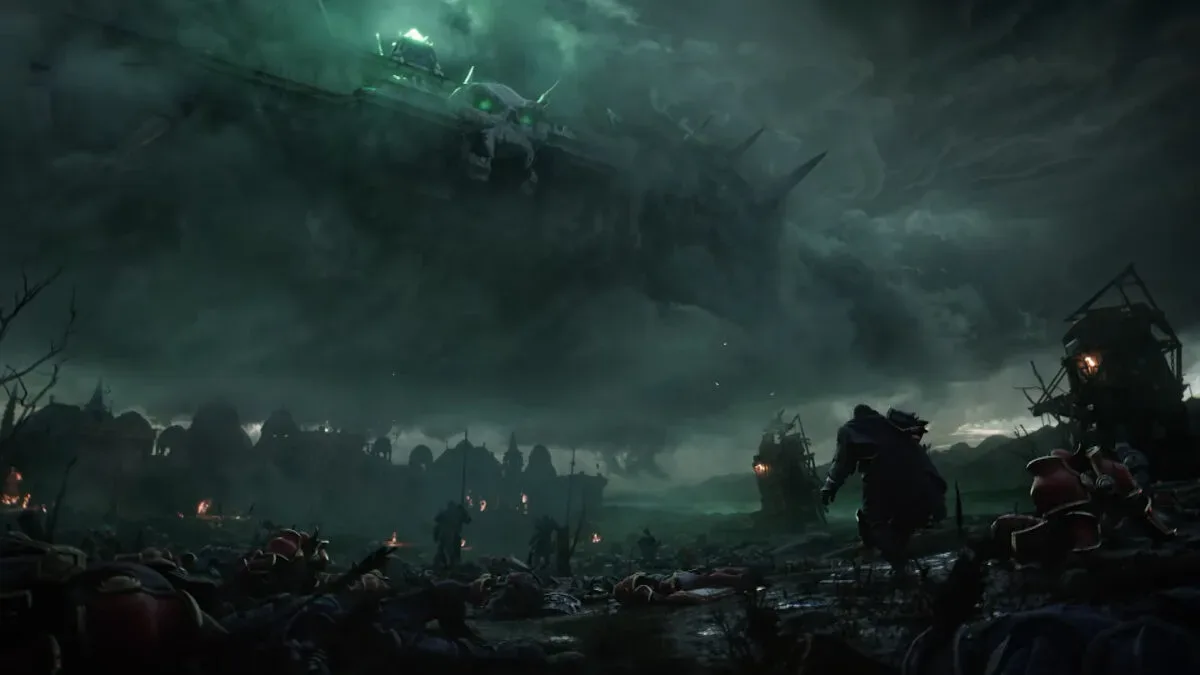
Forsaken Kingdom centers on Arthas’ sacking of Lordaeron and what follows. That premise puts the expansion squarely in familiar Warcraft territory, but not merely in the broad sense of another undead-versus-human battlefield. The fall of Lordaeron is a foundational moment in the setting’s history, a catastrophe whose consequences echo through the politics, identities, and conflicts of Azeroth long after the first armies marched.
Arthas and Sylvanas are both set to have key parts in the campaign. That pairing immediately makes sense for this period of the timeline: Arthas is the prince whose descent and campaign of devastation reshape Lordaeron, while Sylvanas’ fate is intertwined with the birth of the Forsaken. The campaign title itself indicates that the story is interested not only in destruction, but in the damaged kingdom and people that emerge from it.
Players can also expect to encounter major places and factions attached to that era, including:
- The Undercity, the Forsaken stronghold beneath the ruins of Lordaeron.
- The Scarlet Crusade, a faction deeply connected to the chaos and paranoia following the Scourge’s advance.
- Naxxramas, one of Warcraft’s most recognizable necropolis locations.
Those names give Forsaken Kingdom a strong sense of scope. The campaign is not framed as a quick side mission or a small character vignette. It is built around locations and groups that carry considerable narrative weight, particularly for fans who have followed Warcraft’s story through both strategy games and later online adventures.
More than 30 hours, plus a new neutral hero
The new campaign is said to contain more than 30 hours of gameplay. That is a significant stated length for an RTS story mode, especially when paired with the campaign’s focus on a landmark part of the setting. Time estimates naturally vary based on difficulty, mission retries, optional objectives, and player approach, but the announced figure presents Forsaken Kingdom as a major piece of content rather than a brief bonus scenario collection.
A new neutral hero, the Forsaken Paladin, is also included. Neutral heroes have long been an appealing part of Warcraft III’s strategic identity because they can be recruited outside a faction’s standard hero lineup. A Forsaken Paladin is an especially intriguing addition in thematic terms: the image puts a character archetype usually associated with holy martial tradition beside a people shaped by undeath, abandonment, and survival. The announcement confirms the hero’s inclusion, though it does not spell out abilities, unit interactions, or how the character will fit into specific missions.
Related coverage includes Warcraft III: Reforged Gets Forsaken Kingdom Campaign With Arthas and Sylvanas.
That restraint matters. It is tempting to treat every recognizable Warcraft term as a promise of a certain battle, faction roster, or lore revelation, but the currently outlined details are narrower. What is confirmed is a campaign about Lordaeron’s fall and its consequences, important roles for Arthas and Sylvanas, appearances by the Undercity, Scarlet Crusade, and Naxxramas, a Forsaken Paladin neutral hero, and a stated playtime exceeding 30 hours. The mission structure and granular gameplay systems remain to be seen.
The update is free; the campaign is not
The September 12 rollout has two distinct parts. Every Reforged player will receive the major graphics and feature update for free. The Forsaken Kingdom campaign, however, is paid content. It will be offered either as a standalone purchase or within a bundle.
That distinction is important for returning players. Someone who owns Warcraft III: Reforged does not need to buy the campaign simply to get the broader graphical and feature improvements. Conversely, the free patch should not be mistaken for automatic access to the new story content. No price is specified here, so prospective buyers will need to consult the applicable storefront or bundle details rather than assume a cost.
Alongside the upgraded presentation, the update includes improvements to the world editor and further feature adjustments. Warcraft III’s editor has always been more than a menu option for a portion of its community. It is the toolset associated with custom maps, experimental game modes, and a long tradition of player-made work. Improvements there may be meaningful beyond the official campaign, even though the particular editor changes have not been detailed.
The graphics overhaul is likewise described as enhanced visuals rather than a fully itemized list of models, animations, interface elements, performance targets, or settings. For Reforged, that wording will naturally attract scrutiny. Visual presentation was a central part of the remake’s identity and also part of the debate surrounding it. A new graphics pass could be valuable, but players will likely judge it by how clearly it serves the strategy game’s readability and whether it fits the feel of Warcraft III, not simply by how much detail appears on screen.
A surprising second act for a troubled remake
Reforged launched in 2020 with enormous expectations. The original Warcraft III remains a major PC strategy touchstone, valued for its campaigns, faction design, hero mechanics, competitive history, and creative community. A remake had the difficult assignment of respecting that legacy while modernizing the package. Instead, its debut was marked by technical problems, omissions compared with the older game, and changes that alienated many longtime players.
Blizzard has addressed some concerns over time, but the perception that Reforged might quietly receive only limited further attention has lingered. That is why Forsaken Kingdom stands out. It is not simply an adjustment to a balance value or a compatibility fix. It is an attempt to add a large original campaign to a title that had already been viewed as a troubled revisit of something beloved.
There is an odd poetic fit to the selected subject matter. The Forsaken are defined by persistence after ruin; Reforged is now trying to establish a more positive future after a launch that badly damaged its standing. The parallel should not be overstated—games are not kingdoms, and patches do not raise armies from the dead—but it does make the campaign’s theme unusually apt.
For Warcraft followers, the timing also lands amid renewed interest in the franchise’s older foundations. The planned World of Warcraft: Forever return to a level-60 Azeroth points toward another effort to engage with the setting’s classic-era appeal. Forsaken Kingdom approaches that history from the genre and game that originally established so much of Warcraft’s visual language, lore, and character drama.
What players should watch for after the update arrives
The immediate practical question is how the free update changes the day-to-day Reforged experience. Enhanced graphics, feature tweaks, and world editor improvements are meaningful headline items, but their value will be clearest in the particulars: visual clarity during crowded fights, stability, usability, and the practical capabilities offered to map makers and players.
The campaign itself will face a different test. Arthas, Sylvanas, Lordaeron, Naxxramas, the Scarlet Crusade, and the Undercity are not obscure pieces of lore being dusted off for a niche detour. They are among the most recognizable elements of Warcraft’s past. That creates a rich foundation for a 30-plus-hour campaign, but also sets a high bar for how the story handles familiar events and how the missions turn that history into satisfying strategy gameplay.
Still, the basic news is clear: Warcraft III: Reforged is not standing still. Its free September 12 update promises upgraded graphics and systems for all players, while Forsaken Kingdom offers a separately purchased, substantial journey through the fall and aftermath of Lordaeron. For a remake many had expected to fade away, that is a remarkably large resurrection.