VRChat has decided not to add labels identifying AI-generated content at this time, despite saying that 95% of respondents to its community survey wanted some sort of designation for AI use. The result leaves the social virtual-world platform in an awkward but revealing middle ground: users broadly asked for more disclosure, while the company is concerned that a disclosure system could be unreliable and create fresh avenues for conflict.
The platform, which lets people create and share virtual worlds for social interaction, says it is still considering labels such as Human-authored and a Tools used field. Neither is a committed feature. It also says it will not currently add an AI-generated tag or an option to remove AI-made work from search results.
That distinction matters. A broad field describing the tools involved in making an asset, avatar, world or other piece of content is not necessarily the same thing as a warning-style AI label. Nor is a voluntary creator declaration the same as a filter that lets users decide what they want to encounter. VRChat’s position is therefore not that the question has been fully settled; it is that the requested labeling and filtering mechanisms will not be introduced now.
What the survey result does — and does not — establish
The 95% figure is a striking level of support for some form of label among the people who answered the survey. It demonstrates a strong preference for transparency in that respondent group. It does not, on its own, answer the harder implementation questions: what counts as AI use, which assets need a label, how a platform verifies a declaration, or what happens when somebody disputes one.
Those details are especially consequential on a creation-focused social platform. “AI-generated” can sound precise in a debate, but it may cover very different workflows. A creator might use a generative tool to make a central visual or audio element. Another might use automated assistance at one small stage, then substantially revise the result by hand. A simple binary label can be easy to read while still failing to describe those differences.
A proposed Tools used field suggests an attempt to capture more context. In plain terms, it would be a place for creators to disclose parts of their production workflow instead of reducing the work to a single category. A Human-authored label would approach the issue from the other direction, emphasizing work represented as made without generative assistance. VRChat has not committed to either proposal, so users should not treat them as announced features.
VRChat’s concern is enforcement, not just terminology
VRChat’s explanation focuses on the limits of self-reporting. The company says some creators may honestly disclose generative or assisted work, while others may present it as entirely made by hand. That is the fundamental weakness of a voluntary tag: it can improve information for good-faith participants but cannot guarantee that the most disputed examples will be labeled accurately.
Verification presents a separate problem. A platform could ask for disclosures, but that does not automatically give it a dependable way to inspect every creative workflow. The available information does not describe a proposed auditing or moderation system, and VRChat has not said it will build one. Without a reliable verification process, an official-looking label could create confidence that exceeds what the platform can actually prove.
Related coverage includes VRChat Won’t Add AI Labels Despite 95% Survey Support.
The company also worries that labels could encourage what it calls “sleuthing”: users attempting to identify AI-made work themselves and accusing creators of using it. That concern is not merely about disagreement over art. It is about the social consequences of a category becoming a flashpoint, including the possibility that creators may face harassment even when they did not use AI tools.
This makes the policy dispute more complicated than a simple choice between disclosure and secrecy. Community members seeking labels may see them as a way to make informed choices. VRChat sees a risk that an imperfect label system turns creators into targets and makes unverified suspicion more visible. Both points can be true at once, but the practical outcome is still clear: people who want an official AI indicator or a search filter will not get one for now.
Why search filtering was a major part of the request
An AI label and an AI search filter solve different problems. A label is primarily informational: it tells a person something about content after they encounter it. A filter is a discovery control: it affects what that person is shown before an encounter happens.
That difference helps explain why the decision may disappoint users even if VRChat later explores tool disclosures. Someone who wishes to avoid certain kinds of work does not necessarily want to manually inspect individual listings, thumbnails or creator profiles. A search exclusion would give that person a platform-level preference. VRChat says it will not add that capability at present.
Conversely, filters rely on classification being both understandable and dependable. If declarations are inconsistent, then search results can be misleading in either direction: content may be excluded based on an overly broad label, or included because the relevant workflow was not disclosed. VRChat’s stated uncertainty about truthful labeling is therefore directly connected to its reluctance to build a filter around it.
The changes VRChat says have wider community alignment
Rather than implementing AI-specific tags, VRChat says it will focus on areas where it sees broader agreement across the community: accurate thumbnails, better discovery tools and quality as a core metric.
Accurate thumbnails concern the image that represents a world or item before a user opens it. Better accuracy can make discovery less frustrating by narrowing the gap between what is advertised and what is actually available. Discovery tools are the systems that help users find worlds, creators and content. The company has not provided feature-level detail here, so it is not yet possible to say exactly how those tools will change.
Quality as a core metric is similarly a direction rather than a complete specification. It indicates that VRChat wants quality to carry weight in how content is surfaced. But “quality” can be difficult to define in a platform hosting many kinds of communities and creative work. The announcement does not state how the metric will be measured, who decides it, or how creators can understand and respond to it.
Those unanswered questions will matter. Discovery systems do not just organize a catalog; they shape which creators and communities people see first. A stronger emphasis on quality may be welcomed if it helps users find well-presented worlds and avoids misleading listings. It may also invite scrutiny if creators cannot tell what signals affect visibility. The AI-label debate and the discovery debate are therefore related, even where they are not the same policy.
A platform with high-stakes social uses
VRChat’s moderation and disclosure choices carry particular weight because the platform is used for more than casual virtual hangouts. It has been used in filmmaking and to create safer communities for transgender people. Those uses underscore why trust, discovery and harassment concerns cannot be treated as abstract product questions.
At the same time, VRChat has faced accusations involving toxic and predatory behavior. That background helps frame the company’s caution about systems that might intensify creator-on-creator policing or give bad-faith users another pretext for targeting people. It does not resolve whether labels would reduce or increase harm, but it does explain why technical proposals cannot be separated from community safety.
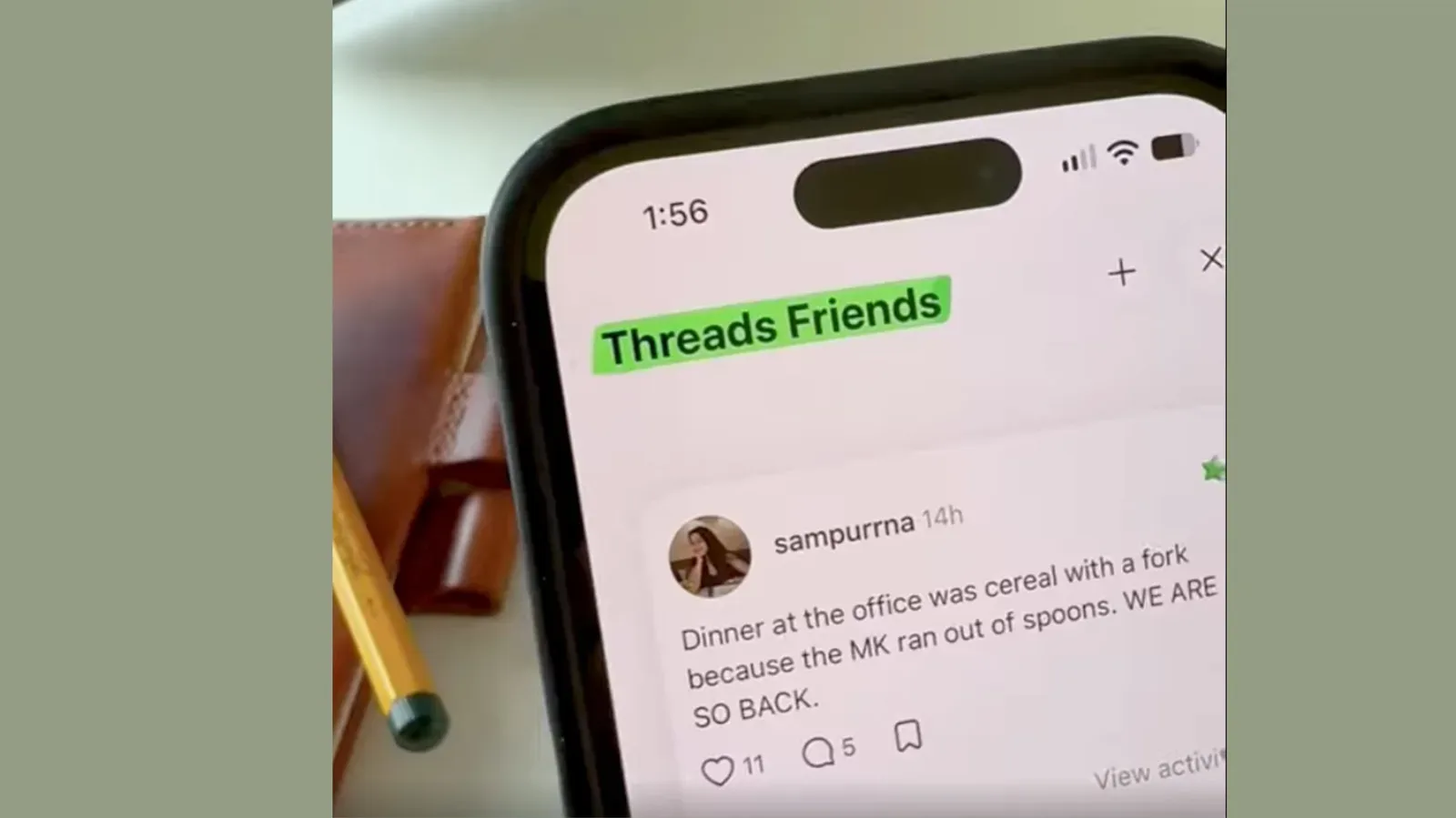
The challenge is familiar across online services: users often want clear controls and clear information, while platforms must decide how much of that information they can meaningfully validate. Privacy and audience controls are also recurring issues for social platforms, as seen when Threads tested a private-post option for limited groups. In VRChat’s case, the immediate debate is not private sharing but creative provenance: what people want to know about work, what creators can accurately state, and what a platform should enforce.
What creators and users can take from the decision now
For creators, the practical position is that VRChat has not imposed a new AI-label requirement in the information available. The company is still weighing a human-authored designation and a tools-used field, but neither should be treated as policy until VRChat makes a definitive decision.
For users, there is no announced official tag for AI-generated material and no AI-focused search exclusion. Users who supported those options have a clear indication that survey support alone did not settle VRChat’s approach. The company is prioritizing measures it believes have wider alignment, while leaving the AI-label issue open for further consideration.
That may be an unsatisfying answer for people on every side. Advocates of labels do not get the transparency or filtering they requested. Creators wary of accusations do not receive a final assurance that labeling proposals are off the table. And the company still has to show how its promised work on accurate thumbnails, discovery and quality will function in practice. For now, VRChat has chosen delay over a rule it believes could be both difficult to enforce and socially combustible.