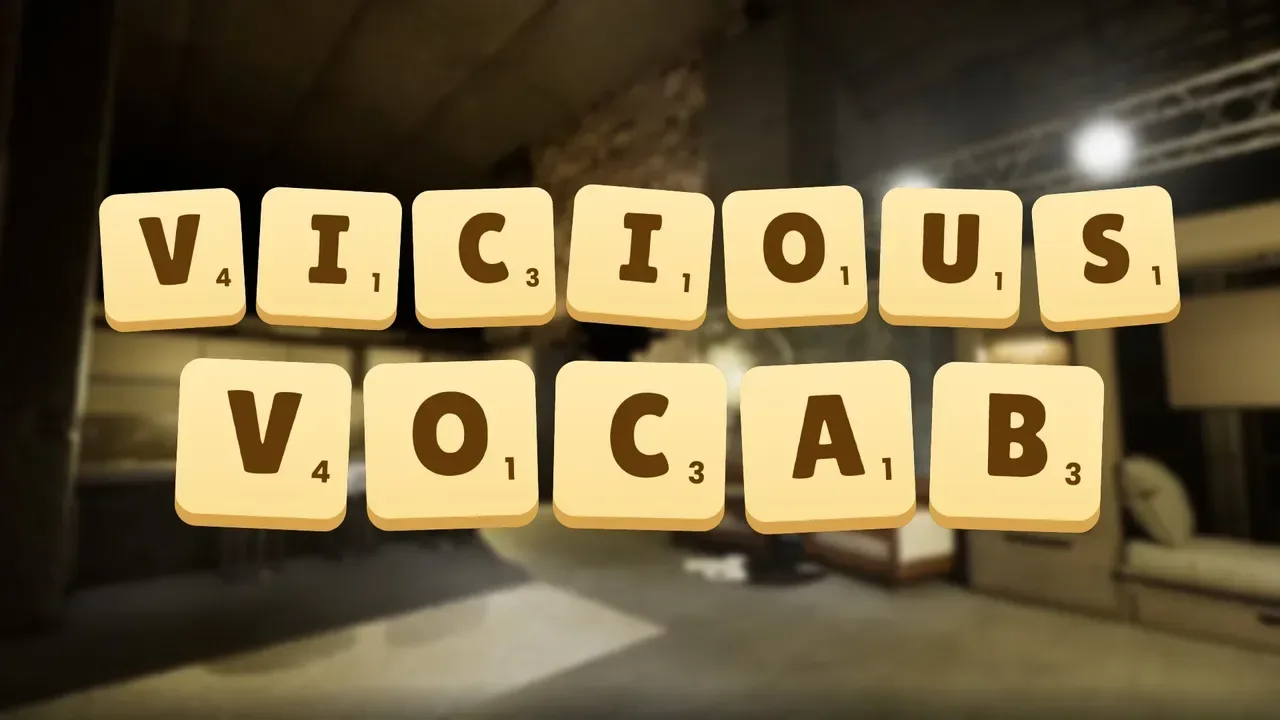
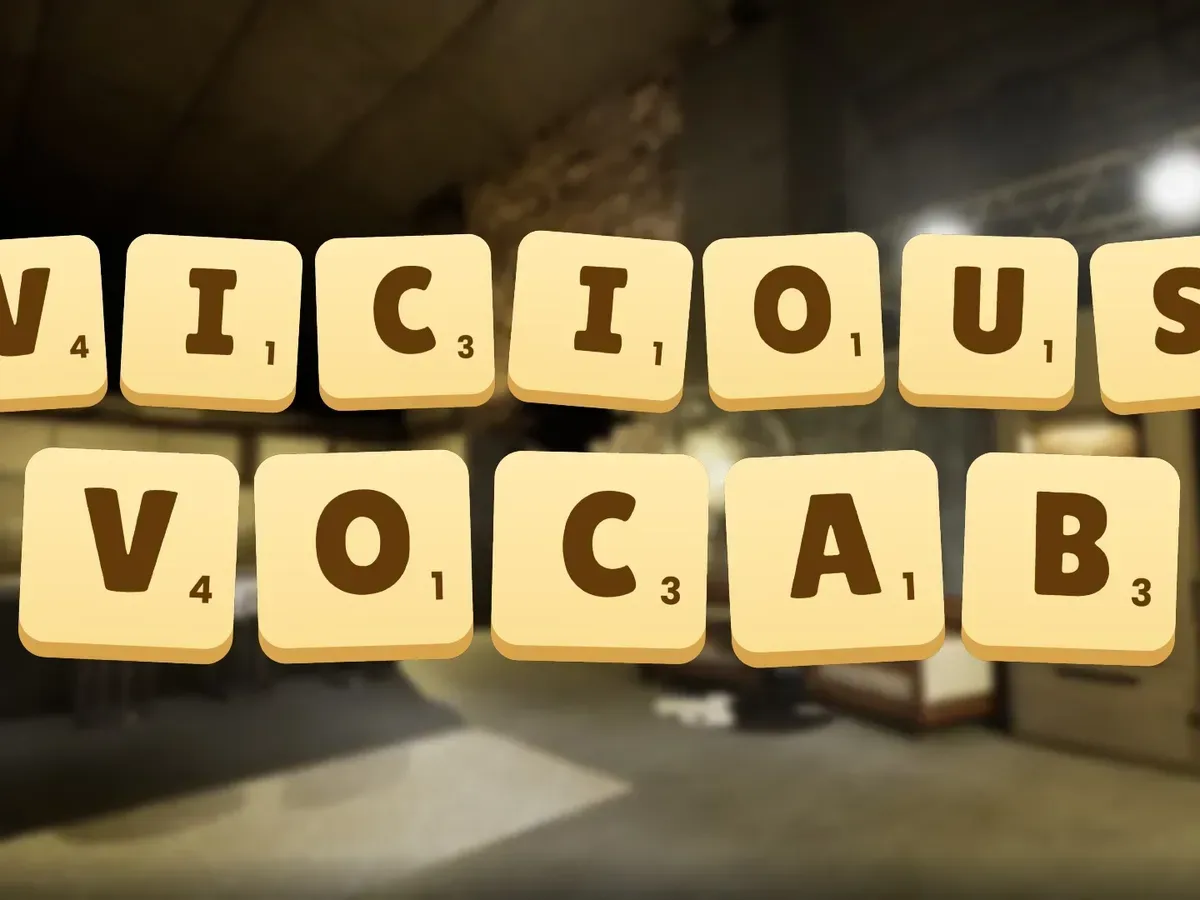
Vicious Vocab is trying to make the humble rack of letters feel dangerous. The newly revealed PC game comes from the five-person collective funcool games, bringing together comedian Dane Cook and Robert Bowling, previously a creative strategist on Call of Duty. Its central idea is straightforward enough to explain at a glance: words do things. The more intriguing promise is what follows from that premise. A word can trigger an effect, demand a response, set up a combination, and potentially lead the player away from the familiar word board altogether.
The team calls it a “word brawler,” while Cook has described the approach as a first-person speller. Those labels are intentionally odd, but they identify the project’s key difference from conventional word games. Vicious Vocab is not simply about finding the highest-scoring entry from a collection of letters. It is designed around the consequences of the terms a player chooses and the way those consequences interact.
A release date has not been announced beyond a PC launch planned for the relatively near future. Pricing is also undecided. The game is currently framed as a single-player, narrative-led experience, though the developers intend to explore multiplayer later.
Words are meant to create problems—and solve them
The clearest example of Vicious Vocab’s reactive design is elemental damage. Spelling a word such as torch or fire can inflict fire damage. With the right letters available, the player can answer by creating water or ice, extinguishing the effect before it continues to cause harm. In the project’s early conception, a word such as bomb might destroy other words on the board.
That turns vocabulary into more than recognition. In an ordinary word-game turn, a player generally evaluates spelling, board placement and points. Here, a valid word may be tactically poor if it introduces a hazard that the current letter pool cannot answer. Conversely, an apparently less valuable word could be exactly what is needed to neutralize an ongoing threat or extend a useful chain.
What does “systems” mean here? In game-design language, a system is a set of rules that produces outcomes from player actions. A damage system tracks harm and recovery. An elemental system defines relationships such as fire being stopped by water or ice. A combo system rewards actions performed in a particular sequence. Vicious Vocab’s stated ambition is to have these rule sets overlap, so an act of word-building can simultaneously change the state of several systems.
Bowling has pointed to chains that can reach several layers deep. The practical appeal of that structure is readable cause and effect: make a word, see it alter the situation, then find a second word that transforms or counters the first result. The challenge is making the web of interactions understandable rather than arbitrary. Since players are working from only seven letters, the limitation is part of the puzzle. They must discover what can be expressed with the letters on hand rather than freely typing the perfect answer.
This is also why the comparison to Balatro matters more than the casino imagery. The announced game is not presented as a card game, but the reference signals an interest in combinations that build on other combinations. The word itself is only the beginning of a turn; its effects and the next available response are where the strategic pressure should live.
Related coverage includes Vicious Vocab Turns Wordplay Into a Strange, Reactive PC Adventure.
A word board with an escape route
Vicious Vocab’s biggest unanswered question is deliberately being kept vague. The game can change direction when particular words are played, moving beyond the board into an unexpected form of play. The team has invoked the disorienting, self-aware energy associated with The Stanley Parable as a point of reference, while declining to detail exactly what players will encounter.
That restraint is sensible for a project that seems to depend on surprise. The important established point is that the shift is not merely cosmetic. The developers say the right language can move players into an entirely different experience. In other words, Vicious Vocab treats words as possible narrative keys as well as combat-like tools.
Genre-bending can be an imprecise marketing term, but the claim has a specific meaning in this case. The game begins from the grammar of a casual word puzzle—letters, spelling and a board—then uses certain player choices to alter the type of activity or story surrounding it. Whether that transition lands will depend on how naturally the game teaches its vocabulary of effects and how rewarding the discoveries are without advance knowledge.
The studio’s approach appears to favor authored surprises over endlessly generated content. Bowling has stressed that the material is bespoke and handcrafted, which puts a natural limit on how many possible detours and responses the game can support. That limitation is not necessarily a drawback. A tightly authored branching experience can make individual words feel more intentional, provided that players can find meaningful routes rather than simply stumble into them by accident.
More than 20 endings, plus an endless way to play
For players who want the comfort of the basic word-game loop, Vicious Vocab is intended to support effectively unlimited play on the board. But its single-player mode is also planned to have more than 20 narrative endings and numerous achievements. Those two ideas serve different appetites: repeatable word play for someone who wants to keep making terms, and branching outcomes for someone who wants to test what the game acknowledges.
Multiple endings do not automatically mean 20 wholly separate campaigns. They do, however, indicate that the developers want word choice and exploration to carry narrative weight. The game’s structure may encourage a player to revisit it with a new vocabulary, different priorities or a willingness to chase unusual inputs. Withholding details on the major twist makes it impossible to judge the scale of those branches, so the ending count should be read as a development target rather than a complete explanation of how the narrative is organized.
Multiplayer is part of the longer-term plan, but it is not being positioned as a simple extension of the narrative game. Bowling describes the single-player and multiplayer directions as branches that should become strange in different ways. The former is centered on endings and authored narrative; the latter is aimed more directly at replayability. No format, timing or platform information for multiplayer has been confirmed.
An unusual creative partnership, built on a long friendship
Cook and Bowling’s collaboration did not begin with Vicious Vocab. They met roughly two decades ago, when Bowling was beginning his work as a community manager at Infinity Ward. Playing Call of Duty 2 together led to a friendship, and Bowling recalls being struck by Cook’s willingness to play the objective during Capture the Flag rather than simply chase eliminations. Cook later contributed battle chatter—character callouts and commands heard during play—to Modern Warfare titles.
The new game grew from a much simpler pitch. Cook had periodically brought game ideas to Bowling, but around a year before the reveal, the pair began turning the word-effects concept into a full project. What started as a playful notion—write a word, produce an associated result—expanded as the team considered what each result could enable or disrupt.
Cook’s connection to the subject is more than celebrity casting. He has described an early memory of his father reading the dictionary to build vocabulary for local hockey commentary. As a comedian, Cook came to see precise word choice as fundamental to rhythm, imagery and delivery. The distinction between a basic word and a more specific one can change not only a sentence’s meaning but its sound. That viewpoint fits a game where semantic choices have mechanical consequences.
The pairing also helps explain the project’s competing instincts. Bowling’s background is associated with a major action series, while Cook’s work centers on the timing and texture of language. Vicious Vocab is attempting to turn that intersection into a game design: action-like reactions expressed through spelling, then redirected into comedic or surreal narrative territory.
What is confirmed, and what remains open
- Confirmed: Vicious Vocab is in development at funcool games, a five-person team.
- Confirmed: It is planned for PC.
- Confirmed: Word choices can cause reactive effects, including damage and counters such as fire answered by water or ice.
- Confirmed: The initial focus is a narrative-driven single-player game with more than 20 planned endings, achievements and a repeatable traditional word-game option.
- Confirmed: Multiplayer is planned for a later stage, with an emphasis on replayability.
- Not yet disclosed: A specific release date, price and the full nature of the game’s major shift away from the word board.
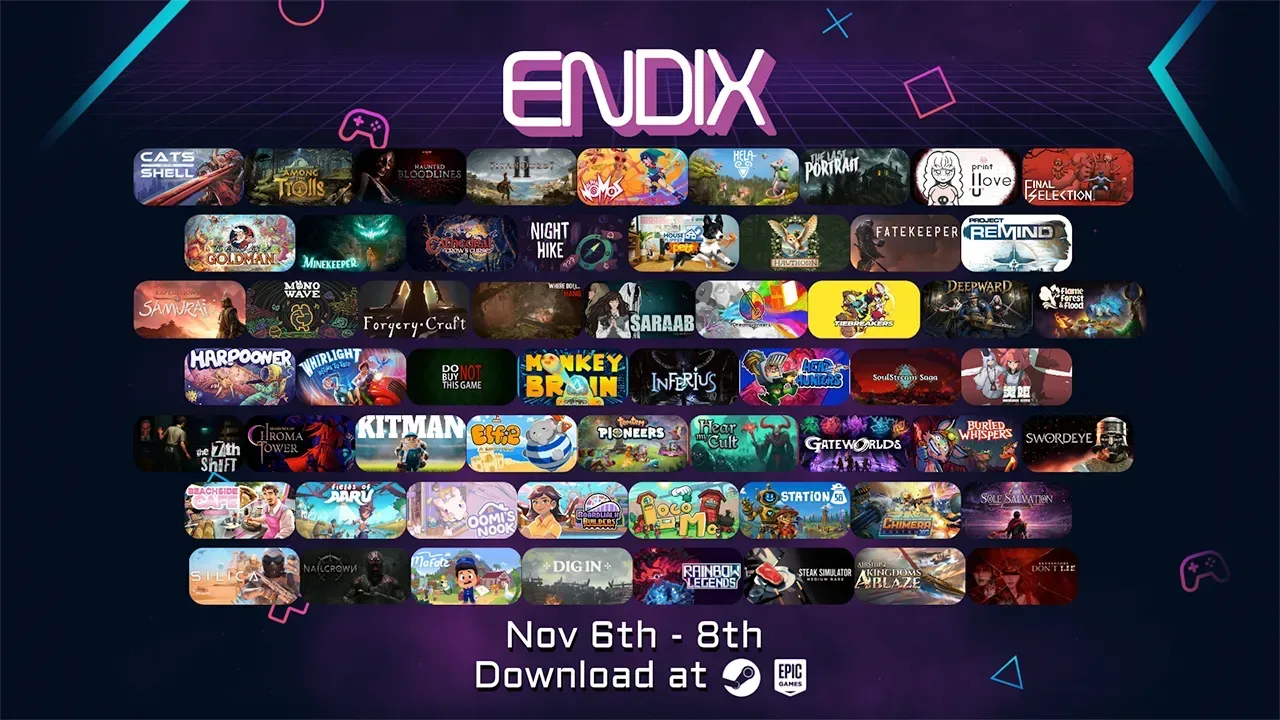
The PC space has plenty of room for small projects with unusual premises, and players looking for new releases and demos can also keep an eye on events such as the ENDIX virtual expo. Vicious Vocab’s pitch stands out because it is not content to add a theme to a standard spelling game. It wants language itself to function as its action system, its defensive kit and its route into narrative disruption.
For now, the most compelling part of the reveal is the constraint at its center. Seven letters sound like a narrow space. funcool games is betting that, once every valid word has an effect and effects can collide, that small vocabulary becomes a surprisingly large playground.