Tiny Dragon has discounted its Steam roster during the Steam Autumn Sale, with reductions ranging from 20% to 30% across five distinctly oddball indie projects. The selection covers competitive mini golf, a card-driven arcade shooter, tactical football, vending-machine management and a game about locating one particular pigeon amid enormous digital cities.
It is a small lineup, but not a narrowly themed one. The games appear aimed at very different kinds of PC players: people looking for an unruly multiplayer night, score-chasers who enjoy repeatable combat runs, strategy fans, low-pressure management play, and anyone prepared to treat an enormous crowd of birds as a romantic obstacle. The largest advertised discount is 30%, shared by Pigeon: A Love Story and Golf Gambit.
The other reductions are 25% for Super Football Tactics Pro and Vending Dokan!: Kozy Kiosk, while IKARUS is 20% off. Tiny Dragon directs players to its Steam publisher page for the complete group of listings and their current storefront details.
The sale lineup at a glance
- Pigeon: A Love Story — 30% off
- Golf Gambit — 30% off
- Super Football Tactics Pro — 25% off
- Vending Dokan!: Kozy Kiosk — 25% off
- IKARUS — 20% off
Percentages communicate the size of a reduction rather than a final checkout total, so prospective buyers should check each Steam product page for the current price in their region and for the sale’s displayed end time. That is particularly worthwhile when choosing between games built for different routines: a multiplayer purchase can depend on having a group ready to play, whereas a single-player score or strategy game may be easier to pick up on impulse.
Pigeon: A Love Story makes the search itself the premise
Pigeon: A Love Story, discounted by 30%, is framed as a “hardcore cosy” search game. Its unusual central task is to fly across cityscapes in pursuit of a single pigeon soulmate concealed within crowds of hundreds of thousands of birds.
The cities include London and Tokyo, presented at 1:1 scale and generated using real OpenStreetMap data. OpenStreetMap is a collaborative mapping project whose geographic data can be used to help construct digital places. In this case, that data-driven approach matters because the city is not merely a backdrop: its scale supports the game’s needle-in-a-haystack idea. Finding the intended bird is evidently meant to be difficult precisely because the player is searching within a vast urban environment full of visually similar pigeons.
The phrase “hardcore cosy” captures the apparent tension in that design. “Cosy” generally signals a gentle atmosphere or low-stress framing. “Hardcore,” by contrast, suggests commitment and a demanding objective. Here, the activity may be calm in the sense that the player is flying and looking, yet its challenge comes from the sheer scale of the search. It is a deliberately peculiar proposition for players who enjoy patience, observation and a concept that does not resemble a conventional mission checklist.
There is a practical expectation to set before buying: this is not described as a sightseeing game alone. The city scale and high bird count are tied directly to the search for the soulmate pigeon. Players drawn to it should be interested in that extended act of looking, rather than assuming the setting guarantees a conventional open-world structure.
Golf Gambit turns a familiar sport into an eight-player disruption contest
Golf Gambit also receives a 30% reduction. It supports mini-golf matches for up to eight players, but its defining twist is interference. Players can sabotage one another using moving obstacles, exploding barrels and mini tornados, while also creating shortcuts.
That changes the usual mini-golf question from “Can I make this shot?” to “What will still be true when I take it?” Obstacles that move or explode can alter a route, and shortcuts introduce opportunities for players who understand a hole’s layout or find a timely opening. The listed tactical nukes add another intentionally excessive flourish to a sport normally associated with tiny windmills and carefully judged putts.
The word “gambit” fits the setup: a gambit is a move that accepts risk or makes a sacrifice to secure an advantage. In this case, the game’s tactical layer seems to arise from deciding when to hinder rivals, when to pursue a faster route and how to cope when the course has been altered. It is the most overtly social game in the group, and the up-to-eight-player support makes it the clearest fit for a party session where a clean sporting contest would be far too sensible.
Potential buyers should note that the appeal described here is competitive chaos, not a pure golf simulation. The feature set is built around traps and player interference. For a regular group that likes friendly sabotage, that may be the whole point; for a group seeking a quieter, precision-first mini-golf game, it is an important distinction.
IKARUS combines shooting runs with card-built weapon synergies
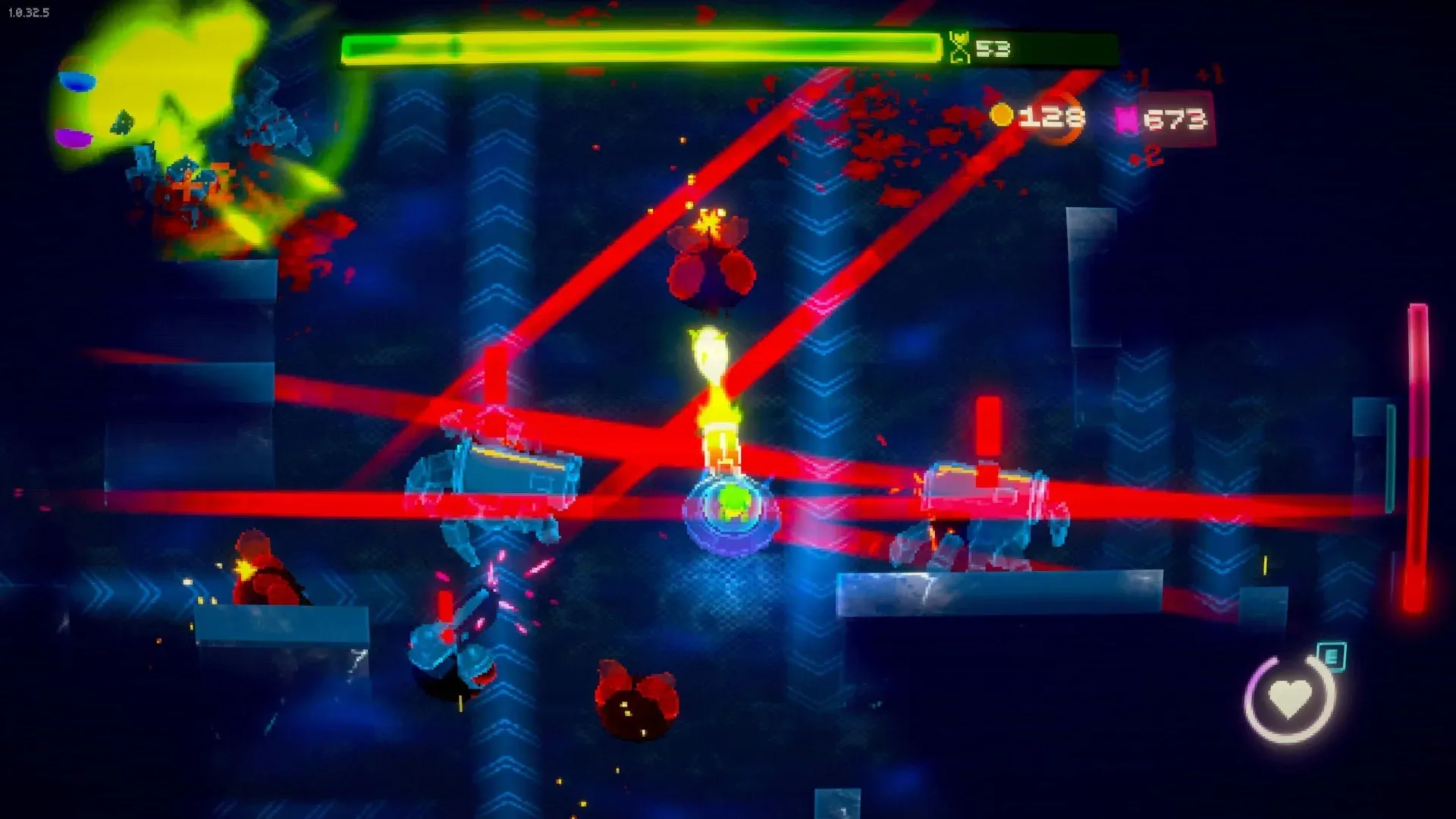
At 20% off, IKARUS brings together an arcade shoot-’em-up and a roguelite deckbuilder. Players combine cards to create weapon synergies, battle waves of robots and climb leaderboards.
A shoot-’em-up is a combat-focused game centered on shooting large numbers of enemies, commonly demanding movement, positioning and quick reactions. A deckbuilder adds another dimension: cards represent tools or effects, and the player’s available set of cards shapes what can be created during play. The supplied description emphasizes combinations, meaning the cards are not simply separate upgrades; their value comes from how they interact to produce powerful weapon setups.
“Roguelite” generally denotes a format with repeatable runs and systems that introduce variation between attempts. The provided details do not specify exactly how runs, failure or progression work in IKARUS, so those mechanics should not be assumed beyond the genre label. Still, the blend gives a useful outline of the intended rhythm: action against robot waves, choices around card combinations and a competitive reason to improve through leaderboard climbing.
This makes IKARUS the sale’s most systems-driven option on paper. Its appeal may lie in discovering a potent combination, then executing effectively enough to capitalize on it under arcade pressure. Players who enjoy either half of the premise but not the other should keep the hybrid structure in mind: deck decisions and direct shooting are both central to the pitch.
Super Football Tactics Pro puts special powers on a board-like pitch
Super Football Tactics Pro is 25% off and describes itself as a tactical, board-like sports game. Alongside tackles, it features special powers that can change a game and a tongue-in-cheek story.
“Board-like” is a useful signal that its football is being approached through positioning and tactical decision-making rather than a straightforward real-time sporting simulation. The description does not lay out turn structure, teams or match rules, but it clearly foregrounds the strategic framing. Bone-crunching tackles offer an aggressive on-field flavor, while special powers suggest that momentum can shift through more than standard sporting plays.
The tongue-in-cheek story further suggests a knowingly playful tone. That matters because special powers and punishing tackles can move sports games into heightened, arcade-adjacent territory. It is likely best considered by players who want football as a tactical game framework with a comic edge, rather than a strict simulation of the sport.
Vending Dokan!: Kozy Kiosk offers a lo-fi management change of pace
Vending Dokan!: Kozy Kiosk, also 25% off, is a lo-fi, cosy vending-machine management game. Tiny Dragon says it has been supporting the team at Aftabi Games on the project.
Management games revolve around organizing, operating or improving a system. Here, that system is vending machines, but the available information does not specify elements such as stock, pricing, customer behavior or progression. The safest read is simply that it focuses on the management of a vending-machine operation and frames that work in a lo-fi, cosy style.
“Lo-fi” is often used for a deliberately understated aesthetic or atmosphere, while “cosy” indicates an inviting and comparatively relaxed mood. Together, those labels position the game as a contrast to the explosives of Golf Gambit and robot waves of IKARUS. Players seeking a slower-paced game may find that distinction more valuable than any percentage discount.
How to choose among the five
The range of genres means the best pick depends less on which percentage is largest and more on what kind of play a buyer actually wants. The sale does not present five variations on one formula.
- Choose Pigeon: A Love Story for an unconventional search built around vast mapped cities and an elusive objective.
- Choose Golf Gambit for multiplayer mini golf where traps, obstacles and sabotage are integral.
- Choose IKARUS for a combination of arcade shooting, card interactions and leaderboard ambition.
- Choose Super Football Tactics Pro for board-like football strategy with tackles, powers and a comic tone.
- Choose Vending Dokan!: Kozy Kiosk for a lo-fi vending-machine management premise.
For PC players comparing this sale with broader hardware or platform considerations, our recent gaming tech roundup covers a different side of the hobby: equipment rather than game software. Tiny Dragon’s lineup, meanwhile, is about variety of design rather than shared technology or a single franchise universe.
The common thread is a willingness to make the premise do a lot of the work. One game makes romantic birdwatching absurdly enormous; another turns mini golf into a weaponized party game; another joins deck construction to shooter action. The remaining two use tactics and management as paths to sports parody and calm operational play. With discounts from 20% to 30%, the Steam Autumn Sale gives each of those ideas a lower-priced entry point without requiring them to resemble one another.