Grand Theft Auto 6 is not planned for PC at launch, but Take-Two chief executive Strauss Zelnick has offered the clearest recent indication that PC remains central to the company’s longer-term platform strategy. His comments do not confirm a GTA 6 PC edition, establish a date, or describe a port in development. They do, however, make one point unusually difficult to ignore: Take-Two sees the PC platform as increasingly important.
During an investor meeting on September 17, Zelnick was asked about the company’s approach to PC release timing. He framed the answer around cadence—the sequence and timing of launches across platforms—rather than committing to a particular product. Take-Two’s general strategy, he said, is to release on platforms where there is a meaningful audience, while allowing for exceptions if a platform is no longer viable.
“The PC platform is becoming more and more important to our company over time,” Zelnick said.
That is a broad corporate statement, not a GTA 6 announcement. Still, in the context of Rockstar’s previous release patterns and Grand Theft Auto 5’s substantial PC audience, it is meaningful. The practical takeaway for prospective PC players is cautiously straightforward: a later GTA 6 PC release looks plausible, but neither its existence nor its schedule has been formally confirmed.
What Zelnick did—and did not—say
It is important to separate a company strategy from a product promise. Zelnick did not say that Grand Theft Auto 6 will come to PC. He did not mention a release window, technical specifications, storefronts, upgrades, cross-platform features, or whether PC development is underway. Treating his remarks as a launch announcement would go beyond the available evidence.
What he did say is that Take-Two generally wants to serve platforms with a meaningful audience, and that PC matters more to the company over time. That is the central piece of evidence behind renewed expectations. A platform’s importance can influence where a publisher ultimately brings its major releases, but it does not eliminate the possibility of staggered launches.
Rockstar’s established console-first history also remains relevant. Zelnick has previously said GTA 6 is bypassing PC at launch in order to concentrate on the “core consumer” on consoles, adding that Rockstar has historically launched on console first. He also rejected the idea that the initial PC absence was driven by a rumored PlayStation exclusivity agreement.
In other words, the present picture has not changed at the level of official commitments: GTA 6 is not a day-one PC release. The newer comments matter because they describe PC as a growing strategic priority, rather than as a peripheral market that can be dismissed.
Why GTA 5’s PC history carries weight
Grand Theft Auto 5 provides the most concrete background for assessing the likely commercial significance of a potential PC version. The game first arrived on consoles in September 2013. Its Legacy PC release followed on Steam in April 2015, several years later. That gap shows that Rockstar has been willing to delay a PC edition, but it also shows that the company has ultimately supported the platform for one of its largest games.
The scale of that support is visible in Steam’s public-facing signals. GTA 5 Enhanced has more than 210,000 user reviews on Steam, with 83% marked positive, and it continues to appear regularly among the store’s top 20 daily-active games. Before it, GTA 5 Legacy accumulated nearly 1.9 million Steam user reviews, 88% of them positive, and reached a peak of more than 1.1 million concurrent players. The Legacy edition has been delisted from Steam, although its page remains viewable online.
Those are not interchangeable measurements, so they need careful interpretation:
- User reviews show that a large number of Steam customers engaged enough to submit feedback. They are not a sales total, because not every buyer writes a review.
- Positive-review percentage is a snapshot of the reception recorded through Steam reviews. It does not measure technical performance, player count, or the whole community on its own.
- Concurrent-player peak means the highest number of people using the game at the same time on Steam. It is a useful sign of demand, but it is not the game’s lifetime audience.
- Tracker estimates are external estimates rather than company-confirmed sales data. They should be read as a range, not as an audited figure.
SteamDB-based trackers place GTA 5’s PC sales between 50 million and 90 million copies across the editions. Take-Two has said GTA 5 has sold 230 million copies overall. Even the low end of that estimated PC range would represent a considerable share of the game’s lifetime sales. That does not prove GTA 6 will follow precisely the same route, but it explains why the PC question is commercially consequential.
A delayed release is not the same as no release
The distinction between a skipped launch platform and a permanently skipped platform is the heart of the discussion. GTA 6’s console-first plan is confirmed; an eventual PC release is not. The two ideas are compatible. A publisher can prioritize consoles for the initial launch, then expand later once additional platform work is ready or once it fits the wider release plan.
The historic GTA 5 timing has led to speculation that GTA 6 could arrive on PC 12 to 18 months after consoles. That number is speculation, not guidance from Take-Two or Rockstar. GTA 5’s own PC version arrived years after its 2013 console debut, and past schedules cannot establish a future timetable. Anyone planning a hardware purchase or waiting to play should treat estimates, retailer placeholders, supposed leaks, and community countdowns as unverified unless Rockstar or Take-Two announces details directly.
There is also a production reality behind a staggered strategy. Building for PC means accounting for a broad range of hardware configurations and settings that differ from a fixed console target. That does not mean PC is unimportant. Rather, it helps explain why a publisher could value the platform while still allocating the initial launch effort toward console versions.
A former GTA 5 producer has made that trade-off explicit in general terms: work assigned to one version is work not assigned to something else. That is a useful way to understand a console-first decision without turning it into a judgment about whether Rockstar “cares” about PC players. Development priorities, launch timing, and long-term platform support are related, but they are not identical things.
What PC players should reasonably expect now
The most defensible expectation is patience paired with skepticism. Zelnick’s comments offer a positive signal for the broader importance of PC within Take-Two, and GTA 5 demonstrates that Grand Theft Auto can command an enormous PC audience. Neither fact gives players a confirmed GTA 6 PC date.
For now, prospective players should avoid assuming any particular delay, performance target, edition, or distribution arrangement. There is no sourced information here about minimum requirements, graphics options, mods, online compatibility, preorders, pricing, or Steam availability. A PC release can be a sensible inference from the company’s direction; those details would still require an official reveal.
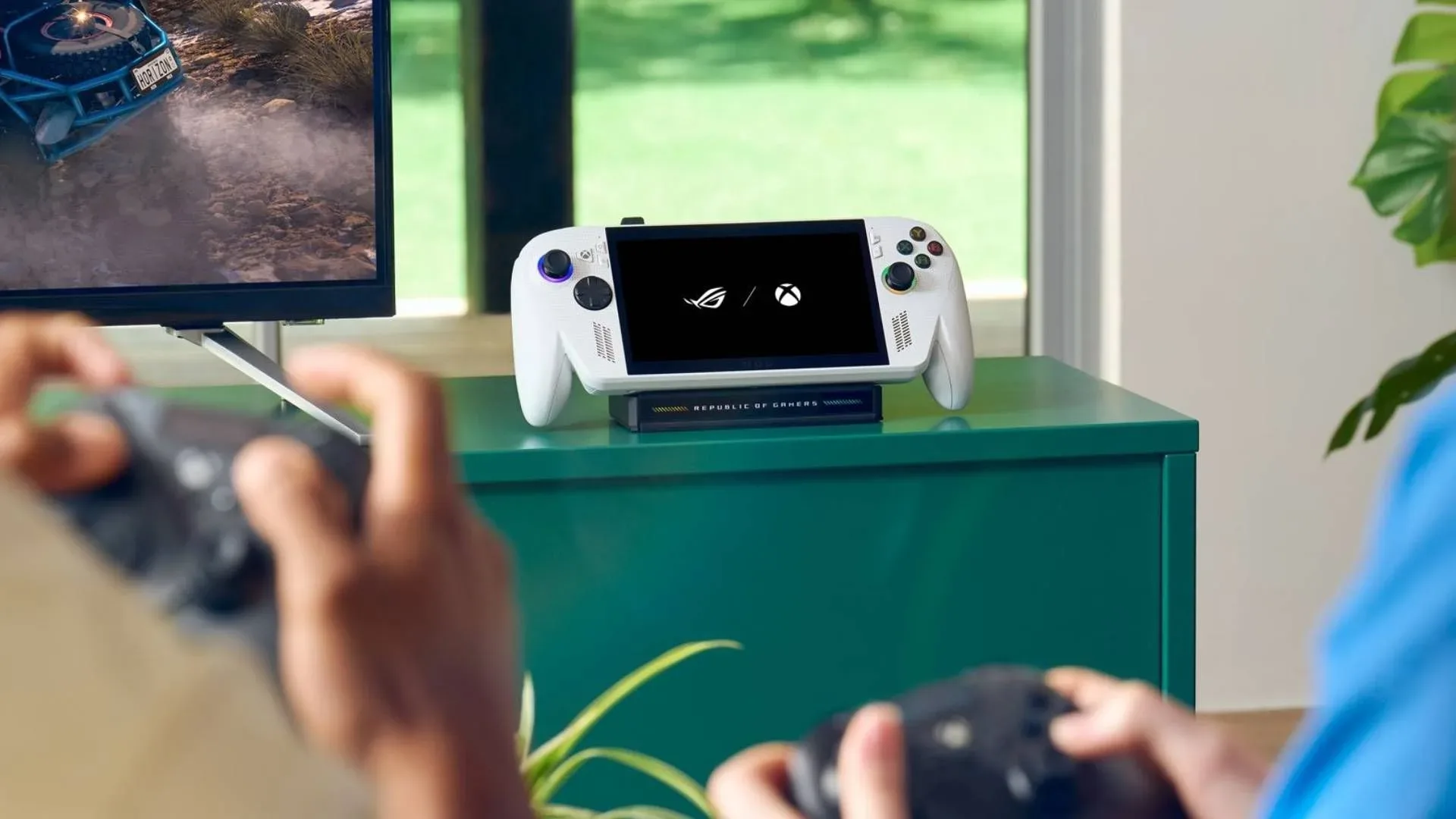
The conversation also lands at a time when PC hardware remains its own purchasing decision rather than a guarantee of access to every major release on day one. Players weighing a PC upgrade for upcoming games may find our look at open-box ROG Xbox Ally pricing and the limits of affordable PC hardware useful context, but GTA 6 itself has no announced PC requirements to plan around.
The business message behind the careful wording
Zelnick’s language is measured because it leaves Take-Two room to decide platform timing title by title. His reference to a “meaningful audience” is not an automatic pledge that every release will reach every device. It is a statement of how the company evaluates opportunity, balanced against viability and its own development priorities.
For Grand Theft Auto specifically, the evidence makes PC difficult to regard as an insignificant afterthought. GTA 5’s Steam review volume, its historical concurrent-player high, its continuing daily activity, and the large range of estimated PC sales all point to a major established audience. Add Zelnick’s statement that PC is becoming more important to the company, and the case for a later GTA 6 port becomes stronger than the case for a permanent omission.
But “stronger expectation” is still not “confirmation.” GTA 6 remains officially set to miss PC at launch. Until Rockstar or Take-Two names a PC version, a release date, or platform details, the responsible reading is that the door appears open—and increasingly likely to many observers—but it is not officially unlocked.