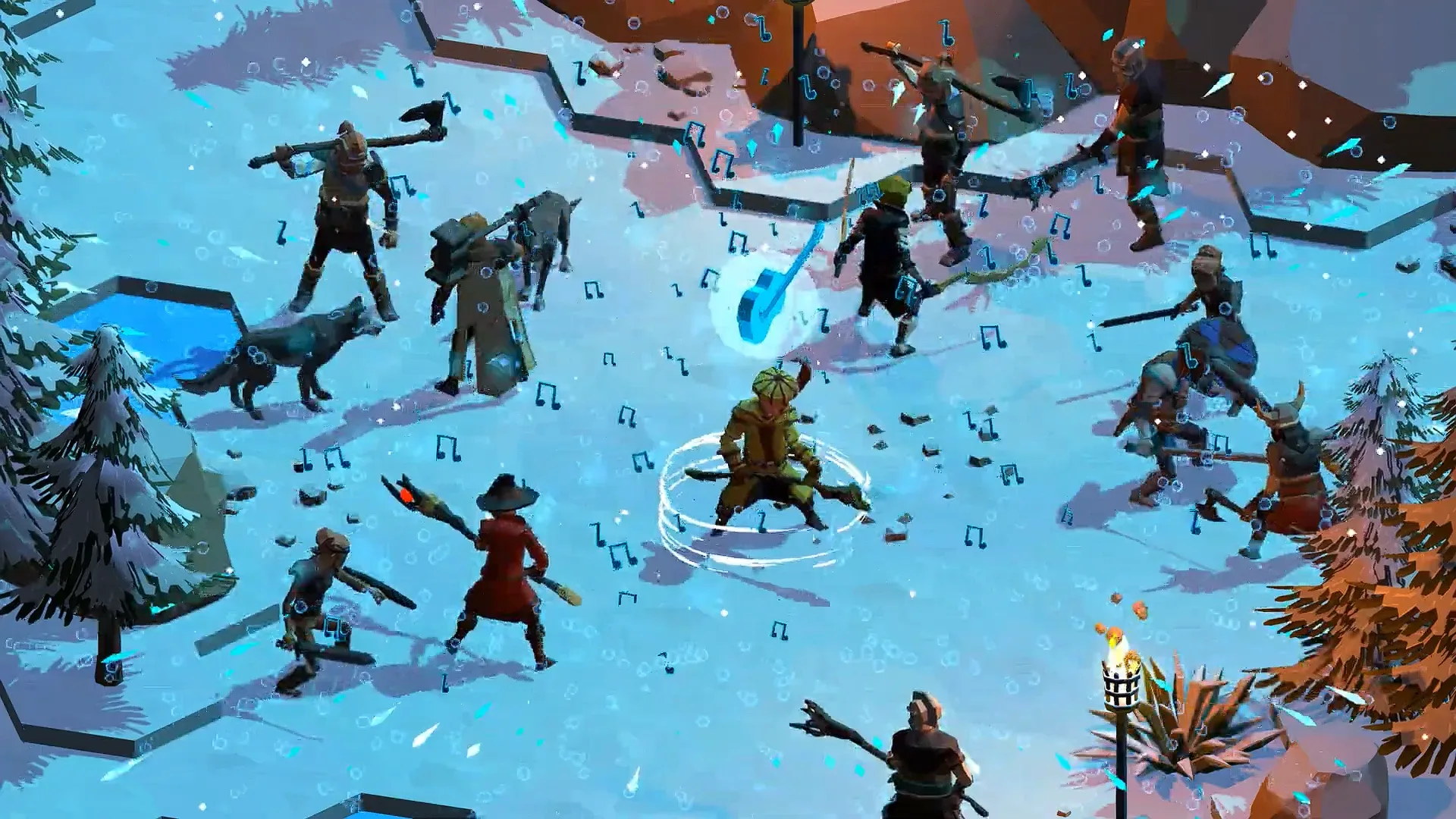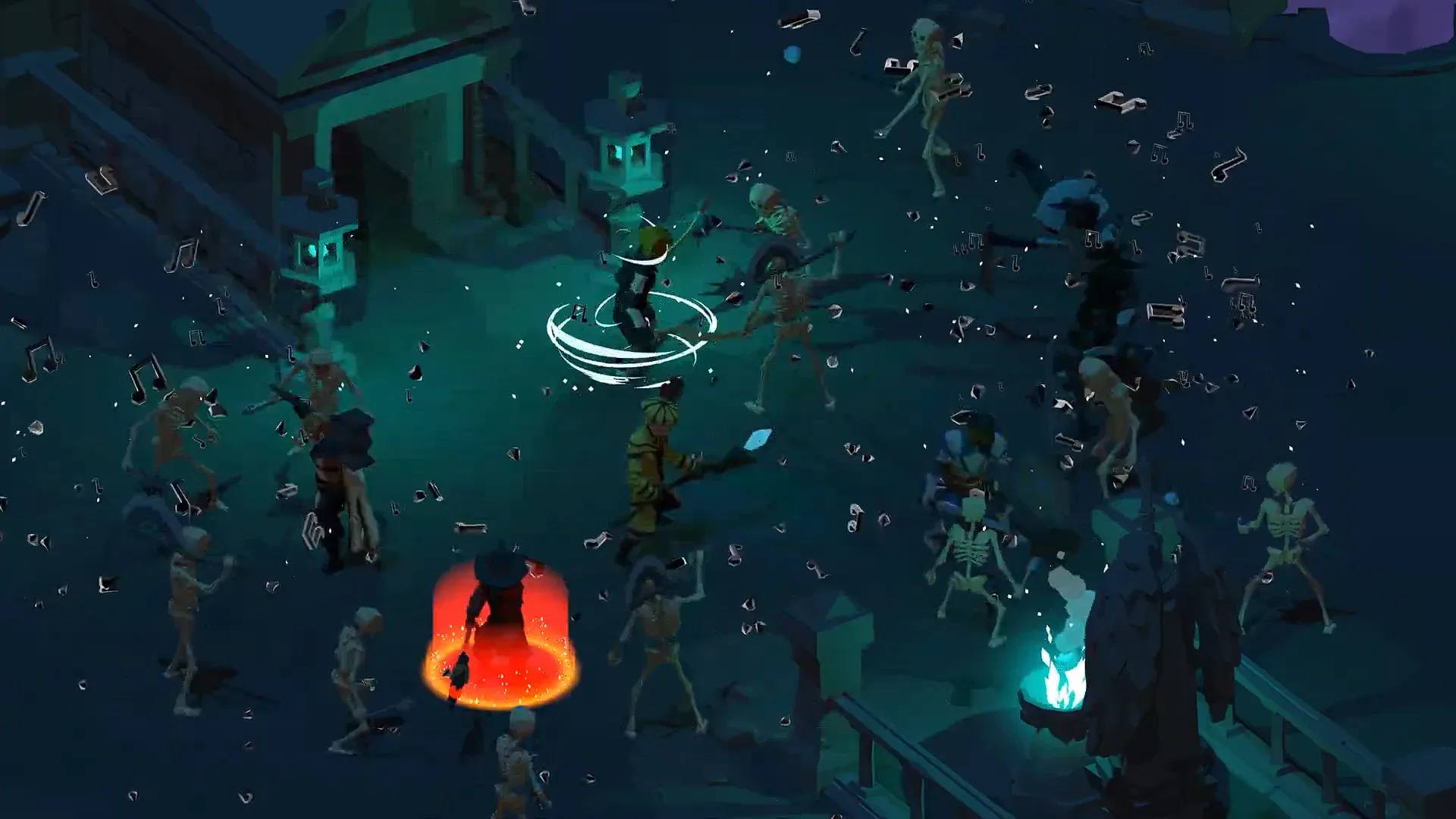
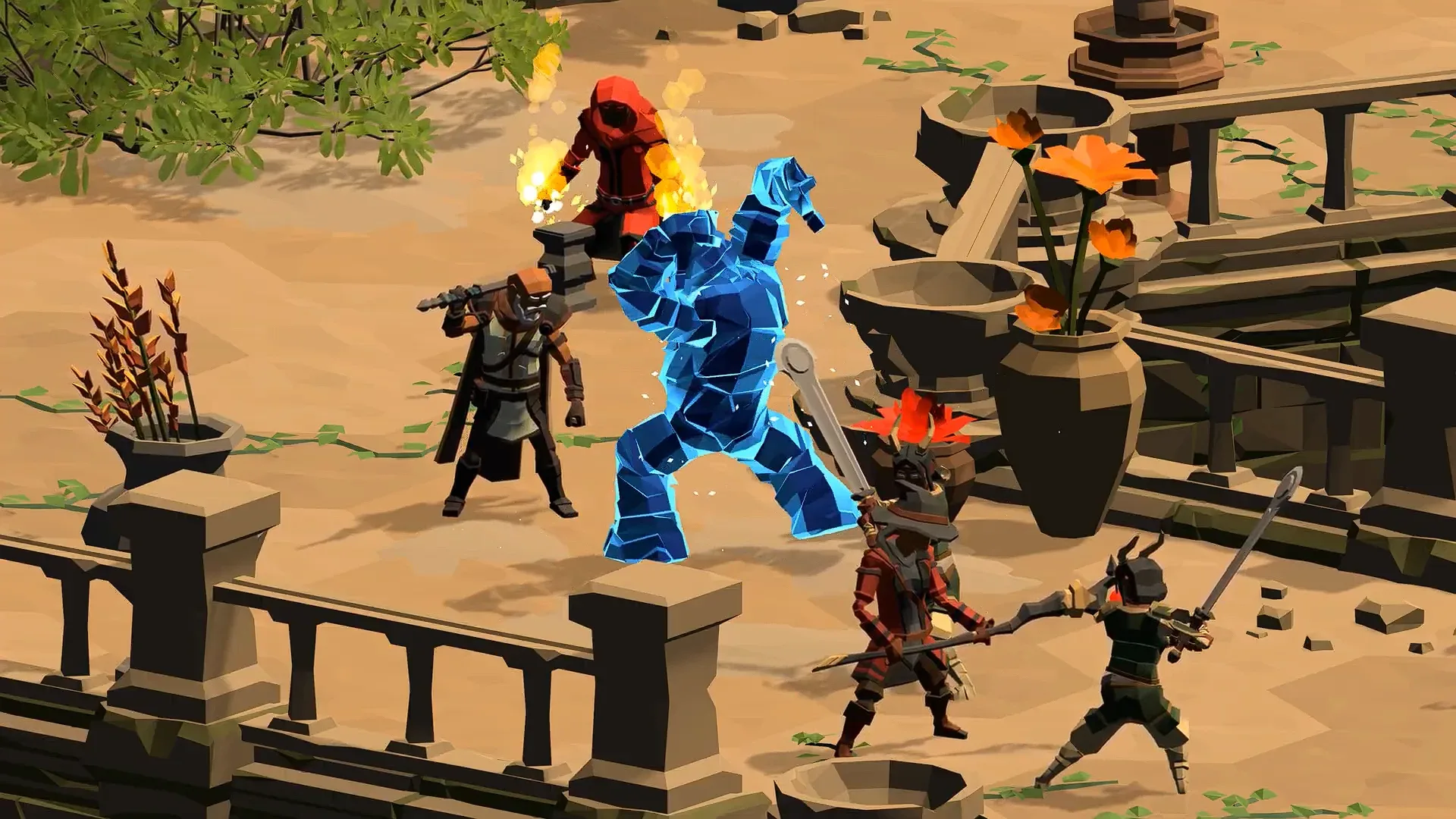
Stolen Realm has expanded on Steam with the paid Bard Pack, introducing a new class whose musical toolkit is built around party support, battlefield disruption and delayed bursts of damage. The November 26 release arrives beside a free update for all players that adds harder Endless Mode boss variants, rare loot-bearing Familiars, character Build Codes and a substantial set of interface, inventory, balance and bug-fix changes.
For a turn-based tactical fantasy RPG, the Bard’s apparent job description—stand nearby and make everyone else better—only tells part of the story. Its skill tree centers on Songs and Crescendo: Songs enhance nearby allies, while Crescendo accumulates across consecutive turns to raise the impact of the Bard’s abilities. The result is a class designed around timing. It can establish advantages over several turns, then convert that setup into stronger support, control or offensive results.
A Bard whose turns build toward a bigger play
Crescendo is the defining mechanic in the Bard Pack. In plain terms, it is a growing payoff for keeping the Bard’s musical abilities active over successive turns. Rather than treating every action as an isolated decision, the class encourages players to consider what the next few turns may look like: whether allies need stronger healing or defenses, whether enemies need to be forced out of position, or whether it is time to prepare a damaging finish.
That makes the Bard an especially flexible addition on paper. Its Songs can strengthen allies positioned nearby, and its listed support options include improved healing, lower mana costs, extra statistics and resistances. Mana is the resource used for abilities, so reducing mana costs can potentially make a party’s broader plan more sustainable. Resistances, meanwhile, generally describe protection against certain types of incoming effects or damage. Within the Bard’s toolkit, those benefits give the class a role in helping a group keep functioning efficiently rather than solely repairing problems after they happen.
The class also carries the Improvise passive. This allows multiple Songs to be performed at the same time, with each Song building Crescendo separately. That detail is important because it means the system is not presented as a choice between committing to one musical effect or another. A Bard can maintain overlapping aims, potentially mixing party enhancement with a separate setup for control, protection or damage.
There is still an inherent tactical trade-off in a Crescendo system. A payoff that builds over turns rewards surviving long enough to develop it, while a fast-changing fight may demand an immediate answer. The Bard’s stated access to several kinds of utility suggests it can respond to that tension: players can use its songs for ongoing value, but can also interfere with opponents or defend allies when the battlefield refuses to follow the score.
Support is only one movement of the Bard’s kit
The Bard Pack divides the class’s practical identity into four broad approaches: party support, battlefield control, protection and damage. Those headings overlap, but together they outline a class intended to influence much more than raw damage totals.
Party support
Support is the clearest fit for Songs. The Bard can bolster nearby allies, improve healing, reduce mana costs and grant extra statistics and resistances. Positioning matters here: “nearby” means the class is not simply a distant global bonus generator. Players will need to think about where the Bard stands relative to the characters intended to benefit, and that can make movement as meaningful as the selected Song.
Related coverage includes Stolen Realm’s Bard Pack hits Steam alongside a free update.
For cooperative or party-focused play, this sort of utility can shape how a group approaches encounters. Better healing and resistances favor endurance; cheaper mana costs can help preserve resources; added statistics may reinforce whichever role an ally already performs. The key appeal is adaptability. A Bard player may have tools that matter to several teammates at once rather than a kit aimed at a single narrow job.
Battlefield control
The Bard can also taunt enemies, apply Fear or Sleep, and influence enemy positioning. These are forms of crowd control: effects that limit, redirect or otherwise disrupt what opponents can do. Taunt directs enemy attention; Fear and Sleep are named negative states; moving enemies can alter who is exposed, protected or within range.
Control is valuable because tactical combat is often decided as much by who gets to act effectively as by who has the largest attack. An enemy that has been displaced may no longer threaten the same ally. An enemy affected by a status condition may be less able to execute its preferred turn. The Bard’s listed control tools therefore give it a way to actively shape the encounter instead of waiting for allies to capitalize on passive buffs.
Protection and cleansing
The protection side includes crowd-control immunity, removal of harmful effects, removal of enemy buffs and defenses for nearby allies. These abilities address both sides of an ongoing status-effect contest. Cleansing means taking negative effects off friendly characters, while stripping buffs removes beneficial effects from enemies.
That distinction matters when considering the Bard as a response class. It is not only able to prevent some disruptive effects through immunity; it can also react after problems arise by clearing harmful conditions. Similarly, removing enemy buffs can reduce the advantage an opponent has already built. In a game where Chaos Touched bosses will now arrive with extra modifiers, tools that deal with changing conditions may be particularly worth considering—although the available details do not specify which Bard effects counter which boss modifiers.
Damage and finishers
The Bard is not restricted to enabling teammates. By building Crescendo, it can unleash powerful barrages and explosive finishing attacks. This supplies an offensive destination for the class’s long-form setup. A player does not necessarily have to treat several turns of Songs as a purely defensive investment; the accumulated value can lead into a direct attack.
That damage option also gives the class a distinct rhythm. Build-up mechanics create a question of opportunity: when is the accumulated Crescendo worth spending? The answer will depend on the flow of a battle, the party’s needs and whether enemies can be controlled long enough for the Bard to reach a stronger payoff. Specific damage values, cooldowns and exact ability behavior were not detailed, so players should avoid assuming a particular optimal build before seeing the full in-game tree.
The free update gives every player new reasons to revisit runs
The Bard Pack is paid content, but the accompanying update is free for all Stolen Realm players. Its headline gameplay feature is Chaos Touched Endless Mode bosses. These are tougher versions of Endless Mode bosses with additional modifiers and improved loot.
A modifier is an added rule or property that changes how an encounter plays. The announced update does not identify the individual modifiers, so it would be premature to treat Chaos Touched bosses as a known set of mechanics. What is clear is the intended risk-and-reward structure: these variants are harder, and the loot is improved. That provides an endgame-style reason to take on fights that ask more from a character build and a party’s coordination.
The update also introduces Mischievous Familiars, rare creatures that may try to escape during combat. Defeat them before they get away and they can yield rare loot. These are not described as ordinary enemies or permanent companions; the significant feature is their potential escape and associated reward. That creates a tactical priority shift in battles where one appears. Players may need to decide whether to focus on the rare target before it leaves or continue addressing the main encounter’s immediate threats.
Build Codes are another notable addition. They enable players to share and discover character builds, which should make it easier to pass along a particular combination of choices without manually recreating it from scratch. In a game adding a new class with support, control, protection and damage possibilities, sharing builds has an obvious practical use: players can exchange ideas around different Bard directions as well as existing characters.
Build sharing does not automatically establish that a build is best, of course. A code can communicate a setup, while its suitability still depends on a player’s preferred role and the challenges they face. But it lowers the friction between seeing a build concept and trying it. That is especially useful after balance adjustments, when older assumptions may need revisiting.
Inventory and information changes address the less glamorous side of adventuring
The free update’s quality-of-life work includes an improved Examine window, automatic purchases of crafting materials, a Sell All menu and item locking. These functions do not sound as dramatic as a Chaos Touched boss, but they target routine decisions that recur throughout a loot-driven RPG.
An improved Examine window should make it easier to inspect relevant information. Automatic crafting-material purchases reduce an extra step when making items. Sell All offers a faster way to clear unwanted inventory, while item locking provides a safeguard against disposing of gear a player intends to keep. Together, these changes suggest an effort to make the administrative parts of character progression less cumbersome.
The patch also includes balance adjustments and numerous gameplay and multiplayer bug fixes. No complete balance list or individual fixes were provided, so the exact impact on existing builds, encounters or multiplayer sessions is not specified. Still, the combination of a new class, community feedback and patch work is meaningful: the Bard’s release was preceded by a community playtest used to refine abilities, improve balance and identify issues before launch.
That playtest context is worth separating from a guarantee. It shows that feedback informed pre-release refinement, not that the expansion or update will be free of future issues. The announced fixes make clear that gameplay and multiplayer problems were addressed in this release, while ongoing player experience will determine how the new systems settle in.
What the update means for different Stolen Realm players
Players interested chiefly in the Bard should look at the DLC as a class with several possible assignments rather than a one-note healer. Its strongest apparent attraction is the ability to combine Songs with separate Crescendo tracks through Improvise, then decide whether the encounter calls for ally enhancement, disruption, defense or an offensive payoff.
Players not purchasing the Bard Pack still receive a meaningful update. Chaos Touched Endless Mode bosses and Mischievous Familiars add new encounter and loot incentives, while Build Codes and the quality-of-life features improve the wider experience. The division is straightforward: the Bard class is part of the paid pack; the update’s bosses, creatures, sharing system and listed usability improvements are available to all players.
For a wider look at how smaller games keep experimenting with accessible interfaces and focused ideas, see this report on FIRSTS and its swipe-based hex-grid crossword.
Stolen Realm: Bard Pack is available now on Steam. The free content update is available alongside it for all players, giving existing parties new bosses to challenge, rare Familiars to catch before they flee and new ways to share the builds behind their favorite battle plans.