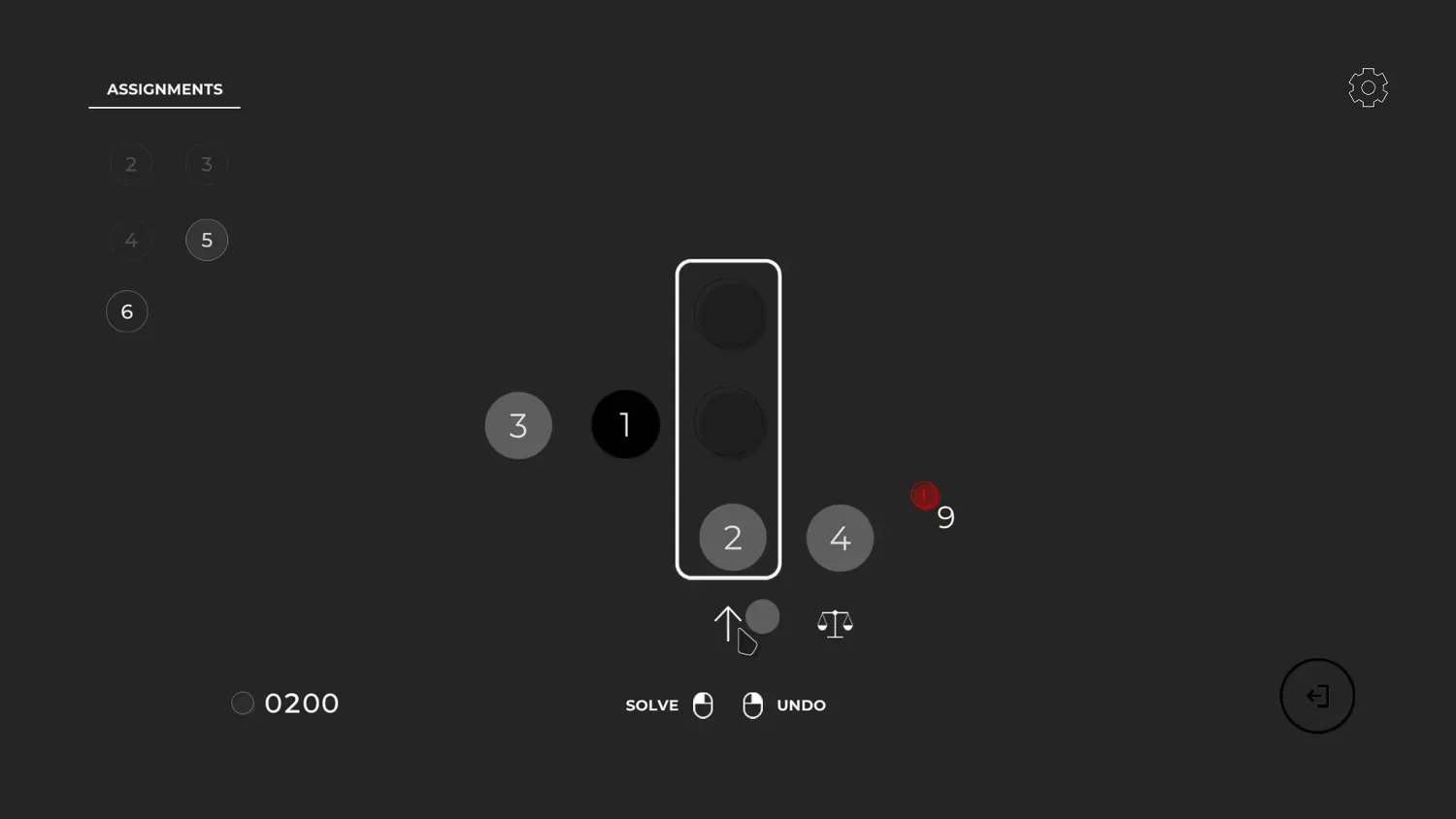
The demo for Stip, the forthcoming number-puzzle game from Belgian solo developer Sam Agten of SixtyFour, is now available ahead of its planned appearance in October’s Steam Next Fest. The full game is expected later in 2026, but the demo already lays out a pleasingly unnerving proposition: put the right numbers on the right dots, obey the constraints, and perhaps do not ask why the puzzle room appears to be developing opinions.
Its name is appropriately compact. Stip is Dutch for “dot,” and dots are the central objects of its puzzles. The premise is built around deduction: players assign numbers to a series of points while following a set of constraints. That may sound like a clean, familiar logic-puzzle setup, but the game’s stated approach has a more mischievous wrinkle. Rules are not simply handed over in a complete manual. They are discovered through play, and the puzzles can begin to “misbehave.”
That makes the demo more than a sampler of individual brainteasers. It is also an introduction to the game’s larger mystery: what counts as a rule, what happens when a rule changes or conceals itself, and whether the room surrounding the puzzle is as innocent as its minimalist presentation suggests. The official welcome is reassuring in precisely the way that makes it less reassuring:
“Hi there! Please, come in and enjoy our number puzzles. Use the constraints to assign the correct numbers. Assign, undo, deduce, repeat. Please refrain from touching anything else. There are more puzzles for you, that way. Please ignore any odd behaviour, we’ll have that looked at. You are doing great!”
A number puzzle with rules still under investigation
At the core of Stip are constraint-based puzzles. In plain terms, a constraint is a condition that limits which answers can be correct. Rather than guessing a number for each dot, players use those conditions to eliminate impossible placements until a valid arrangement remains. The stated loop is simple: assign a number, undo when an assumption fails, make a deduction, and repeat.
That emphasis on undoing matters. Good deduction games often turn a wrong move into useful information rather than a catastrophe. A player can try a plausible interpretation, see what no longer fits, roll it back, and revise their model of the puzzle. Stip makes that process part of its language instead of treating it as an admission that somebody has temporarily become a human error message.
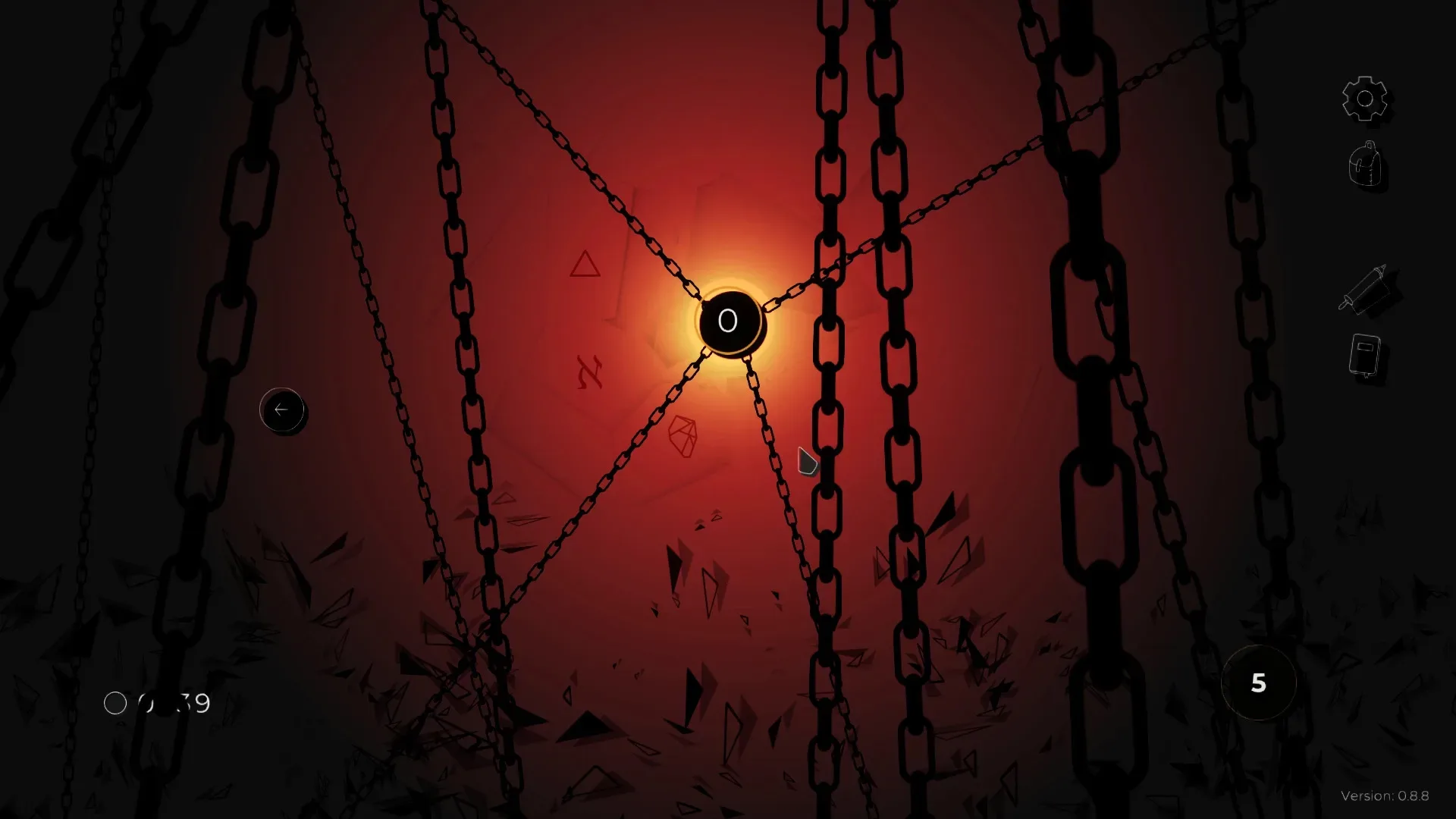
The unusual part is that Stip does not present its rules as a fixed, fully visible contract. Players are expected to uncover further rules and hidden mechanics as they proceed. A puzzle’s apparent logic may therefore be only the first layer of its logic. The game describes this as intentional misbehaviour, which suggests that noticing an inconsistency could be as important as solving a standard numerical relationship.
That distinction is worth keeping clear. A hard puzzle asks a player to apply known rules cleverly. A rule-discovery puzzle also asks them to work out the rules themselves. Stip is positioning itself around both tasks. The second can be especially rewarding for players who enjoy testing assumptions, but it also gives the developer a useful way to surprise anyone who thinks they have reduced the whole game to a tidy set of arithmetic chores.
Rooms are part of the puzzle, not just wallpaper
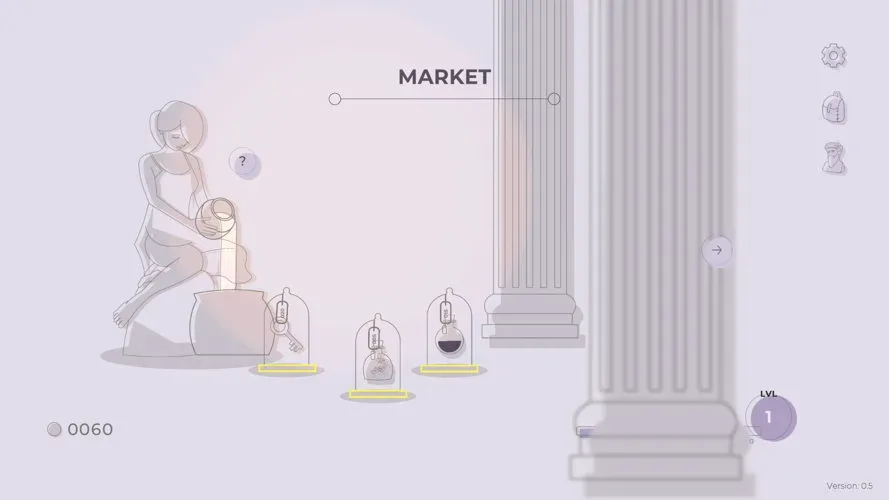
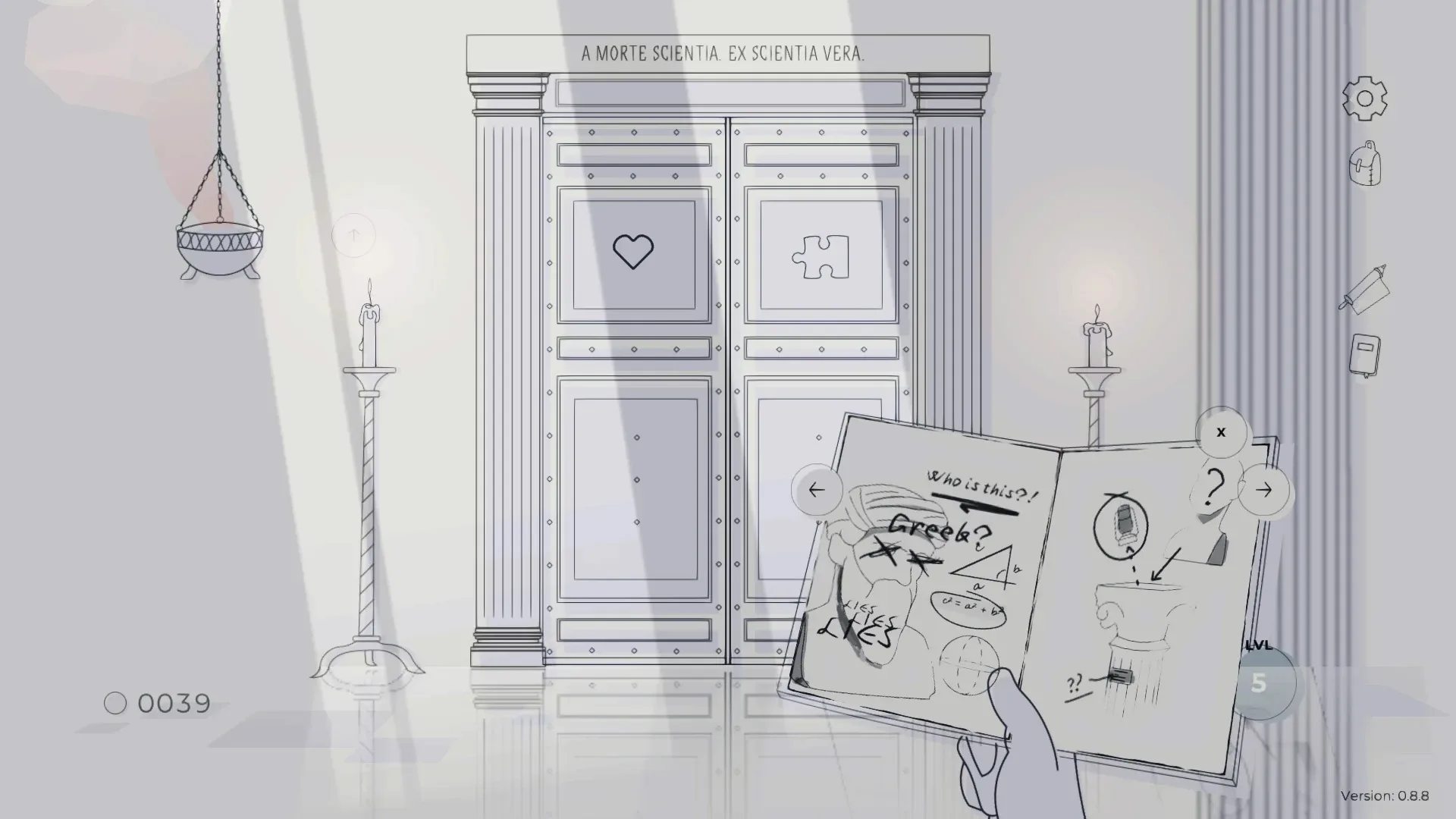
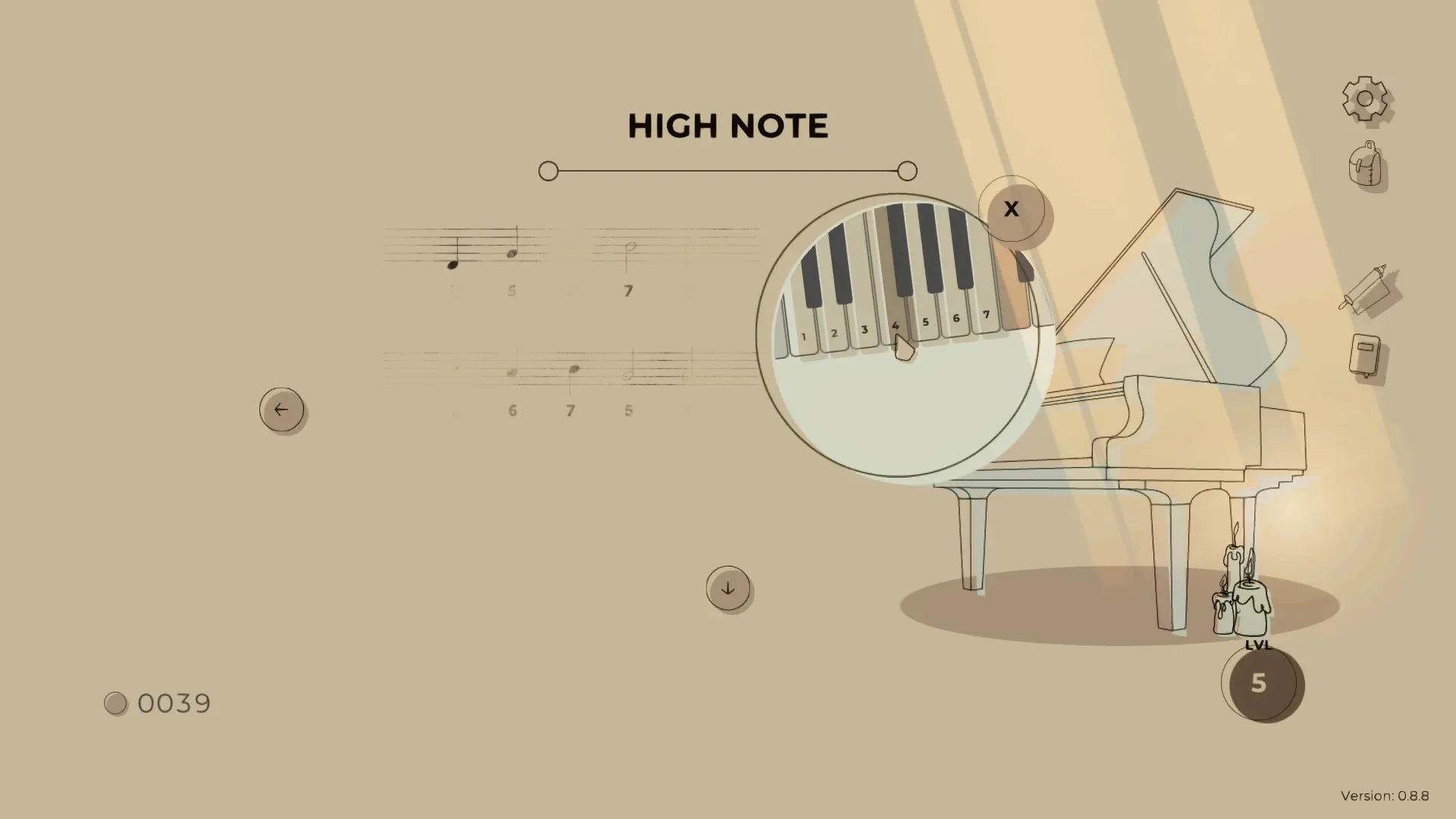
Stip pairs its sparse visual style with maze-like rooms that operate as intricate puzzle boxes. The room is not described merely as a menu for selecting the next numerical challenge. It can hold environmental clues, items and secrets that reveal additional rules or layers of difficulty.
A puzzle box, in this context, means an environment where interacting with the setting and interpreting its details can be part of the solution. An object, route or visual detail may change how players understand the puzzle in front of them. Stip’s rooms are therefore designed to connect observation with deduction: the number grid or dot layout gives one kind of information, while the surrounding space may provide another.
This broader structure aligns with the game’s “Metroidbrainia” label. The term is commonly used for puzzle games whose progression depends on gaining knowledge rather than acquiring conventional equipment. In Stip’s case, the meaningful unlock may be an understanding of a hidden mechanic, a newly noticed environmental relationship, or a realization that an earlier assumption was incomplete. The barrier is not necessarily a locked door in the traditional sense; it may be a gap in the player’s understanding.
That premise has practical implications for anyone trying the demo. It may be wise not to treat every stalled puzzle as a demand for more calculations. If the game foregrounds item-based and environmental secrets, a dead end could mean the needed information is elsewhere in the room—or that the player has yet to learn how to read a familiar element. The game itself has politely asked visitors not to touch anything else, which is generally a fairly reliable signal that touching other things will be relevant.
What to pay attention to in the demo
- Visible constraints: Start with the rules that are explicit and identify what they exclude. This reduces the search space before experimentation begins.
- Changes in behaviour: If a puzzle appears inconsistent, do not immediately assume it is a mistake. Stip explicitly builds “misbehaviour” into its premise.
- The room around the dots: Environmental details and items are described as meaningful parts of uncovering hidden rules and challenges.
- Earlier assumptions: Rule-discovery games reward revisiting a conclusion when fresh information arrives. An interpretation that worked once may not be the complete explanation.
- The option to undo: Use it as a reasoning tool. A reversible test can reveal why an answer fails without forcing a full restart.
There is a secret code, because apparently the trailer also has homework
The official Stip demo trailer contains a secret code that can be entered in the demo. The input sequence is specific: press C, enter the code, then press Enter. The code itself is not supplied in the game details, so players who want to find it will need to scrutinize the trailer rather than expect a convenient note taped to the monitor.
This is also an example of the game’s stated transmedia clues: information and secrets can be spread across trailers, store pages and other related material rather than existing solely inside the play space. “Transmedia” need not mean a giant multimedia scavenger hunt here; the practical point is that Stip may reward attention outside the immediate puzzle room as well as inside it.
For puzzle fans, this changes the boundary of play. A trailer may be promotional material, but it can also contain a usable lead. A store page may describe features, but it may also be part of the game’s pattern of signals. That approach will naturally appeal most to players who enjoy keeping notes and pulling at loose narrative threads. Others can at least take comfort in the fact that the demo’s direct code-entry process has been disclosed: C, code, Enter. No need to deduce the keyboard’s existence from the arrangement of wall tiles.
The minimalist look is serving a larger narrative setup
Stip’s presentation is deliberately minimal, but its story is intended to unlock gradually as progress is made. The official language surrounding the puzzles is unusually courteous, full of praise and requests to ignore odd behaviour. That voice gives the number assignments an institutional, slightly comic framing: the player is a valued puzzle worker, provided they continue to be valued in the approved way.
Nothing in the available details confirms where that narrative is heading, and it would be premature to assign a specific explanation to the game’s oddities. What is clear is that the narrative layer is tied to advancement, while hidden mechanics and environmental discoveries are built into the structure. The result is a game designed to make its basic act—putting numbers on dots—feel less isolated over time.
That is a promising fit for the room-based format. A standalone logic puzzle can be satisfying on its own terms, but a sequence of rooms with secrets gives deductions consequences beyond the next correct answer. The player is not only solving a configuration; they are potentially learning what the place expects of them, where its rules stop being reliable, and why everyone is so determined to compliment their work while warning them away from anything interesting.
Steam Next Fest is the next stop, with a 2026 release still planned
The Stip demo arrives before October’s Steam Next Fest, placing it among the event’s playable previews. The full game is planned for later in 2026. No price, final launch date or additional platforms are provided in the available details, so the demo is the clearest current way to see how its number assignments, maze-like spaces and discovered rules fit together.
Stip has also been named the Belgian Game Awards jury’s Most Anticipated Belgian Game release of 2026. It is a notable early endorsement for a project whose hook is intentionally restrained on the surface: dots, numbers, constraints. Yet the details behind that surface point toward something more layered, where the player’s understanding is the main progression system and the polite tutorial text may have access to more information than it is sharing.
For a broader look at another unusual PC release on the October calendar, see Lostbound’s Steam launch plans. Stip, meanwhile, is making the case that the most alarming words in a puzzle game can be: “Please ignore any odd behaviour.”