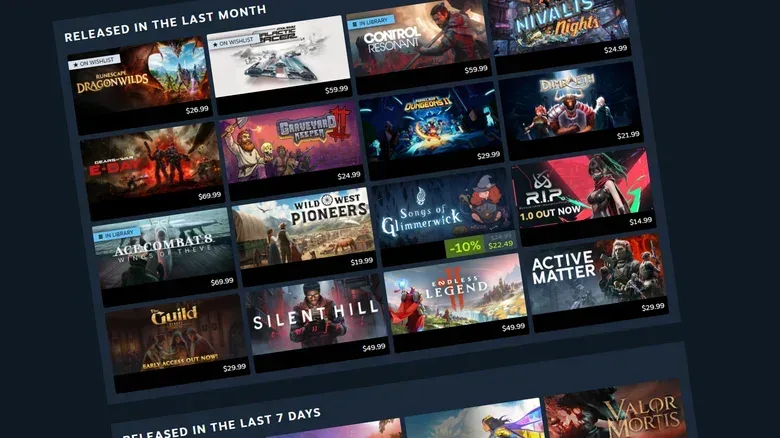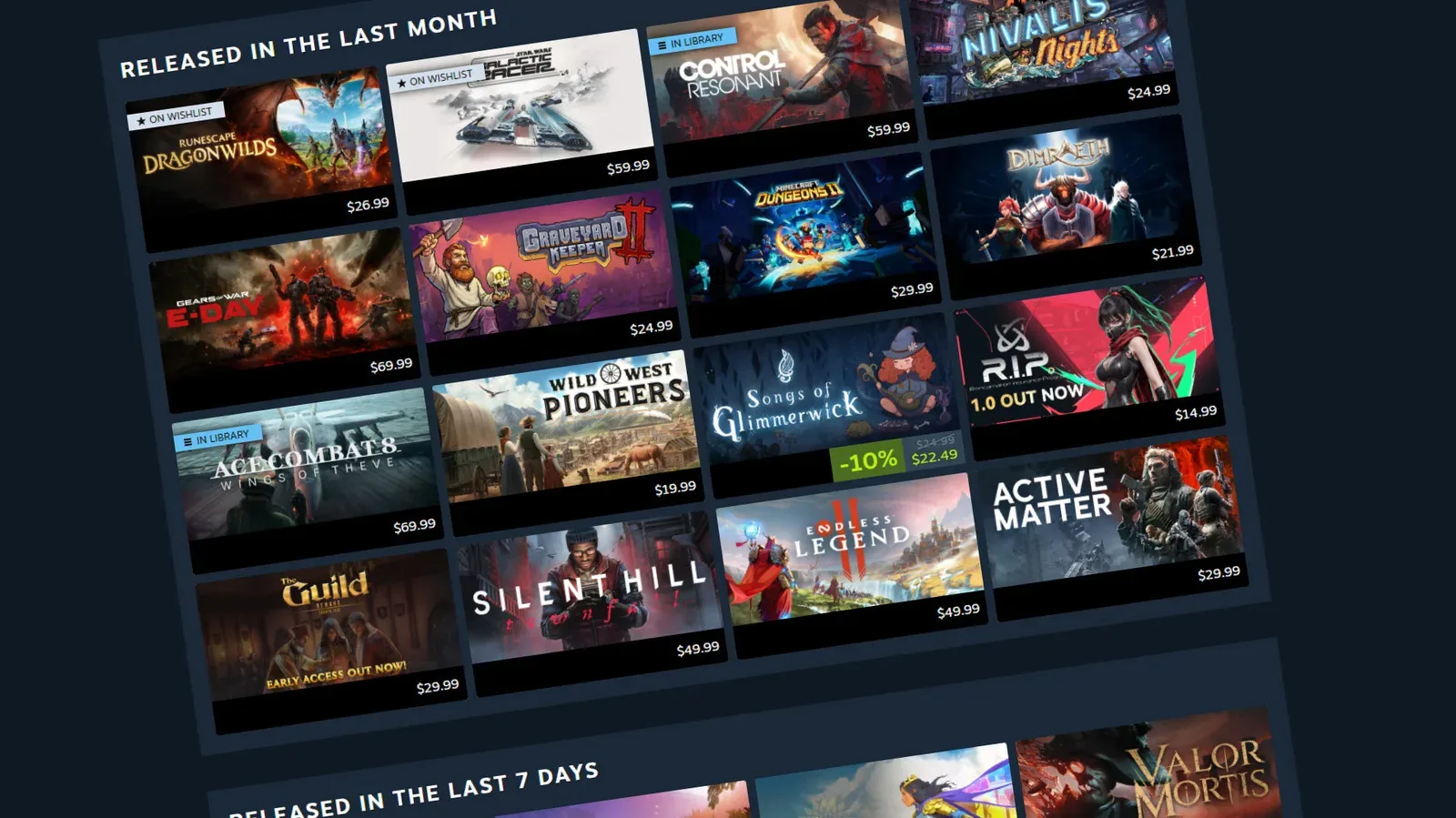
Steam has added a new discovery feature called Personal Calendar, a user-specific release tracker intended to make a very large PC games store feel a little less like a warehouse with the lights off.
The feature is now available from Steam’s storefront homepage. Rather than presenting one universal list of the biggest launches, Personal Calendar aims to show recently released games and upcoming titles that are more likely to match an individual player’s habits. Its recommendations are built from a combination of a user’s recent games, time spent playing them, wishlist activity and comparisons with players whose profiles appear similar.
That distinction matters. A conventional release calendar answers a simple question: what games are coming out? Steam’s new tool is trying to answer the trickier version: which of those releases are likely to matter to this particular account?
It is a modest-sounding change, but it targets a familiar PC gaming problem. Finding a game can be difficult even when someone knows exactly what they generally enjoy. Storefronts can present popular releases, discounts, broad genres, recommended products, franchise pages and search results all at once. That abundance provides options, but it can also make a quieter release easy to miss.
What Steam Personal Calendar is designed to do
Personal Calendar sits between two established ways of browsing. On one side are charts and prominent storefront placements that show what is broadly popular. On the other are highly tailored recommendations, which can be useful but do not necessarily help a player follow the rhythm of releases over time.
Valve describes Personal Calendar as filling that gap: a place to follow newly available games and forthcoming releases through the lens of a person’s established interests. The calendar format is significant because it puts timing at the center. A game can be relevant to a player’s taste yet still be missed if it appears only briefly in a crowded recommendation feed. Organizing suggestions around release windows gives users a reason to return when they want to know what has just arrived or what is approaching.
Steam’s stated inputs include:
- titles the user has played recently;
- the amount of time logged in those games;
- games on the user’s wishlist; and
- patterns from other users with similar gaming profiles.
This is an example of a recommendation system: software that ranks or selects possible items based on behavior and shared patterns. In this case, it is not simply looking for games carrying the same genre label. It can also use the behavior of players with comparable libraries and interests to infer that another title may be relevant.
Related coverage includes Steam Personal Calendar Brings Daily Game Recommendations to the Storefront.
That does not mean the system can know why somebody liked a game, or that every suggestion will land. It means Steam is using evidence from activity already associated with an account to narrow a huge catalogue into a more manageable release-focused list.
Playtime appears to carry more weight than a quick experiment
One of the more practical details is Valve’s explanation that briefly trying a new game should not dramatically redirect recommendations. The service primarily emphasizes games in which a user has spent substantial time.
That is useful because a game library often contains noisy signals. A person may open a free weekend title, launch a demo, test a recommendation for a few minutes, or check whether a game runs properly on their machine. Treating every launch as an equally meaningful declaration of taste would make a personalized calendar unusually easy to confuse.
Playtime is not a perfect measurement of enjoyment. Players may invest hours in a difficult game, a social routine or a title they are still deciding whether they like. Even so, it is often a more durable indicator of engagement than a very short session. Steam’s approach suggests it is trying to recognize sustained interests without making the calendar overreact to every passing curiosity.
Wishlists add a different type of signal. They can indicate intent before someone has purchased or played a game at all. When used alongside actual play history, that may help the calendar span both sides of a player’s habits: the games that have held their attention and the kinds of releases they have already marked for future consideration.
Daily refreshes do not mean a completely new calendar every morning
Personal Calendar refreshes daily. Valve says the systems behind the personalized selections are regularly retrained using the latest available data. In everyday language, retraining means the recommendation model is updated with newer information so it can revise the connections it makes between player behavior and game suggestions.
Daily retraining could sound like a promise that the page will be radically different each time it is opened. Valve has specifically tempered that expectation. Day-to-day changes are not expected to be extensive. More noticeable movement is likely to appear over roughly an eight-week period, or when developers confirm release dates for upcoming games.
That cadence makes sense for the job the feature is meant to perform. Release calendars generally should not churn for the sake of churn. If a recommended game’s launch date has not changed and the player’s core interests have not changed, there is little value in rearranging the same information every day. A calmer presentation can make actual changes—such as a newly confirmed date—more meaningful.
For users, the practical implication is straightforward: Personal Calendar is likely better treated as an ongoing planning page than an endlessly refreshed novelty feed. Checking periodically may be more useful than expecting a brand-new set of recommendations after every daily update.
Why similar-player data can help discovery
The phrase “similar gaming profiles” describes a common recommendation idea. If groups of players repeatedly show overlapping interests, their behavior can reveal connections that a simple genre menu may not catch. Someone who spends significant time in one set of games may share meaningful preferences with users who also play titles that are not obviously identical on a store tag.
That can be especially helpful with releases that do not dominate platform-wide popularity lists. A title does not need to be the biggest game on Steam to be a plausible match for a particular audience. In principle, this gives niche games a route into front-page discovery for users most inclined to care about them, while allowing those users to see beyond whichever launches are receiving the most general attention.
There are limits to any system based on past behavior. Personalization can naturally favor familiar patterns, and a calendar based on established preferences may be better at finding likely fits than at encouraging a player to radically change genres. The supplied details do not explain how Steam balances familiar recommendations against surprising ones, so users should view the feature as one discovery route rather than a complete map of what is worth playing.
Still, the calendar approach is a useful addition because it frames recommendations around a concrete decision: whether a release is worth tracking, wishlisting or investigating around its launch. It is less abstract than a general “you may like this” shelf.
From Steam Labs experiment to storefront feature
Valve says Personal Calendar spent several months being tested through Steam Labs, its program for experimental store and discovery changes. Testing in that setting allowed the feature to receive feedback before being made broadly available on the storefront.
Valve also says users click more than 2,000 different games from Personal Calendar during an average 24-hour period. The figure does not tell us how many people ultimately buy, wishlist or play those games, and it should not be read as a sales measurement. It does, however, point to a broad spread of titles being explored through the feature rather than attention landing on only a tiny handful of games.
For developers, discovery remains the central promise and the central uncertainty of a personalized storefront. A better-targeted recommendation can put a game in front of an appropriate audience. But it also means visibility increasingly depends on how well a store’s systems interpret audience overlap, engagement and interest. Personal Calendar’s emphasis on dates may give release planning an additional storefront surface, particularly once a developer has confirmed an upcoming launch date.
For players, it potentially reduces some of the burden of monitoring release schedules across genres and niches. The calendar will not replace informed browsing, friends’ recommendations or a carefully maintained wishlist, but it can provide a focused starting point built around the games a person actually spends time with.
Part of a wider push to make Steam easier to browse
Personal Calendar arrives amid Valve’s broader work on storefront navigation. Steam has faced feedback that its store can feel cluttered or difficult to explore. Earlier this year, the platform introduced a revised storefront that included a search menu and a new “Categories” feature intended to help users locate games more easily.
The new calendar tackles the same issue from a different direction. Search works best when someone already has a title, feature or genre in mind. Categories help users navigate a structured selection. Personal Calendar begins with the platform’s inference about what a specific player may want to follow next.
Those tools need not compete. They serve different moments in the buying or browsing process:
- Search is useful when the target is known.
- Categories are useful when a user wants to browse a defined area.
- Personal Calendar is useful when the user wants a tailored view of releases without deciding what to search for first.
Store discovery is also an industry concern beyond any one feature. The broader business side of game development can determine whether projects ever reach players at all, as illustrated by the account of why Rockstar’s Cold War spy game Agent never made it out of development. Personal Calendar is not a solution to development risk, but it reflects how much the route from release to audience matters once a game is actually ready to be found.
How to approach the feature
Personal Calendar is available from Steam’s store homepage. Players curious about its suggestions should give it enough time to reflect meaningful activity rather than judging it solely on a single day’s list. Since Steam says the system prioritizes sustained play over a quick tryout, the recommendations may be most representative for accounts with a clearer history of games played and wishlisted.
It is also worth remembering what the calendar is and is not. It is a discovery tool, not a critical assessment. A recommendation indicates that Steam sees a likely match based on behavior and similarities across user profiles; it does not establish quality, technical performance, value or personal certainty. Users who find a promising entry will still want to inspect the store page and make their own decision.
Steam’s largest strength as a game store—its enormous choice—can be its hardest feature to navigate. Personal Calendar attempts to turn some of that scale into a more personal release schedule. Its daily updates and long-term changes should make it less of a loud new feed and more of a quietly maintained watchlist for whatever a player may be ready to discover next.