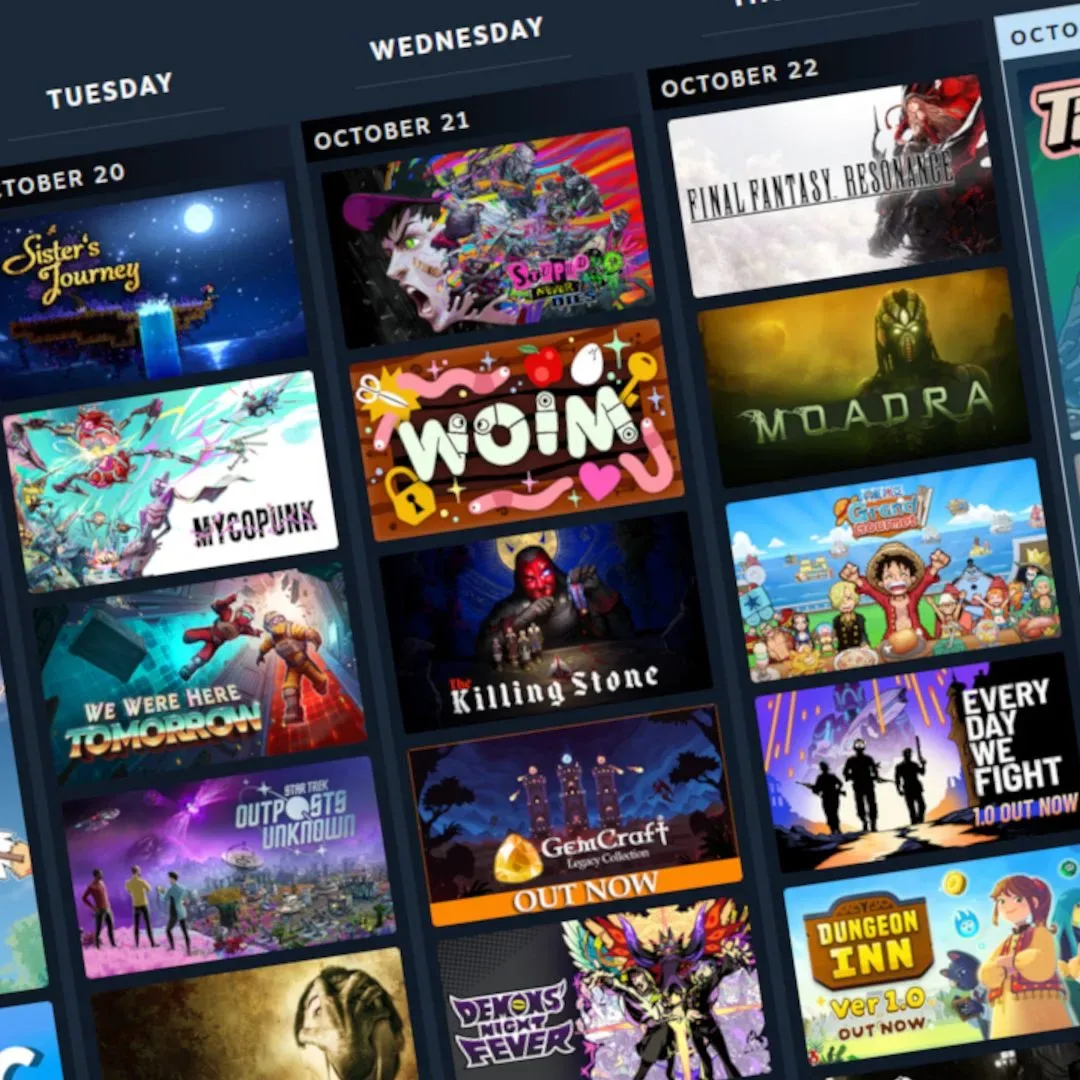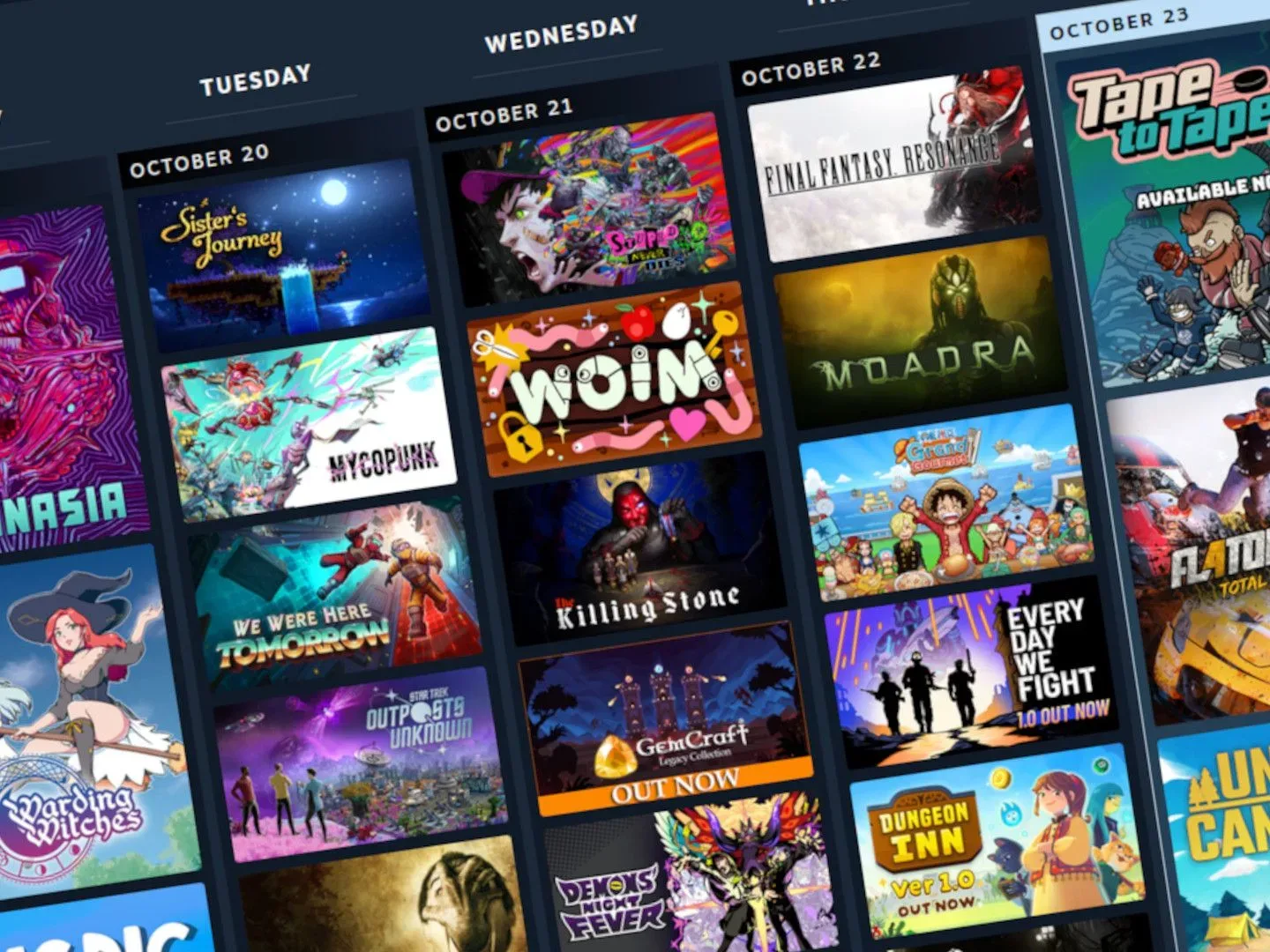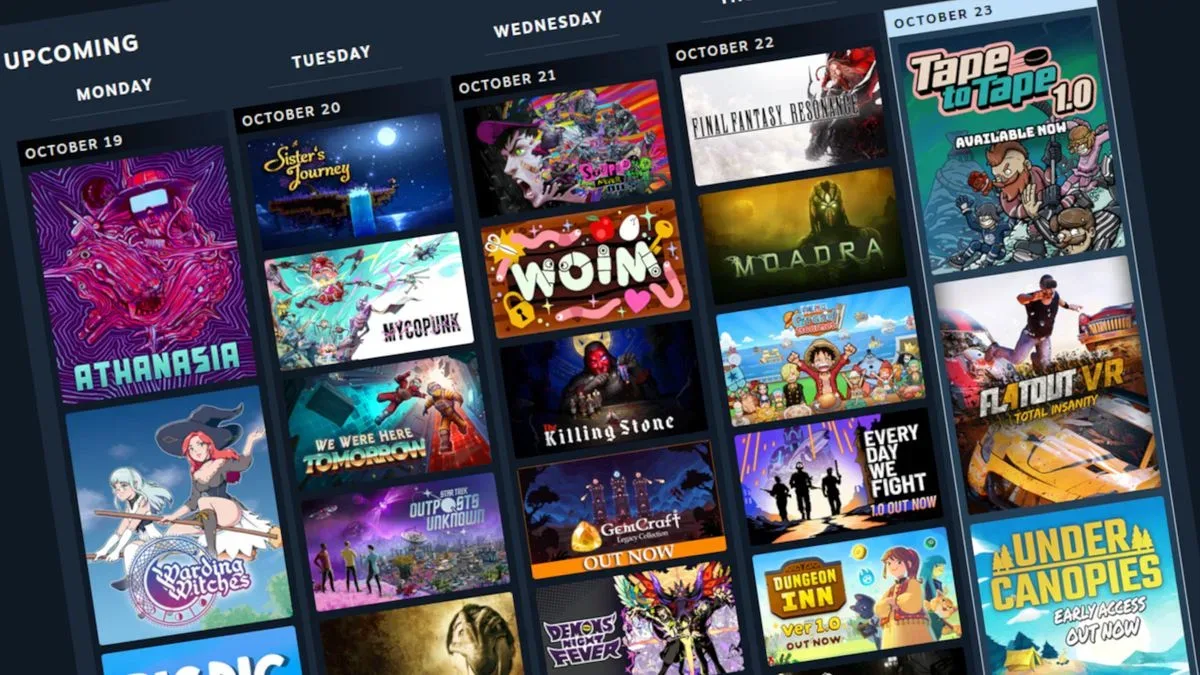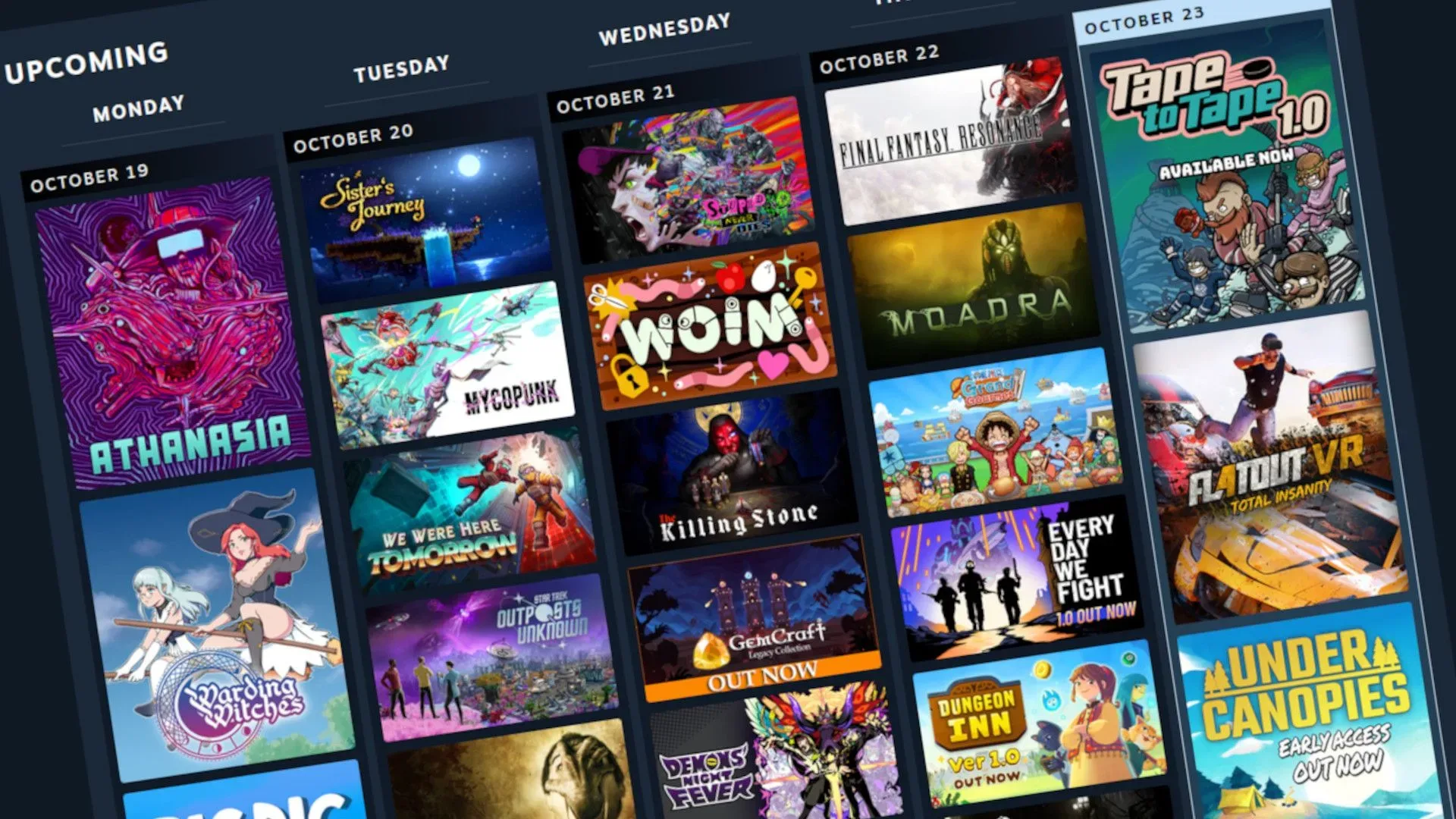
Steam’s problem has never been a shortage of games. It is the opposite: a near-constant release flow makes it hard to notice the smaller, stranger or more personally appealing launches before they vanish beneath the next wave of store updates. Valve is now making a focused attempt to solve that discovery problem by promoting Personal Calendar from Steam Labs testing into a full Steam Store feature.
Personal Calendar is built around a simple proposition. Rather than asking players to sort through every upcoming game, it presents an eight-week calendar of releases that Steam believes will be relevant to that particular account. The result is intended to be less like a universal release schedule and more like a personalised watchlist for games that have not launched yet.
Its graduation from Steam Labs matters because Labs is where Valve experiments with ideas that are not necessarily permanent parts of the storefront. A full-feature designation puts Personal Calendar alongside the store’s established discovery tools, rather than leaving it as an optional experiment for players who know where to look.
What Steam Personal Calendar does
The calendar displays anticipated releases across the next eight weeks. Players can adjust the number of games visible in its calendar view, which should make the tool more useful for both quick checks and deeper browsing. It also supports filters based on genre and theme tags, allowing users to narrow a broadly personalised list toward a specific mood or type of game.
In Steam’s ecosystem, tags are labels attached to games to describe genres, mechanics, settings or other qualities. A genre filter might help a player focus on a familiar category, while theme-oriented filtering can provide another route through the list. The important distinction is that these controls sit on top of personalised recommendations rather than replacing them with a complete catalogue search.
That approach gives players two levels of control:
- Automatic selection: Steam chooses upcoming games it considers likely matches.
- Manual narrowing: the player chooses how much appears and can apply genre or theme tags.
For someone who wants only a brief overview, an eight-week window creates a clear near-term planning horizon. For someone deciding what to wishlist, follow or keep an eye on, the tag filters offer a way to turn an algorithmic feed into something more deliberate.
Playtime is the main recommendation signal
Valve says the recommendations are based on games a user plays a lot, with particular emphasis on the titles receiving the most playtime. That design choice is more meaningful than it may initially sound. A Steam library can contain years of purchases, bundles, free claims, short demo sessions and titles launched once out of curiosity. Treating all of those equally would risk producing recommendations based on noise rather than actual interest.
Related coverage includes Steam Personal Calendar Leaves Labs as a Full Store Feature.
Personal Calendar instead gives greater weight to sustained engagement. Trying a game for a few minutes is not expected to meaningfully change future recommendations. Spending substantial time with a new favourite, however, can. In practical terms, the system is attempting to distinguish between ownership and enthusiasm.
Playtime here means the amount of time associated with playing a title. It is being used as a behavioural signal: extended time with a game suggests it is more representative of what a player may enjoy than a fleeting experiment. Valve has not outlined every factor involved in the recommendation system, so players should not assume that playtime is the only input. But it is the signal the company has specifically identified as the focus.
This may be especially useful for Steam accounts with sprawling libraries. A person who owns many games across unrelated genres may have buying habits that do not match their current preferences. A calendar informed by the games they are actually spending time on has a better chance of highlighting releases that fit how they play now.
No sponsored placements, and an effort to avoid repetition
Valve also says Personal Calendar does not include sponsored placements. That is a notable promise for a recommendation surface inside a large digital store. A sponsored placement generally means a title is given visibility because its publisher or developer paid for that position. Valve’s stated approach is that the games appearing in Personal Calendar are not there because they purchased a slot.
The other stated safeguard concerns the filter bubble. This term describes a recommendation loop in which a system repeatedly serves closely similar material, reinforcing what it already thinks the user likes and limiting opportunities to encounter something different. In games, that could mean a player who enjoys one kind of release continuously sees only near-identical games, even when other adjacent interests might be a better fit.
Valve says the calendar is designed not to trap users in that pattern. Its reasoning is straightforward: there will not necessarily be a suitable new release in the exact same genre or theme every day. That scarcity creates room for recommendation variety across the eight-week schedule. Instead of filling every date with superficial matches, the calendar can show titles from a broader spread of genres and themes when they are considered good recommendations.
That is an important distinction between variety and randomness. A varied calendar does not necessarily mean unrelated games will be pushed at users. The aim, based on Valve’s explanation, is to retain relevance while avoiding an overly narrow parade of duplicates.
Why an upcoming-release calendar may work better than another store feed
Steam already has multiple ways to surface games, but Personal Calendar changes the frame of the task. A conventional recommendation feed is usually about what someone can buy or play immediately. A release calendar is about what is approaching and when it is approaching. That time-based organisation can make discovery feel more actionable.
Players often need different information before launch than after it. Ahead of release, they may want to decide whether to add a title to a wishlist, track it for later, or simply remember that it exists. Seeing the release placed on a date also helps establish whether several appealing games are arriving at once, or whether a quieter period leaves room to try something unexpected.
The eight-week limit helps keep that planning task manageable. A much larger horizon could become a speculative list of distant releases; a much shorter one could miss games before players have time to notice them. The stated range keeps the feature focused on the immediate release landscape without asking users to search the entire store.
It also complements Steam’s demo-focused events rather than duplicating them. For example, Steam’s large demo showcases can reveal what is drawing attention at a particular moment, as seen in this look at some of Steam Next Fest’s most-played demos. Personal Calendar serves a different purpose: it attempts to create an ongoing, account-specific view of scheduled releases.
Practical ways to use the feature
Personal Calendar will be most useful when treated as a discovery aid, not as a verdict on which games deserve attention. Recommendation systems make selections from patterns; they cannot fully account for a sudden interest in a genre, a new friend group, a particular creator’s work, or the desire to play something entirely outside established habits.
Still, the feature’s controls suggest a sensible routine for players looking to reduce store browsing time:
- Check the calendar periodically. The eight-week view is designed for upcoming releases, so it can be used as a recurring forward-looking scan instead of an endless scroll through a storefront.
- Adjust the number of displayed games. A shorter list can make the view more selective; a larger one may be better when looking for a broader spread of possibilities.
- Use genre and theme tags with intent. Apply them when looking for something specific, but remove them occasionally to avoid turning a personalised calendar into an unnecessarily narrow search.
- Let sustained play shape future results. Because Valve says heavily played games matter most, time invested in a new favourite may gradually make the calendar a better fit.
- Use the calendar as a prompt to review your wishlist. An upcoming release is a useful moment to reconsider whether a game is still of interest, rather than allowing old wishlist entries to accumulate indefinitely.
What the feature does not promise
Personal Calendar is not a comprehensive release database. Its value comes from reducing the amount of information in front of the player, which also means some games will inevitably fall outside their recommended view. Anyone trying to follow a particular developer, franchise or niche scene should still use direct searches, wishlists and other forms of tracking.
Nor does Valve’s description guarantee perfect recommendations. Even a system weighted toward long-term play can misunderstand a player’s taste. Someone may devote many hours to one multiplayer game because of friends, for example, without wanting a calendar full of mechanically similar releases. The optional tag controls and promised genre diversity are therefore important counterbalances, but they cannot make personal recommendations infallible.
There is also a difference between absence of sponsored placements and complete transparency. The no-sponsorship policy addresses one clear concern: a game is not supposed to appear because it paid to be there. It does not reveal the full workings of the recommendation model, and Valve has not detailed every calculation behind a given calendar entry. Players can reasonably view the feature as a convenient sorting layer, while retaining their own judgement about what to play or buy.
A more useful kind of Steam discovery
The strongest idea behind Personal Calendar is not simply that it recommends games. Steam has long had recommendation systems. It is that it turns recommendation into a time-sensitive tool with visible controls. Focusing on the next eight weeks, placing releases on a calendar, allowing players to alter density and apply tags, and grounding suggestions in substantial playtime all make the process easier to understand at a glance.
For a store with a vast and fast-moving catalogue, that clarity may be the real upgrade. Personal Calendar cannot make every relevant release visible to every player, nor can it replace curiosity. But it can give players a cleaner way to spot potential favourites before launch—without asking them to sift through the whole of Steam to do it.