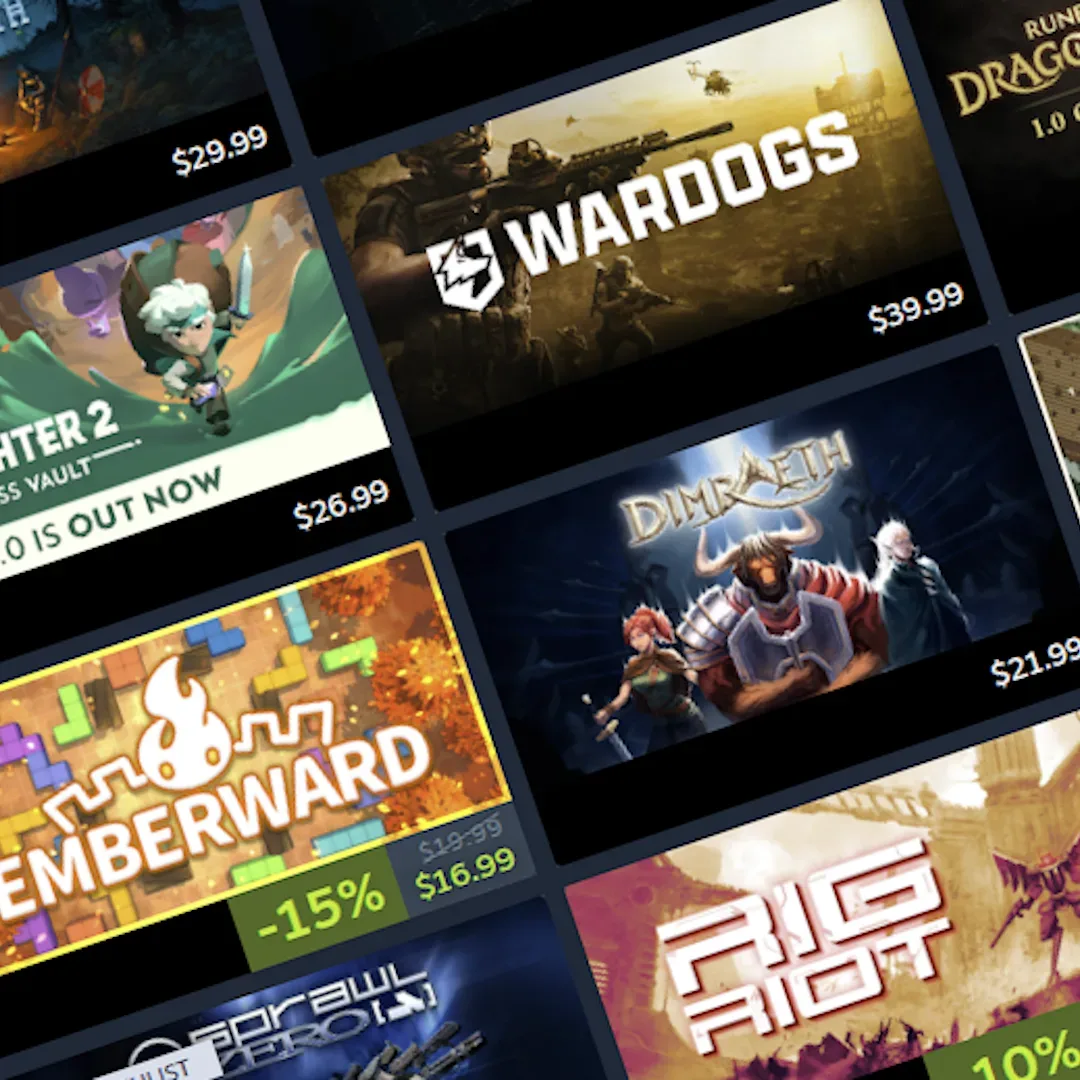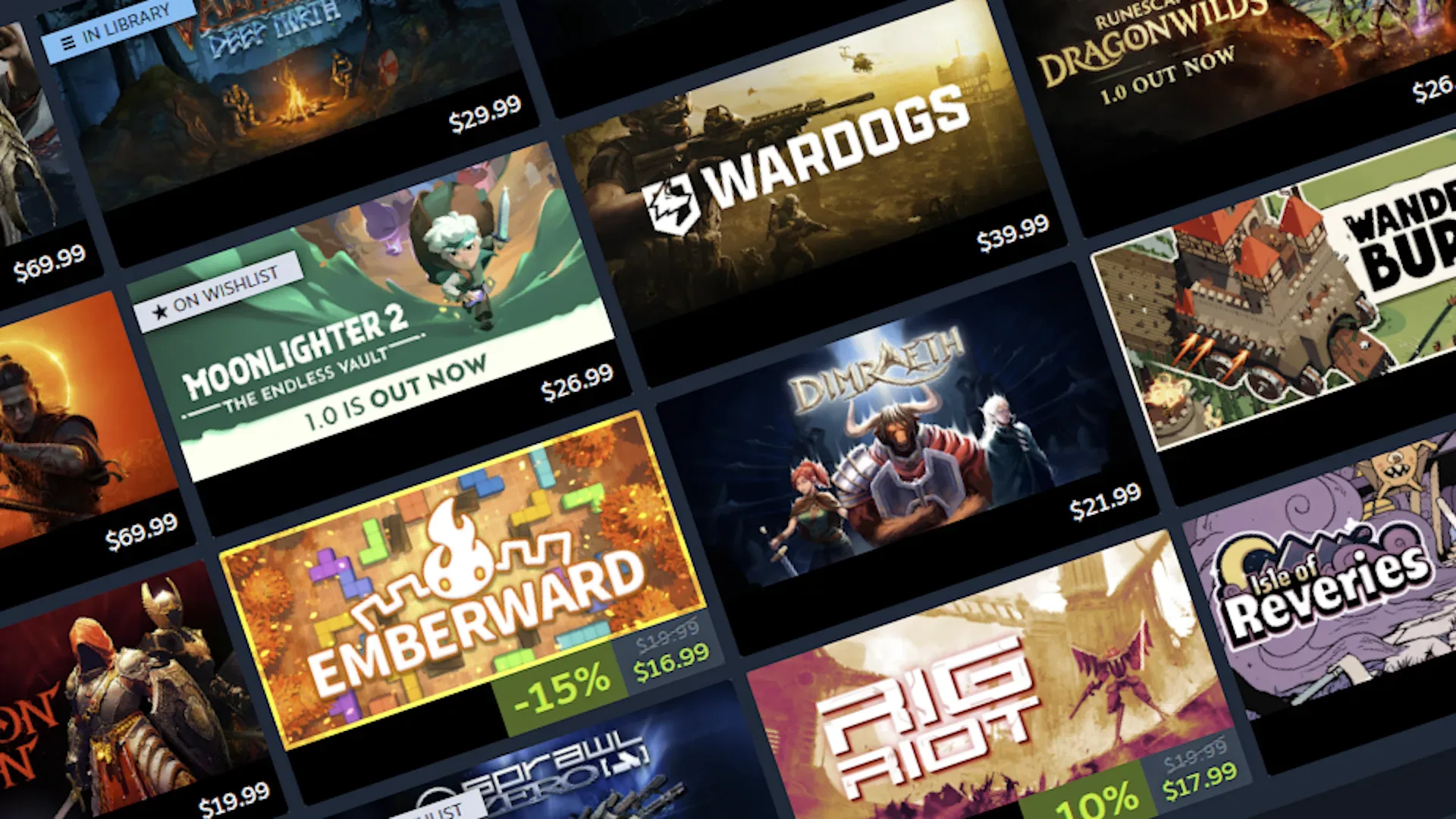
Steam’s Discounts & Events page is set for a major change in early 2027. Valve plans to replace the page’s current, largely manually scheduled promotional structure with an algorithmic system intended to put more discounted games and sales events in front of individual customers.
The central claim from Valve’s testing is substantial: the experimental model was able to show customers 10 times more games in a given day within that section. Valve also reports meaningful increases in store-page visits, wishlist additions, and items added to carts. Those are promising indicators for a storefront whose biggest ongoing problem is not a shortage of games or discounts, but the problem of finding a relevant one before it vanishes beneath everything else.
The caveat is equally important. Valve has not given a definitive implementation date, says details are still being worked out, and explicitly acknowledges the system will not be perfect immediately. “Early 2027” is the current window, not a full specification of what customers and developers will see when the change arrives.
What is changing on the Discounts & Events page?
At present, the Discounts & Events section relies on curated placements. Those placements can be scheduled by partners through Steamworks, Steam’s developer-facing toolkit and distribution system, or selected by Valve’s own Steam team. In plain terms, a limited set of available display slots is managed through a calendar.
That approach creates a hard ceiling. A page with a fixed number of promotional spaces can only display so many games and events at once, regardless of how many discounts might be relevant to the person viewing it. Valve’s planned system is meant to loosen that constraint. Rather than treating visibility as a small set of pre-arranged placements, it would use an algorithm to decide which discounted games or sale events should appear for a particular customer, including on the homepage and elsewhere on Steam.
An algorithmic storefront does not necessarily mean an entirely hands-off storefront. It means a system uses signals and rules to choose and rank what is displayed, rather than filling every promotion position through a fixed calendar. The supplied details do not spell out the precise signals Steam will use for this page, the weight those signals will receive, or whether customers will get new controls over the recommendations. Those are meaningful unanswered questions.
What is clear is that this specific page is moving further toward personalization. Steam’s broader store already uses a mixture of hand-selected material and personalized placements, including on Featured & Recommended. The planned change concerns Discounts & Events in particular, where Valve believes the fixed calendar is no longer a good fit for an audience with varied tastes and a large number of active deals.
Why 10 times more games matters
“Show 10x more games” is a statement about exposure, not a promise that every customer will be shown every discounted game. Still, it points to the key difference between the two models. A manual calendar limits the number of titles that can occupy prominent positions. An algorithm can assemble many more tailored sequences of recommendations across many customers and sessions.
Related coverage includes Steam Plans Algorithmic Overhaul for Discounts & Events Page.
For players, the potential advantage is simple: a sale becomes less dependent on happening to reach a scarce featured slot at the right time. Someone looking at Steam could be presented with more offers that match their apparent interests, while a person with different tastes may see an entirely different set of games. That is a more scalable answer to a store packed with simultaneous discounts than a single editorial-style lineup seen by everyone.
For developers and publishers, more available visibility could be consequential. A discounted game does not benefit much from an attractive price if prospective buyers never encounter its store page. Valve’s reported increases in visits, wishlists, and cart additions suggest that the test did not merely put more artwork into view; it led to more customers taking actions that can precede a purchase.
It is worth keeping the language precise, though. Store-page visits, wishlists, and cart additions are not the same measure as completed sales, and no sales figures were provided. A wishlist is a customer marking a game for later attention. A cart addition shows purchase interest but does not establish that checkout happened. The results make the experiment look encouraging, but they do not reveal how the effects varied by genre, price, developer size, or the individual games selected by the system.
The upside for discovery
Game discovery is the practical issue underneath this redesign. Steam has an enormous variety of games and a continually changing flow of themed events and discounts. A static promotional page has to make choices about which deals receive attention, and those choices inherently leave many other deals out of view.
Valve’s reasoning is that a personalized approach can better connect a relevant deal with a relevant player. A person who frequently explores a certain kind of game may be more likely to click a discount in that area than an unrelated offer. This is why recommendation systems are useful to storefronts: they can reduce the number of irrelevant choices a customer has to sift through.
There is also a developer-side case. More recommendation opportunities could give more discounted titles a route to visibility than a small, manually managed set of calendar slots allows. That does not mean equal exposure. It means the theoretical capacity to expose many more games is higher. Whether that capacity is shared broadly will depend on the final ranking design and how the system interprets relevance.
Steam users who want to keep up with broader PC gaming developments can also find related coverage in our guide to using an old router as a gaming network sidekick.
The risk: relevance can become a filter bubble
The obvious concern with an algorithmic sale page is that a system trained on past behavior may become too good at repeating that behavior. If a customer’s library, browsing, shopping, and play habits largely point toward co-op horror, role-playing games, or cozy games, a recommendation system may keep prioritizing more of those categories. The result could be efficient browsing but weaker accidental discovery.
This is often called a filter bubble: recommendations narrow around what the system infers a person already likes, making it harder for unfamiliar but potentially appealing material to break through. In a games store, that might mean a player rarely sees a tactics title, first-person shooter, or another genre outside their usual patterns, even when it is discounted and might become a new favorite.
That concern should not be treated as proof that the new system will fail. The available information does not establish that Steam will only use a customer’s familiar genres, or that it will exclude unfamiliar games altogether. Recommendation systems can be designed to include variety, fresh material, and exploratory suggestions alongside close matches. But Valve has not yet detailed the balance it intends to strike, so users do not yet know how much serendipity the Discounts & Events page will preserve.
This is where the difference between personalization and discovery matters. Personalization is about matching known preferences. Discovery is about helping people find worthwhile things they may not yet know they want. The two can overlap, but they are not identical. A system that maximizes immediate clicks could behave differently from one that deliberately introduces customers to adjacent or unfamiliar interests.
What customers should watch for
Once Valve shares further details, several practical questions will determine whether the redesign feels like an improvement rather than simply a more automated shop window.
- Variety: Does the page offer deals outside a customer’s established habits, or mostly recycle familiar genres and franchises?
- Clarity: Can users tell why a game or event is being displayed to them, and distinguish personalized results from other promotions?
- Control: Are there ways to adjust recommendations, explore broader categories, or deliberately browse beyond an inferred taste profile?
- Access for smaller games: Does the extra display capacity translate into more meaningful opportunities for a wide range of developers, rather than concentrating attention on titles that already have strong engagement?
- Event visibility: How will themed sale events appear alongside individual discounts, particularly when several relevant promotions are running at once?
For now, shoppers who prefer a less personalized route will still have other parts of Steam to browse. The main Featured & Recommended area remains a mix of curated and personalized material. The upcoming shift is not described as a total conversion of Steam into an algorithm-only storefront; it is a targeted overhaul of Discounts & Events.
A change in how promotional space is allocated
The deeper significance is not that Steam is adding recommendations; it has been moving toward personalized discovery for years. The change is that a specific promotional space currently governed by limited, calendar-based placements is being reframed as a dynamic system. Instead of asking which small number of discounts can be scheduled into a page, Steam can ask which many possible deals are most appropriate to show each person right now.
Valve believes that is better aligned with both customer interests and developer outcomes. Its early test results give the company a reason to proceed, especially with more store-page traffic, wishlists, and cart additions reported. Yet the company’s own warning that the system will not be perfect right away is the right frame for the rollout. Discovery systems are judged not only by how much they show, but by what they repeatedly fail to show.
Steam’s Discounts & Events page may soon have room for far more games than a manual calendar can accommodate. The real test will be whether that added room produces broader paths into the store—or merely a faster, more polished route back to what each customer already knows.