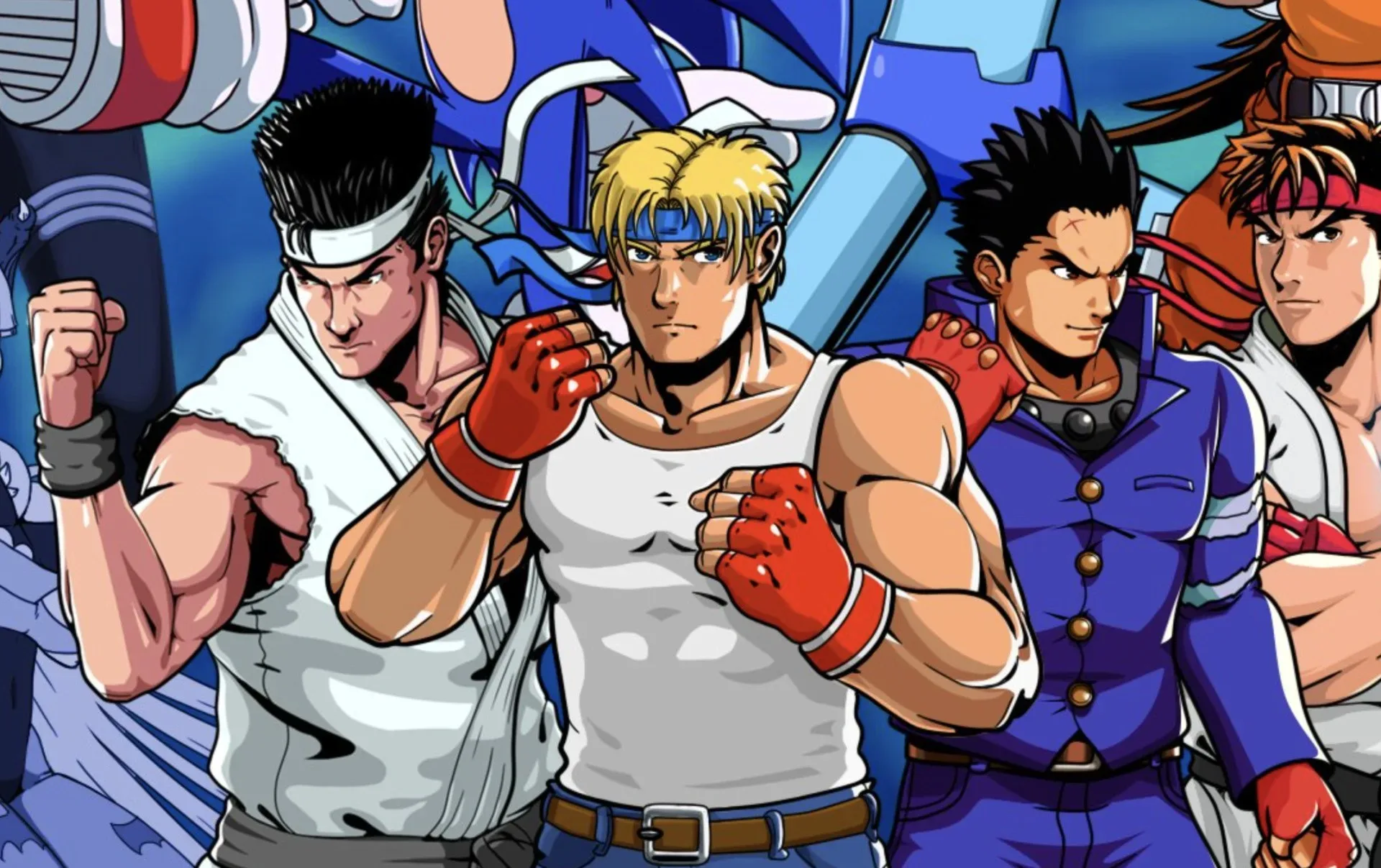
The improbable crossover bout has reached its final round. 4CYDE Studios has discontinued Sega Vs Capcom, its long-running PC fan fighting game, saying the project was shut down over its use of Capcom characters and likenesses. The team’s public message is notably direct: it attributes the end of the game to that issue alone, rather than a dispute over some broader technical, platform, or community matter.
For anyone who has ever looked at two rival fighting-game rosters and immediately started arranging dream matches in their head, the project’s premise was easy to understand. Sega Vs Capcom brought characters from both companies’ games into a fan-made fighting-game framework. It existed online for several years, enough time to build an audience and to reach what 4CYDE Studios describes as a Season 1 release.
Now, downloads have been removed. Videos remain online, preserving a record of what the team built, but the playable project itself is no longer being distributed.
A clear statement from the developer
4CYDE Studios said that Sega Vs Capcom, often shortened to SVC, was shut down because it used Capcom’s characters and likenesses. The studio acknowledged that this is a known risk attached to fan games and said it does not regret having made the project. It also thanked the people who contributed and marked the arrival of Season 1 as a meaningful milestone.
That framing matters because fan-project shutdown stories can quickly become tangled in rumors: was a particular asset disputed, did a platform issue a demand, did the team voluntarily stop, or did another company object? Here, the developer sought to narrow the explanation. Its stated reason concerns Capcom intellectual property, and no additional cause was identified in the statement.
There is an unavoidable bit of irony in the title. Official crossover games have made the idea of Sega and Capcom combatants sharing space feel plausible for decades. Capcom itself has a deep history with versus games, including Capcom Vs. SNK 2 and Tatsunoko vs. Capcom. Yet the existence of official crossovers does not give an unrelated fan work permission to use the participants, their names, or their visual identities. A dream match can be culturally familiar while still belonging to the companies that control the underlying characters.
Why free fan games still carry risk
The online response included disappointment for the team and frustration directed at Capcom, alongside a more pragmatic view: a free release is not automatically a legally safe release. The basic point is less glamorous than a dramatic final-boss entrance, but it is important. Copyright and related intellectual-property rights can apply regardless of whether a project is sold for money.
That does not mean every fan work is treated the same way, or that every unlicensed homage receives the same response. Companies make different decisions, at different times, for reasons that may include brand management, licensing arrangements, future product plans, and the particular details of a work. But a project that places recognizable protected characters into a new game is exposed to the possibility that a rights holder will object.
Sega Vs Capcom also illustrates why the word “fan-made” describes a project’s passion, not its legal status. Building something without charging players can reflect enthusiasm and a desire to learn. It does not transform borrowed characters into original creations. Nor does the amount of effort invested erase the rights-holder question.
That reality can feel harsh precisely because fan developers often put real craft into these projects: coding systems, balancing rosters, creating interface work, building stages, organizing releases, and maintaining a community. The more polished a tribute becomes, the more visible it can be—and visibility is a mixed blessing when its central appeal depends on characters owned by someone else.
A veteran developer joins the debate
The discussion drew in Hidetoshi Ishizawa, also known as Neo_G. Ishizawa was director on Street Fighter III 3rd STRIKE and served as the main planner on Capcom Vs. SNK 2, making his perspective particularly relevant to a conversation about an unofficial crossover fighter.
He argued that using Capcom’s copyrighted material was not acceptable and emphasized that the legal position would favor Capcom whether the game was free or commercial, and regardless of geography. In other words, he rejected the idea that this is simply a clash between Japanese and Western attitudes toward fan creations.
During the exchange, Ishizawa initially said the project had directly extracted character models from Tatsunoko vs. Capcom. He later withdrew that claim after being corrected. That correction is worth keeping attached to the broader conversation. It is one thing to discuss the admitted use of Capcom characters and likenesses; it is another to allege specific asset extraction. The latter allegation was walked back, and should not be treated as an established fact.
The distinction is more than internet-discourse housekeeping. Fan works can raise several separate questions—character usage, music, art, models, code, branding, distribution, and commercial activity among them. Folding all of those issues together can produce a much muddier account of what actually happened. In this case, 4CYDE Studios’ own explanation focused on character and likeness use.
The project’s value does not vanish with the download
4CYDE Studios has presented the work as a learning experience that can inform future original games. That is a useful way to understand what fan projects can be, even when their public life ends. A crossover fighter may be unlicensed, but the production process can still teach a team practical lessons about game feel, player feedback, design scope, communication, and finishing a release.
Those lessons are especially relevant in PC development, where small teams can prototype ideas and reach communities quickly. Anyone tracking smaller projects can see how broad that space remains in our recent PC indie game roundup, from unusual premises to experiments built around focused mechanical ideas. The long-term challenge for a studio leaving a fan project behind is converting its newly developed skills into a game whose characters, setting, and identity it fully owns.
That route is not merely safer in an intellectual-property sense. Original work gives developers the ability to decide what happens next: whether a game returns after an update, appears on another storefront, becomes a sequel, or grows into a business. No borrowed roster can offer that level of control. For a team that has already endured the complexity of a fighting game, creating an original cast could turn hard-won technical experience into something durable.
What remains of Sega Vs Capcom
With the downloads pulled, the surviving videos are now the most accessible way to see the project’s former state. They are also a reminder that a game’s disappearance from distribution does not erase the labor behind it or the audience response it received. The project made it to Season 1, attracted attention across fighting-game and retro-game circles, and sparked a debate that goes beyond one matchup list.
For players, the loss is a familiar one: an ambitious “what if?” game has become unavailable. For developers, it is another highly visible example of the tradeoff in building around famous licensed characters. The recognition is immediate, but the foundation is never fully theirs. For rights holders, protecting a character catalog can be viewed as a routine responsibility even when the project being removed was made as a tribute.
4CYDE Studios’ position has remained remarkably unsentimental about that tension. The team says it knew fan games come with risk, is glad the work happened, and does not regard the time as wasted. That does not make the shutdown less disappointing for people who wanted to keep playing. It does, however, make the stated next step clearer: use what was learned from Sega Vs Capcom to create future titles built on original ground.