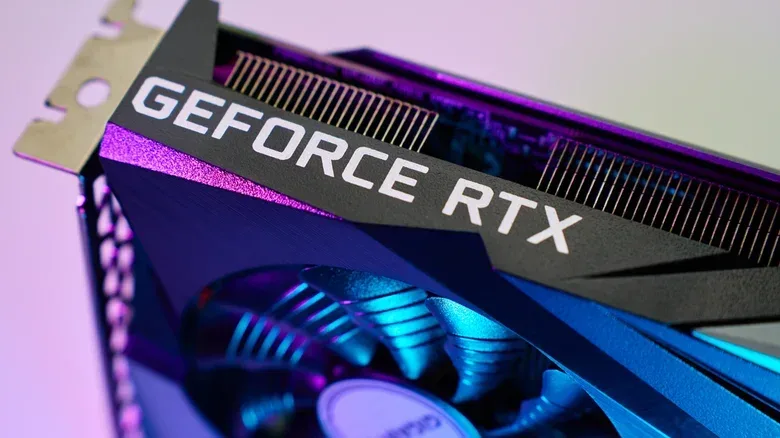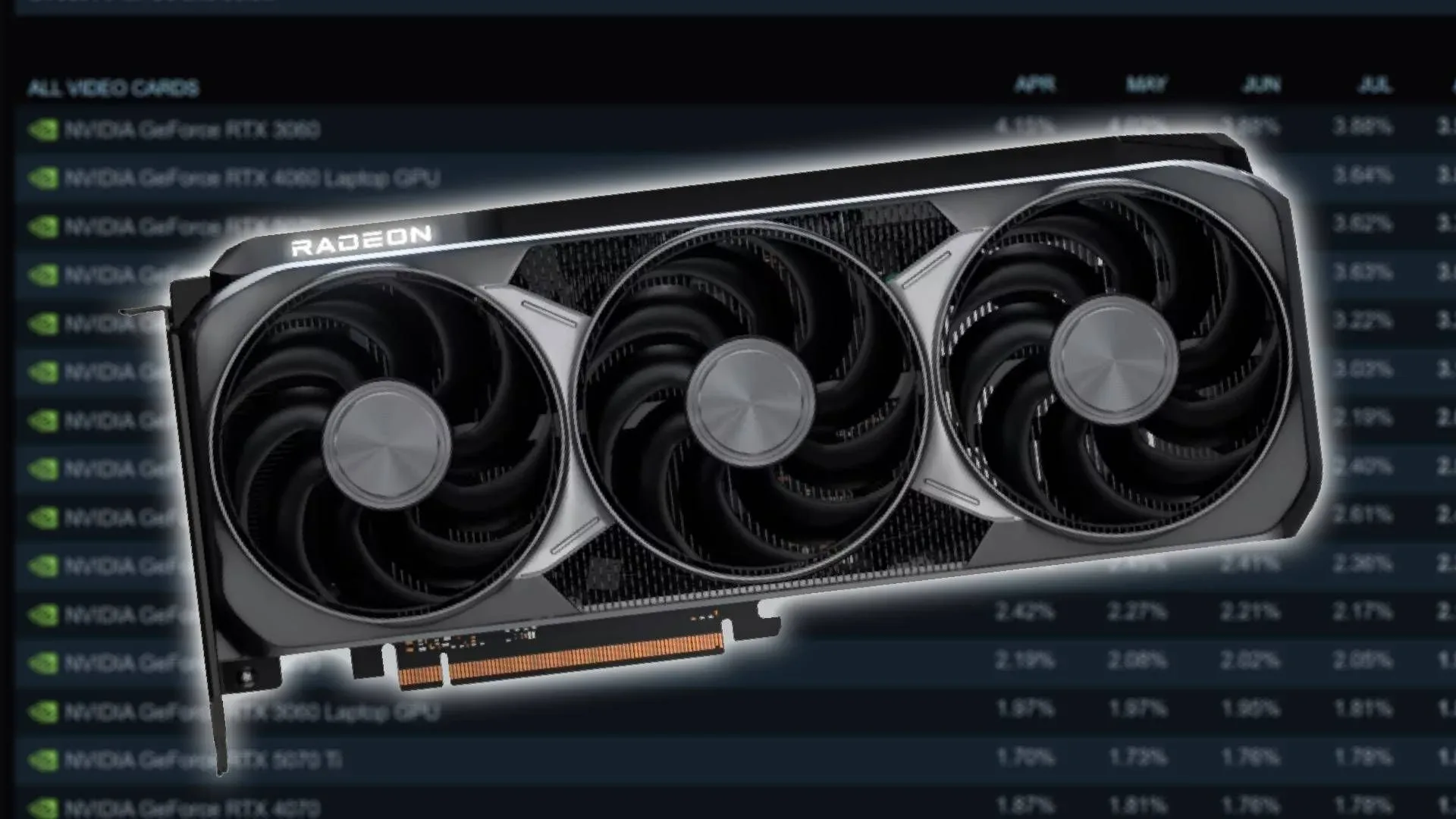
The NVIDIA GeForce RTX 3060 is now old enough to have been replaced more than once, yet it remains tied for the largest individual graphics-card share in Steam’s October hardware survey. The desktop RTX 3060 and RTX 5070 each appear in 3.78% of surveyed systems.
That result does not mean the RTX 3060 is the fastest card in widespread use, nor does it establish that every PC player should seek one out today. It says something more practical: a huge number of players bought this particular mid-range GPU when it was attainable, and many have not seen a compellingly priced reason to leave it behind.
The card launched in February 2021 at $329, during a period when cryptocurrency demand was distorting the GPU market. NVIDIA used a driver limiter intended to reduce its Ethereum-mining performance. Nearly six years later, a different demand problem appears to be shaping the market: competition for memory and manufacturing capacity from AI-oriented hardware. The names have changed; the awkward arithmetic for mainstream PC upgrades has not.
A survey leader, but not a growing one
Steam’s hardware survey is a useful snapshot of participating users’ systems, not a full census of every PC gamer or a ranking of gaming performance. Its individual GPU percentages also need context. The RTX 3060 registered 4.79% in August 2025, so its 3.78% October share shows that even a chart-topping model can be declining in share over time.
There is another important wrinkle: desktop and laptop GPUs are listed separately. The desktop RTX 4060 accounts for 3.51% of systems in the figures cited, while the RTX 4060 Laptop GPU accounts for 3.60%. Together that is 7.11%, substantially higher than the RTX 3060’s individual share. In other words, the 3060’s headline is about a single named GPU; newer hardware is more widely represented once closely related mobile and desktop entries are combined.
Still, the 3060’s individual position is meaningful. It reflects the unusually long life of an affordable mainstream card in a market where many replacement options have become far more expensive than their suggested launch prices.
New GPU pricing has made keeping an old card rational
NVIDIA lists the RTX 5070 at $549. Median prices at Newegg were reported to have risen from $659.99 in June to $899.99 in August, a 64% premium over the listed price. That does not make the RTX 5070 a direct performance match for an RTX 3060; it illustrates the broader affordability issue facing someone who would normally consider a mainstream upgrade.
RTX 50-series cards use GDDR7, a newer generation of graphics memory. The available information points to AI data centers absorbing a large portion of memory production, which can constrain GPU supply and keep retail prices elevated. For a player with a functioning RTX 3060, the question is not simply whether a new GPU is quicker. It is whether the speed increase justifies a purchase at the price actually on the shelf.
Related coverage includes RTX 3060 Still Leads Steam GPU Use as New Card Prices Stay High.
That distinction is especially relevant because graphics cards are not bought in a vacuum. An upgrade may also require a power-supply check, case-space check, or a rethink of a broader PC budget. None of those additional costs are necessary to understand the survey data, but they reinforce the fundamental consumer logic: when a current card still handles a person’s usual games and display resolution, an inflated replacement price is easy to decline.
Desktop GPU shipments nonetheless reached 12.5 million units in the second quarter of 2026, the highest level since early 2022. The reported interpretation was that buyers may have moved early out of concern that pricing would rise still further. Much of that activity was concentrated at the high end, however. A healthy shipment total does not necessarily mean that the normal owner of a mid-range 2021 card can comfortably move into today’s mid-range market.
Why 12GB of VRAM still matters at 1080p
The RTX 3060 has a specification that looks unusually durable in retrospect: 12GB of GDDR6 video memory, commonly called VRAM, on a 192-bit memory bus. VRAM is the dedicated memory a GPU uses for assets such as textures and other graphical data needed during rendering. It is not the same as a PC’s general system RAM.
When a game needs more graphics memory than the card has readily available, data can spill into slower system memory. That can contribute to reduced frame rates and, notably, stutter. Raw GPU processing power remains important, but the amount of VRAM can have a direct effect on whether settings that demand larger texture allocations feel smooth.
The RTX 3060’s capacity is conspicuous because it exceeded the VRAM allocation of the more powerful RTX 3070 and RTX 3080 when those cards launched. Its nominal successor, the RTX 4060, arrived in 2023 with 8GB on a 128-bit bus at a $299 list price. The RTX 5060 retained 8GB. Those changes do not turn the 3060 into the better card in every workload, but they help explain why owners may view its memory allocation as something worth holding onto.
Resolution is the other half of the picture. Steam’s figures show 50.23% of users playing at 1920 by 1080, better known as 1080p. That is the resolution the RTX 3060 was built around, and 12GB is generally adequate for it. A 1080p player who can already tune settings to suit a game has less immediate pressure to replace the card than somebody targeting a higher-resolution display.
Upscaling extends the card’s useful life, with limits
RTX 3060 owners can also use DLSS, NVIDIA’s image-upscaling technology. In simple terms, DLSS renders at a lower internal resolution and uses processing to produce an image intended to resemble a higher-resolution render. The goal is to improve frame rates without accepting the full visual compromise of merely lowering output resolution.
Support for a feature does not mean every version carries the same cost. DLSS 4.5 Super Resolution, released in January 2026, has a heavier performance burden on RTX 20- and RTX 30-series GPUs than on RTX 40- or RTX 50-series cards. The earlier DLSS 4 is described as working fine on the older hardware. For an RTX 3060 owner, that is a nuanced situation: newer upscaling options remain available, but the newest version may take more performance to use well.
That pattern is a useful reminder against treating a feature checklist as a purchase guide. A card can support modern software capabilities while newer architectures execute them more efficiently. Buyers should assess the games they actually play, their target resolution and the settings they are unwilling to sacrifice instead of assuming a new label alone settles the value question.
The strange possibility of a 2021 card returning
There has been a report that NVIDIA restarted RTX 3060 12GB production in June, after the card had reportedly been discontinued in August 2024. The reasoning is plausible within the market conditions described, but the restart itself should be treated as an allegation rather than a confirmed company announcement here.
The RTX 3060 is built on Samsung’s older 8nm process and uses GDDR6 rather than GDDR7. That means it does not compete in exactly the same way for the newest production nodes and newest memory used by more advanced GPUs and AI chips. An older design can therefore be attractive to keep in circulation when the leading-edge supply chain is stressed.
Yet an old design being easier to produce does not automatically restore its original value. Although the revived RTX 3060 was said to retain a $339 launch price, many versions reportedly sell around $500 or more. That is a striking gap from the $329 price attached to the original February 2021 launch. It also makes the strongest case for the RTX 3060 one of ownership, rather than an unconditional recommendation to buy one now.
For current owners, the argument is straightforward: a card with 12GB of VRAM that remains suited to the most common Steam resolution can be sensible to keep while the market is hostile. For shoppers, the better question is comparative rather than nostalgic: what is available locally at the actual price, what resolution is the system intended to run, and which performance limitation needs solving?
What the 3060’s endurance says about PC gaming
The RTX 3060 is not staying visible because PC gaming stopped moving forward. It is staying visible because the installed base is built from past buying opportunities, and hardware survives when it remains good enough for the games, screens and budgets people have. Steam’s survey captures that installed base more effectively than it captures the excitement around a new launch.
It also highlights why technical specifications and market economics must be read together. A newer card may offer architectural improvements and a stronger performance ceiling. But if its retail price is far above its list price, its practical influence on the hardware population can be limited. Meanwhile, 12GB of VRAM and a 1080p-friendly performance profile can turn a 2021 purchase into a much longer-term one than expected.
The AI boom is also reshaping consumer PC conversations beyond graphics cards. For related context on how dedicated AI-focused silicon is showing up in everyday machines, see this explanation of laptop NPUs. In the GPU market, the immediate effect described by current pricing is less about a new button for players and more about constrained supply that changes what an upgrade costs.
For now, the RTX 3060’s shared first-place survey result looks less like a triumph of old hardware over new hardware than a verdict on value. Millions of players acquired a capable 1080p GPU at a time when it made financial sense. As long as successors remain difficult to obtain at accessible prices, many of those systems have little reason to change.