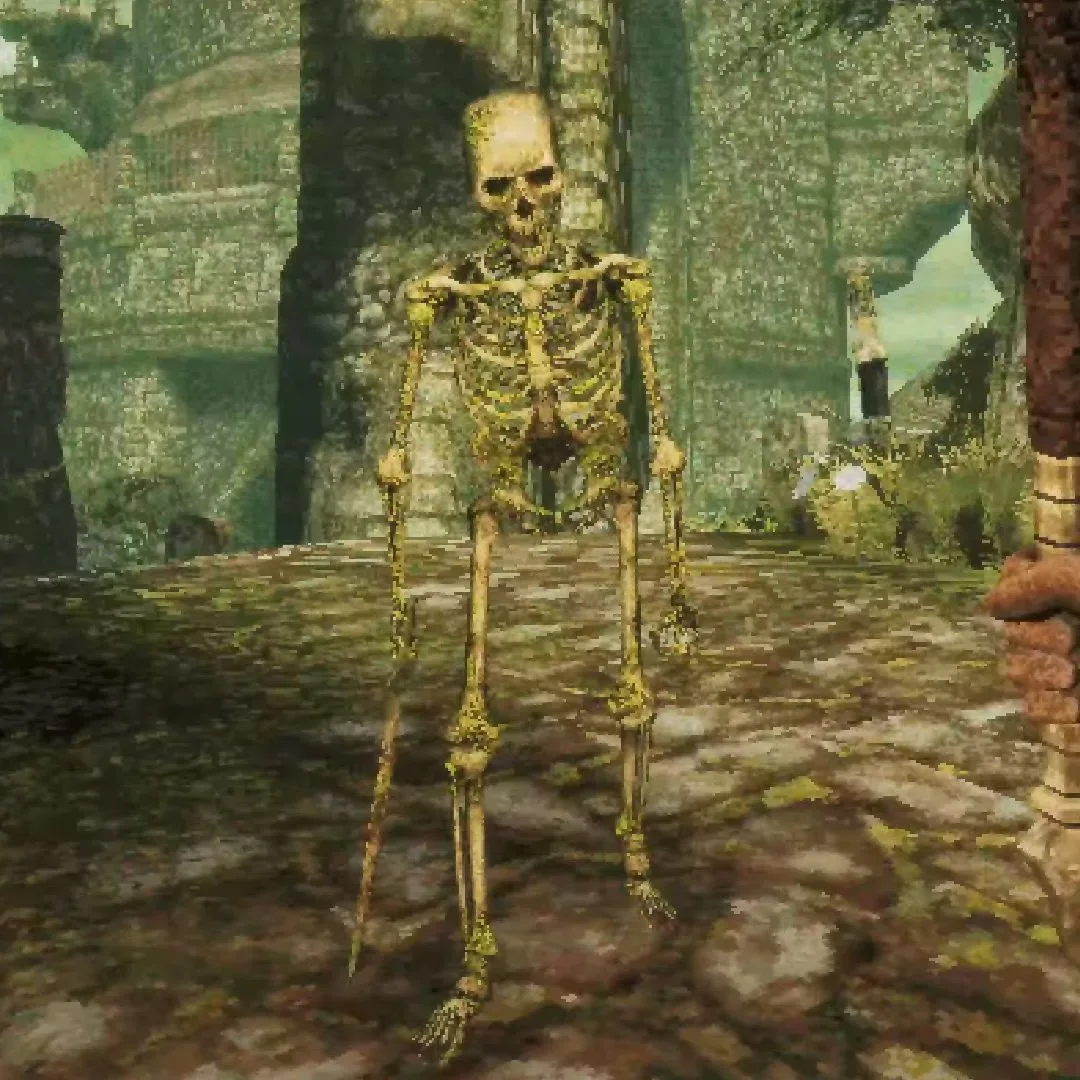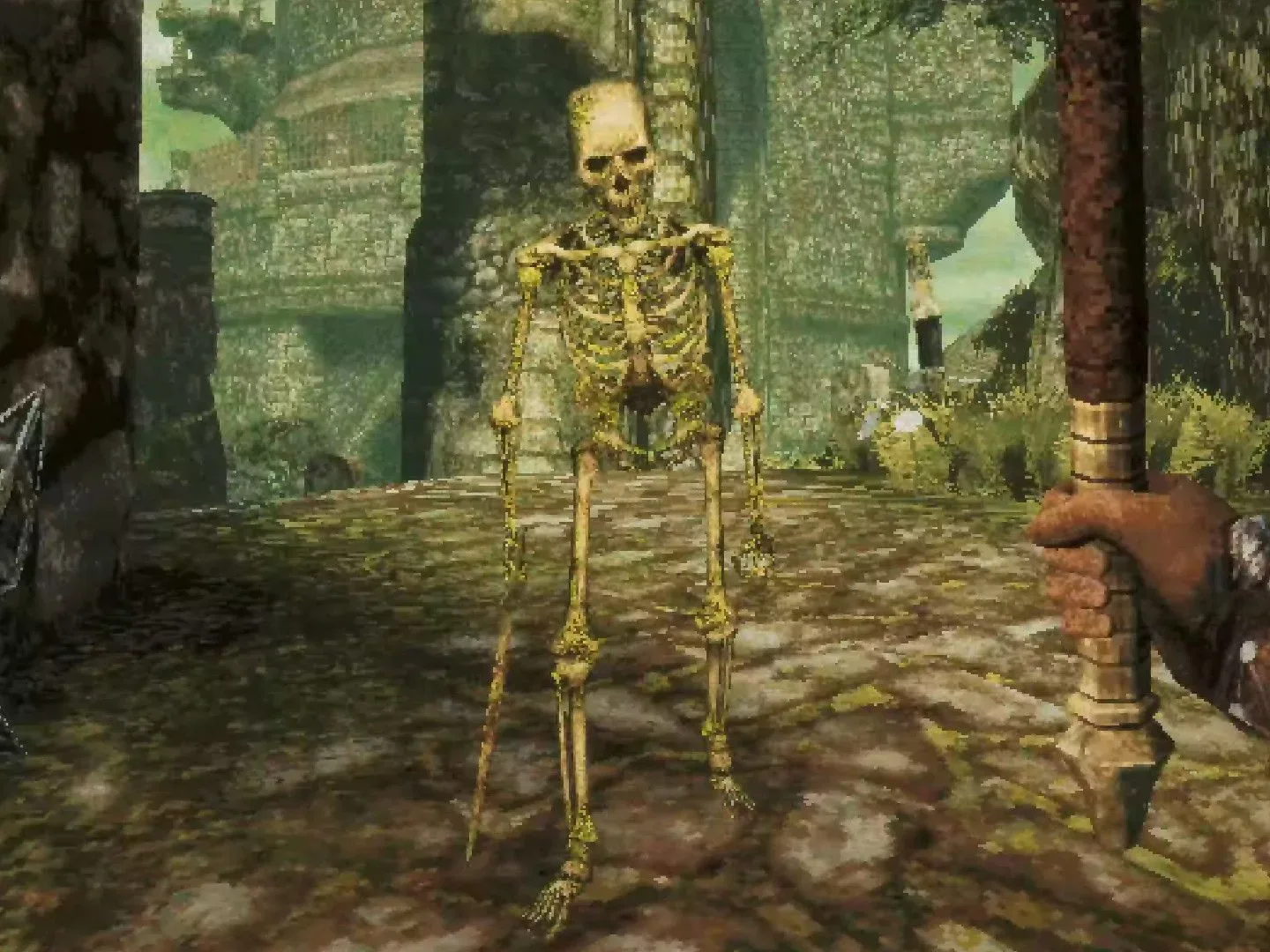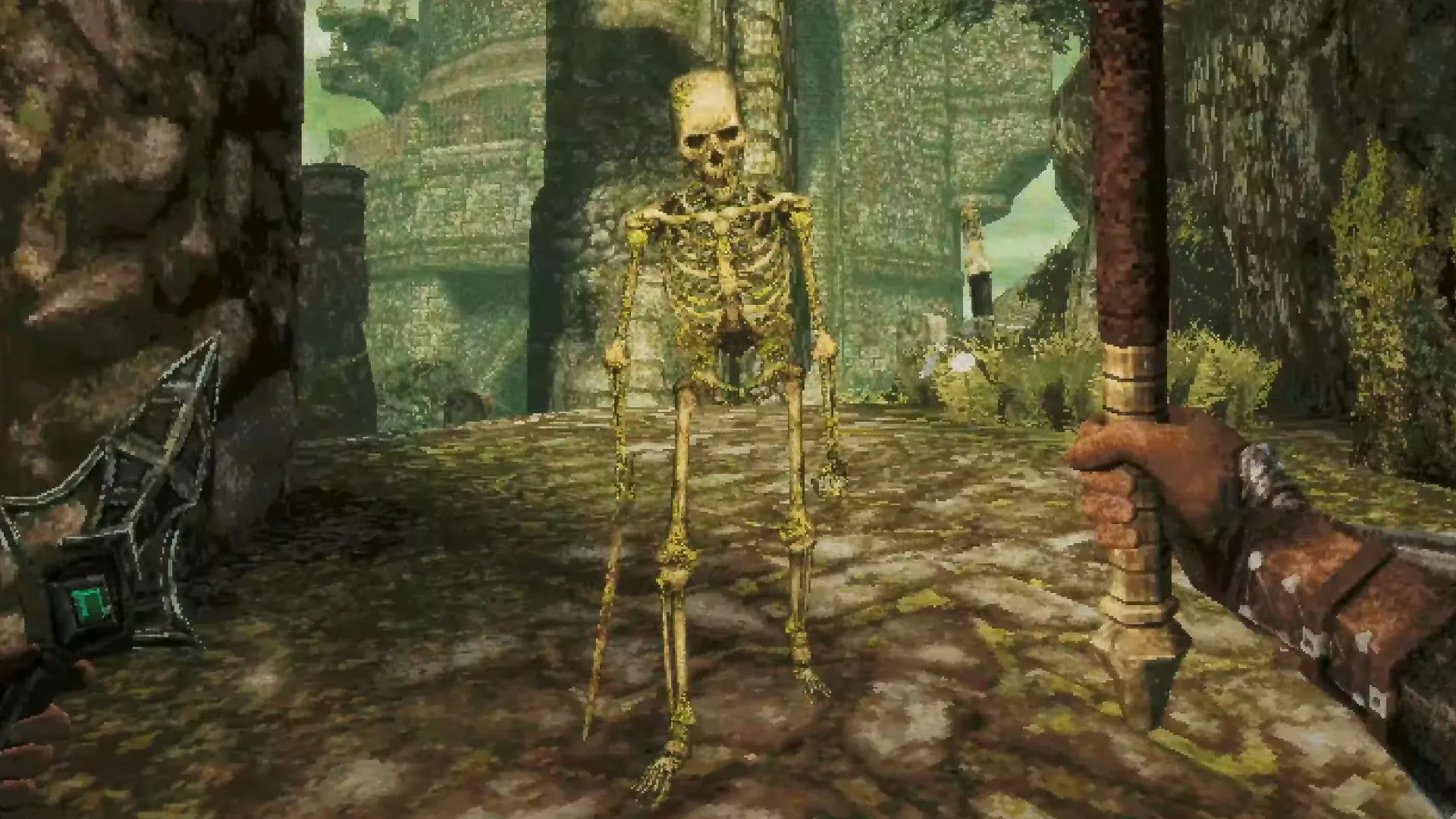
There is an enduring appeal to a role-playing game that looks at a stranded adventurer, points toward a hostile island, and declines to provide a comforting checklist. Queen’s Domain is preparing to make that particular kind of rudeness available on October 30, when it is scheduled to arrive on Steam, PlayStation 5, Xbox Series X/S and Switch 2.
The first-person RPG wears its influences openly: its retro-fantasy presentation, sparse interface, heavy-looking creatures and isolated exploration recall the atmosphere associated with FromSoftware’s King’s Field. That series began on the original PlayStation in the 1990s and built a small but devoted following for its dark mood and demanding approach. Queen’s Domain is not presented as a literal PS1-style production, however. Its environments are denser and more detailed than the original hardware could reasonably have delivered. The point is a visual and mechanical mood, not a strict technical reenactment.
For players who enjoy games willing to let them get properly, magnificently lost, that distinction may be the important part. Queen’s Domain appears to use old-school cues to frame a contemporary game: atmospheric image effects, minimal guidance and a large interconnected space to decipher at the player’s pace. It is the kind of design where the map in your head may be more valuable than a flashing objective marker.
A release date, four platforms and a substantial wishlist total
Queen’s Domain is slated to launch simultaneously on Steam, PS5, Xbox Series X/S and Switch 2 on October 30. The cross-platform plan means its audience will not be confined to PC players with a fondness for obscure first-person dungeon crawlers and a suspiciously high tolerance for being attacked around blind corners.
Interest on Steam has also grown considerably. The game previously reached 50,000 wishlists in a week, and its total has now passed 180,000. A wishlist is a Steam feature that lets users bookmark a game and receive updates or notifications related to it; it is not a purchase or a guarantee of sales. Still, it is a useful public measure of attention, particularly for an indie game working in a niche with a highly specific historical reference point.
That attention is notable because Queen’s Domain is not chasing the usual shorthand for retro gaming. It is not simply reproducing a low polygon count or treating a dated resolution as the entire aesthetic. Its stated look uses elements associated with an older visual language while making room for environments with more detail than a genuine PS1 game could support.
A demo is currently available through Steam. For curious players, that is the most useful way to assess whether the project’s deliberately unfamiliar rhythm—first-person exploration, limited direction and the promise of punishing encounters—lands as compelling mystery or as a swift appointment with the uninstall button.
What “King’s Field-like” actually signals
Calling a game King’s Field-inspired communicates more than “old game, but in a dungeon.” The reference points toward a particular combination of first-person perspective, fantasy exploration, uneasy pacing and a world that expects players to learn through observation. Rather than constantly telling the player where to go, such games derive tension from uncertainty: Which route is safe? Is an apparently minor enemy actually lethal? Did that key open a door nearby, or is it tied to a place you passed an hour ago?
Related coverage includes Queen's Domain Brings King's Field-Style Dungeon Crawling to Steam and Consoles This Halloween.
Queen’s Domain begins with the player washed ashore on a mysterious island. From there, the stated setup offers little explicit direction. Progress instead centers on discovering a route through the interconnected world and expanding an arsenal of weapons and powers. In practical terms, that suggests exploration and accumulation are linked: finding equipment and abilities should broaden the player’s options, while understanding the island’s layout should turn dead ends and locked paths into future possibilities.
Interconnected world is an important term here. It does not merely mean a setting has several areas. It describes spaces designed to relate to one another through paths, gates, returns and newly accessible routes. In a game with limited instruction, that structure can make memory, attention and willingness to revisit locations part of the challenge. A previously unremarkable passage may gain relevance when the player acquires a new weapon or power.
The game is also described as punishing. That word should not automatically be read as a promise that every challenge will be fair, expertly balanced, or enjoyable for every player. It does indicate an expectation of pressure and setbacks. Players interested in Queen’s Domain should go in prepared for a game whose atmosphere is tied to vulnerability and self-directed problem-solving, rather than one built around frequent reassurance.
Retro-fantasy is more than a nostalgia filter
Queen’s Domain uses the phrase retro-fantasy for its visual approach. The available description identifies dithering, sparse UI and chunky creature designs as central ingredients. Those terms are worth unpacking, because they help explain why a game can evoke an older era without directly mimicking its technical limitations.
- Dithering is an image technique that uses patterns of dots or pixels to suggest gradients, texture or extra shades. In a modern game it can produce a deliberately coarse, atmospheric surface rather than serving as a workaround for limited display technology.
- Sparse UI, or user interface, means less on-screen information competing for attention. Fewer meters, icons and markers can make the world feel less mediated, but it also asks the player to notice more independently.
- Chunky creature designs refer to bold, weighty forms rather than delicate realism. That kind of silhouette can make monsters feel both readable and uncanny, especially within a murky fantasy setting.
Combined, those choices can create a sense of age without pretending that the game was recovered from a lost PlayStation memory card. The supplied details make clear that Queen’s Domain’s environments exceed the density and detail of a true PS1 release. That is a productive split: the game can borrow an older style’s mood while using contemporary machines for a richer sense of place.
The sparse interface may also be doing thematic work. When a game declines to plaster the screen with directions, it can make an island feel less like a sequence of tasks and more like a place that exists without concern for the player. That does not make minimal UI inherently better; accessibility and clarity matter, and individual preferences vary. But for a game built around loneliness and discovery, visual restraint is an understandable fit.
An indie lane built around deliberate disorientation
Queen’s Domain is part of a broader revival of first-person, retro-styled dark fantasy RPGs. Lunacid, which has drawn very positive reception since its 2023 release, and the newer Verho: Curse of Faces, which has received positive buzz, show that the King’s Field-adjacent space is no longer limited to players trading recommendations in the darkest recesses of an old forum archive.
The shared appeal is not necessarily a desire to replay the past unchanged. Instead, these projects demonstrate an appetite for ideas that can feel unusual beside more heavily directed modern RPGs: opaque worlds, deliberate movement, environments that reward caution, and an atmosphere where silence can be as important as spectacle.
That makes Queen’s Domain’s multi-platform release especially meaningful. Games drawing from niche retro traditions have often been most visible to PC audiences, where experimental projects and demos are easily distributed. Reaching PlayStation, Xbox and Switch 2 alongside Steam broadens the possible audience for this strain of dungeon crawling without requiring players to own a particular old console or track down aging software.
It also arrives at a season that suits its premise. An October 30 release places a lonely island, ominous creatures and unavoidable skeletons directly beside Halloween. The timing is tidy, though the game’s appeal seems less about seasonal jump scares than sustained unease: the slower dread of stepping into a new corridor and realizing the island has offered no clue about what lives at the other end.
Who should keep Queen’s Domain on the radar?
Queen’s Domain looks most promising for players who enjoy navigating by curiosity rather than by an aggressively helpful quest log. The game’s stated setup favors those willing to test routes, gather tools, revisit prior areas and accept that understanding the world is part of progression.
It may be less naturally suited to players who want constant waypoint guidance, briskly explained systems, or an experience that keeps friction to an absolute minimum. None of those preferences are wrong; they simply point toward a different relationship with an RPG. Queen’s Domain appears interested in making uncertainty part of its identity.
Before committing, the Steam demo offers the clearest available option for checking the fit. Players can look for the practical basics: whether the first-person perspective feels comfortable, whether the visual treatment works for them, and whether its intentionally limited direction creates intrigue. The demo cannot answer every question about the full game, but it can answer the crucial one: does being dropped onto this island feel like an invitation?
For more on the month’s wider release slate, see October 2026’s five biggest games. Queen’s Domain has a very specific proposition within that busy calendar: contemporary hardware, retro-fantasy texture, and a world that apparently believes directions are a privilege, not a right.