Some multiplayer games ask players to settle in, study a small library of systems, cultivate a lane, and prepare for a match that may consume an evening. Project Zeta is chasing a markedly different mood. Nirvanana Studio’s upcoming third-person Tactical Hero Arena frames its design around a short, high-pressure race: four teams of three players fighting for objectives, points, and positioning in sessions intended to last roughly 20 minutes.
The studio has landed on an unusually effective shorthand for that ambition: an “espresso MOBA.” It is not a claim that the game will remove all the strategic considerations associated with multiplayer online battle arenas. Rather, Project Zeta appears built to compress their flashiest, tensest moments—ability use, rotations, objective contests, coordinated engagements, and score swings—into a denser format with little room for passive play.
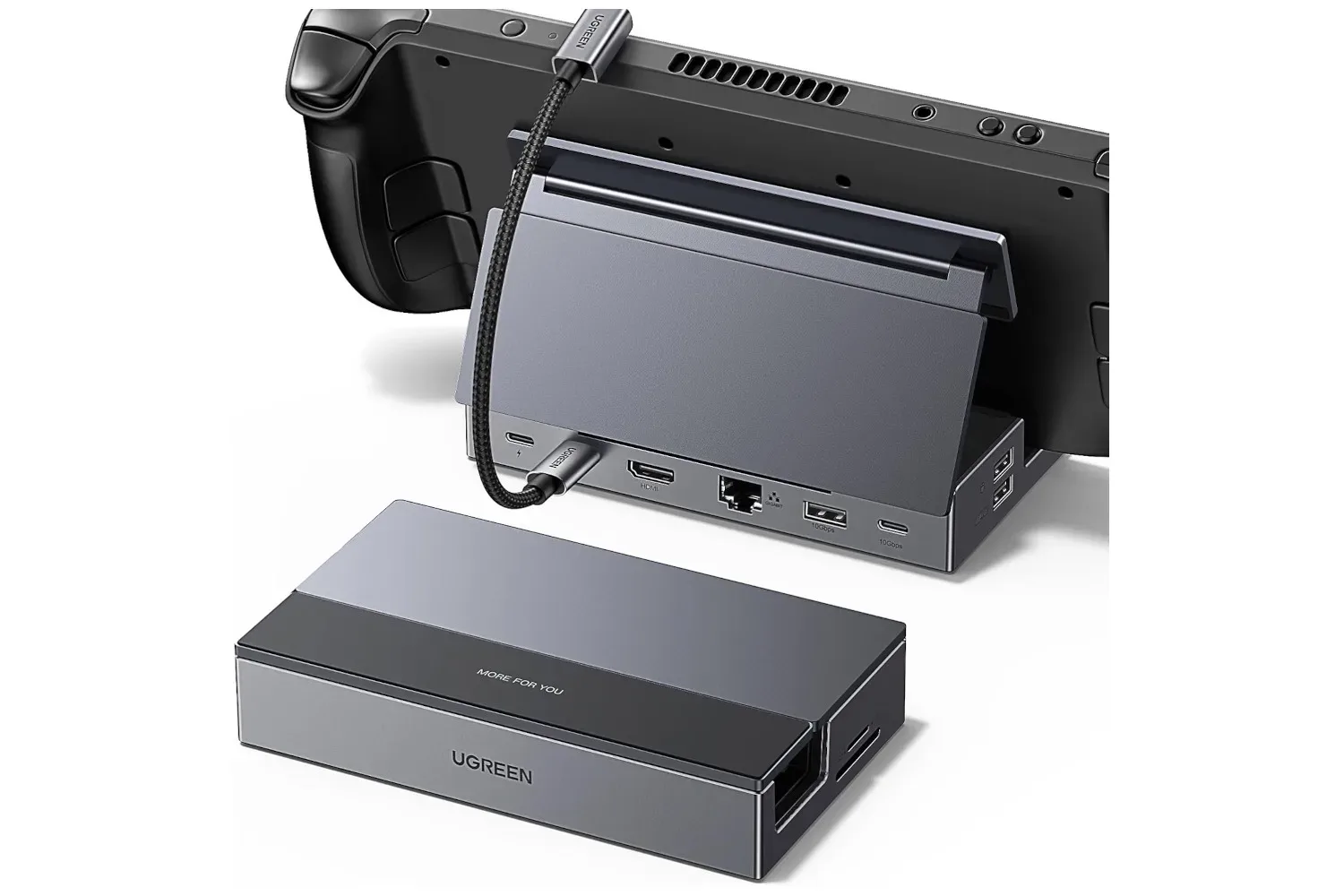
Project Zeta is being developed by Nirvanana Studio and published by Krafton. It is currently confirmed for PC through Steam and PlayStation 5. Its controller-forward design could be particularly relevant to players who move between couch and desktop play; the broader PC accessory space is also increasingly built around that flexibility, as seen with this foldable Steam Deck dock.
A MOBA Without the Traditional Lane Routine
The central break from the genre’s familiar formula is the absence of a lane-driven match structure. In many established MOBAs, lanes provide the basic rhythm: players farm, manage waves, pressure structures, and eventually assemble for pivotal fights. Project Zeta instead wants combatants moving toward shared targets very early. Around the three-minute point, the emphasis is expected to turn decisively toward contested objectives.
That does not mean the opening is entirely devoid of traditional MOBA DNA. A session has seven phases, and its first phase serves as a brief setup period. Teams defeat ordinary monsters to gain levels, providing a moment to establish a plan before the wider conflict escalates. From there, the key prize is a prism, earned from prism bosses.
Once a team has secured a prism, it must carry that prize to one of the ballasts located near the middle of the map. Depositing it scores a point. The first team to reach five points takes first place and exits the match.
That last detail is important. The format is not merely three squads watching two teams duel until it is convenient to intervene. With four teams pursuing the same score target, the game is designed to create a constantly changing race. The team leading on the scoreboard is visible, so every successful prism turn-in can alter the priorities of everyone still in the arena.
Why the Formula 1 Comparison Fits
Nirvanana CEO Namseok Kim has compared the intended feel to Formula 1: everyone is driving toward objectives at speed. The analogy is useful beyond the headline. A race is not only about the final lap; it is about adapting to traffic, timing moves, protecting a lead, and capitalizing when a competitor loses momentum. Project Zeta’s public score display and objective loop appear intended to create that same urgent, legible drama.
Related coverage includes Project Zeta Wants to Turn MOBA Teamfights Into a 20-Minute Sprint.
The goal is a match where players can quickly understand that the situation has changed. A prism boss becomes available. A rival squad collects the reward. A ballast is now the place to be. Another team is already fighting there. The decision is immediate: contest the score, disrupt a deposit, seek an advantageous engagement, or reposition for the next opening.
Calling that experience an espresso MOBA is also a candid acknowledgement of what Project Zeta is trying to solve. Long matches, intricate item paths, and broad knowledge requirements have helped make classic MOBAs deep, but those same qualities can be imposing. Kim has pointed to his daughter’s lack of enthusiasm for League of Legends after playing it with him repeatedly, citing both its length and how much players need to learn and remember. Project Zeta’s proposed answer is not to eliminate decision-making, but to make its path into the genre more approachable.
Positioning Over Crosshair Precision
One of Project Zeta’s most distinctive combat decisions is the lack of a central crosshair. Basic attacks are designed to connect rather than hinge on fine aiming accuracy, moving the focus away from conventional shooter-style tracking.
That choice should not be mistaken for an absence of skill expression. The studio’s apparent aim is to concentrate that skill in ability knowledge, movement, spacing, prediction, dodging, and mind games. In a three-dimensional arena, knowing when to commit, when to evade, and where an opposing team may arrive can be more consequential than simply having the steadiest mouse movement.
It is a particularly logical fit for Project Zeta’s cross-platform intentions. The game was built from the ground up with controller play in mind, and Nirvanana’s goal is for PC and console users to compete on an even field. By reducing reliance on raw aim, the developer can potentially make controller input feel less like a compromise while still leaving plenty of tactical demands in place.
Outside a session, players will also be able to configure skills around aggressive, supportive, or defensive preferences. An auto-itemization system then purchases the needed skills once the match begins. That could remove some of the in-match shopping burden without preventing players from making meaningful choices about the role they want to play.
Respawns Are Meant to Encourage the Messy Fights
Project Zeta is embracing a short time-to-kill and unlimited team respawns. When a team is eliminated, its players return immediately with health and cooldowns restored. Rather than treating death as a prolonged detour—or a limited-life failure state—the game uses resets to get everyone back into the race.
This is a major philosophical divide from battle royale-adjacent designs, where scarce lives can make survival the dominant priority. When being eliminated carries a heavy cost, players often have good reason to avoid uncertain encounters. Project Zeta instead wants its teams actively looking for fights, because fighting is intertwined with preventing opponents from scoring and creating chances to score themselves.
The full reset also addresses the awkward politics of multi-team combat. In a prolonged showdown between Team A and Team B, Team C can arrive late and exploit the winner’s depleted health, spent cooldowns, and general exhaustion. Nirvanana’s reasoning is that brisk kills and rapid resets keep that third-party advantage from becoming too punishing. Teams may still need to worry about an interloper, but a victorious group is not intended to remain crippled for long simply because it participated in the action the game encourages.
No Pure Tanks, No Pure Healers
For similar reasons, Project Zeta will not include pure tank or pure healer characters. These archetypes can be vital to the identities of many team games, but they can also extend fights considerably. In a four-team objective contest, extended battles risk turning into a waiting game for the freshest squad to crash the party.
Nirvanana’s approach suggests that its heroes will instead need a more active blend of offensive and utility options. That could make every character feel more immediately involved in the rapid exchanges Project Zeta is pursuing. It also leaves an open question about how broad the roster’s strategic identities will ultimately become. The absence of dedicated tanks and healers may preserve pace, but players will want to see whether other forms of protection, recovery, disruption, and team enablement provide enough variety.
A Difficult Opening in an Entrenched Genre
The MOBA category is dominated by games with enormous communities, years of balance history, and players deeply invested in their chosen competitive homes. Project Zeta does not need to be a direct replacement for League of Legends or Dota 2 to earn an audience, but it will still need a compelling reason for established players to spend time elsewhere.
Its clearest differentiators are already visible: four three-player teams rather than a standard two-side contest, objective scoring based on prisms and ballasts, matches targeted at 20 minutes, persistent scoreboard pressure, controller parity, and a combat model centered on tactical positioning instead of crosshair accuracy. Together, those features make the espresso comparison sound less like a novelty label and more like a concise statement of purpose.
There is no release date included in the currently confirmed details. But Project Zeta has a clearly defined pitch: take the explosive parts of a MOBA match, remove much of the waiting and lane maintenance, then put four teams in a race where sitting quietly in a bush is unlikely to win the day.