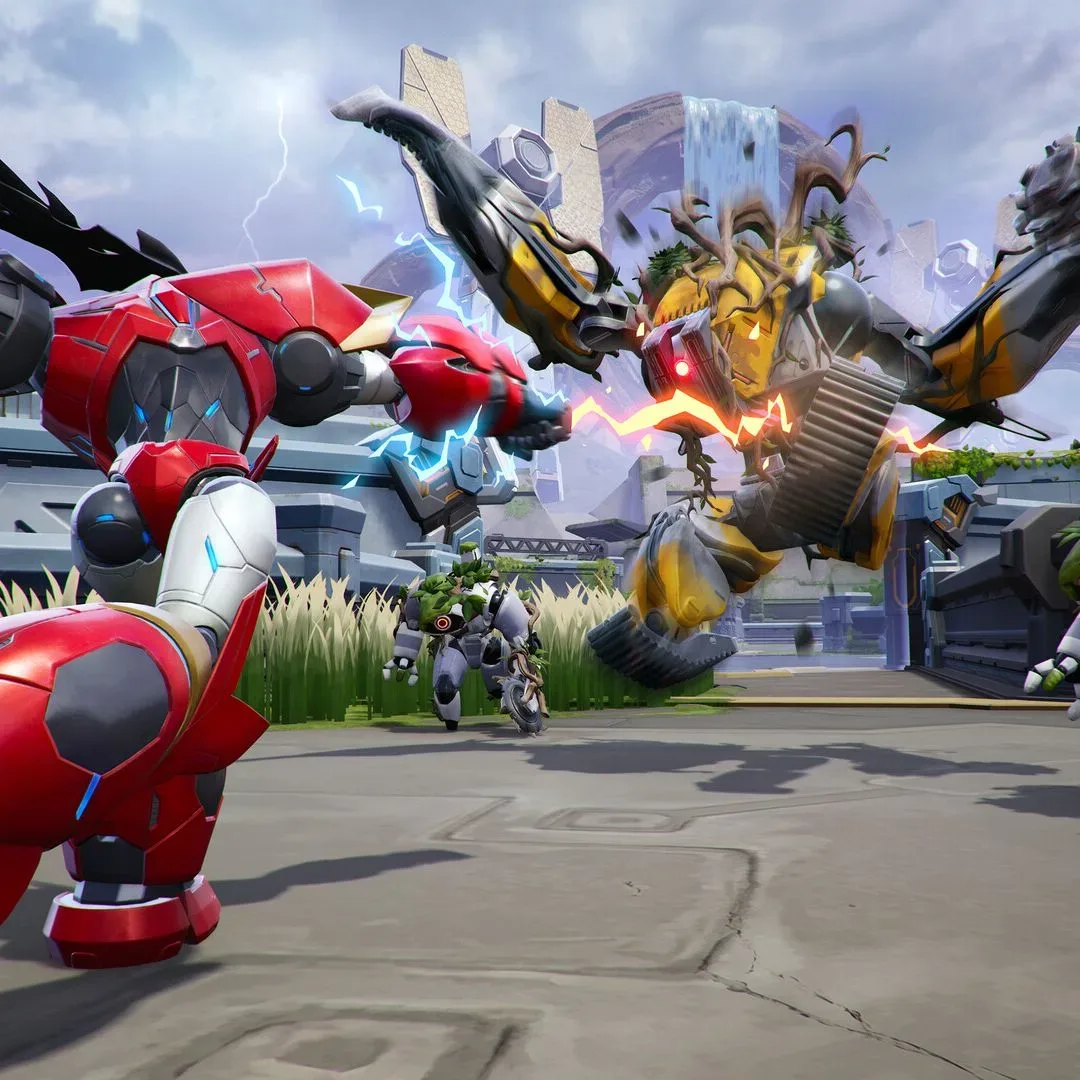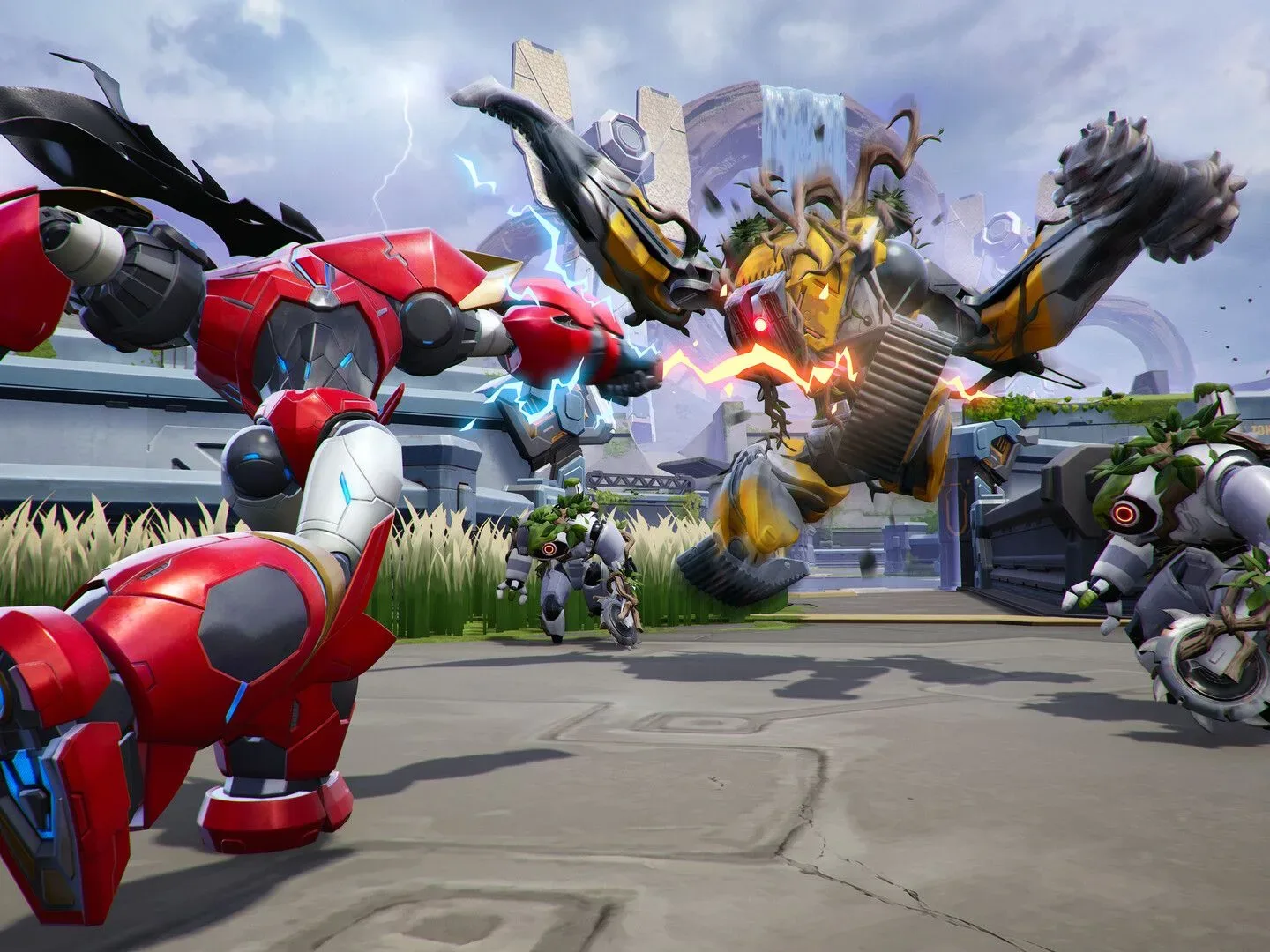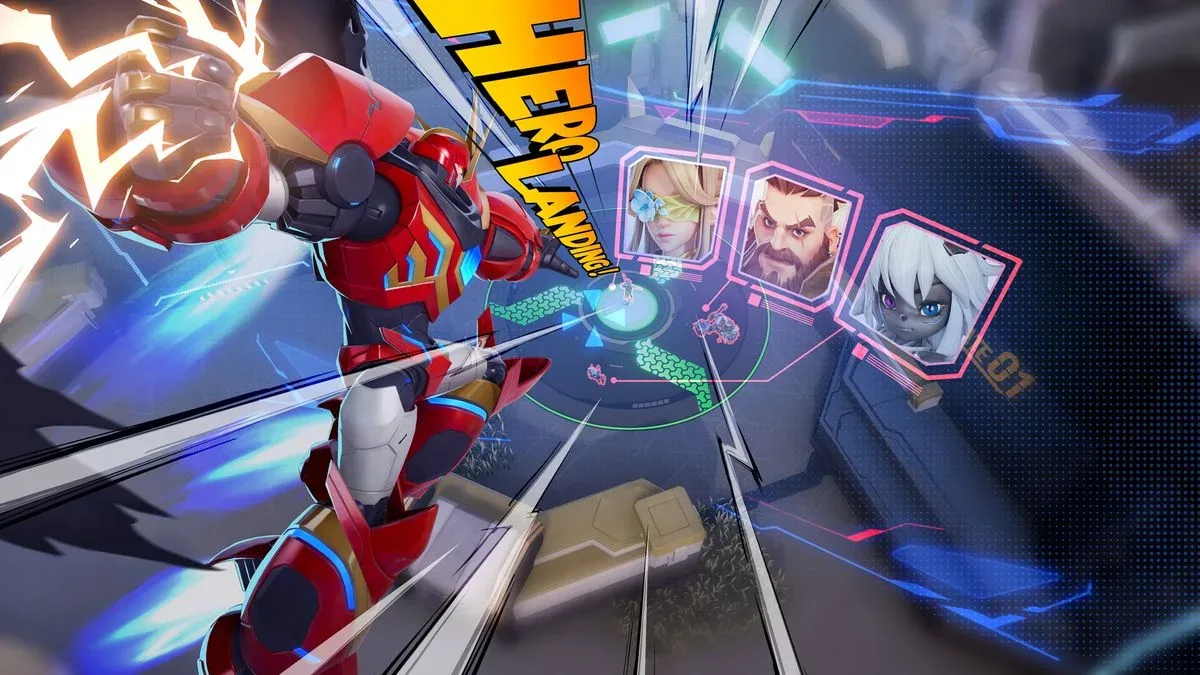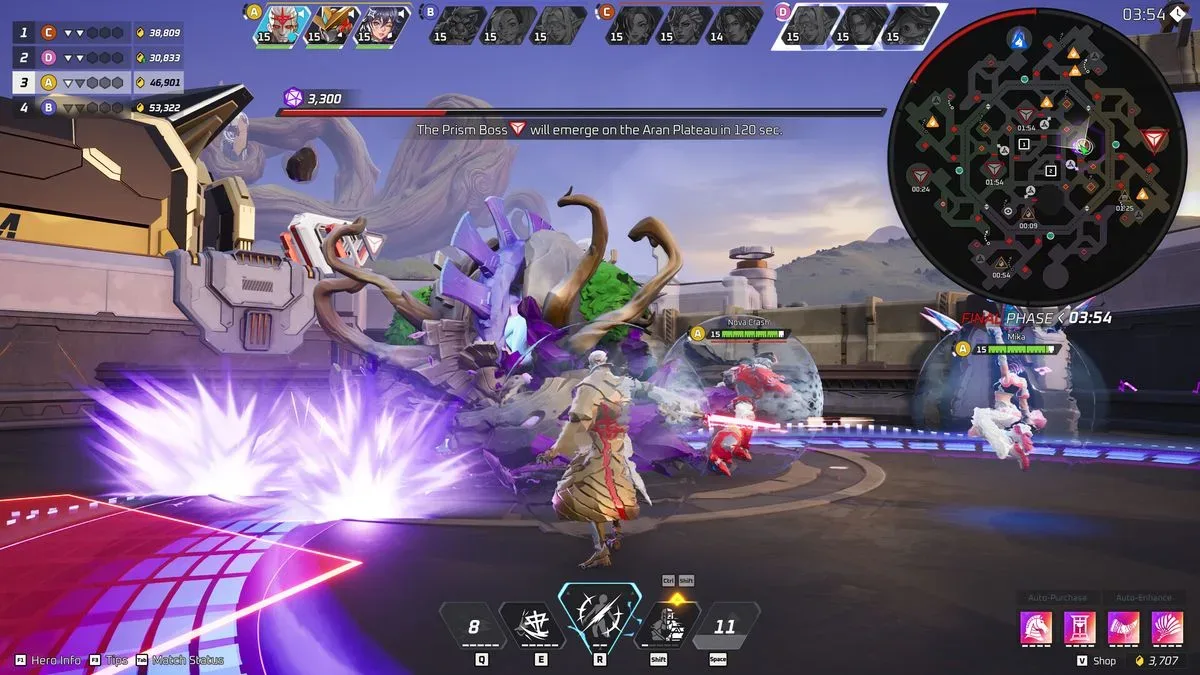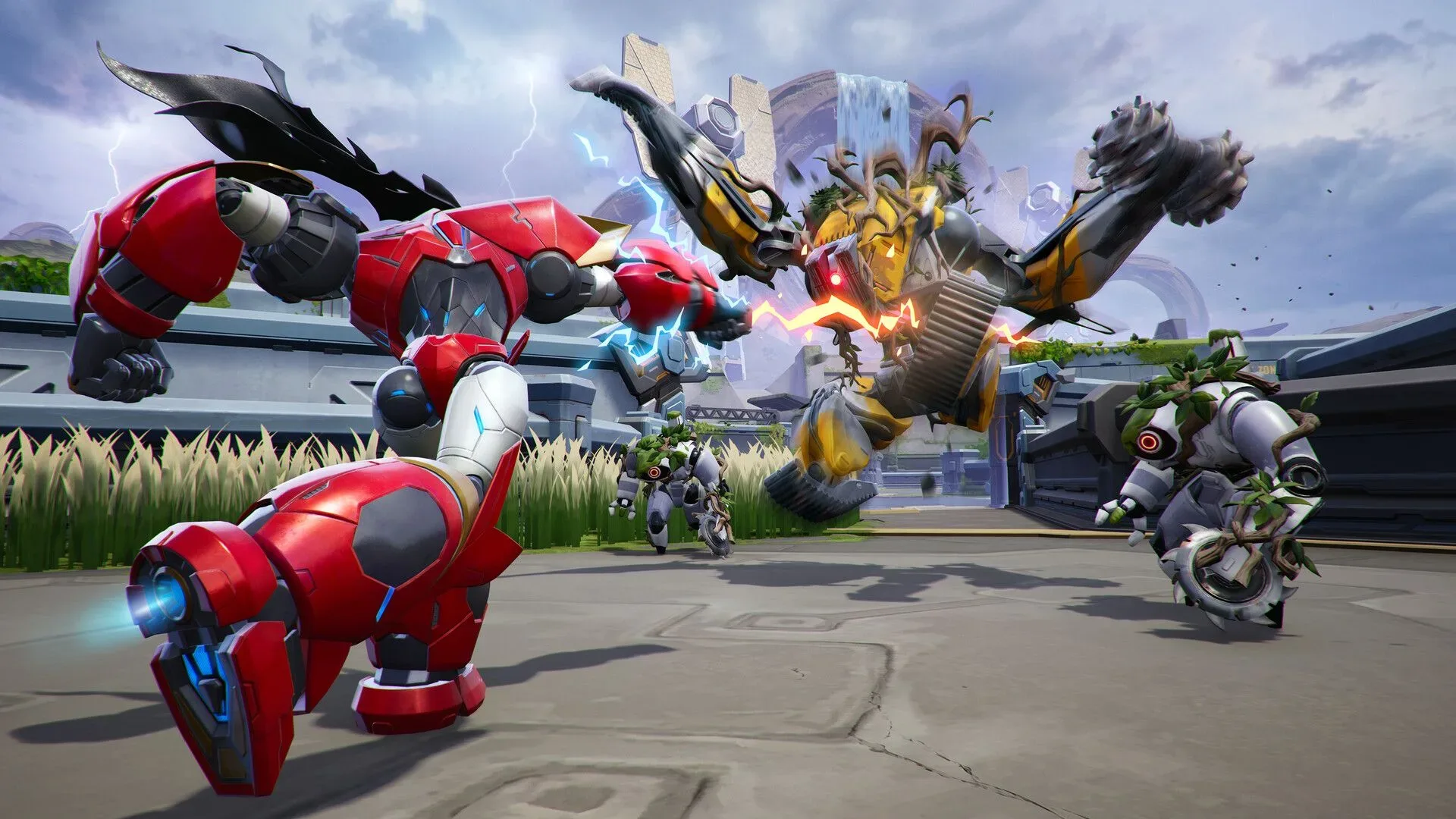
Project Zeta is entering one of competitive gaming’s most crowded spaces with a deliberately unruly pitch: take the objective-led framework associated with multiplayer online battle arenas, add several four-player teams to the same map, fold in battle royale-style third-party danger, and make spectacular eliminations matter even when a team does not take the match.
That is the direction outlined by Korean developer Nirvanana and executive producer Namseok Kim. Project Zeta is being framed not as a conventional MOBA with a new coat of paint, but as a hybrid built around volatile clashes in which a victorious squad may immediately be caught by another group arriving late to the fight. Global playtest registrations are open through Steam, giving the studio another opportunity to tune a project it says has already changed substantially through public feedback.
The central claim is eye-catching. Kim described situations where players produce “11 kills, 12 kills at a time,” a scale of multi-kill that is structurally different from the traditional five-player opposing team that defines a standard MOBA pentakill. It is an ambitious target, and not a promise that every match will reliably generate those moments. But it neatly explains what Project Zeta is trying to prioritize: not merely the final result screen, but the stories created in the middle of a chaotic match.
What Project Zeta means by a MOBA-battle royale hybrid
A MOBA, short for multiplayer online battle arena, is generally built around team composition, character abilities, map awareness and objectives. A player’s choice of hero, their position, and coordination with teammates are usually as important as individual mechanical skill. Project Zeta retains an objective-focused multiplayer map and four-player teams, but its reported multi-team structure changes the assumptions that normally govern a fight.
In a two-side contest, players can usually identify the immediate threat: the other team. In a multi-team environment, a squad may be fighting one rival while another watches, waits and attacks at the most inconvenient possible moment. That is the battle royale influence here. The term does not simply mean a large player count; it describes the uncertainty and opportunism created when several parties can collide, retreat, interrupt one another, or exploit a weakened winner.
Nirvanana is also citing elements of a hero shooter. In practical terms, that points to combat structured around distinct playable characters and their kits rather than a single uniform arsenal. The developer has not detailed every character’s role or ability set in the information available, so it would be premature to map Project Zeta cleanly onto any one existing genre. The important point is that its combat is intended to rest on heroes, controls and immediate action as much as strategic objective play.
The combination has an obvious tension. More teams can mean more surprise, more eliminations and more opportunities to recover from a bad engagement. It can also mean confusion. A game asking players to manage abilities, objectives, teammates and threats from multiple directions needs to make information legible without draining the chaos that gives it personality. Nirvanana’s recent changes suggest the studio is aware that this balance will determine whether Project Zeta feels exciting or simply difficult to parse.
Why the pursuit of big multi-kills matters
Kim’s emphasis on eliminations is not just marketing shorthand for a louder action game. It reveals an approach to player satisfaction that is less dependent on the binary of winning or losing. In the footage shown to him, streamers celebrated as they cut through opponents, then were blindsided by a different team and had to re-enter the action. The abrupt reversal was not presented as a failure of the design; it was part of the intended rhythm.
Related coverage includes Project Zeta Aims to Turn MOBA Matches Into Multi-Team Battle Royale Mayhem.
That distinction matters in long-running multiplayer games. A match can end in defeat, but players may still come away with a memorable rescue, an impressive streak, a successful objective play or an absurd encounter involving several teams. Project Zeta is explicitly trying to make those moments compelling enough that the loss does not erase them.
“A large number of players were gathered together, [and] kills would just erupt – 11 kills, 12 kills at a time,” Kim said of a moment that convinced him the concept could represent “some new form of MOBA game.”
There is also a meaningful difference between a five-kill event in a standard setup and a 10-kill deca-kill in this proposed structure. A pentakill conventionally represents eliminating every member of the opposing five-player team. A deca-kill implies that the player is affecting a much broader conflict, potentially across several squads. It is a signal of battle density rather than merely an extension of a familiar scoring label.
For spectators and streamers, that density may be part of the appeal. A multi-team fight has more room for sudden reversals than a clean, isolated duel between two coordinated sides. The same trait can create footage with clear peaks—an apparent wipe, an unexpected interception, a desperate retreat, then another charge into combat. The challenge is ensuring players understand why events happened. An exciting defeat is easier to accept when a player can read the encounter and recognize the decision that led to it.
Feedback has led to character, terrain and map changes
Project Zeta is not being presented as a fixed design waiting for players to validate it. Kim said Nirvanana has continued meeting players, hearing their feedback and accepting criticism during public testing. The studio has reworked every character, altered the terrain again and changed the map itself.
Most revealing is the reason given for the map revisions. Players wanted to understand intuitively where they were at any moment, so Nirvanana changed the concept and narrative of each map area. That is a usability issue with direct consequences for competitive play.
UI, or user interface, refers to the visual elements through which a player receives information and gives commands: markers, indicators, menus and similar on-screen systems. UX, or user experience, is broader. It encompasses how naturally a player understands the game’s spaces and systems, including whether the terrain, landmarks and presentation help them orient themselves under pressure.
Kim said a deca-kill was the moment when “combat, controls, heroes, systems, UI, UX” appeared to click together. That is a useful way to read the team’s stated development goals. The desired outcome is not chaos for its own sake. It is controlled chaos: enough complexity to permit explosive multi-team fights, paired with enough clarity that players know where they are, what they can do and why the conflict is unfolding around them.
Terrain is especially important in that equation. Even without further details about Project Zeta’s specific layout, terrain changes can affect sightlines, routes, ambush opportunities, escape options and the visibility of objectives. In a game where a third or fourth team can appear at any time, the physical shape of the map is part of the combat system. A route that makes sense to its designers but is unreadable to players can turn a surprise attack into frustration. A recognizable area concept, meanwhile, can help a team make fast calls without first stopping to decode its surroundings.
The difficult audience Project Zeta wants to reach
Nirvanana is pursuing this idea in a genre with entrenched habits and established competitors. Longtime players of traditional MOBAs can be deeply invested in the strategic language they already know: lanes, roles, teamfights, objectives and carefully learned character matchups. New players, meanwhile, can find the genre’s accumulated knowledge intimidating.
Project Zeta’s hybrid framing may be an attempt to serve both problems at once. Its heroes and objectives provide a recognizable foundation for players familiar with team-based arena games. Its emphasis on immediate eliminations, multi-team clashes and the possibility of a sudden third-party attack could make individual moments easier to appreciate for those coming from action-focused competitive games.
That does not automatically solve the onboarding question. Layering multiple genres can create a broader invitation, but it can also give players more systems to learn. A player must still understand their hero, cooperate with three teammates, pursue objectives and react to the presence of other teams. The value of the map and UX rework will therefore be measured not only by how attractive it looks, but by whether it lowers the mental burden of making good decisions in a fast fight.
One encouraging detail is that the studio is treating public tests as a development tool rather than a ceremonial preview. Feedback can be noisy, and no multiplayer audience agrees on every change, but the revisions described by Kim are concrete rather than abstract. Every character was reworked; terrain and the broader map changed; area concepts and narratives were adjusted to improve orientation. Those are large interventions, not a claim of merely tweaking balance values.
What to watch during the Steam playtests
Steam sign-ups offer interested players a chance to participate in the next stage of that iteration. Registration should not be mistaken for a release date, a guarantee of access or a full accounting of the game’s eventual platforms and features. What it does indicate is that Nirvanana is continuing to collect feedback on the shape of the game.
For prospective testers, the most useful questions may be practical ones:
- Can players quickly identify the current area of the map and its significance?
- Do four-player squads have enough information to decide whether to commit, disengage or anticipate another team?
- Do hero abilities and controls remain understandable when several teams collide?
- Are spectacular kill streaks the product of readable decisions and skill, rather than visual overload?
- Does completing an objective feel worthwhile even if a different squad ultimately wins the match?
Those answers will say more about Project Zeta’s prospects than the headline number attached to a multi-kill. The game’s premise is strongest when the possibility of being interrupted is thrilling instead of arbitrary, and when a player can lose a match while still understanding why the session was worth playing.
It is also worth viewing Project Zeta as part of a wider appetite for games that keep evolving around player response. For another example of a live game emphasizing additions and quality-of-life changes, see the details on Wuthering Waves 3.7. Project Zeta’s case is more foundational: its developer is still reshaping characters, terrain and map readability while testing what its hybrid format should be.
For now, Project Zeta’s clearest identity is its appetite for a fight that refuses to stay neatly contained. Nirvanana wants players to chase the rush of a giant streak, survive the retaliation that follows, and queue for another attempt even after the chaos goes against them. Whether that becomes a durable new corner of the MOBA space will depend on the same work its playtests are designed to test: making mayhem understandable enough to master.