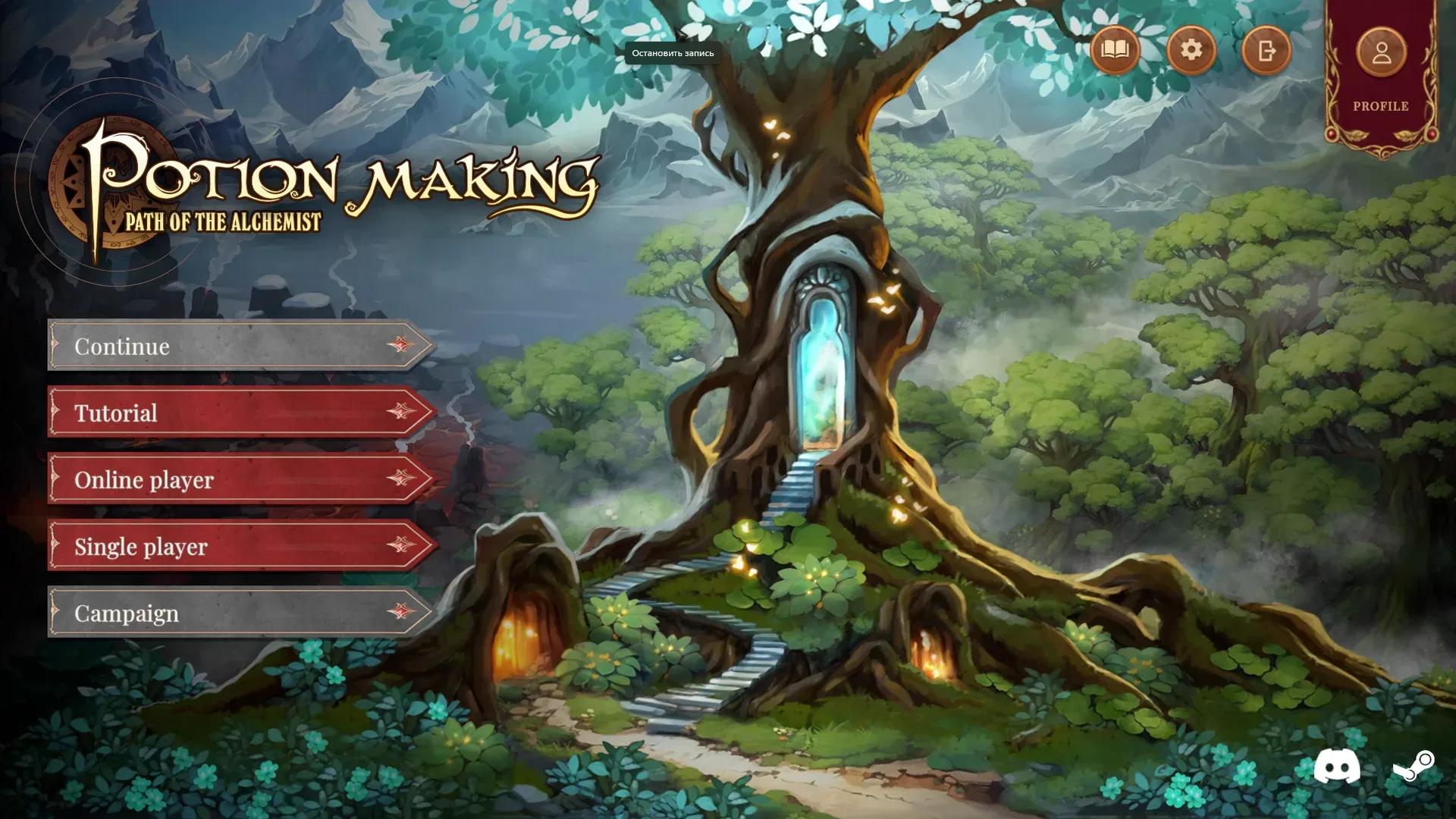
Potion-making: Path of the Alchemist is scheduled to launch in full on Steam on November 10. The game’s existing demo presents its central alchemy-board-game loop, while the complete release is set to broaden that foundation with six playable maps, online multiplayer, solo matches against AI opponents, and visual customization for player tokens.
The release is a meaningful expansion in terms of board variety rather than a simple cosmetic refresh. Each announced map changes movement or adds an obstacle, so the route through a match can demand different decisions even while players remain within the game’s established systems of brewing, stealing, and building recipe chains.
For players who want to see the core game before launch, the demo is currently available on Steam and is participating in Steam Next Fest from October 19 through October 26. The release joins a busy calendar that also includes the titles listed in today’s October 23 game releases.
Six boards, six different movement problems
The full game will include the following six maps. Their names matter less than the movement rules attached to them: they appear designed to make positioning, timing, and token use progressively more complicated.
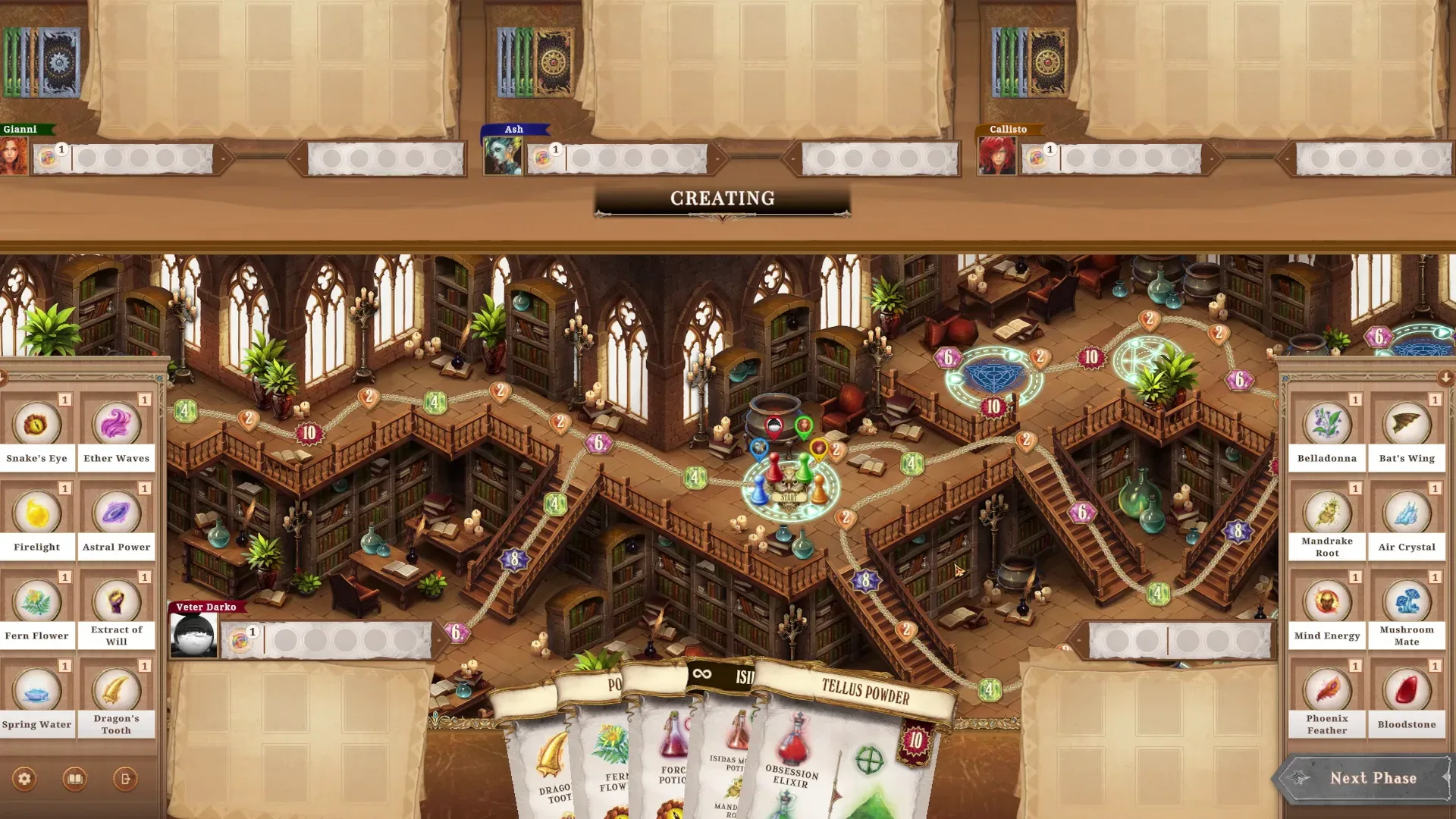
- Library of Five Worlds: The classic board, using the basic movement rules.
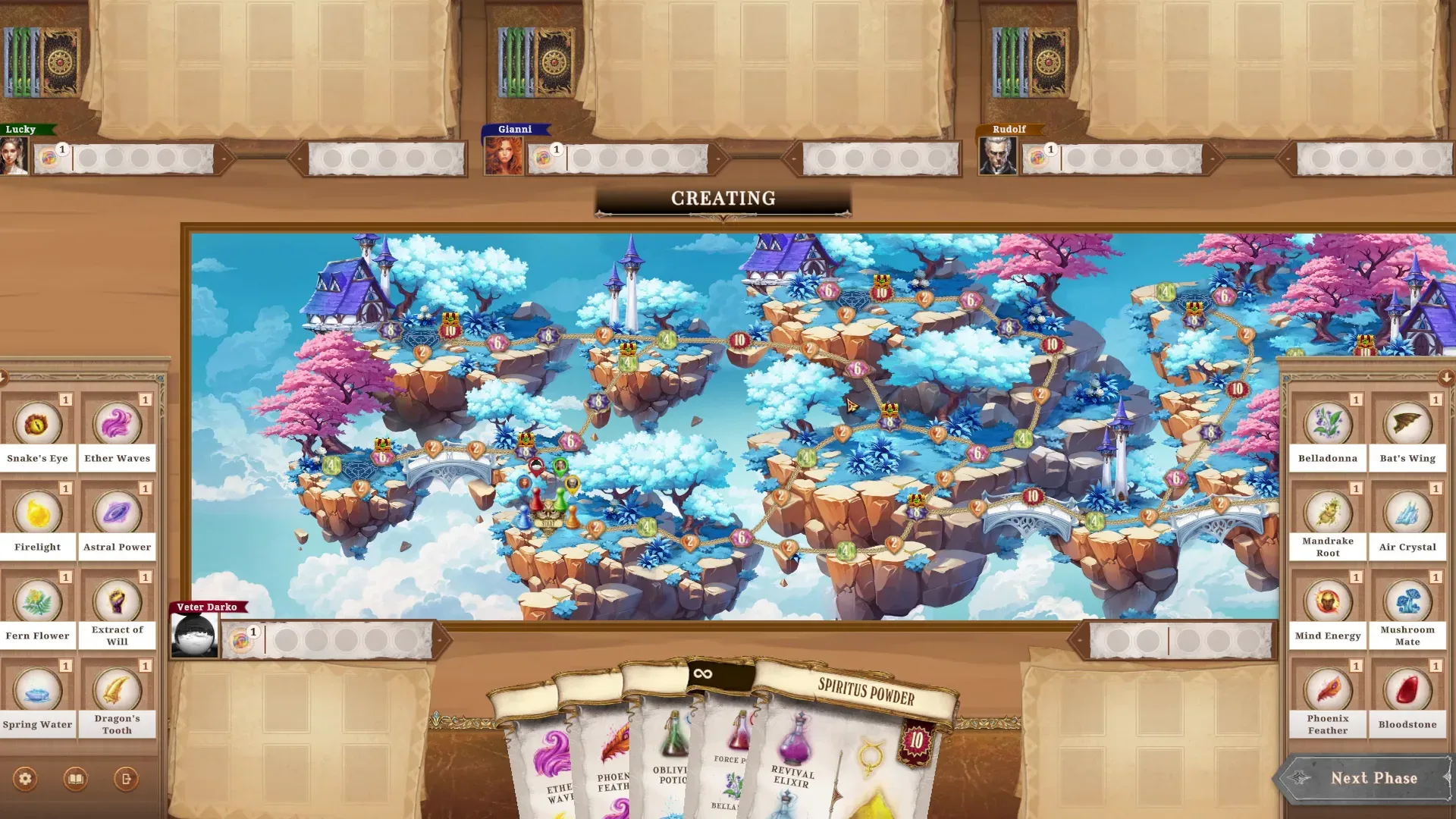
- Floating Islands: Chests containing talismans can appear around the map.
- Great Forest: Thickets cannot be skipped, forcing players to stop.
- Snow Realm: Slippery ice requires the use of only a “1” power token.
- Underwater World: Bubbles require a pair of tokens to be spent for movement.
- Valley of Creation: Combines thickets, ice, and bubbles, making it the most demanding announced board.
The Library of Five Worlds is the baseline. With standard movement rules and no listed terrain twist, it should provide the clearest place to understand the basic relationship between traversing the board and pursuing alchemical goals. That is particularly useful for anyone arriving from the demo or for groups introducing a new player to the game.
The other five boards each put pressure on movement in a distinct way. In a board-game context, movement rules are not merely decoration: they determine which spaces can be reached, when a player has to stop, and what resources must be committed to advance. Because brewing and recipe chains are already part of the game’s core, a board that changes travel can also change the pace at which players can pursue those systems.
What the terrain rules mean in practice
Thickets in the Great Forest force a stop because they cannot be bypassed. That makes the route itself an active constraint. A player cannot simply treat the board as open space and calculate only the shortest path; a thicket can interrupt a planned journey and make the timing of subsequent moves more important.
Ice in the Snow Realm imposes a narrower token requirement. The announced rule says slippery tiles require only a “1” power token. Put plainly, a player needs the correct low-value movement resource rather than merely any available option. The key consequence is that the value and composition of a player’s tokens may matter as much as the quantity held.
Bubbles in the Underwater World introduce a cost to movement by requiring a pair of tokens. This is a resource tax: moving through or from the relevant obstacle asks players to spend more than usual. When a game includes competing priorities such as travel and potion-making, an additional movement expense can create a more consequential choice about when to move and what to preserve.
The Floating Islands use a different kind of complication. Rather than directly stopping movement or requiring a specified payment, they add chests carrying talismans to the map. Their presence introduces map-based opportunities that may draw players toward particular areas. The provided details do not define what talismans do, so it would be premature to assign them a specific strategic effect. What is clear is that chests make the board state more than a static collection of spaces.
Valley of Creation brings together thickets, ice, and bubbles. It is described as the most difficult board, and that follows directly from the combination: forced stops, a particular-token requirement, and a two-token movement cost can all shape one route. Players who have learned the individual constraints on the other maps will face their most layered navigation problem here.
The central game systems remain brewing, stealing, and recipe chains
The available demo already contains the game’s principal mechanics: brewing, stealing, and recipe chains. Those terms establish a game where players do more than race across a board.
Brewing is the thematic heart of the experience: players are making potions. Recipe chains indicate that recipes can connect into sequences rather than existing as wholly isolated objectives. The supplied information does not spell out the conditions or scoring attached to a chain, but the term signals that completing one recipe can relate to setting up another.
Stealing adds direct player interaction. Rather than every participant progressing in a sealed-off personal puzzle, players have a mechanic that can affect one another. No further restrictions or targets have been detailed, so the exact scope of stealing is unknown. Still, its inclusion alongside competitive racing makes it clear that opponents are part of the game state, not just pieces moving in parallel.
The map rules are therefore likely to be significant because they sit on top of these shared core systems. A forced stop may change when a player can continue a recipe plan. A token cost may make a desired destination less convenient. A chest may create a competing reason to change course. These are analyses of the announced structure, not confirmed rules interactions, but they explain why six boards can offer more than six visual backdrops.
Online multiplayer and AI will cover every map
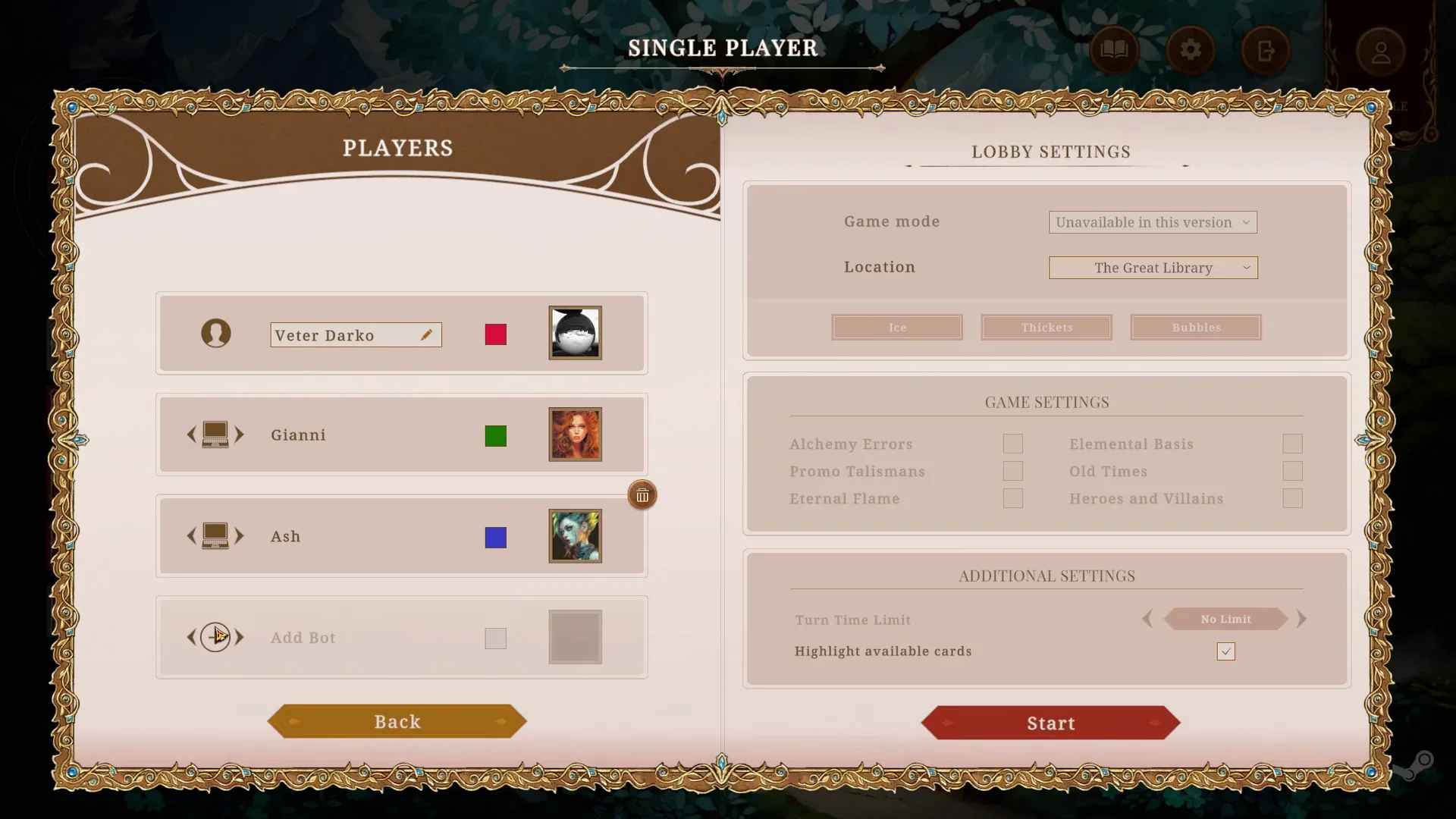
All six maps will support both announced play modes. Online multiplayer lets players race friends, while the single-player option supplies AI opponents.
That parity is important for practical reasons. Players will not have to reserve the more complex boards only for a multiplayer session, nor will solo players be confined to the basic map. Someone learning the Snow Realm’s token constraint or tackling the combined hazards in Valley of Creation can do so against AI, then take that understanding into an online race.
Likewise, groups playing online will be able to choose the level of board complexity that suits the session. The Library of Five Worlds offers standard movement; the Valley of Creation offers the stacked obstacle rules. The announcement does not describe matchmaking, player counts, cross-platform support, local multiplayer, or AI difficulty settings, so those details remain unconfirmed.
Customization focuses on the player token
The full release is also adding player-token customization. Players will be able to place hats on their piece and select travel effects that appear while it moves across the board.
These options are cosmetic based on the information provided. There is no indication that hats or movement effects alter rules, grant bonuses, or change a match’s outcome. Their purpose is instead to make a player’s token more recognizable and expressive during play—especially relevant in multiplayer, where several pieces are sharing the same board.
It is a small but sensible complement to a game organized around individual board tokens. The announced effects are tied to movement, which means the customization is visible during one of the game’s most frequent actions rather than being limited to a menu.
What the demo can and cannot show ahead of November 10
The Steam demo is the best available way to understand the basic loop before the full release, since it includes brewing, stealing, and recipe chains. Its Steam Next Fest presence through October 26 also gives it a timely discovery window for players browsing upcoming games.
However, the full release is where the complete map roster, every-map online support, AI matches, and token cosmetics are expected to arrive. Players interested specifically in the differing board conditions should keep that distinction in mind: the demo establishes the foundation, while the November 10 version is positioned as the broader package.
Oduvan Games has also made a Creators Kit with assets available for content creators. The announcement identifies the kit but does not list its contents, permitted uses, or distribution terms. Creators looking to cover the game should consult the materials directly for those specifics rather than assuming what is included.
With a basic board, opportunity-driven chests, forced stops, token-specific ice, two-token bubble costs, and one map that combines the lot, Potion-making: Path of the Alchemist is framing its full launch around variation in how players navigate the same competitive alchemy premise. The demo provides the immediate introduction; November 10 is the date for the entire six-map set and both announced opponent options.