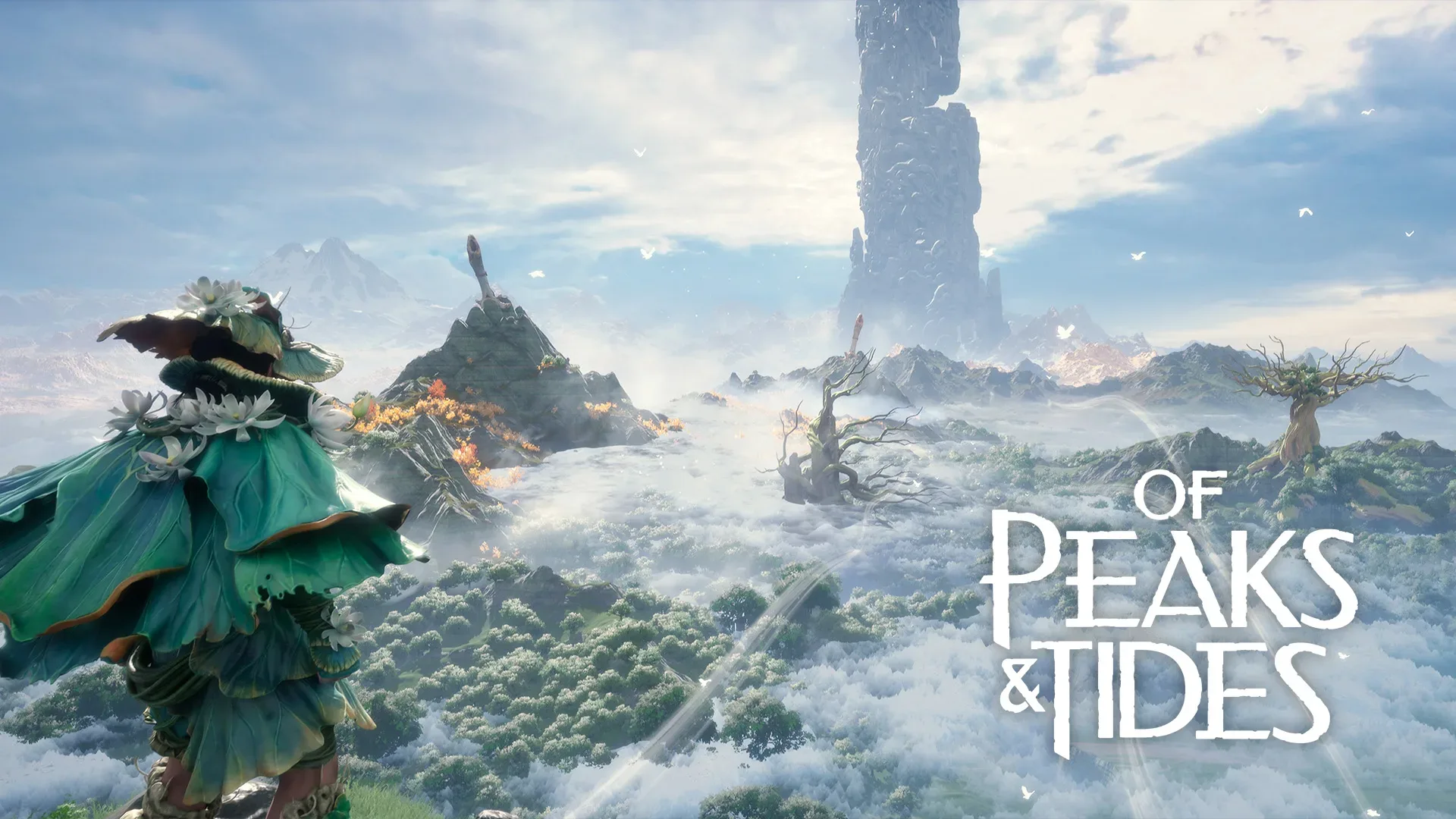
Of Peaks and Tides is positioning survival crafting as less of a fixed checklist and more of a world-scale improvisation exercise. Developed by CyancookGames in Unreal Engine 5, the open-world fantasy project combines gathering, building, exploration and combat in Everland, a land shaped by a rupture between Heaven and Earth. Its central idea is that the environment should not merely decorate those systems: weather, wildlife, vegetation and large creatures are intended to become active parts of the player’s plans.
The game is currently available to add to a Steam wishlist. CyancookGames has also shown its latest build during a two-day offline event in Shanghai, where more than 500 local players were given an early look at its crafting, disaster and road-and-bridge systems.
A survival world built around responses, not routines
Survival-crafting games commonly begin with scarcity. Players collect materials, establish shelter, expand their toolset and eventually push deeper into more dangerous territory. Of Peaks and Tides uses that familiar starting point: players awaken as the Nolands with nothing, then need to gather resources, construct what they need and explore a world full of lost civilizations.
What distinguishes the stated approach is its emphasis on interaction between those core activities. The game’s “Boundless Creativity” and “Imaginative Combat” philosophy means an object or phenomenon is not supposed to have only one approved use. A storm can disrupt a threat. A plant can help control a much larger creature. A tame animal can carry a mobile base rather than existing solely as a mount or combat companion. Even apparently silly creations, such as berry hammers and beehive hammers, are presented as possible tools or weapons.
That is the premise of emergent gameplay: interesting outcomes arise from interacting systems, rather than from a developer scripting every solution individually. In practical terms, the player may see an environmental condition and decide whether it is a danger to avoid, an opportunity to exploit, or both. The appeal is not simply that the world contains sandstorms and blizzards; it is that those conditions can matter when making a route, fighting an enemy or deciding where and when to build.
The important caveat is that a system-led design lives or dies by clarity and consistency. A game can invite experimentation only if players can understand enough about cause and effect to form a plan. If a blizzard disrupts enemies, for example, players need reliable feedback about the conditions involved and what the disruption actually changes. The material released so far establishes CyancookGames’ ambition for reactive systems, while the eventual game will need to show how approachable those systems are in ordinary play.
Everland’s fractured mythology frames the journey
Everland was once linked with the gods, but it was shattered after conflict between Heaven and Earth. The Nolands begin their journey amid the aftermath, working upward from survival and construction toward exploration of the world’s past and, ultimately, a confrontation with the gods who left humanity behind.
This setup gives the crafting loop a broader narrative direction. Gathering supplies and making a foothold are not described as an isolated wilderness challenge; they are part of crossing a broken world and uncovering what happened to it. The promised biomes reinforce the scale of that journey, spanning Cangmu Source, green forests, deserts and snow-covered mountains. Each region is said to bring different dangers and discoveries, suggesting that progression will involve adapting to location as well as acquiring more resources.
Related coverage includes Of Peaks and Tides Builds a Survival Sandbox Around Myth, Weather and Giant Beasts.
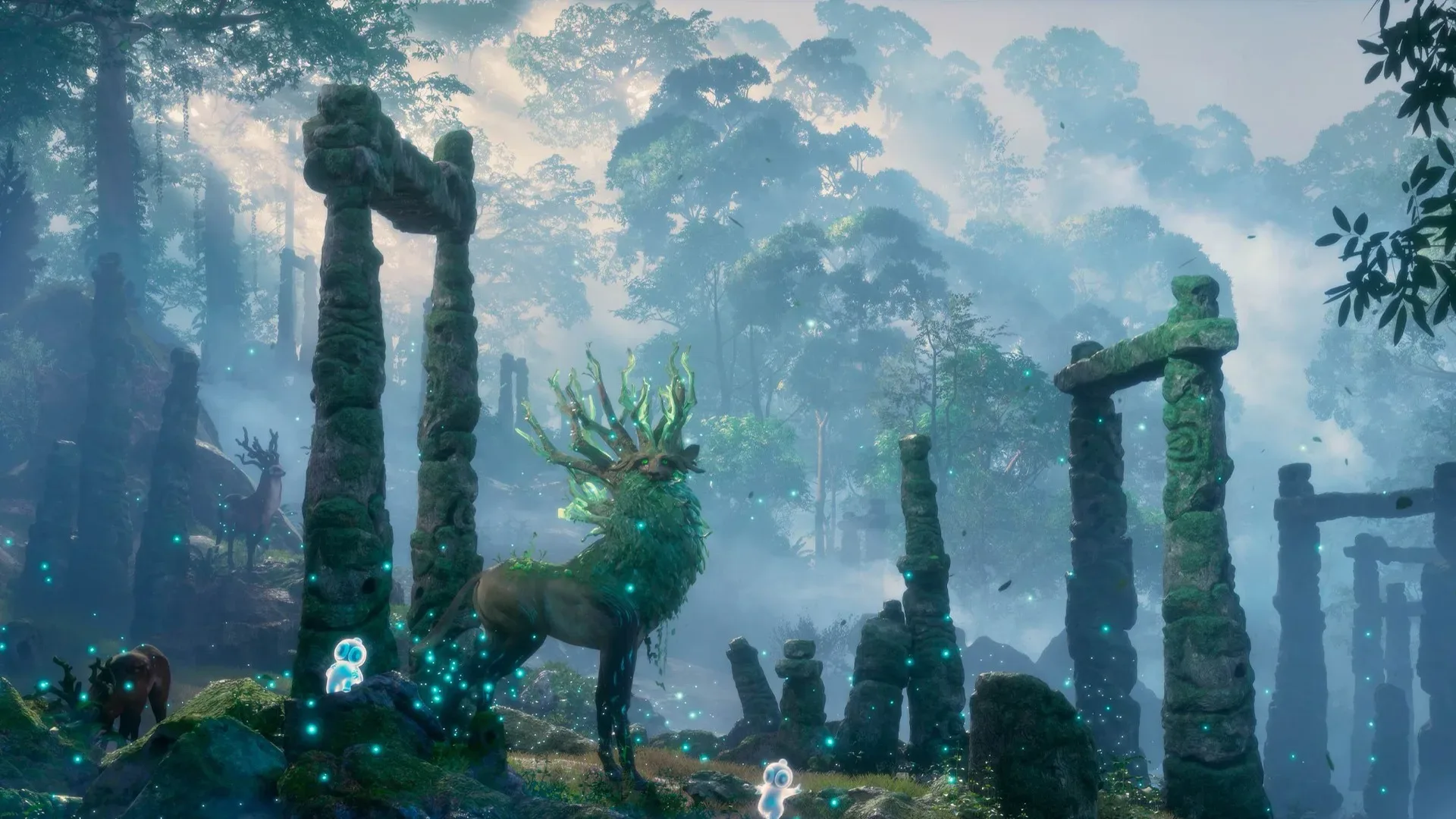
The game draws creatures from the Shan Hai Jing, a Chinese mythological text whose name is often translated as Classic of Mountains and Seas. Among the creatures named for Everland are Fuzhu, Little Taotie, Mischievous Monkeys and the Giant Xi. The use of that mythology is especially meaningful here because creatures are not framed simply as a list of bosses or harvestable materials. They are intended to populate an ecosystem with behavior of their own.
CyancookGames says wildlife hunts, hides and responds to its surroundings. That distinction matters. In a static game world, an animal or monster is generally an encounter waiting at a designated point. A living ecosystem, by contrast, implies that creatures can be encountered in changing circumstances, perhaps reacting to threats or environmental disruption before the player chooses to fight. It is a design goal that complements the game’s wider focus on unscripted solutions.
Giant creatures are meant to be infrastructure
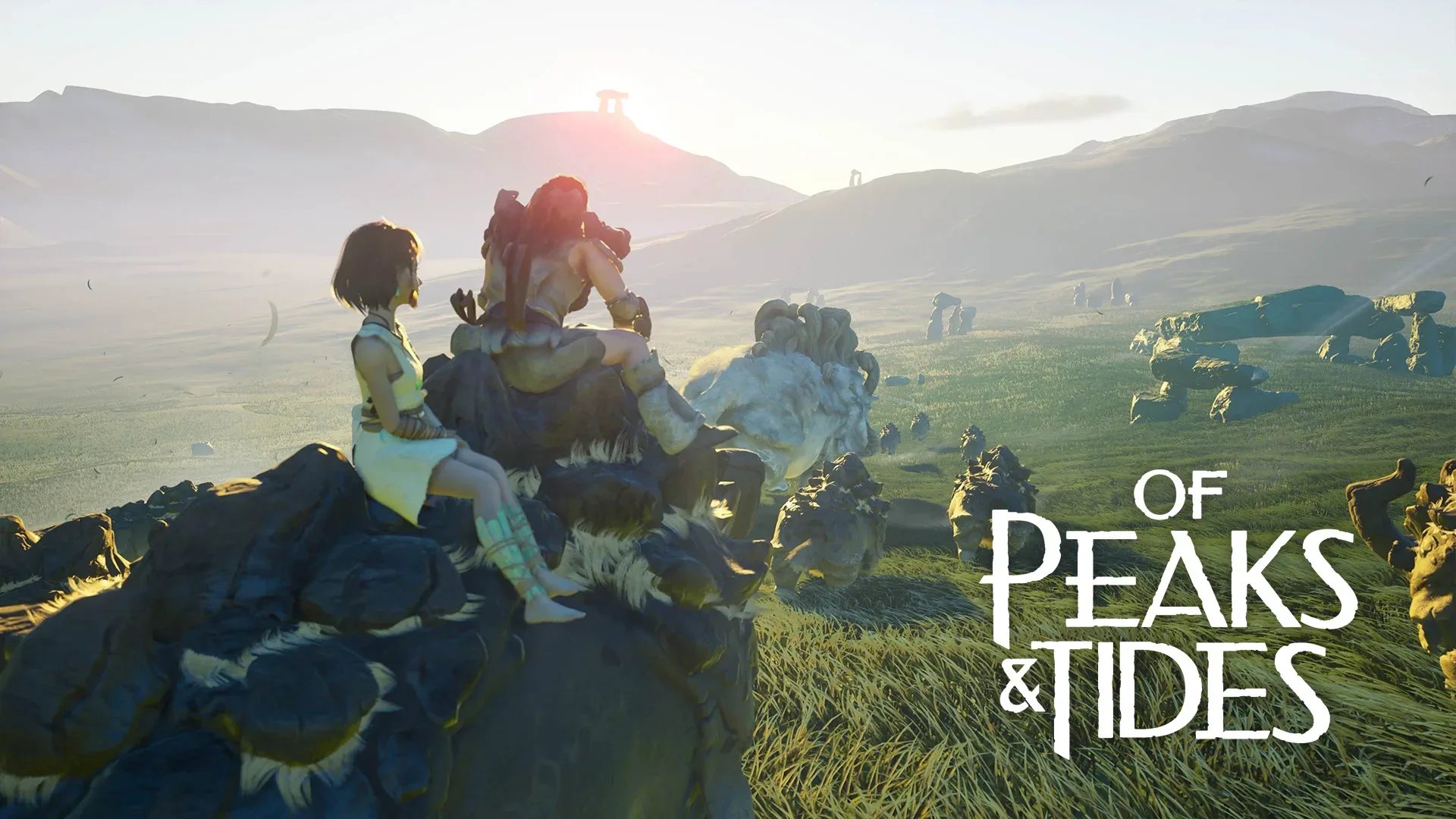
Perhaps the clearest expression of Of Peaks and Tides’ scale is its plan for enormous creatures. Players can tame beasts and use them to transport mobile bases, while huge flying creatures offer a different method of crossing Everland. These are not merely cosmetic ideas. A base that moves with a creature could change the traditional survival-game question of where to settle, while airborne travel may alter how players approach terrain and distant areas.
There is a strategic angle as well as a visual one. Permanent shelters encourage players to fortify a single location and repeatedly travel out from it. A mobile base could instead make expeditions more flexible, allowing supplies and construction capability to travel with the group or player. That does not automatically eliminate the value of fixed construction, but it could create a useful tension between establishing a safe site and taking home on the road.
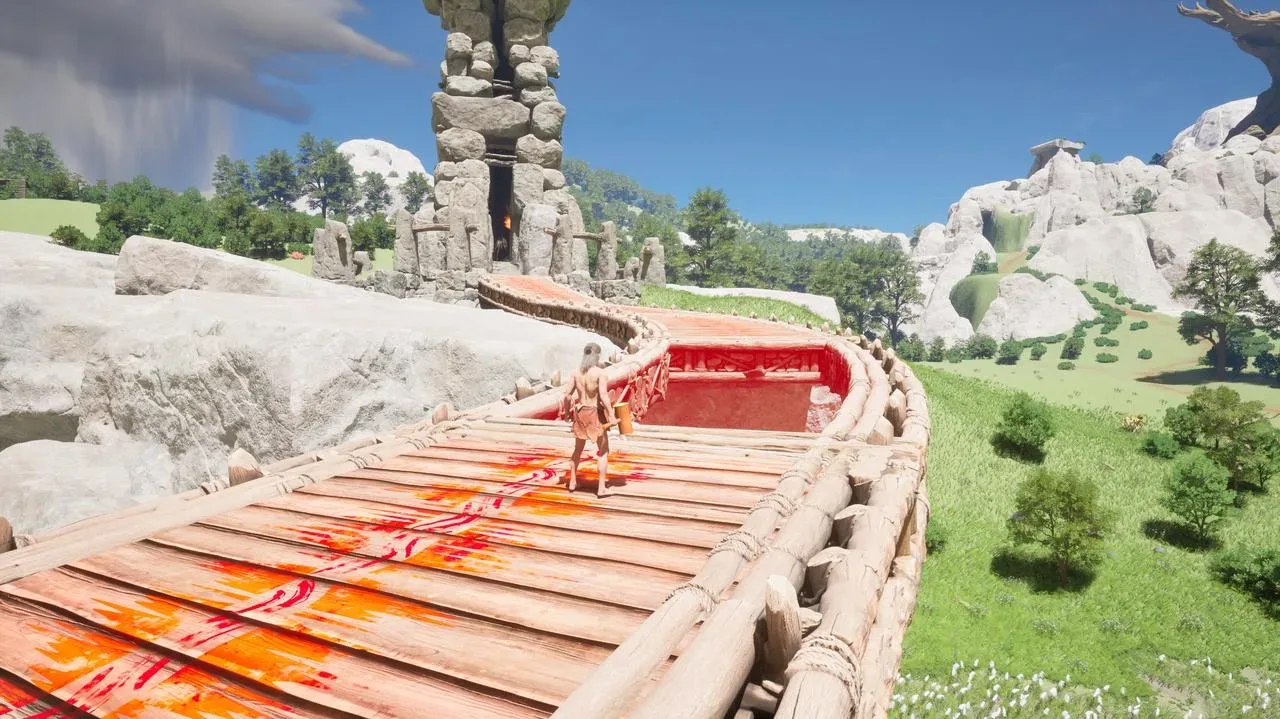
Traversal is also tied to the natural world rather than kept separate from it. The game highlights flying giants, weather and its road-and-bridge system as ways that moving through Everland can be shaped by player choices. Roads and bridges are particularly notable because they suggest construction can support journeys beyond the immediate perimeter of a base. In other words, building may be as much about connecting spaces and overcoming geography as it is about putting up walls.
That emphasis places logistics alongside combat. Reaching an objective may involve choosing a route through hazardous weather, creating a crossing, taking to the air or bringing a mobile base. In a game promising varied deserts, forests and peaks, that could make terrain a real factor in the adventure rather than a surface to sprint across.
Combat is pitched as a physics-led problem
The game’s combat pitch is deliberately broader than choosing a weapon with a higher damage number. Sandstorms and blizzards can be used to interfere with enemies, while plants can trap or otherwise manipulate huge creatures. CyancookGames has also pointed to unconventional crafted implements including berry and beehive hammers.
Physics-driven systems generally refer to game rules that model motion, force, collisions or the material behavior of objects rather than relying wholly on pre-authored animations and triggers. The developer’s examples suggest that the term matters in Of Peaks and Tides because it supports creative problem-solving: the same environment that makes travel difficult may create an opening in combat, and an item made from everyday components may have a surprising tactical role.
It is not yet possible to say how deep each interaction will be, or whether every listed possibility will apply in every region and encounter. But the broader design direction is clear. Large-scale battles are meant to evolve with environmental conditions and player inventions, not just follow a single, memorized pattern. That could make preparation, observation and experimentation as important as direct attacks.
For players who enjoy survival games for their building systems but want those creations to carry into exploration and encounters, this is the most promising part of the concept. A creative sandbox has greater payoff when a strange tool, a carefully placed structure or a chosen travel method affects the actual problems players face.
A year of expansion after the initial reveal
CyancookGames says it has spent a full year since the project’s initial reveal refining and extending the game. The latest build is said to include more dynamic environments, improved visual effects, expanded environmental interactions and bigger boss encounters. Those areas are closely tied to the project’s main promise: larger enemies, dynamic weather and reactive systems need to work together for the world to feel coherent rather than like a collection of isolated features.
The Shanghai hands-on event gave attendees a look at footage and systems including crafting, natural disasters and the road-and-bridge feature. It is a useful sign that the team is showing those pillars together, because their overlap is central to the game’s identity. The game is not simply saying that it has construction, weather and monsters; it is proposing that construction helps negotiate the world, weather affects confrontations and monsters can become part of a player’s infrastructure.
For now, the most concrete action for interested players is a Steam wishlist. Those following the PC survival space can also see how other games are approaching hands-on crafting through Dressmaker’s tactile tailoring-focused launch on Steam, though its cozy town setting is a very different proposition from Everland’s mythic wilderness.
What to watch as Of Peaks and Tides develops
- System readability: Players will need understandable rules and feedback if weather, plants, wildlife and physics are to encourage experimentation rather than confusion.
- Meaningful building: The road-and-bridge system and mobile bases could make construction important to exploration, not just base decoration.
- Creature behavior: The ecosystem concept will be most compelling if animals visibly respond to each other, threats and shifting conditions.
- Scale with purpose: Giant creatures and large boss encounters are more memorable when their size changes tactics, traversal or construction decisions.
- Biome identity: Forests, deserts and snowy peaks should ideally affect how players prepare, travel and interact with the environment, not only alter the scenery.
Of Peaks and Tides has a clear early identity: a myth-rooted survival adventure where a harsh world is also a toolbox. Its standout promise is not any one creature, storm or improvised hammer, but the possibility that they all can intersect. Whether Everland delivers on that possibility will depend on how well its many reactive parts hold together when players start inventing solutions the developers did not explicitly script.