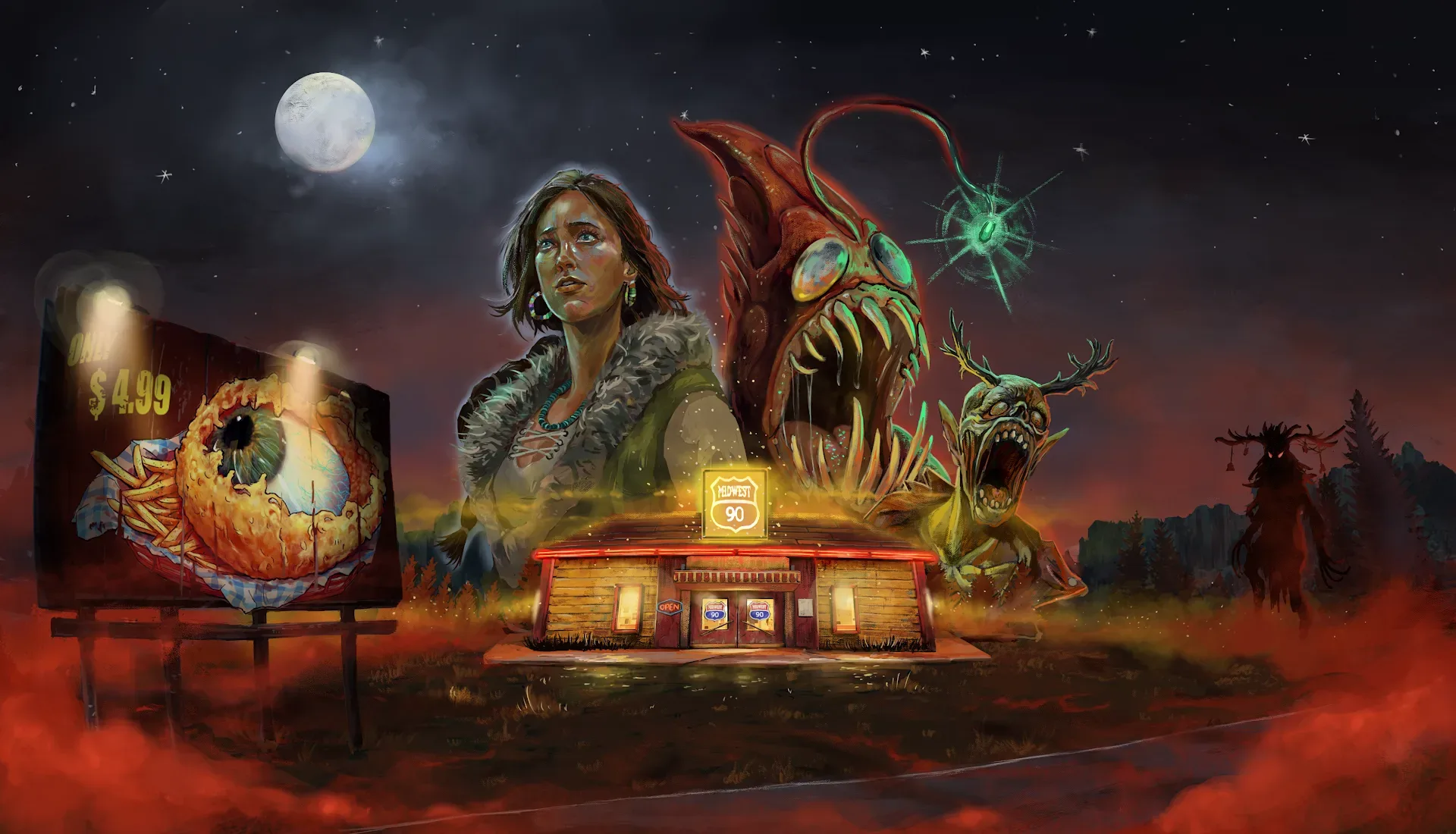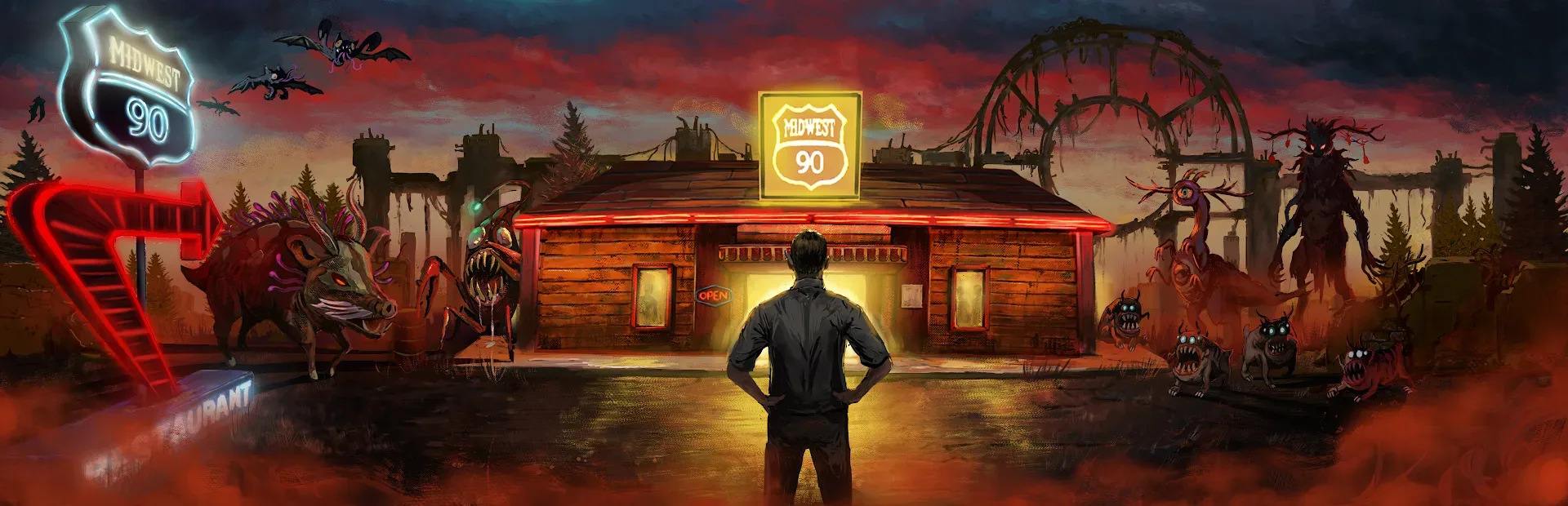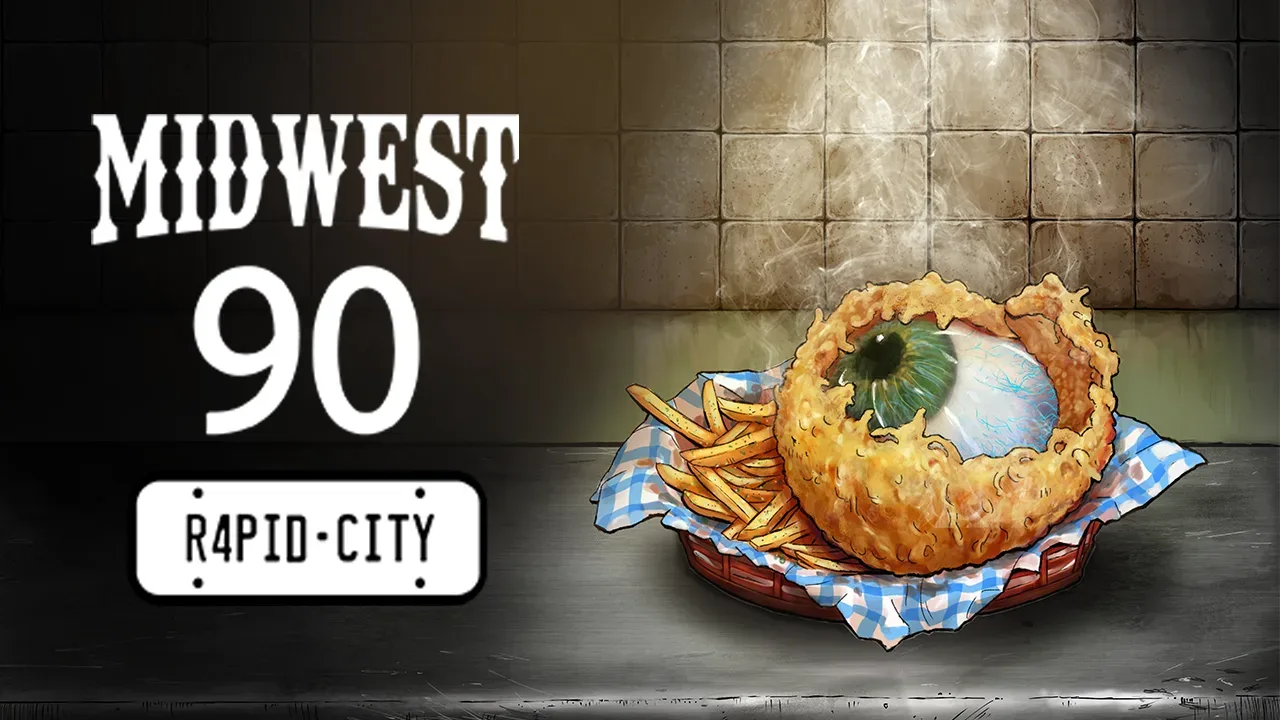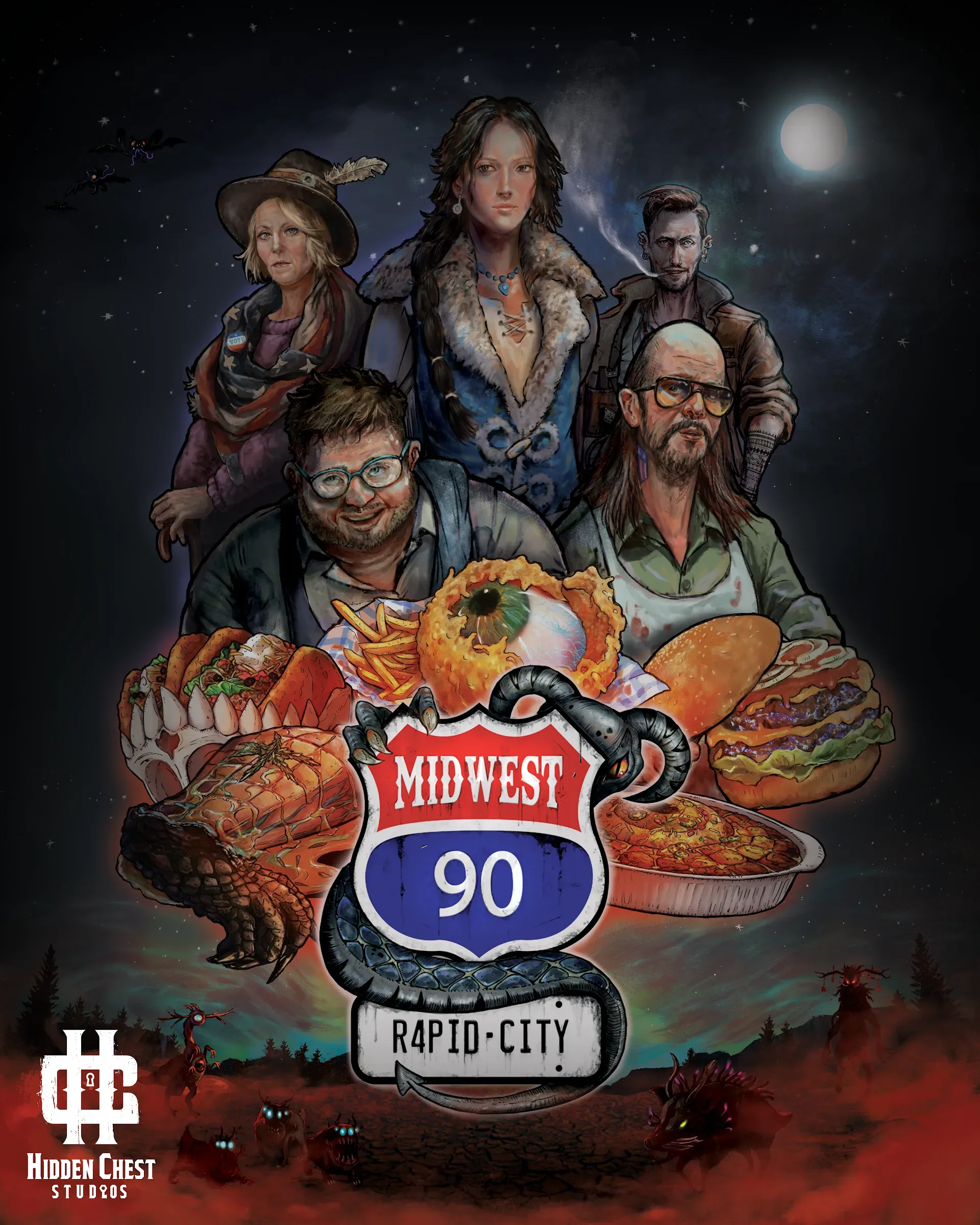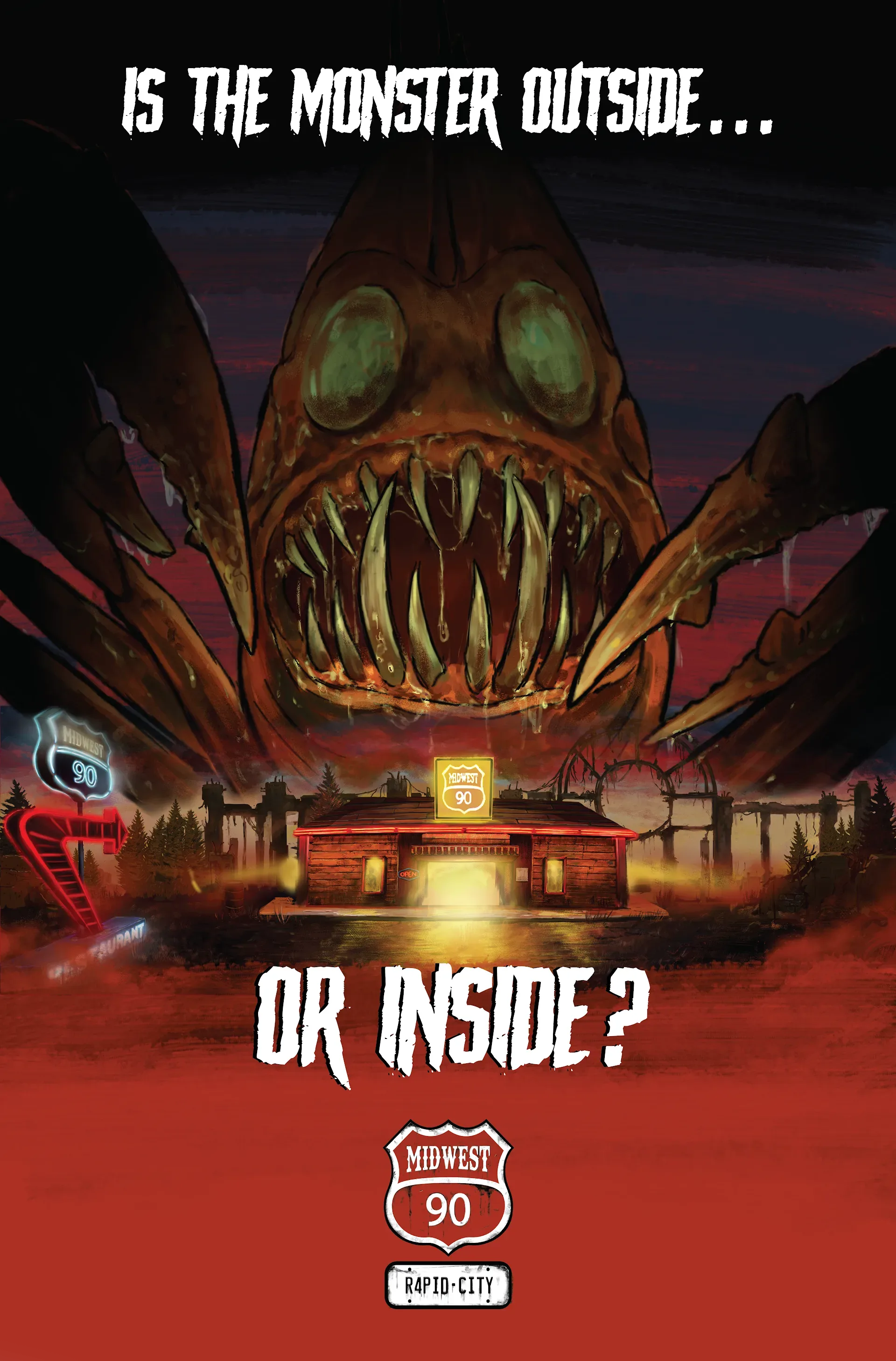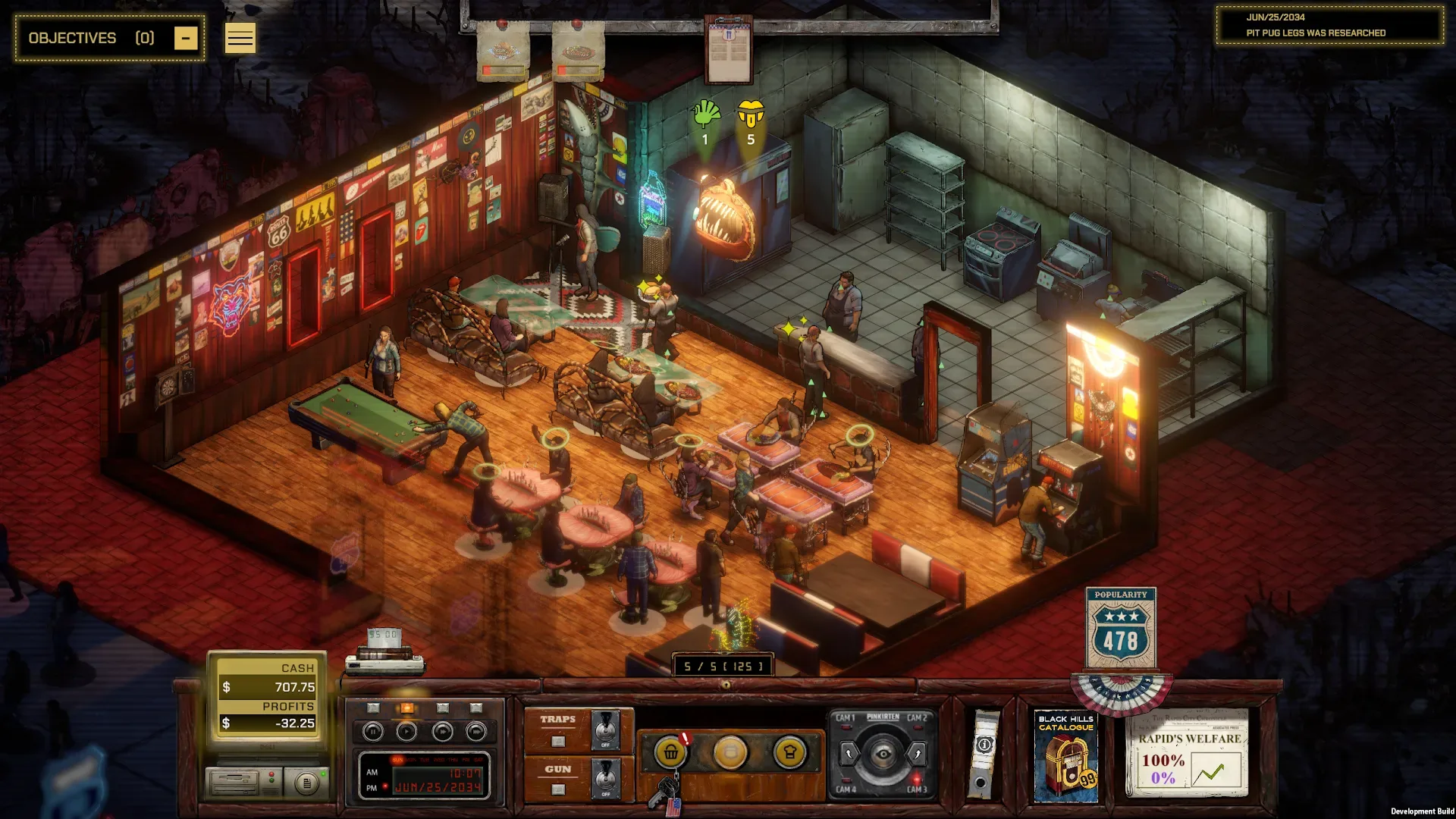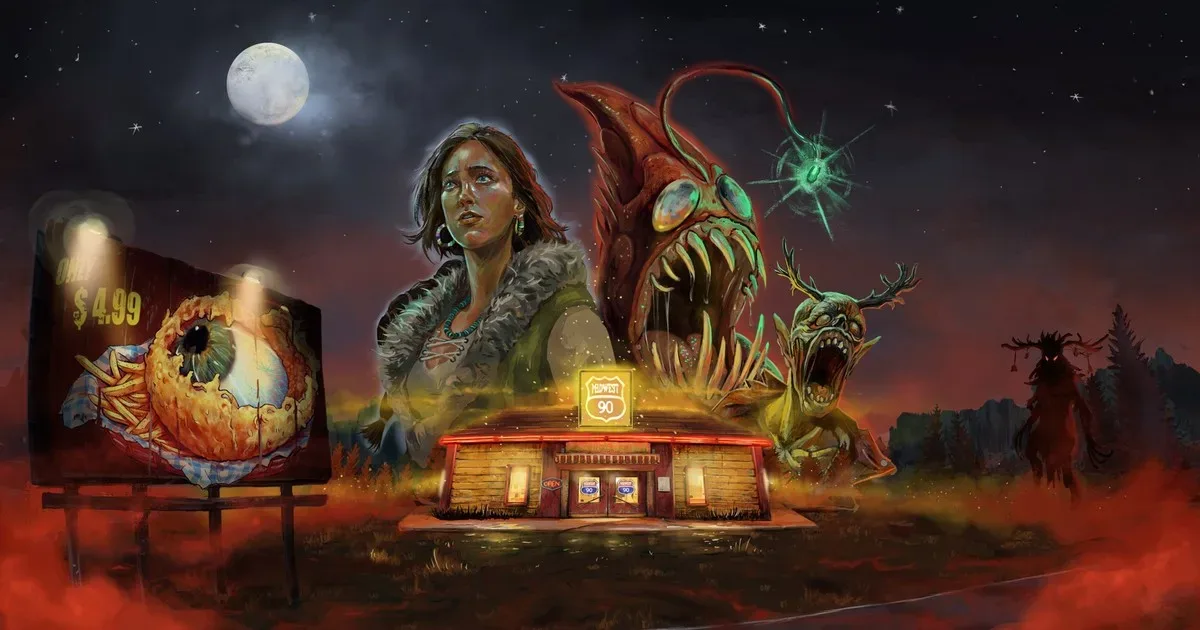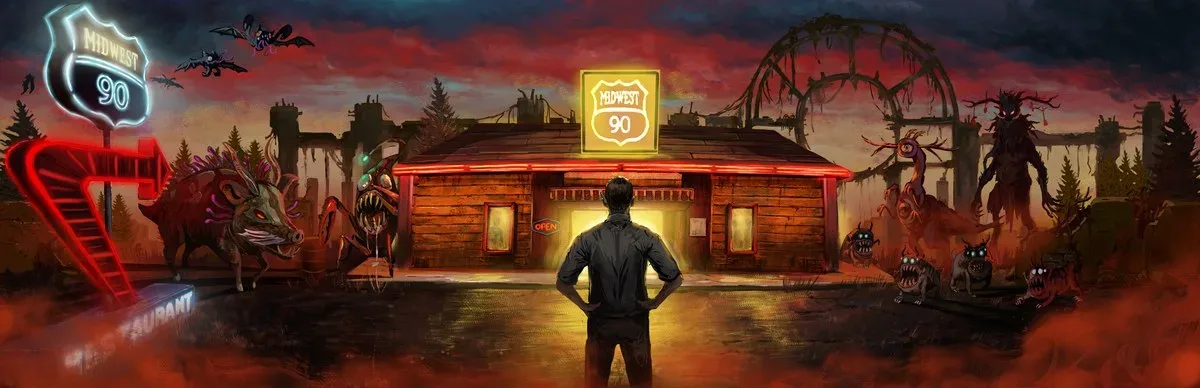
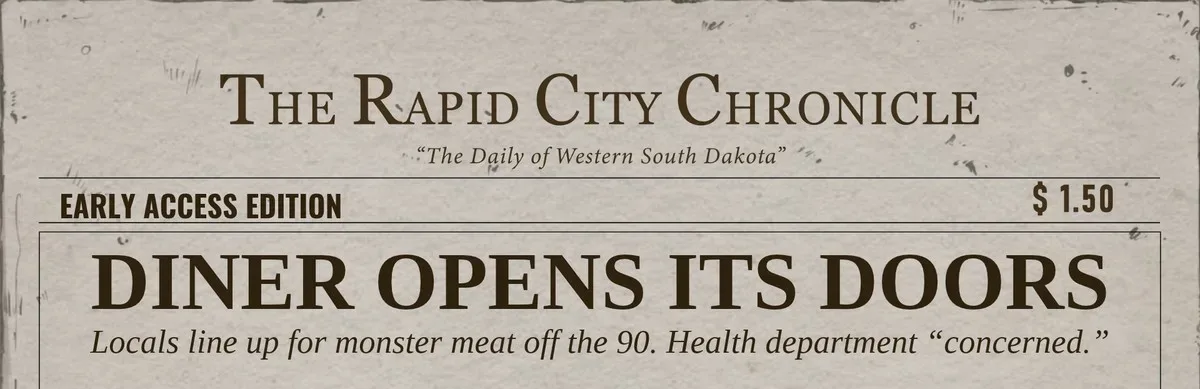
Midwest 90: Rapid City has entered Early Access on Steam, putting players behind the counter of a roadside diner in a monster-ravaged version of Rapid City, South Dakota. Developed by Hidden Chest Studios and published by Rising Tide, the game is priced at $16.99 during Early Access.
Its setup is deliberately strange in the best way: it is 2034, a New Great Depression has hollowed out the town, monsters have appeared, and the practical answer to both problems is apparently to turn the dead creatures into dinner. The restaurant is not simply a bizarre business premise. It is presented as part of the town’s survival, connecting the game’s cooking and economic systems directly to its bleak setting.
The Early Access launch includes an Endless Mode designed for dozens of hours of play, plus the Prologue and Chapter 1 of the game’s Story Mode. Further chapters are planned through updates ahead of a full 1.0 release in early 2027.
A diner-management game where the pantry bites back
At its core, Midwest 90: Rapid City asks players to run a diner: set a menu, decide prices, hire a crew and use the money earned to keep the operation moving. Its twist is that the ingredients come from monsters rather than a conventional supplier. Players can experiment with monster-derived recipes and the traits assigned to dishes, meaning a meal is more than a single menu item with a fixed role.
One named ingredient, Missourite, illustrates the trade-off at the center of that system. It can boost sales, but it can also bring side effects. That is a useful distinction from a straightforward upgrade: the benefit is clear, while the cost or complication means it is not automatically the correct choice in every situation.
For prospective players, that suggests the important decisions will not be limited to whether a recipe earns more. A higher-selling dish may come with an unwanted consequence, while a safer option may be less lucrative. The supplied details do not specify every dish trait or side effect, so it is too early to map out an optimal menu. But the basic loop is clear: experiment with food, monitor the business result, and weigh the risks that come with the most tempting ingredients.
The personnel system also has an intentionally off-kilter comic note: players can hire a crew, and slapping is described as optional. That detail fits a game that combines economic hardship, creature butchery and roadside hospitality without treating its setting as solemn survival drama every second of the day.
Why the tower-defense element matters
Midwest 90: Rapid City is not only about managing a counter and kitchen. It also blends in tower defense, a genre term generally used for games where players prepare defenses to stop incoming threats. Here, the defensive tools named so far are bear traps, barricades and a shotgun for emergencies.
That makes the diner’s cash flow a survival concern rather than a pure score-chasing exercise. Earnings can be reinvested into defenses, with the listed in-game costs for barricades ranging roughly from $10 to $150. The spread hints that protection is not a single purchase but a scale of investment: a player must decide when business income should go back into the menu and staff, and when it needs to become security.
The shotgun is especially notable because it is framed as an emergency measure. The available information does not define its ammunition, limitations, or exact combat controls, so it should not be mistaken for confirmation of a full shooter system. What it does establish is that players have a direct last-resort response alongside the placed defenses. In practical terms, the game’s loop appears built around preparation first, with the option to personally intervene when preparation is not enough.
This is where the three stated genres—simulation, diner management and tower defense—seem intended to feed one another. Simulation refers to managing linked systems and outcomes. Diner management covers menus, pricing, recipes and employees. Tower defense creates pressure to turn those restaurant proceeds into protection. The monster-harvesting premise gives both halves a shared logic: monsters are a source of food once defeated, but also a danger that requires the diner to stay fortified.
What is playable at Early Access launch
There are two distinct ways to approach the game at launch. Endless Mode is available immediately and is positioned as the larger repeatable mode, with dozens of hours of gameplay. Endless modes generally emphasize recurring runs or ongoing management rather than a finite narrative endpoint; in this case, the confirmed appeal is an extended chance to work with the diner, recipes, crew and defenses.
Story Mode, by comparison, is incomplete at launch. The Prologue and Chapter 1 are playable in Early Access, while the rest of the narrative is scheduled to arrive in later updates. That distinction is worth making plainly for anyone deciding whether to buy now. Players looking primarily for a finished story campaign will need to wait, whereas those more interested in the repeatable management-and-defense side have Endless Mode available from day one.
Early Access is a development model in which a game is sold before all planned content is complete, with updates delivered on the road to the full version. It can suit players who enjoy seeing systems evolve and who are happy with an unfinished narrative. It is less ideal for players who prefer to begin only once every planned chapter is present. Midwest 90: Rapid City makes that division unusually easy to understand because the available Story Mode chapters and the intended ongoing mode are clearly separated.
The update plan through 1.0
The current roadmap gives the next several additions a defined shape. On December 31, the game is set to receive custom Endless Mode scenarios and a new monster, with the possibility of a second monster also mentioned. Custom scenarios could add more structured variations to the mode’s existing long-form format, though the exact rules or customization options have not been detailed.
Chapter 2 is scheduled for January 28 and is described as a free update. The remaining story content, including the final chapter, is planned for the full release in early 2027. All updates are set to be free for Early Access players.
The launch price is $16.99, and that price is expected to rise slightly when the game reaches 1.0. No final-release price has been stated. For players considering the Early Access version, the concrete trade-off is therefore straightforward: buying now means access to the current game and free planned updates, but also accepting that Story Mode presently stops after Chapter 1. Waiting offers the prospect of a completed narrative, though at a somewhat higher price.
That roadmap is also important for the game’s monster-diner concept. New creatures are not just an enemy roster issue when creatures become meals; a new monster could potentially affect the game’s food and resource side as well. The currently available details do not confirm any specific recipes, materials or gameplay effects tied to the planned monster, so that possibility remains analysis rather than a feature announcement.
A distinctive Steam-management premise
Steam has no shortage of games that turn unusual jobs into management challenges, but Midwest 90: Rapid City’s particular mix is unusually focused: keep a diner open, turn monsters into food, decide what customers will pay, and make enough money to stop the next crisis from tearing through the place. The setting’s economic collapse is not merely decorative. It supports the game’s central idea that every resource must be repurposed and every dollar matters.
Its tone also looks comfortably absurd without losing the stakes of its systems. A recipe ingredient that improves sales but causes side effects, defensive barricades bought with diner revenue, and optional employee slapping all point to a game willing to make its apocalypse a little ridiculous. The most meaningful question for players will be whether the menu, staffing and defense choices create enough variety across a long Endless Mode session. The launch materials promise the time commitment, but the depth of any individual strategy will reveal itself as players get into the available build.
For Steam players already browsing unconventional PC releases, the monster-diner angle makes Midwest 90: Rapid City an easy game to distinguish from the crowd. It also arrives amid a wider stream of oddball indie premises on the platform; for another recent example of a wildly different kind of chaos, see JOHN GLEEP’s UFO-and-pachinko mayhem.
Midwest 90: Rapid City is available now in Steam Early Access. Players can begin with Endless Mode or the opening Story Mode material, then follow the planned December 31 scenario-and-monster update, Chapter 2 on January 28, and the anticipated early-2027 route to 1.0.