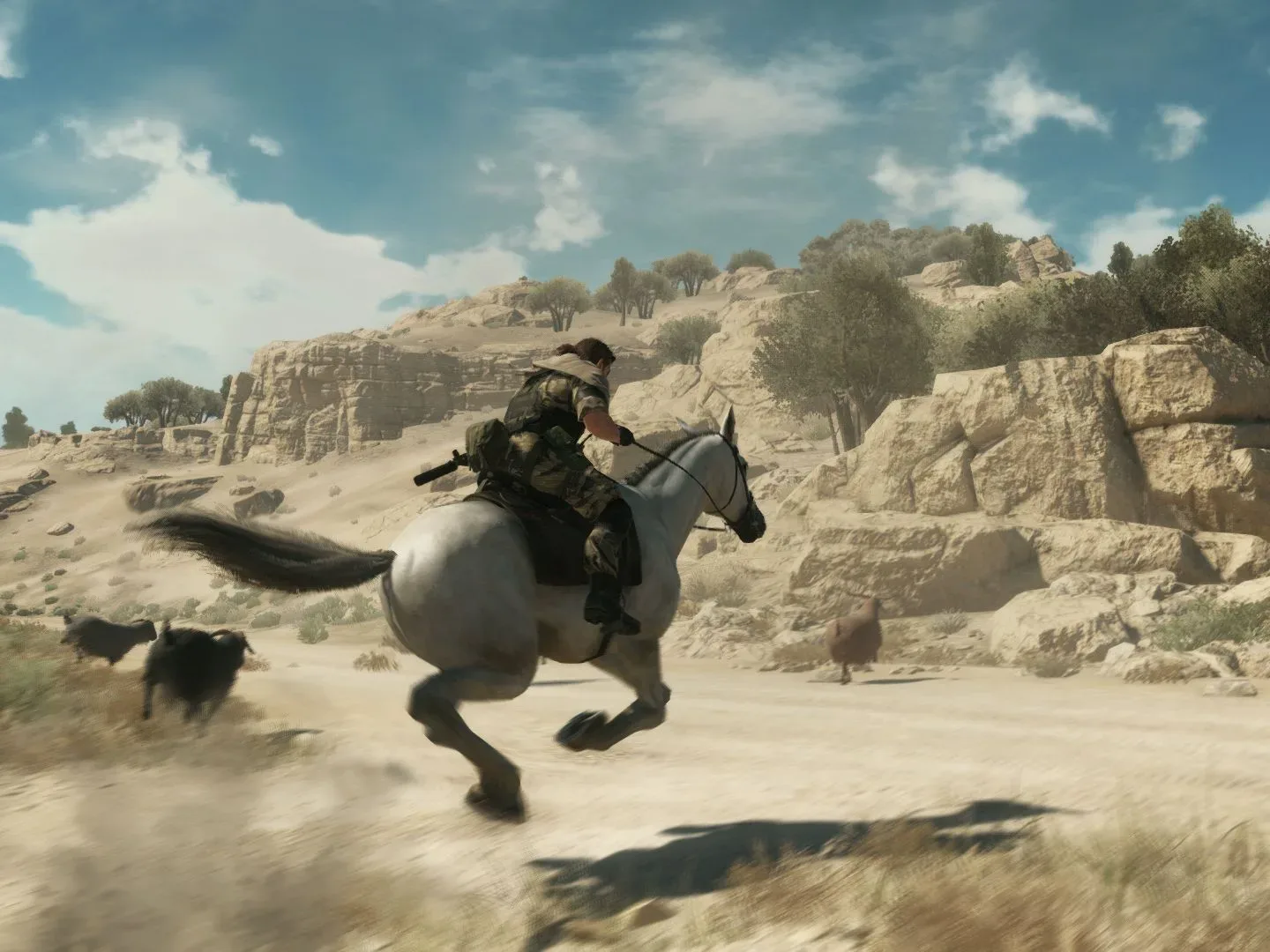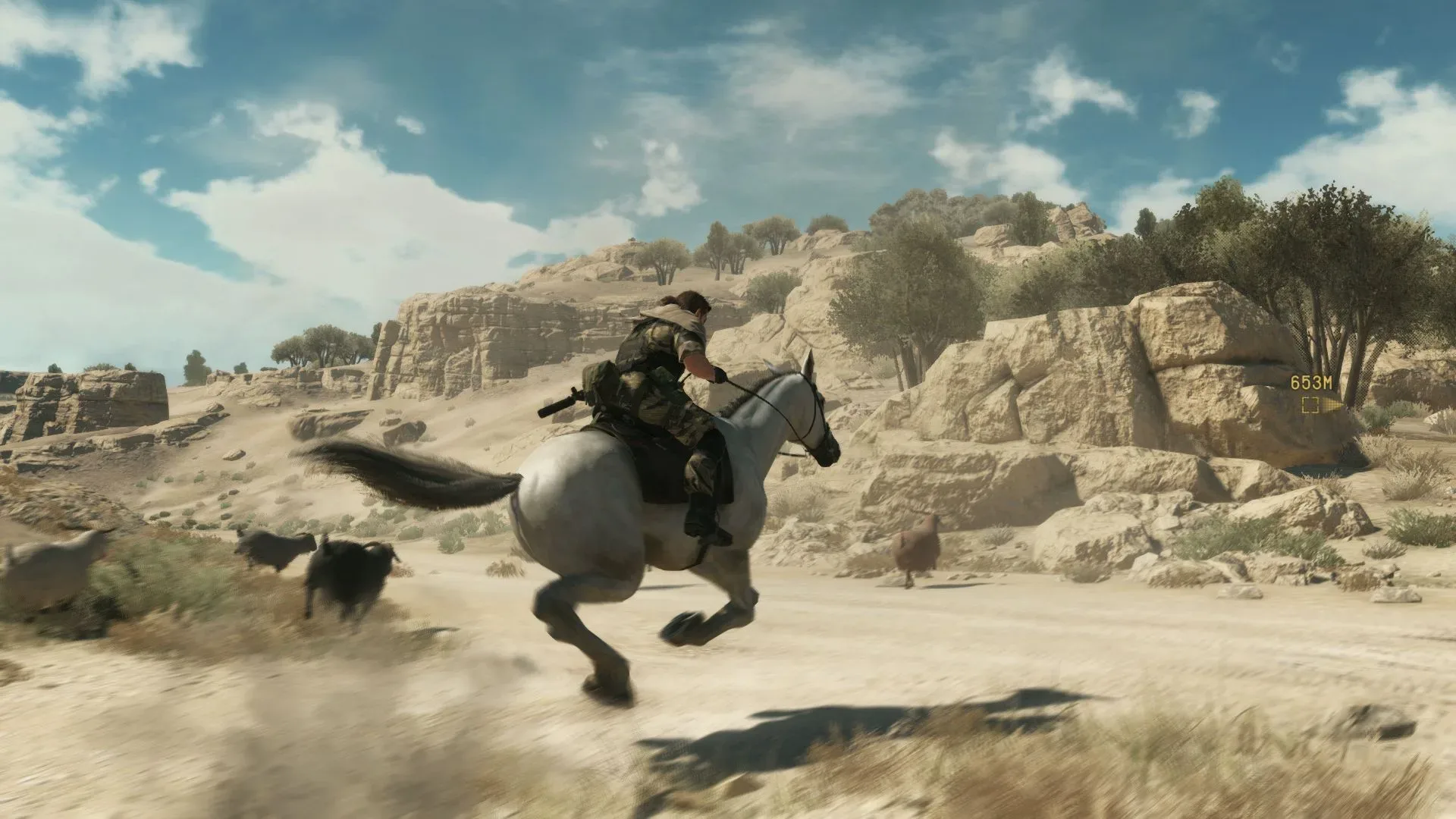
Metal Gear Solid V: The Phantom Pain is built around preparation. Mother Base turns research and development into a central loop, letting players deploy with developed weapons and equipment already selected. That flexibility is a major part of the game’s identity—but it is not the only way Metal Gear has understood infiltration.
A newly released mod from mohtalgear, called definitive subsistence, takes the opposite approach. Its core purpose is to let players begin a mission without bringing a weapon, then acquire what they need inside the operation area. In other words, it puts The Phantom Pain’s broad open-world stealth systems in conversation with the harsher, more improvisational setup associated with earlier entries in the series.
The idea is known as On-Site Procurement, or OSP: the infiltrator does not arrive with a preferred inventory, but instead obtains weapons and other necessary equipment from the enemy base or its surroundings. Metal Gear Solid used that concept at Shadow Moses, where Snake had to secure vital gear during the operation. The mod adapts that basic premise for a game whose usual equipment systems make arriving entirely empty-handed difficult.
Rather than simply removing the player’s loadout and calling it a day, definitive subsistence reportedly reworks the mission experience so an unarmed start can function. Base weapons can be obtained in the field, either from enemies or at locations on the map. The mod also restores a familiar Metal Gear-style relationship with fallen guards: their gear can be dropped or looted after they have been taken out.
Why a no-loadout run changes the shape of stealth
In a standard Phantom Pain deployment, planning generally happens before the helicopter touches down. Players can choose developed tools and firearms in advance, which makes the opening minutes of a mission an extension of Mother Base progress. The key question is often which of many available options best suits a target, terrain or preferred approach.
OSP shifts that question. The first problem becomes immediate and local: what can be found, who has it, and how can it be taken without making the situation worse?
That distinction matters because it makes equipment part of the infiltration rather than merely preparation for it. A guard’s weapon is no longer just a hazard to avoid. It may be a resource. A placed firearm or item on the map is not simply environmental dressing; it can determine which options become possible next. Getting an enemy down without destroying the chance to search them can become more valuable than a loud, quick solution.
This does not automatically make one approach superior to the other. The Phantom Pain’s normal model rewards the player for developing a vast kit and choosing how to apply it. The mod’s subsistence model instead restricts the opening state so that discovery, adaptation and opportunism carry more weight. It is a different kind of player expression: less about arriving with the perfect answer and more about finding an acceptable answer once inside.
Related coverage includes Metal Gear Solid 5 Mod Revives On-Site Procurement for a More Classic Stealth Challenge.
What “on-site procurement” means here
OSP is easy to mistake for a blanket rule that removes every advantage. In practice, its central principle is narrower: the mission begins without the usual ready-made arsenal, and useful equipment is acquired on location. That is distinct from a conventional challenge run in which players voluntarily refuse to use weapons but the game’s world remains unchanged.
The mod changes availability by ensuring base weapons can be found on-site. It also adds radios that can be used to call support from Diamond Dog companions, including D. Dog, D. Horse and Quiet. Those radios matter because support is not treated as a permanently preloaded convenience; it becomes another capability that must be secured during the operation.
The result is a structure where the player is not necessarily powerless, but is deliberately under-equipped at the start. That is the source of the tension. A successful infiltration can gradually build momentum as the player finds the tools needed to expand their options.
A bridge between two Metal Gear philosophies
The mod is especially interesting because The Phantom Pain sits at the far end of a progression-heavy path. Earlier Metal Gear games, including the original MSX2 titles and the Solid trilogy, commonly placed Snake into hostile territory with little more than what he could carry at the outset. Important weapons and items were found during the mission itself.
Later games moved toward a system where preparation and procurement outside the immediate combat zone had a much bigger role. Metal Gear Solid 4 introduced the Drebin shop, while Peace Walker and The Phantom Pain made Mother Base development central to the player’s equipment economy. Researching tools and selecting a kit before deployment made progression tangible: each upgrade was something players could bring into the next operation.
Definitive subsistence does not erase that system. Players can still deploy with developed weapons if they choose. That preservation is important. The mod appears to be offering a new ruleset rather than claiming that the original structure must be replaced.
For players who enjoy The Phantom Pain’s controls, enemy encounters and wide spaces but miss the constrained starts of older Metal Gear games, that makes the project less a nostalgia switch than a framework for replaying familiar content with altered priorities. A developed loadout remains available; a subsistence deployment becomes an elective way to restore uncertainty.
Field tools, support calls and expanded character options
The mod’s changes go beyond found firearms. It introduces new bionic arms and weapons that were previously unavailable in main missions. It also makes multiplayer-exclusive characters Ocelot and Quiet playable in the open world.
Those additions broaden the mod’s scope beyond strict OSP simulation. The project is both a restriction-focused stealth overhaul and an expansion of accessible equipment and characters. That combination may sound contradictory at first, but it fits the basic design idea: a player can begin constrained, then earn or discover more possibilities during play.
There is also a practical difference between a character option, a gadget and a weapon in this setup. A character changes the player’s starting perspective and abilities. A weapon changes the direct way an encounter can be handled. A support radio creates an additional route to assistance. By placing emphasis on acquiring tools in the field, the mod potentially turns all of these into parts of an evolving mission state rather than a fixed list chosen before deployment.
That structure should particularly appeal to players who like stealth games to create stories from imperfect circumstances. An infiltration that begins with no dependable firearm can become a chain of decisions: avoid a patrol, locate a weapon, choose whether to loot a downed enemy, obtain a radio, then decide whether calling a buddy helps more than it complicates the plan.
The practical appeal: more reasons to look, wait and improvise
The Phantom Pain’s open areas are capable of supporting many approaches, but a strong pre-mission kit can reduce the need to engage with every opportunity on the map. When a player already has a favored weapon and a familiar plan, a patrol’s equipment or an item placed in the environment may be less meaningful.
A subsistence rule can reverse that hierarchy. Enemy routes, isolated guards and weapon placements become more consequential because they may provide the first usable advantage. The player may be encouraged to scout longer, avoid an unnecessary confrontation, or favor a takedown that preserves a chance to loot rather than one that merely ends the immediate threat.
That is analysis of the stated design, not a promise that every mission will become harder or better. The experience will depend on the operation, the equipment encountered and the player’s choices. What is clear is that the mod’s stated changes aim at making scarcity an active stealth mechanic rather than a self-imposed limitation.
For a series that has repeatedly balanced cinematic spy fiction with systems-driven infiltration, the appeal is understandable. Going in prepared can feel like being the world’s most capable operative. Going in empty can make every recovered tool feel like a small act of survival.
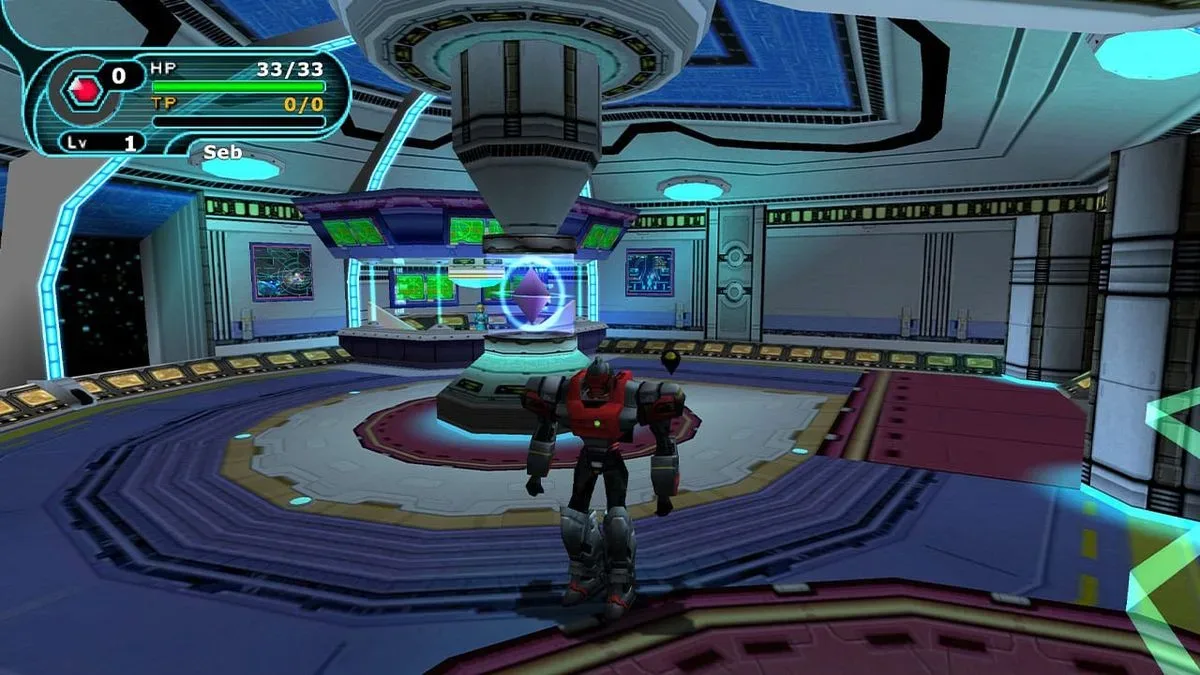
For another example of a community project rethinking how an older game can be played and accessed, see our coverage of PSOReBorn’s browser-based Phantasy Star Online effort.
What definitive subsistence preserves
The most notable part of this mod may be that it does not demand a single “correct” version of Metal Gear Solid V. Players who prefer Mother Base’s developed arsenal can still use it. Players seeking a closer echo of the series’ older equipment-scavenging missions can opt into a deployment that starts with almost nothing.
That makes definitive subsistence a targeted answer to a long-running design contrast within Metal Gear. It restores the anxiety of entering hostile territory without guaranteed answers, while retaining the mechanics, open-world spaces and optional advanced gear that define The Phantom Pain.
Its key promise is simple, but substantial: before the tranquilizers, rifles, bionic arms and buddy support, there is the old stealth-game question—what can Snake find before the base finds Snake?