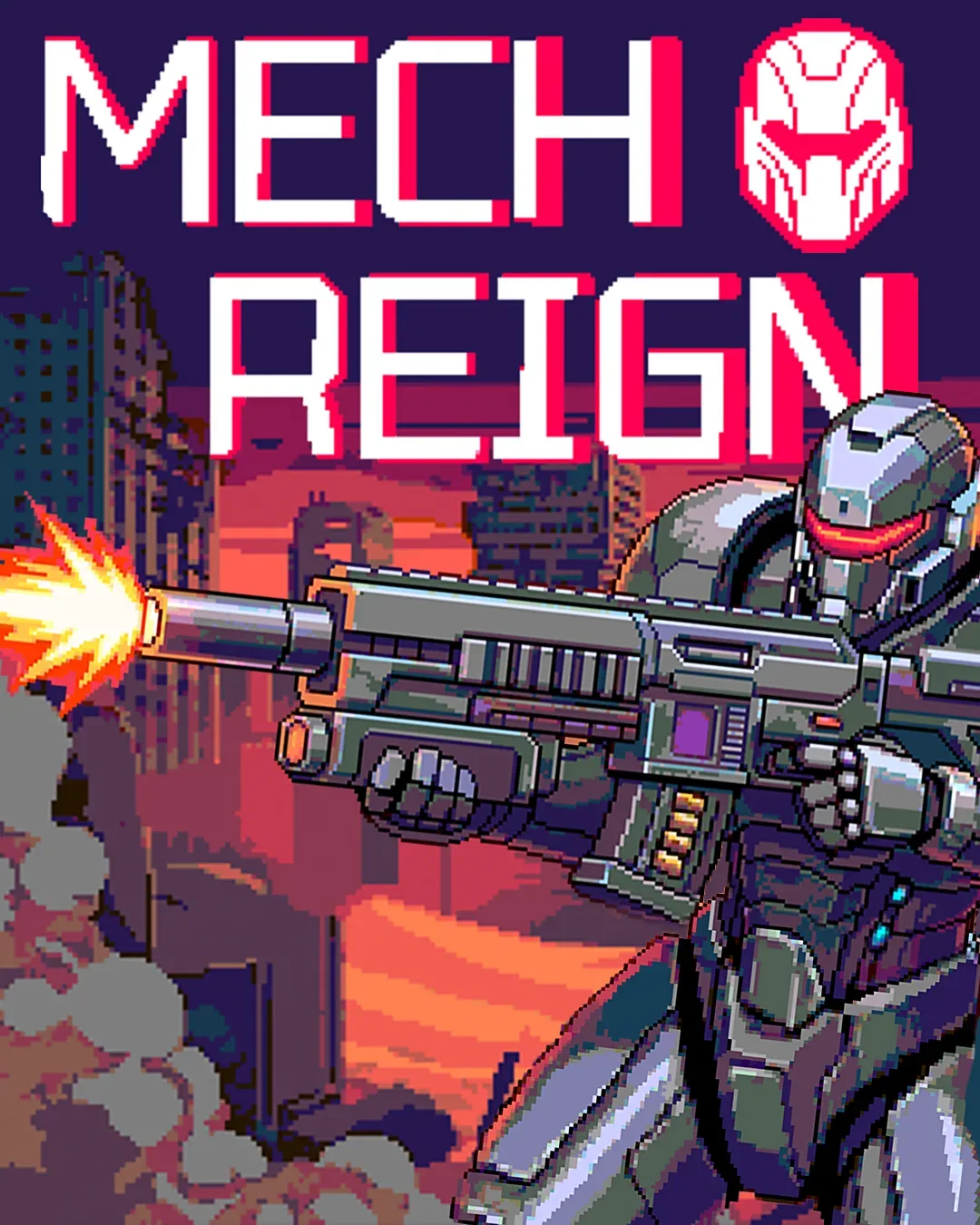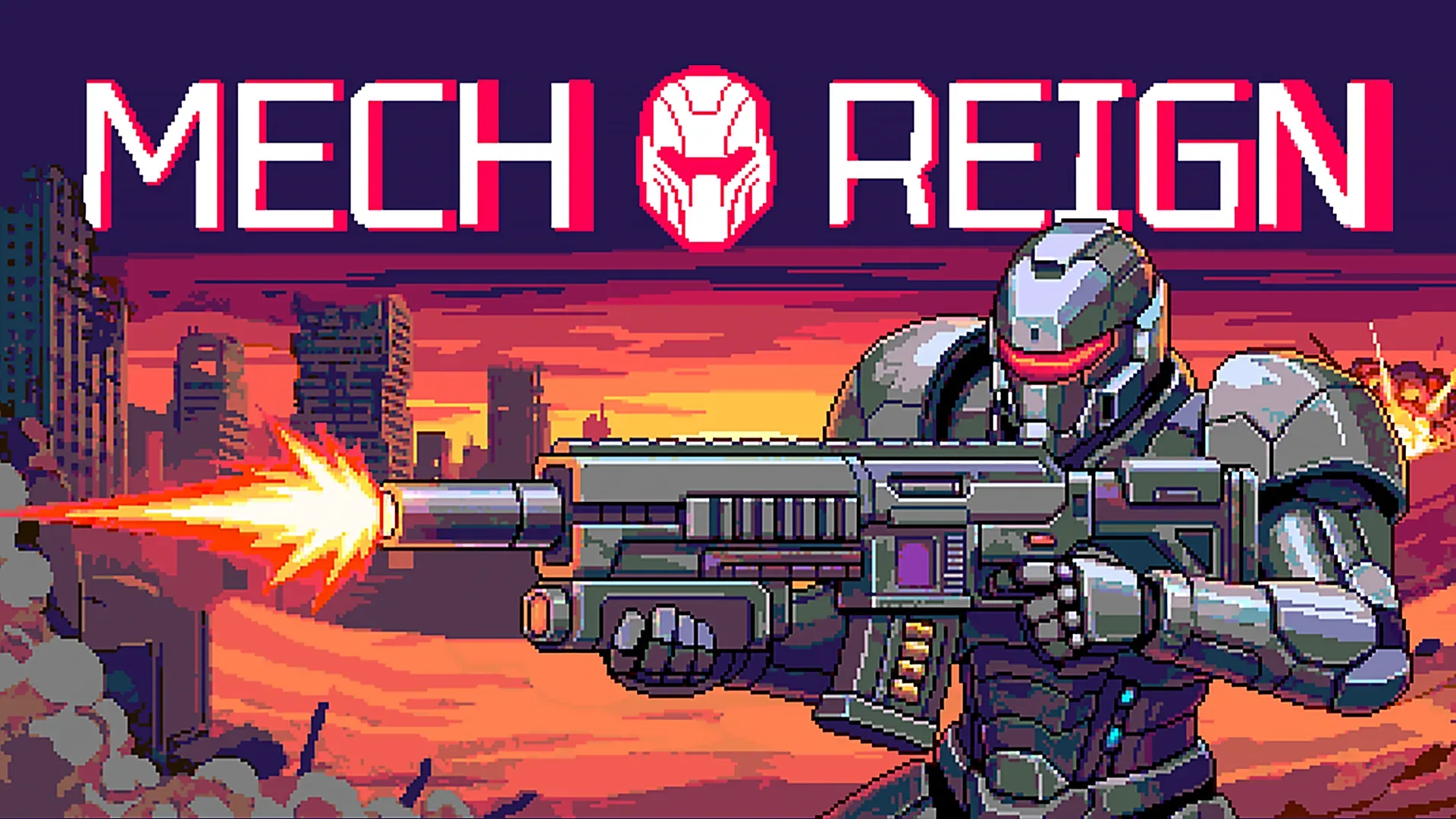

MECH REIGN, a new incremental autobattler from Targem Games’ indie publishing arm and developer Dot Blood, is opening a playtest. The game asks players to assemble a five-mech unit and push through a mutant-overrun planet, using equipment choices, squad positioning and long-term upgrades to get farther across repeated runs.
The announced playtest has an unusually open approach to player-made coverage: participants may stream the game, publish video recordings and write reviews, with no content restrictions stated. Details including the playtest’s access method, supported platforms and duration were not provided.
At its center, MECH REIGN combines several strategy-game ideas. It is an autobattler, meaning the major decision-making happens before combat rather than through direct moment-to-moment control. Players prepare their roster and arrangement, then the battle resolution depends on the squad’s construction and the opposing mutants. It is also an incremental game: progression is designed to continue through resource collection and permanent upgrades over multiple attempts, including attempts that end in retreat or defeat.
Five mechs, no fixed classes
Each run begins with the same fundamental party size: five mechs. The game does not impose class restrictions, so the intended build space is not limited to a conventional tank, healer and damage-dealer lineup. Instead, players can equip armor, weapons, accessories and ultimate abilities to shape the role each mech performs.
That flexibility is the foundation of MECH REIGN’s stated claim of hundreds of thousands of possible builds. There are more than 30 pieces of equipment in the announced feature set, alongside the four named equipment and ability categories. The exact size of each item pool, the way individual effects function and whether every option can be used by every mech have not been detailed. Still, the broad design goal is clear: a squad may be built around distinct roles, or it may test less obvious combinations rather than complying with a locked class system.
In practical terms, unrestricted builds make composition choices more consequential. A balanced group might prioritize separate defensive, offensive and support jobs. A more specialized setup could instead concentrate its best gear around a smaller number of crucial units. Neither approach is confirmed as optimal, and that uncertainty is a major reason pre-release testing matters. Players will need to discover whether a wide range of builds is genuinely viable or whether specific equipment and positioning combinations pull ahead.
The 3×3 board adds a positioning layer
Before starting a run, players place their five mechs on a 3×3 tactical grid. Because five units occupy only part of nine available spaces, the arrangement is not a cosmetic decision. The game uses defense, attack and support line bonuses, meaning placement is tied directly to squad advantages.
A line bonus is a modifier granted for arranging units along a specified positional line or type of line. MECH REIGN has not yet explained the exact conditions for these bonuses, their numerical effects or whether they are mutually exclusive. What is known is that the game expects players to weigh three interlocking questions before battle: which equipment is on each mech, what purpose that mech serves, and where it belongs on the board.
Related coverage includes MECH REIGN Opens Playtest for Five-Mech Incremental Battles.
This structure could give the game a useful distinction from an autobattler focused entirely on loot selection. The equipment system establishes what a mech can do, while the grid establishes how the full group begins an encounter. A defensive setup may be most valuable when it enables more vulnerable squad members to benefit from an attack or support line. Conversely, a strong build could lose effectiveness if it is positioned without regard for the available bonuses.
That is analysis of the announced structure rather than a confirmed strategy. No combat statistics, enemy targeting rules or detailed line-bonus descriptions have been shared, so players should avoid assuming that familiar front-line and back-line conventions necessarily apply here.
Planet clearing, mutant matchups and a large technology tree
The campaign contains more than 200 sectors to clear. Across them, players face 16 mutant types, each described as having its own strengths and weaknesses. This establishes a matchup layer on top of the squad-building system: a composition that handles one mutant well may require a different answer against another.
The exact nature of those strengths and weaknesses remains unspecified. They could concern defense, offense, resilience or other battle properties, but the current information does not define them. What can be said is that enemy variety should make a single static loadout less dependable across the whole campaign. The absence of hard class limits may matter most when squads need to adapt between sectors rather than merely improve one fixed formation.
Persistent development is supported by a branching upgrade tree of more than 140 technologies. A branching tree generally means players must make selections across multiple possible upgrade routes instead of receiving every improvement in a strict sequence. The announcement does not identify the branches or individual technologies, but the scale suggests that choices made outside combat will be a central part of long-term build planning.
Equipment, positioning, sector opposition and technology upgrades therefore form the game’s stated four-part strategic loop. Gear determines a mech’s loadout; the grid turns five individual machines into a formation; mutants create sector-specific problems; and technologies provide broader progress that can support later solutions. The depth of that loop will ultimately depend on how clearly the game communicates its systems and how strongly those choices affect battle outcomes.
Retreating is built into the progression loop
MECH REIGN explicitly treats defeat as progress rather than simply a failed attempt. Players clear sectors, collect resources and move forward until mutant resistance becomes too strong. At that point, progress can be reset in exchange for permanent bonuses that strengthen later runs.
This is commonly called a prestige or reset-progression system. Instead of trying to clear every sector in one uninterrupted push, the player decides how far to advance before starting again with lasting advantages. The reset is meant to convert a losing run into future momentum.
For players, the important decision in such a system is not only how to win the next fight. It is also whether continuing onward will yield enough resources to justify the increased risk, or whether resetting now would create a better foundation for the next attempt. MECH REIGN’s permanent bonuses have not been broken down, so it is not yet known whether they affect raw mech power, economy, technologies, equipment access or another part of the loop.
The announced design makes retreat part of the expected rhythm rather than a sign that a squad concept has failed outright. A formation that reaches a hard resistance point can still have helped fund the upgrades needed to alter equipment, improve the technology path or change positioning on the following run.
What the playtest can reveal
The playtest should be particularly useful for a game built around compounding choices. The headline numbers—five mechs, more than 30 equipment pieces, over 140 technologies, more than 200 sectors and 16 mutant types—indicate scope, but they do not by themselves show how understandable or balanced the decision-making will be.
Important questions include whether the game gives enough information to explain why an arrangement succeeds or fails, whether permanent bonuses feel meaningful without trivializing earlier sectors, and whether the no-class system produces real experimentation instead of a narrow set of dominant builds. The open permission for streams, recordings and reviews means prospective players can potentially see those questions explored publicly as the test proceeds.
Players who enjoy systems-heavy games may also want to distinguish MECH REIGN’s format from direct-control mech action. The available description points to planning, adaptation and repeated progression runs—not reflex-focused piloting. The key skill is expected to be reading the current build, opponent and board state, then making a better setup before the automated battle unfolds.
MECH REIGN arrives amid a wider spread of games that blend repeat-run advancement with combat systems; for another recent example of a different roguelite-focused approach, see Eternal Palace Sakura’s fast roguelite combat. MECH REIGN’s own identity, however, rests on its five-mech formation and reset-driven autobattler structure.
More details on access, platform plans and the playtest schedule will be needed before players can plan participation. For now, the confirmed pitch is a customizable five-unit mech squad, tactical placement on a compact grid, mutant-driven sector progression and permanent growth earned by pushing until it is time to reset.