
Eternal Palace Sakura, the single-player 3D action roguelite from developer Denneko Yuugi and publisher Shochiku Games, is now available for PC via Steam and Nintendo Switch. The Steam release arrived on November 4, 2026, followed by the Switch version on November 5.
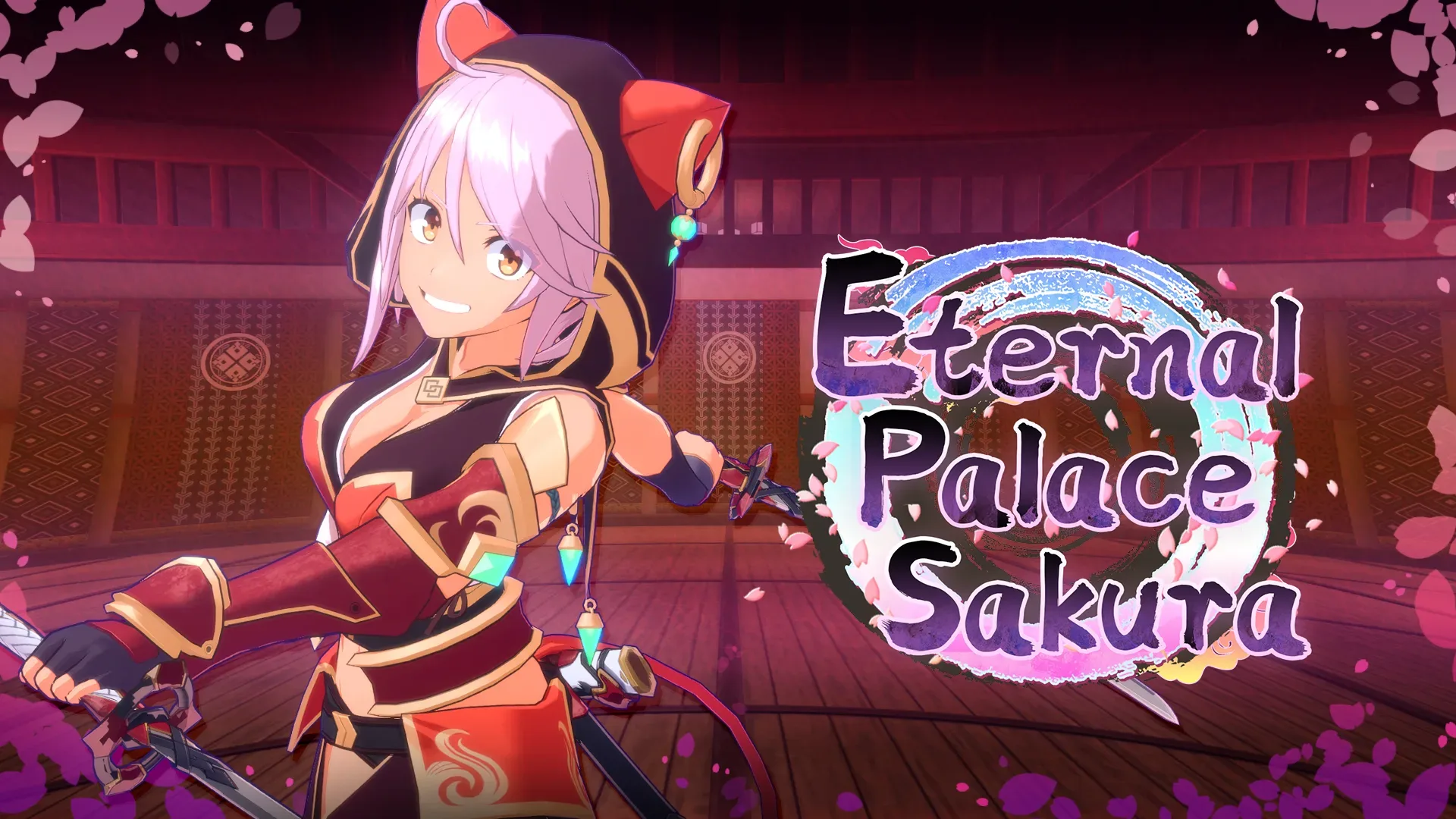
The game places cat-eared heroine Retla Stlutin inside the imposing Eternal Palace Sakura after she travels to the land of Ouran to investigate a mysterious tower. What begins as an investigation becomes an escape-and-survival mission: Retla must force her way through the palace’s floors, overcome formidable bosses and seek out rare treasures while pressing deeper into an endless dungeon.
Its central pitch is a familiar but potentially flexible roguelite loop: enter a dungeon whose layout is procedurally generated, fight through encounters, assemble a run-specific build from the upgrades found along the way, and try to advance further than before. Eternal Palace Sakura adds a prominently action-focused layer to that structure, putting combo strings, special skills and a high-powered ultimate at the center of Retla’s moment-to-moment toolkit.
Release details and launch pricing
Eternal Palace Sakura is listed at a digital price of $11.99, including tax. A limited-time launch price of $9.99 is also listed, alongside a two-week 20% discount running from November 5 through November 18, 2026. Those dates are especially relevant for Switch players, as the sale window begins on the platform’s release date.
- Developer: Denneko Yuugi
- Publisher: Shochiku Games
- Platforms: PC via Steam and Nintendo Switch
- Players: Single-player
- Steam launch: November 4, 2026
- Nintendo Switch launch: November 5, 2026
For a broader view of the day’s releases, readers can also see games releasing today on November 10, 2026.
What the combat system is built around
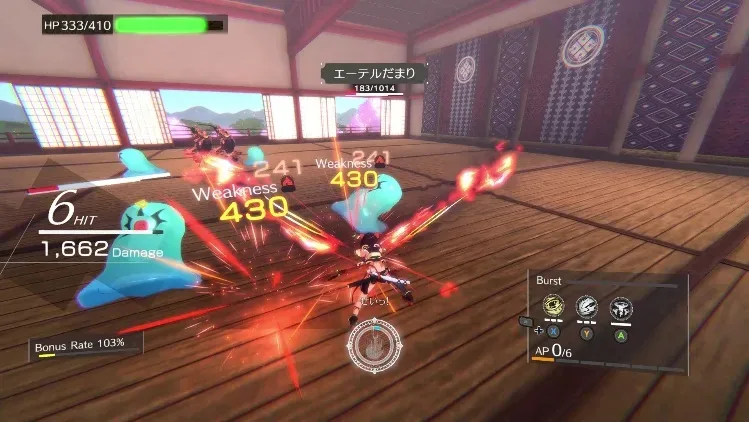
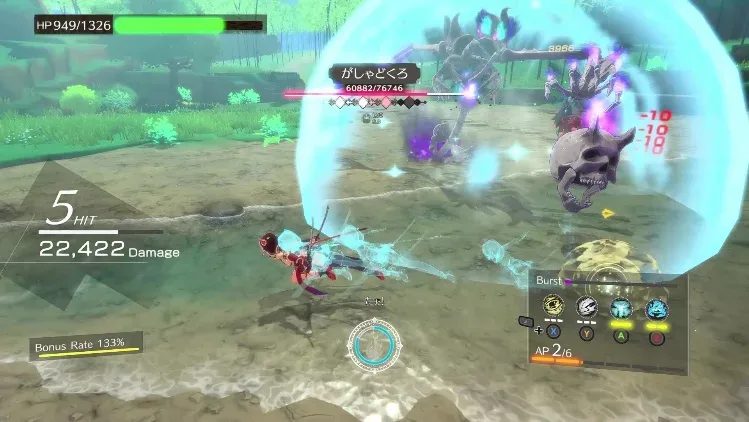
Retla’s combat is described as using simple inputs to chain flashy combos. In practical terms, combo chaining means attacks are designed to flow together in sequence instead of treating every strike as a separate, isolated command. That can make a game approachable at the control level while still leaving room for decisions about positioning, timing and when to spend stronger abilities.
On top of standard combo attacks, Retla can equip up to four special abilities called Arts. Since the game permits four Arts at a time, choosing a loadout appears to be an important part of defining a run. The supplied details do not specify individual Arts or their effects, so it is not yet possible to say whether the available skills emphasize movement, defense, crowd control or direct damage. What is clear is that they provide an additional layer beyond basic attack chains.
There is also an ultimate technique named Over Arts. An ultimate is generally a particularly powerful action separated from ordinary attacks and standard skills; in Eternal Palace Sakura, Over Arts is positioned as a distinct part of the combat kit. The available information does not explain its activation conditions, resource cost or how many Over Arts are available, but its inclusion gives Retla a named peak tool within the action system.
Related coverage includes Eternal Palace Sakura Brings Roguelite Action to Steam and Switch.
The launch trailer focuses on Retla’s descent through the dungeon, and the announced combat structure suggests the game’s appeal rests on the intersection of quick action and repeated build experimentation rather than on a fixed set of stages played once in a prescribed order.
Attributes are the heart of run-to-run build crafting
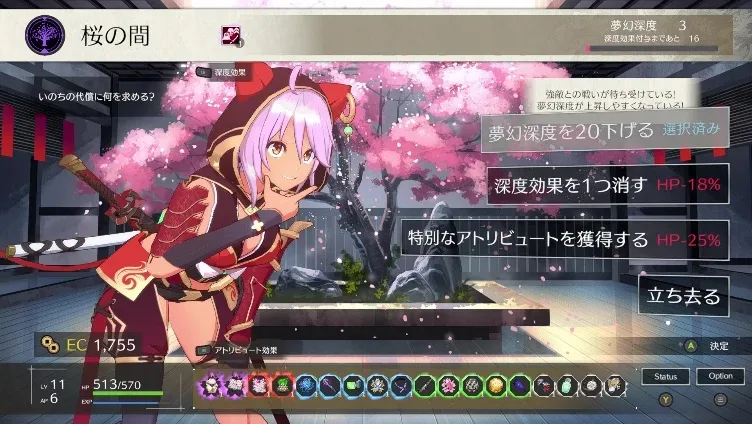
Eternal Palace Sakura includes more than 50 power-up items known as Attributes. These are the upgrades used to create builds during dungeon runs. A build, in roguelite terms, is the collection of effects, powers and combat choices that shape how a particular attempt plays. Rather than simply improving every statistic in the same direction, a build system encourages players to combine available options into an approach that suits the choices offered during that run.
The announcement does not list the individual Attributes, their rarity or their possible interactions. Still, the total of more than 50 gives the system a stated breadth beyond a small, static upgrade pool. Because dungeon layouts are procedurally generated, the exact route through the palace is not necessarily identical from one attempt to the next; Attributes add another variable by changing the power-up decisions available across runs.
That combination is a defining feature of the roguelite format. “Procedurally generated” means some dungeon content is assembled by systems rather than presented as one fully unchanging, hand-set sequence. The provided details do not identify exactly which elements of Eternal Palace Sakura’s dungeons are randomized, so players should not assume that every room, boss or reward behaves the same way. The confirmed point is that the dungeons themselves are procedurally generated and that Attributes can be combined into builds.
For players deciding whether the game matches their interests, the important distinction is between permanent progress and the power gained inside an individual run. Eternal Palace Sakura includes both temporary build construction through Attributes and permanent upgrades that can be unlocked. The available details do not name the upgrade currency, the upgrade categories or the conditions for unlocking them. Even so, the presence of permanent upgrades means progress is not limited solely to clearing a full run in one attempt.
Mugen Depth and the push toward Endless Mode
The dungeon challenge escalates through a system called Mugen Depth. The name is attached to the game’s rising difficulty, with players expected to manage it as they descend or advance. The exact rules remain unspecified: there is no confirmed explanation of whether Mugen Depth is a selectable setting, a level of progression, a risk-and-reward meter or a combination of those ideas. It should therefore be treated as the game’s named difficulty-escalation framework rather than a fully explained feature.
That escalation feeds into Endless Mode, where the goal is to push further into the dungeon. Endless modes commonly frame success around endurance and repeated advancement, but the specific scoring, termination and progression rules for Eternal Palace Sakura have not been detailed. What is confirmed is that the mode exists and that it is meant to support continued runs beyond the basic premise of battling floor by floor through the palace.
Boss encounters provide another checkpoint in Retla’s journey. The story explicitly has her facing powerful bosses while crossing the palace’s floors, so boss fights are part of the game’s stated structure rather than merely a possible side activity. No boss names, encounter counts or combat mechanics have been announced in the supplied information. Players interested in the game’s action side should therefore view bosses as a confirmed component, while waiting for more detail on how each encounter tests the combo, Arts, Over Arts and Attribute systems.
A focused premise for a solo action roguelite
The narrative setup is concise: Retla Stlutin arrives in Ouran to look into a strange tower, becomes trapped in Eternal Palace Sakura and has to fight her way out. The palace is both the setting and the game’s primary obstacle. Its floors, treasures, bosses and seemingly unending structure all support the same objective: continue the climb or descent through a hostile labyrinth that changes between attempts.
Retla is specifically described as cat-eared, but the available story information does not establish additional characters, branching narrative choices or the reason the palace has trapped her. The mystery of the tower and the palace is therefore part of the premise, while the confirmed gameplay emphasis remains combat, upgrades and forward momentum.
The game is also explicitly single-player. There is no supplied indication of co-op, competitive multiplayer or online systems, so prospective players should regard Eternal Palace Sakura as a solo experience centered on developing Retla’s capabilities over repeated dungeon expeditions.
Who the launch is likely to suit
Based on its announced systems, Eternal Palace Sakura is aimed at players who want action combat to be the main driver of a roguelite. The four-slot Arts loadout, Over Arts ultimate and combo chaining point toward active ability use rather than a format focused only on passive upgrades. Meanwhile, the pool of more than 50 Attributes and procedurally generated dungeons supplies the repeat-run variation expected of the genre.
Players who prefer clearly defined long-term advancement also have permanent upgrades to work toward, while those looking for a deeper endurance challenge can pursue Endless Mode and contend with rising Mugen Depth. The exact balance between these elements will depend on details not yet provided, including how Attributes interact and how Mugen Depth changes a run. But the core structure is clear: learn Retla’s combat tools, assemble a combination of powers, survive increasingly difficult dungeon progression and see how far into the Eternal Palace Sakura the run can go.
Eternal Palace Sakura is available now on Steam and Nintendo Switch, with its launch discount scheduled to run through November 18, 2026.