
League of Legends is preparing for a major new chapter. Riot Games has announced League of Legends: New Dawn, a wide-ranging update planned for 2027 that is intended to refresh key parts of the long-running multiplayer online battle arena game, or MOBA.
The early outline is deliberately broad, but the pillars are clear: a modernized game client, a visual revamp of Summoner’s Rift, gameplay evolution, and additional ways to play and experience League’s champion roster. The project was revealed during the 2026 League of Legends World Championship, with a fuller presentation scheduled for January 2027.
That leaves many important questions unanswered—for now. Riot has not detailed exactly how the gameplay will change, what new experiences will look like, or whether the Summoner’s Rift makeover will involve fundamental map alterations. Still, the announcement makes New Dawn sound less like a normal seasonal patch and more like a coordinated effort to improve the game’s foundations while keeping it viable for years ahead.
A new client is one of New Dawn’s clearest promises
Executive producer Paul Bellezza was direct about one major target: League’s client needs to improve. New Dawn will bring a modernized client next year.
In League of Legends terms, the client is the application players use outside an active match. It is the place for logging in, navigating menus, managing social features, selecting game modes, entering matchmaking queues, preparing for champion select, and accessing other account-facing parts of the game. It is distinct from the match itself, even if players experience both as parts of the same product.
That distinction matters because a client refresh can improve the route into a game without necessarily changing a single champion ability or the rules of a Summoner’s Rift match. A more modern client could mean clearer navigation and a more current technical base, though Riot has not yet specified the individual improvements planned for New Dawn.
The timing is notable. League’s last under-the-hood architectural overhaul came in 2016, a decade before the New Dawn announcement. Technical architecture is the underlying structure that lets an application’s systems work together. It is not always the most visible part of a game update, but it can determine how readily a team can maintain, modernize, or build on an application over time.
For a game that has been running for 17 years, prioritizing that layer signals that Riot sees long-term upkeep as central to League’s future rather than as a side task behind content updates.
Related coverage includes League of Legends: New Dawn Revealed as Riot Plans a Major 2027 Evolution.
Summoner’s Rift is getting a visual revamp
Senior vice president and studio head Andrei van Roon said New Dawn goes beyond the client. The plan includes visually revamping Summoner’s Rift, evolving gameplay, and adding new ways to play and experience favorite champions.
Summoner’s Rift is League of Legends’ best-known battlefield, so any revamp to it will attract close attention from both regular players and the competitive community. However, it is important to separate what Riot has confirmed from what remains unknown. The confirmed point is a visual update. Riot has not yet described specific terrain changes, objectives, lanes, systems, match rules, or champion balance adjustments tied to the project.
A visual revamp can cover the look and presentation of a map: environmental art, lighting, structures, effects, readability, and the overall identity of the arena. Those elements can be meaningful even when a game’s rules stay intact, especially in a title with a large, established audience that knows the map intimately. But visual modernization does not automatically mean a complete gameplay redesign.
New Dawn does include gameplay evolution as a separate promise, which suggests Riot is thinking about both presentation and play. The practical details will have to wait for January’s reveal. Until then, players should avoid treating the initial announcement as confirmation of any particular new mechanic, mode, map structure, or sweeping balance approach.
What “evolving gameplay” could mean—and what it does not confirm
The phrase “evolving gameplay” is substantial but intentionally non-specific. In a MOBA, gameplay encompasses the systems that shape a match: champion interactions, map objectives, team coordination, progression within a match, strategic choices, and the tools players use to compete. League’s named champions are its playable characters, each associated with their own combat identity and abilities.
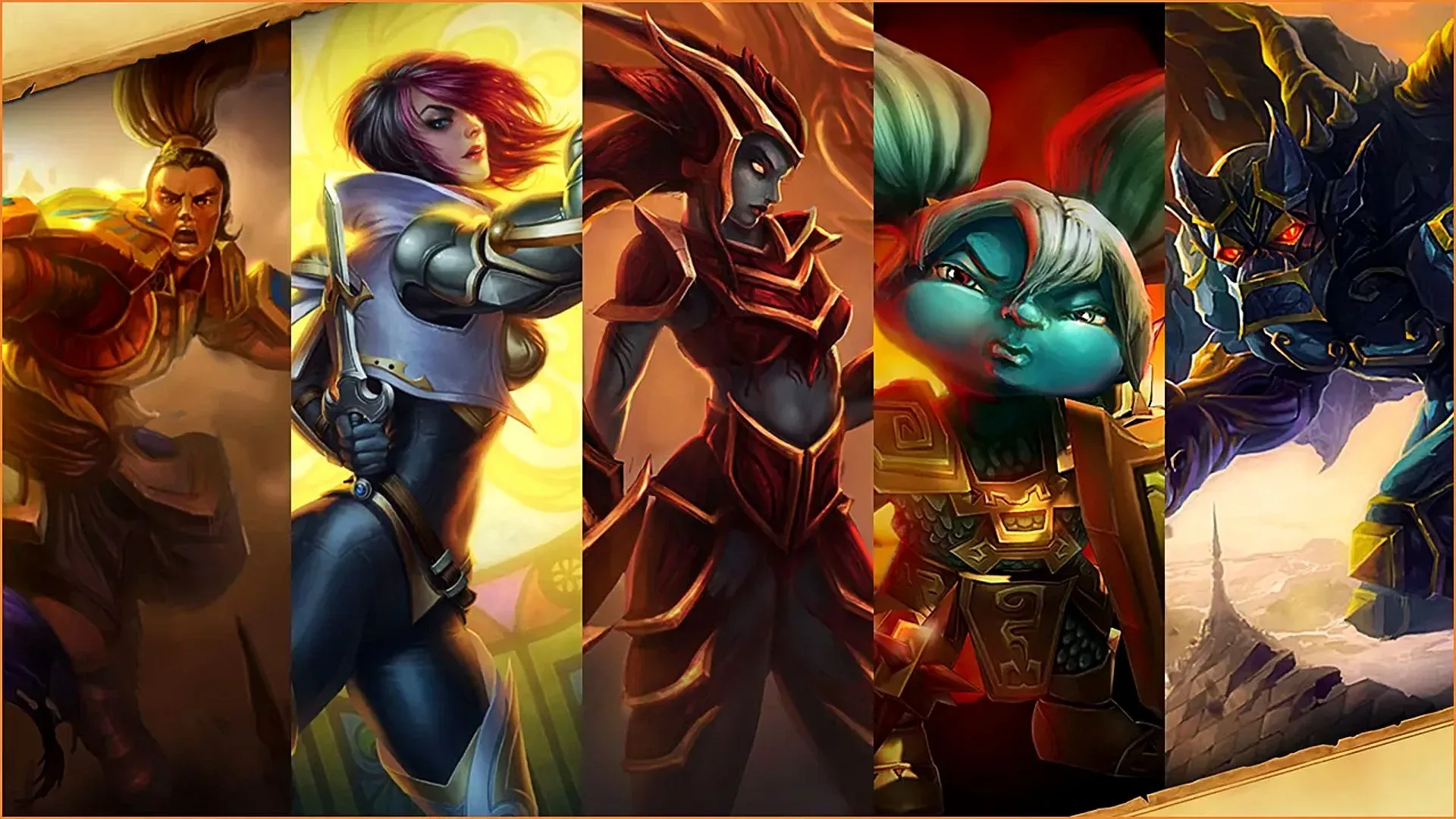
Riot has shown New Dawn material featuring Riven, Ahri, Jhin, Sett, Poppy, Lux, Blitzcrank, Leona, and Volibear. Those appearances establish that the project is being framed around recognizable figures from across League’s roster. They do not, by themselves, confirm reworks, new kits, balance changes, story developments, or special modes for those champions.
The announcement’s mention of “new ways to play and experience” champions likewise leaves room for several possibilities without locking any of them in. It could refer to modes, presentation, progression, or other features, but Riot has not said which. The responsible reading is simple: players can expect more detail, but should not mistake cinematic shots and gameplay snippets for a complete feature list.
That restraint is especially useful for competitive games. Specifics around gameplay systems can affect player preparation, community discussion, and organized competition. Riot has offered direction, not a technical design document, and January is positioned as the point where that larger picture will be properly opened up.
A longevity project rather than a routine update
Van Roon framed New Dawn around endurance, saying Riot wants League to stand the test of time and remain present for many more years. That goal helps explain why the announcement spans client technology, map presentation, gameplay, and champion experiences instead of focusing on one isolated component.
For players, this is the central takeaway: New Dawn appears to be an umbrella for connected modernization work. A client improvement is useful for the pre-match experience. A renewed Summoner’s Rift can update the game’s most recognizable setting. Gameplay changes can address how matches feel and develop. New ways to engage with champions could expand the ways people connect with the roster. Together, those initiatives are aimed at maintaining League as an active, evolving game rather than leaving its oldest systems untouched.
It is also a reminder that longevity in a live multiplayer game is not just about adding characters. The surrounding systems matter: the interface people use every time they launch the game, the technical framework supporting that interface, and the visual and mechanical language of its core battlefield. New Dawn’s stated scope puts all of those areas on the table.
That broader maintenance challenge extends across competitive games. For another example of how developers revisit core character roles while trying to solve kit-level problems, see the discussion around Overwatch’s Hudson moving from support to DPS. League’s New Dawn announcement does not establish a direct comparison or reveal equivalent changes, but it does underscore why foundational design decisions can remain relevant long after a game launches.
What players should watch for in January 2027
The full reveal in January is likely to matter more than the initial announcement because it should define the practical boundaries of New Dawn. The most useful questions concern specifics rather than speculation:
- Client changes: What will the modernized client change for navigation, matchmaking, champion select, social functions, and other player-facing workflows?
- Summoner’s Rift: Is the revamp strictly visual, or will it include changes that affect how the map plays?
- Gameplay evolution: Which systems are being adjusted, and how large will those adjustments be?
- Champion experiences: What does Riot mean by new ways to play and experience champions?
- Rollout: Will the project arrive as one major update or be introduced over time?
None of those answers were supplied in the initial announcement, so they remain open. There is also no stated need for current players to change how they play, prepare for a specific release date, or expect a particular champion to be altered based solely on the early footage.
For now, League of Legends: New Dawn is best understood as Riot’s declared next era for the MOBA: a 2027 modernization initiative anchored by a new client, a visual renewal for Summoner’s Rift, gameplay work, and expanded champion-focused experiences. The project’s ambition is clear; its exact shape will be defined when the studio delivers its full January reveal.