Konami has offered a clearer look at Wai Wai World Craft, its forthcoming game-creation package, through a new concept trailer. The project was initially revealed at Tokyo Game Show last year, and this latest video shifts the focus from the broad idea of “make games” to the pieces players may use to turn that idea into a playable, shareable little catastrophe—or, with enough care, something genuinely great.
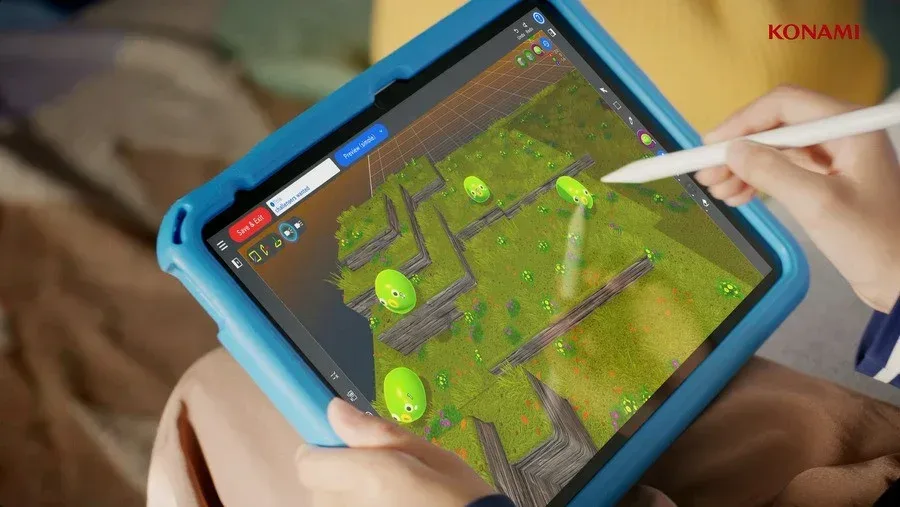
The headline is accessibility. Wai Wai World Craft is being positioned as a toolset where newcomers can start assembling interactive spaces without needing to arrive carrying a degree in menus, a ring binder full of level-design diagrams, and the haunted stare of someone who has spent 14 hours trying to make a moving platform behave. Its building materials are said to include items, customizable textures, colors, and visual effects. Those can be used in environments that contain the crucial ingredients of video-game mischief: hazards, traps, and power-ups.
There is still plenty Konami has not detailed, including exactly how deep the creation tools go, how much control makers will have over rules and logic, or what restrictions will apply to published projects. But the trailer’s basic pitch is clear: make a place, populate it, give players reasons to jump, scramble, cooperate or betray one another, then release it into the wider community and see whether anybody crowns it a masterpiece or declares it legally a staircase.
Start with a base—or build from an empty canvas
Wai Wai World Craft will let users reshape one of several available bases into a personal project, while also offering the option to begin from scratch. That distinction matters. Templates can lower the intimidating first step for people who have ideas but no desire to manually construct every wall, camera angle and floor tile. A blank start, meanwhile, leaves room for builders who see a preset as less of a helpful foundation and more of an insult to their very specific dream of making a frog-themed laser maze.
Among the starting genre frameworks shown or referenced are:
- Side-scrolling games
- 3D platformers
- Battle Royale-style games
These are jumping-off points rather than a confirmed limit on what can be made. The useful question will be how flexibly each base can be bent away from its original purpose. Game-building communities tend to get interesting when creators can use a system in ways its labels do not quite anticipate. A platformer template may become an obstacle course, a racing-adjacent contraption, a puzzle box, or a multiplayer social arena where the only stated objective is finding out who placed that one very suspicious button.
That social possibility is central to Wai Wai World Craft. Players will be able to upload creations directly for others to play. Other users can score them, leave comments, and share them onward. It is a model familiar from community-driven game makers: construction is only half the activity; discovery, reaction and the ongoing hunt for something worth playing are the other half.
The same dynamic can produce remarkable work and an overwhelming pile of nonsense. Both are part of the bargain. Anyone publishing a level is effectively sending it into a public arcade where strangers may admire its smart challenge curve, ignore its signposting, discover an exploit in eight seconds, or repeatedly fall into a pit that was definitely meant to be decorative. The community’s scoring and sharing tools will therefore carry substantial weight in determining whether inventive creations remain visible.
Konami’s character cupboard is open
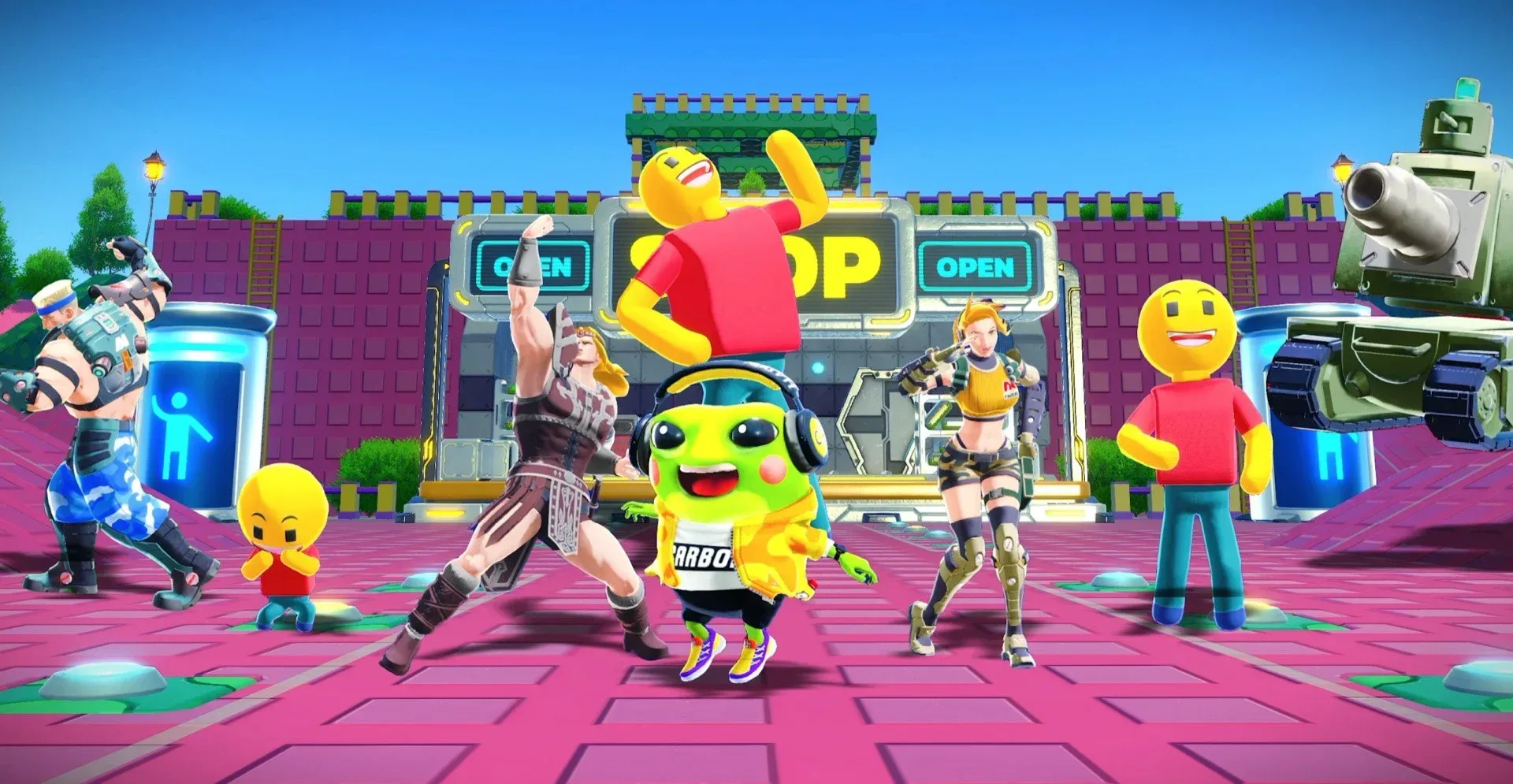
Wai Wai World Craft’s biggest differentiator may be its roster of playable “Actors.” Konami has confirmed that creators can use recognizable figures from across its catalog, including Simon Belmont from Castlevania and Bill and Lance from Contra. Also named is Primon, from Primo—a selection that suggests the game is not limiting itself to only the most internationally famous faces on Konami’s business card.
More Actors are planned to be revealed. For now, that leaves plenty of reasonable wish-listing space for fans, but it is worth separating wish lists from confirmation: characters beyond Simon Belmont, Bill, Lance and Primon have not been announced in the information currently available. The prospect of an expanded roster is nevertheless a natural fit for a game based on playful remixing. A Castlevania hero dropped into a bright, user-made 3D platforming course is already a tonal collision; add Contra protagonists and whatever unexpected deep cut appears next, and the game could become an unusually broad Konami toy box.
Creations will support up to six players. That ceiling opens the door to cooperative stages, competitive survival challenges, party-game experiments and the timeless multiplayer format known as “one person understands the instructions while five people confidently run in the wrong direction.” For a refresher on the social science behind that last one, our guide to the unwritten rules of couch multiplayer may be useful, even if Wai Wai World Craft itself is built around online sharing rather than a specific couch-play promise.
Playing is part of the building economy
Konami is also tying participation to progression through Silver Points. Players can earn the currency by playing, scoring and sharing games. Silver Points can then be exchanged for additional in-game items and Actor customization options.
The loop is straightforward: engage with other people’s projects, receive rewards, use those rewards to expand or personalize what you make, and send a new project back into the ecosystem. It is a structure designed to prevent the experience from being only a one-way pipeline of uploads. Ideally, a person who comes in to play a short platformer made by somebody else might leave with an extra building piece, try a template, make a rough course, receive feedback, improve it, and become part of the supply of things another player discovers.
The unanswered part is how the Silver Point balance will feel in practice. Konami has said what activities award points and what the points can purchase, but it has not provided specifics on earning rates, catalog size, customization boundaries, or whether every item can be obtained solely through ordinary play and social engagement. Those details will shape whether the system feels like a pleasant encouragement to explore or an extended quest to earn enough virtual silver for one especially handsome wall texture.
A difficult but familiar user-generated-content arena
Konami is entering a crowded user-generated-content field. Enormous platforms such as Fortnite and Roblox already command communities accustomed to playing and circulating user-made experiences, while games such as Super Mario Maker established how much energy can come from an accessible editor paired with immediate audience feedback.
Wai Wai World Craft does not need to replace those services to find a purpose. Its potential niche is the combination of approachable game-making, cross-platform availability, six-player support and Konami characters. The company’s long history supplies an unusual library of personalities, and familiar Actors could give even basic beginner projects a dose of identity. A modestly constructed obstacle course featuring Simon Belmont may get a second look that the same layout, starring Generic Adventurer Number Seven, would not.
Still, every UGC platform has a discoverability problem to solve. Good work can be hard to find when uploads arrive faster than players can sample them. Ratings, comments and direct sharing can help surface strong creations, but those systems must contend with popularity loops, joke levels, low-effort uploads and the ever-present human urge to build a room full of traps simply because the editor allowed it. None of that makes the experiment unappealing—it is just the natural weather of a public creation tool.
For now, the concept trailer provides a stronger sense of Wai Wai World Craft’s intended rhythm than a final accounting of its features. The essentials are confirmed: customizable building elements, genre-oriented bases, scratch-built projects, online publishing and feedback, six-player games, named Konami Actors, and Silver Points connected to participation. What remains unclear is equally important, from the precise extent of the tools to the shape of moderation and discovery.
Wai Wai World Craft is in development for Steam, iOS and Android. Konami has not announced a release date. With Tokyo Game Show taking place later in September, further news is possible, but no additional event appearance or timetable has been confirmed. Until then, the concept is a promisingly unruly one: a place where people can make their own games, hand Simon Belmont the keys, and hope the next room does not contain six players, four lava pits and a power-up placed exactly one pixel beyond reach.