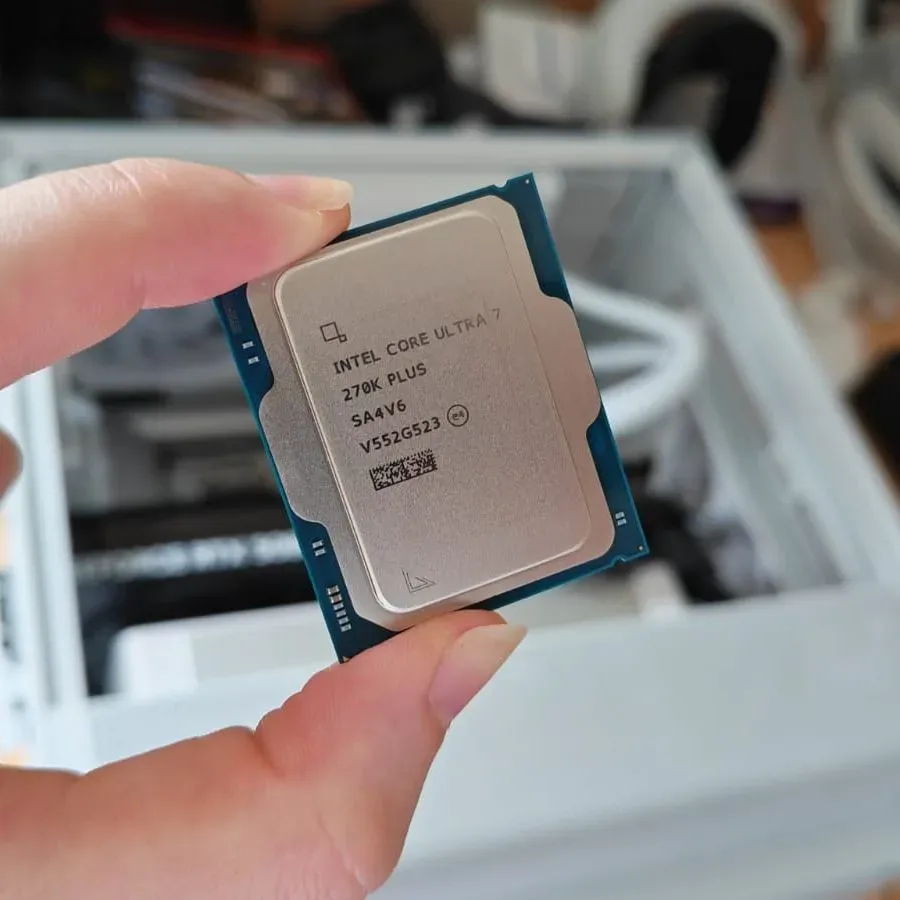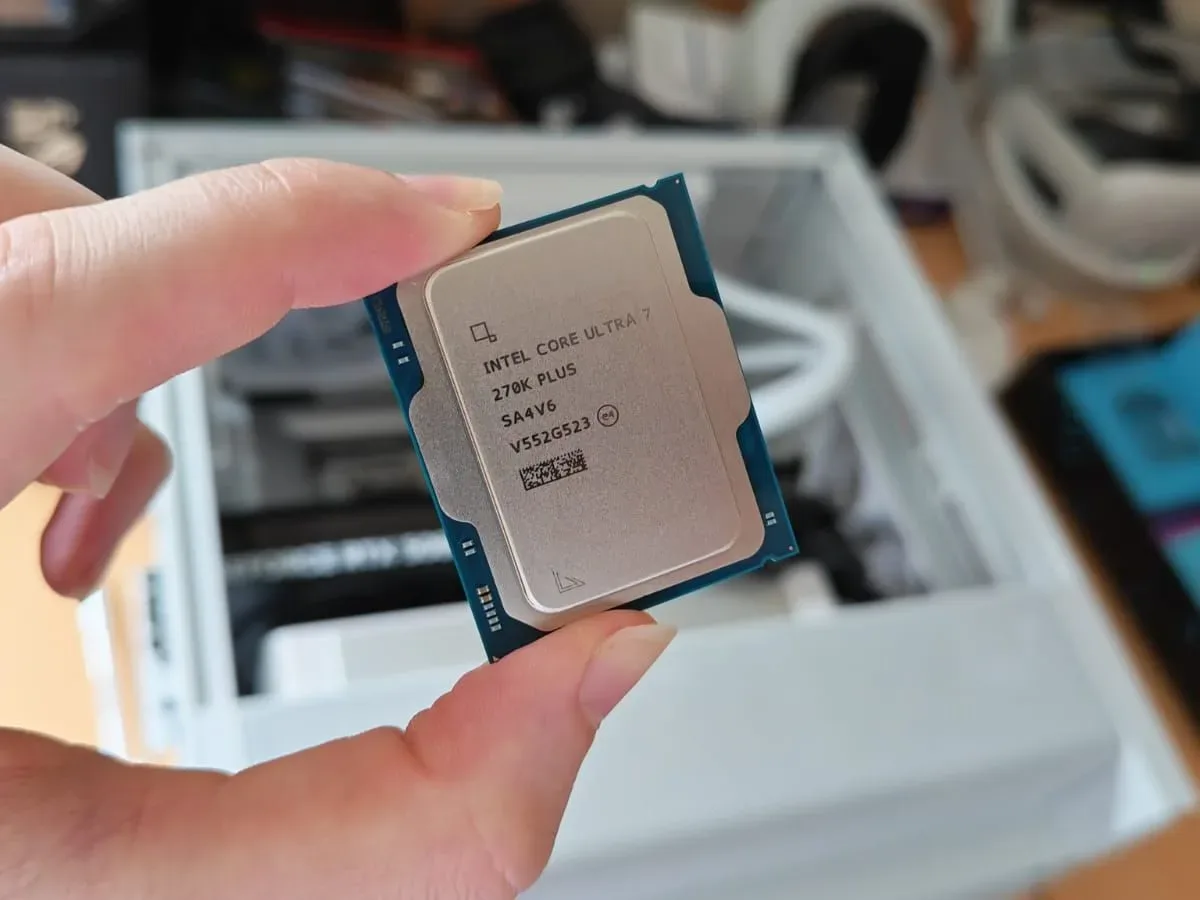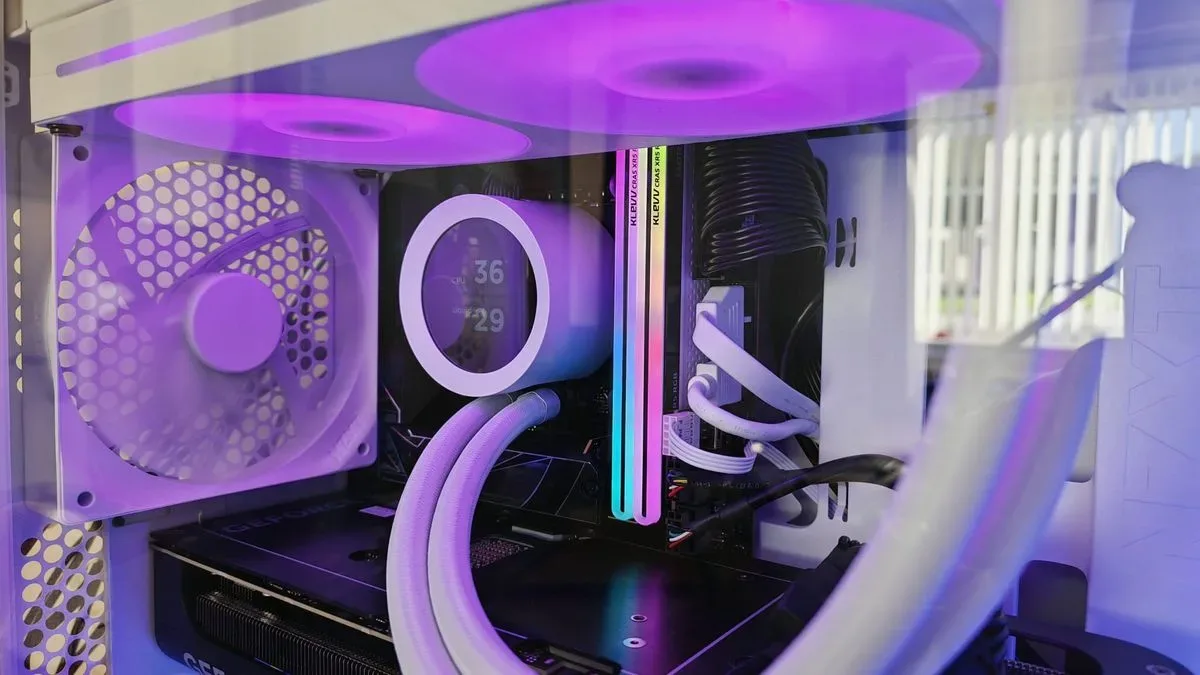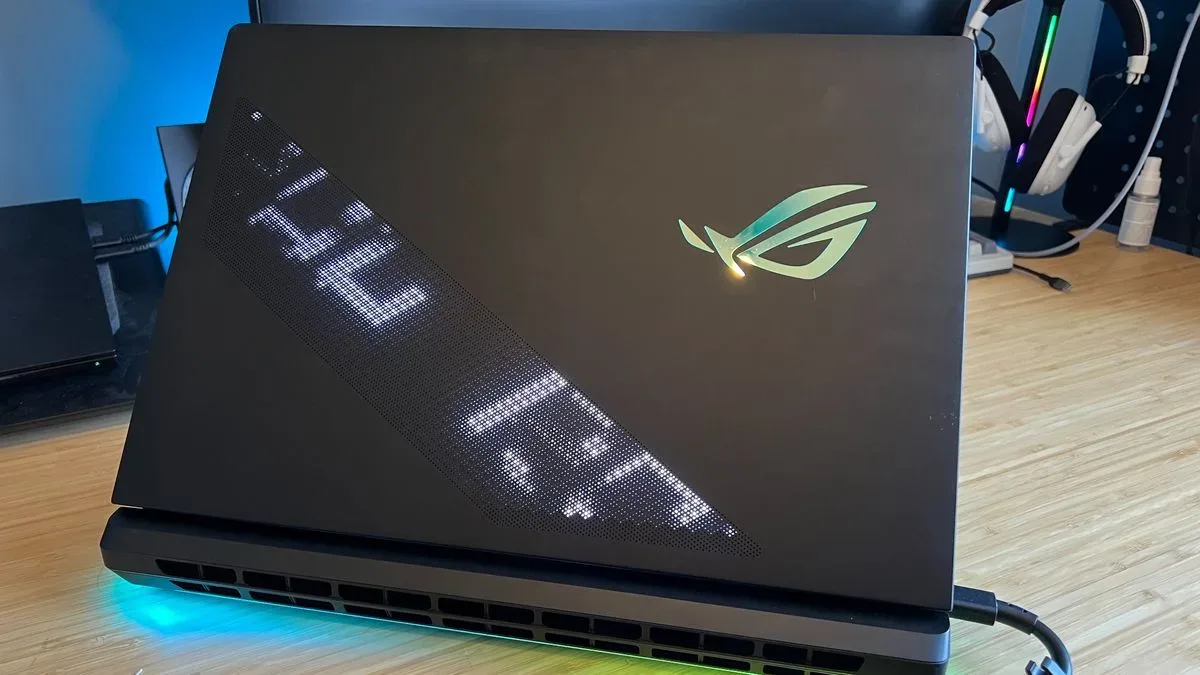
RGB lighting has worked its way into most visible corners of a gaming PC: fans, memory, graphics cards, motherboards, cases and liquid-cooler displays can all contribute to a carefully coordinated light show—or a glorious clash of colors. The processor itself is the conspicuous exception. Intel has now published a patent that considers changing that, with Micro-LED arrays built into an IC package.
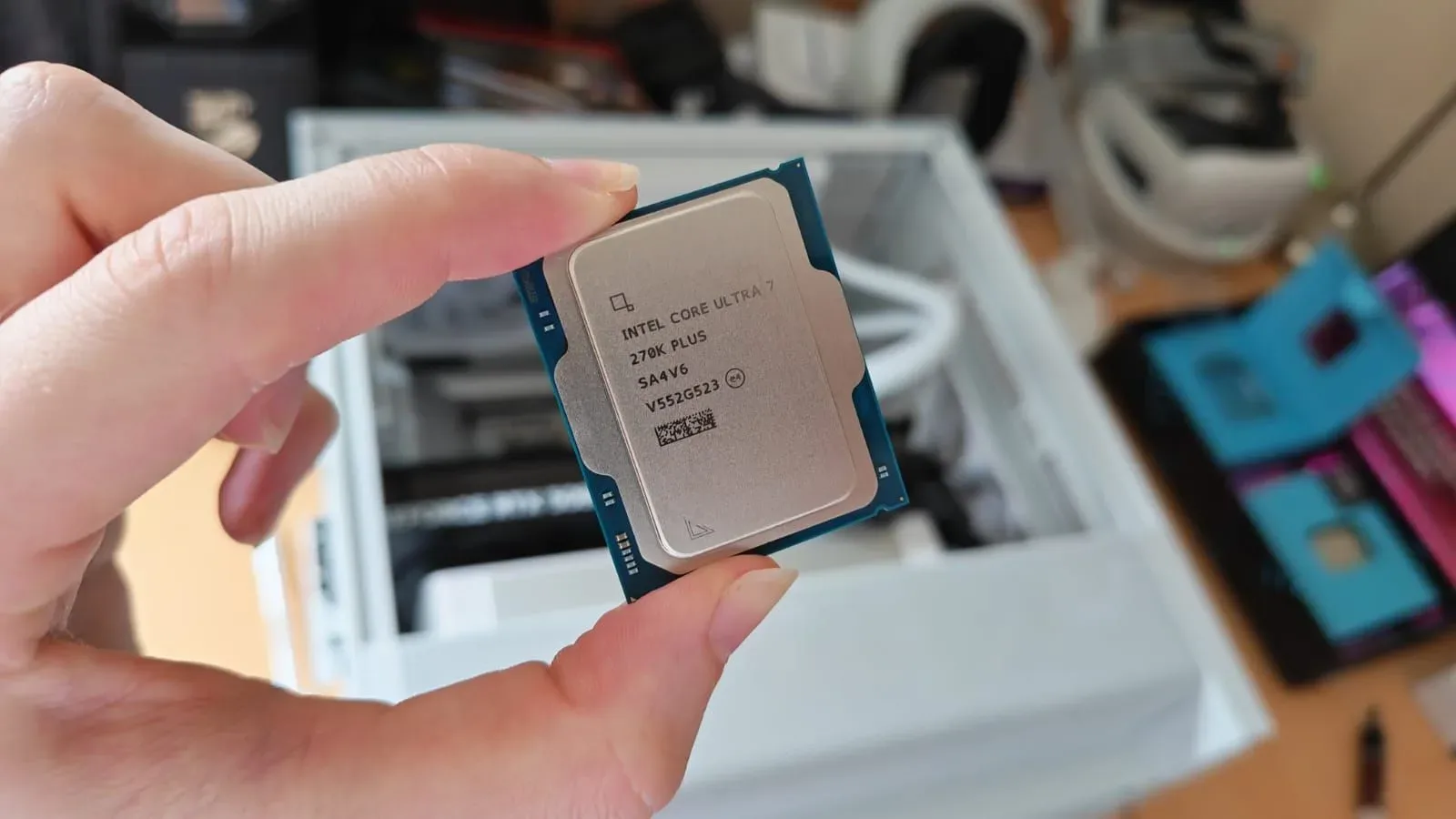
The filing is titled IC Package With Micro LEDs and carries US Patent No. US 12733303 B2. It was originally filed in 2022 and has now been published. Its central idea is small light-emitting diodes incorporated through a glass substrate directly on the semiconductor die. The proposed uses include cosmetic lighting, in-place electrical test indicators and illuminated wording across a CPU.
That is an entertainingly ambitious idea for a component whose normal working life is spent underneath a heat spreader and a cooler. Yet the diagnostic angle gives the concept a potentially more practical rationale than “make the hidden rectangle glow.” The important caveat is equally clear: a published patent outlines an idea and an architecture, not a promised consumer product, a release plan or a feature confirmed for a future Intel processor.
What Intel’s patent actually describes
The patent discusses using Micro-LEDs in electronic devices, especially customizable DIY hardware. It frames the lights as potentially aesthetic, operational indicators, or both. On a CPU package, that could mean an illuminated logo or model text, a distinct status signal, or lighting used while electrically testing the part.
Micro-LED refers here to very small LEDs arranged in an array. The notable part of the proposal is not simply that LEDs exist near a processor—PCs already contain plenty of LEDs—but that they would be integrated into the processor package itself via a glass substrate on the die. A CPU package is the physical form in which the processor is assembled for installation, while the semiconductor die is the piece of silicon at the heart of the chip.
The filing explicitly identifies DIY electronics as a setting where customers may value customization and may pay extra for it. It also notes that placing Micro-LEDs in additional components could increase profit margins. That commercial logic is familiar to anyone who has compared a plain component with an illuminated edition: visual customization is already a major part of the enthusiast PC market.
The patent’s proposed applications extend beyond decoration to in-situ electrical test indicators and light-up CPU wording.
Those are very different purposes. Decorative text is aimed at visibility and personal expression. Test indicators are aimed at communicating something about the hardware’s condition or operation. The latter is closer to the small status LEDs already found on motherboards, where lights can assist in narrowing down a fault during a build or troubleshooting session.
Related coverage includes Intel Patent Explores Micro-LED Lighting Built Into CPU Packages.
The cooler is the obvious problem
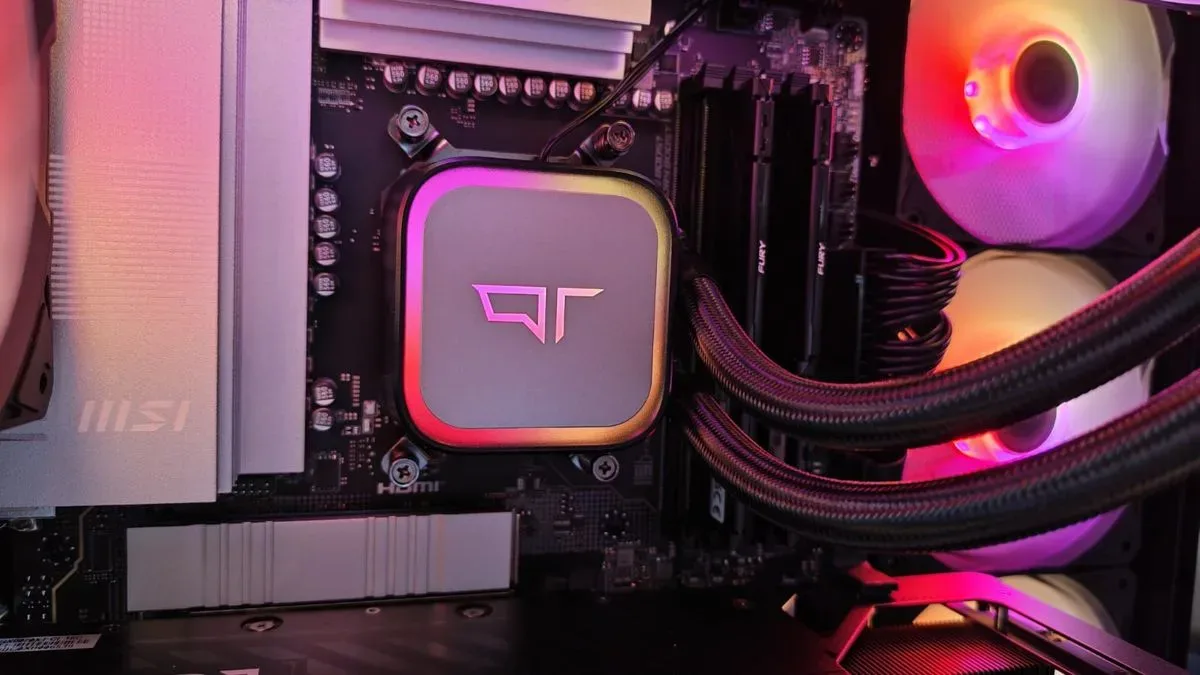
The challenge is physical visibility. A desktop CPU requires cooling, and the cooler ordinarily sits directly over it. Whether a system uses a traditional air cooler, a compact liquid cooler, or a larger all-in-one setup, the processor is generally hidden beneath hardware designed to remove heat. The feature may be inside the machine, but it is not necessarily in a position for its owner to see.
That makes a luminous CPU logo hard to justify on aesthetics alone. A user cannot enjoy lettering placed on the processor if it is covered during normal operation. Nor does moving into a portable device automatically solve the problem: processors in such devices are also typically obscured by fans, heat spreaders or other thermal hardware.
For the lighting to become a visible part of a finished PC, something else would have to change. The case design, board layout, cooler shape, processor orientation, or some combination of these would need to preserve a line of sight. None of that is established by this patent. It is analysis of the practical constraint, not a claimed Intel plan.
There is a second distinction worth making. Lighting that a user cannot see may still serve a manufacturing or technical purpose. A test indicator could be useful while a processor is being checked, assembled or diagnosed, even if it is not a centerpiece of a windowed gaming rig. The filing includes both consumer-customization language and technical-indicator language, so it should not be reduced to a promise of an RGB CPU for gamers.
Why diagnostic LEDs are easier to understand
Motherboards offer the clearest existing comparison from the supplied details. Many combine decorative lighting with small indicator LEDs that help identify potential problems with installed components. This kind of visual feedback can be valuable when a freshly built PC does not start as expected: it gives the builder a clue about which area needs attention.
A CPU-level light could theoretically add another layer of information, but the usefulness depends on whether it can be seen, what it signifies, and how a builder would interpret it. The patent does not identify a particular retail implementation or define a specific user-facing system of colors and meanings. So it would be premature to assume that an illuminated Intel processor would replace motherboard diagnostics, make repairs simpler, or offer a new overclocking dashboard.
Still, diagnostics are the part of the concept that least depends on a radically reimagined PC display case. An indicator meant for electrical testing does not need to be a beautiful showpiece. It needs to be appropriately integrated into a testing or service process. By contrast, a feature intended to make a processor visually distinct has to overcome the basic fact that the processor is normally covered.
CPU coolers already carry the visual workload
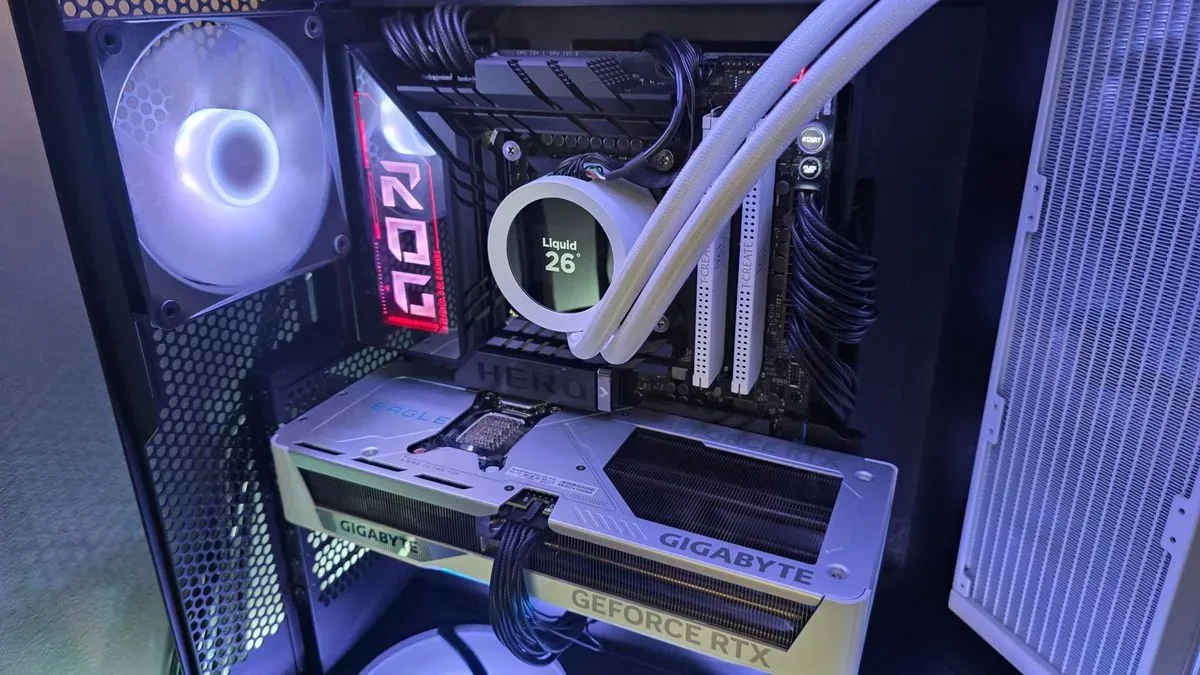
In the current enthusiast-PC arrangement, the cooler has become the processor’s public face. This is where manufacturers can put fans, lighting and displays without blocking the hardware that must be cooled. Air coolers can make a deliberate visual statement—whether that is understated beige-and-brown styling or RGB-heavy fans—while all-in-one liquid coolers may include small screens on the pump head.
Those displays can show images, animated GIFs, video-like visuals or system information at an angle a case window can actually reveal. That is a much more direct route to PC personalization than putting lights on the CPU package below it. It also explains why the patent’s decorative case feels unusual: the surrounding ecosystem has already turned the necessary cooling solution into the customizable, viewable surface.
For builders, the practical takeaway today is therefore simple. The patent does not alter CPU shopping, cooler compatibility, motherboard selection, or the fundamentals of safely cooling a processor. Anyone choosing components for a visually themed gaming PC still has more immediately relevant options in the visible cooler, case, fans, memory and motherboard.
And anyone primarily concerned with fault finding should continue to treat the motherboard’s existing diagnostic tools as the tangible consideration. A patent can point to a direction of research or a claim over a design; it cannot tell a buyer that a function will arrive in the next product generation.
A patent is not a product roadmap
Patent documents often describe possibilities in broad technical detail while avoiding a commitment to one finished device. This filing contains no identified processor model, no launch date, and no statement that an Intel CPU with Micro-LEDs will be sold. The sensible reading is that Intel has documented and protected an approach to integrating such LEDs into chip packaging.
That uncertainty matters because the leap from an architecture described in a patent to a mainstream desktop part is substantial. A possible design must still make sense alongside cooling, packaging, manufacturing, reliability, cost and the real-world value it gives customers. The available material does not establish how Intel would handle those questions, nor whether it ultimately intends to.
What the filing does show is that lighting remains a sufficiently meaningful part of PC customization for a chip maker to consider bringing it all the way down to the processor package. It also suggests that the idea has a possible functional side in electrical testing, rather than existing solely to create the world’s least visible RGB effect.
Intel may use the concept in some future form, modify it, or never commercialize it at all. Until there is an actual product, the Micro-LED CPU is best viewed as a curious packaging proposal: part diagnostic concept, part customization pitch, and part reminder that RGB will apparently investigate every square millimeter of a gaming PC—even the square millimeters hidden under the cooler.
For another look at PC-focused game coverage, see Diablo 4’s current Hellfire Torch Season 15 decision.
Shop the products
Check current price, model and availability at the retailer.