One of gaming’s most famously inaccessible horror experiences may be edging toward a new life on PC—although there are important caveats before anyone starts clearing hard-drive space for haunted hallways.
Developer LoreanXavier is working on a fan-made Windows version of P.T., the 2014 “Playable Teaser” created as a preview for the ultimately cancelled Silent Hills. The project is described as a native PC port, not an emulator and not a newly made recreation. LoreanXavier says it is roughly 97% complete, with the aim of retaining the original game’s house, progression, repeating loops, events, scripts and ending puzzle.
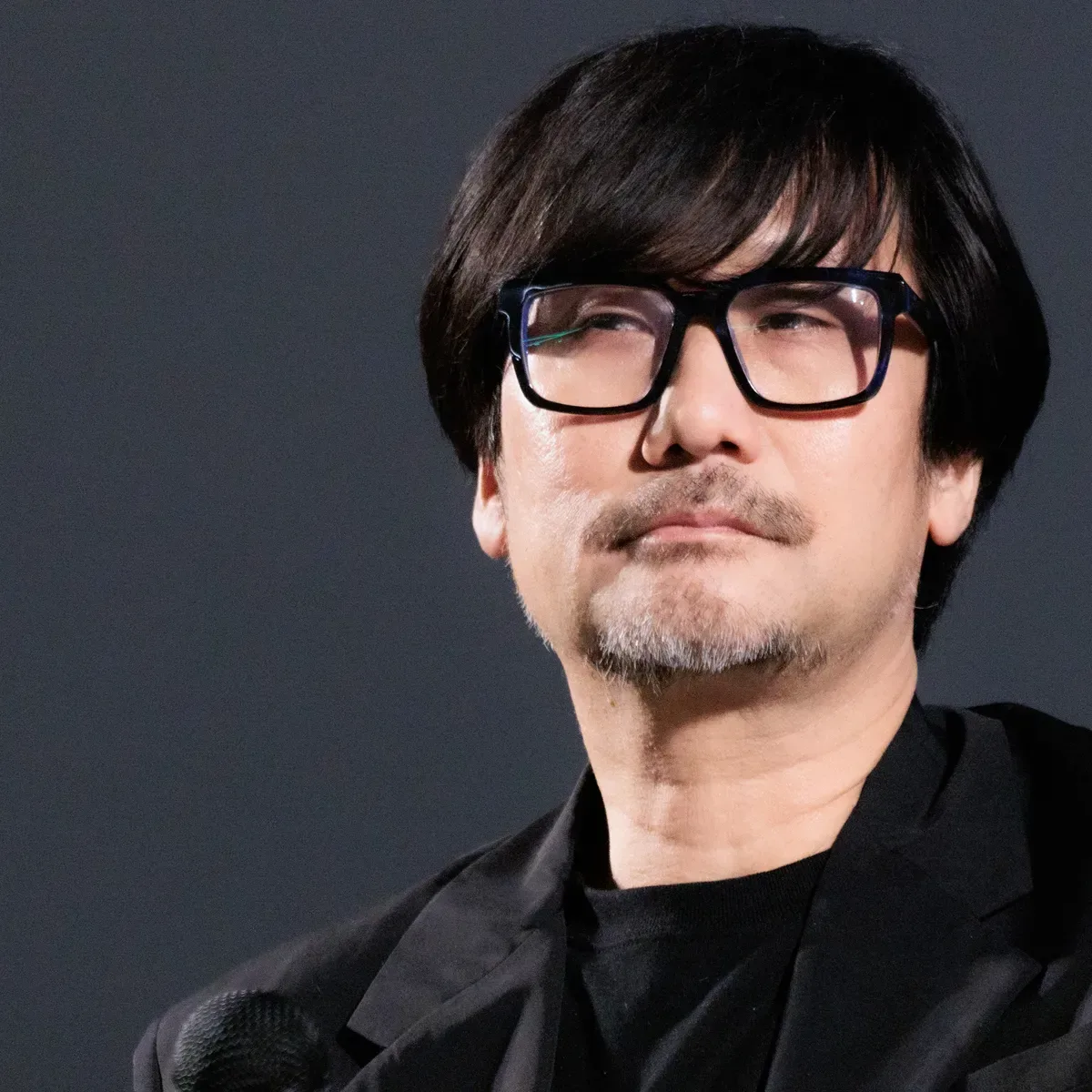
The project drew further attention after Hideo Kojima reposted coverage of it on social media. That repost confirms that Kojima has seen the work, a meaningful moment for a fan developer tackling one of the medium’s most discussed lost releases. It should not, however, be mistaken for an official release, a licensing arrangement, or confirmation that the project will be publicly distributed. Kojima’s social-media acknowledgement is just that: acknowledgement.
A teaser that became difficult to preserve
P.T. arrived in August 2014 as a short PlayStation 4 download. Its name stood for “Playable Teaser,” and its purpose was initially obscured: players navigated a looping domestic corridor while uncovering clues to its connection with a planned Silent Hill game led by Kojima and set to star Norman Reedus.
That larger project did not proceed. Following Kojima’s split from Konami, the game was cancelled, and P.T. was removed from the PlayStation Store in 2015. The delisting created an unusually stark preservation problem. A digital work that had once been available to anyone with a PS4 and an account was no longer normally obtainable through its original storefront. People who deleted it, as well as those who missed its initial availability, were left without a straightforward legitimate path back to it.
That history is central to why a PC-focused preservation effort commands so much interest. P.T. is not merely remembered as an advertisement for a game that never arrived. Its tightly controlled looping structure, unsettling domestic setting and hidden progression made it a horror landmark in its own right. Yet its legacy has been shaped as much by absence as by access.
Platform transitions have always complicated games’ long-term availability, even when the issue is less severe than a storefront removal. Older hardware accessories can themselves become a barrier to playing particular releases, as seen in the changing expectations around controller technology over time. The WaveBird’s role in making wireless controllers feel ordinary is one example of how hardware changes can reshape the practical experience of returning to games. In P.T.’s case, the hurdle is more fundamental: its official digital availability disappeared.
What “native PC port” means here
The terminology matters. An emulator is software designed to imitate the behavior of another machine, allowing software made for that system to run in a different environment. A remake, meanwhile, generally rebuilds a game using newly produced code and assets, sometimes changing its presentation or design along the way.
Related coverage includes Hideo Kojima Notices Fan Project Bringing P.T. to Native PC.
LoreanXavier has characterized this work as neither. The stated approach involves reverse-engineering the PlayStation 4 executable while using the original assets and employing C++ and Vulkan to make a dedicated Windows program. Reverse engineering is the process of studying how a finished program behaves in order to understand its structure or reproduce compatible functionality. C++ is a programming language commonly used for performance-sensitive software, while Vulkan is a graphics and compute API: a set of tools that lets software communicate efficiently with graphics hardware.
Put more simply, the stated goal is to make the original game’s content work through a Windows-native rendering and execution path, rather than to simulate an entire PS4 or devise a different interpretation of the teaser. The developer says the port retains the original Lua scripts. Lua is a scripting language often used to control game logic—events, triggers, sequences and interactions—so keeping those scripts intact would be especially relevant to a project chasing behavioral fidelity.
That distinction explains the emphasis on a “1:1” experience. The developer says the house, story content, repeating loops, events, puzzle progression and final puzzle match the original. The voice-recognition segment is also said to be included. That feature matters because it is part of the original experience’s specific design rather than a cosmetic flourish; leaving it out would change how players approach a key sequence.
The project also reportedly includes optional enhanced graphics. LoreanXavier’s position is that these visual changes are separate from the underlying game, meaning the base experience is not meant to become a revised story or set of altered puzzles. Remaining graphical differences are still being addressed, so “97% complete” should be read as the developer’s progress estimate rather than a guarantee of a finished, polished or released build.
Preservation is not the same as permission
The enthusiasm around this project is understandable, but it exists alongside a practical legal and distribution uncertainty. Using original game assets and recreating a commercial game’s functionality can raise intellectual-property questions. Nothing about a social-media repost settles those questions. Nor does it establish whether a finished version can be distributed, where it could appear, or how long it might remain available.
Some followers have urged the developer to make the code open source as a hedge against a potential copyright claim. Open source generally means that a project’s source code is available for others to inspect, modify and share under a stated license. In preservation conversations, that can reduce dependence on one individual maintainer. It does not automatically resolve rights issues involving a game’s original content, assets or trademarks, and it does not ensure that any complete package will be lawfully distributable.
For players, the responsible takeaway is therefore narrower than “P.T. is coming back.” A technical project is underway; its developer says it is close to completion; and Kojima has publicly noticed coverage of it. Those facts are significant. They are not a release date, an authorization, or a promise of broad availability.
Why Kojima’s acknowledgement still resonates
Even with those limitations, Kojima’s repost carries emotional weight. Fan preservation work can be painstaking and largely invisible, especially when the work is dedicated to a cancelled project whose official future is closed. LoreanXavier responded publicly that the recognition meant a great deal after investing substantial time and passion into the port.
Kojima is known to engage with fan creations online, including artwork inspired by his games. The attention here has naturally encouraged speculation about what the repost means for P.T.’s legacy. The most defensible reading remains the simplest one: the original creator has seen that fans are still motivated to keep this small, vanished teaser in public conversation more than a decade after it first appeared.
It also illustrates the unusual cultural footprint of P.T.. The teaser was brief, but it left a durable mark through its format as much as its scares. A single corridor becomes a maze through repetition. Familiar details become suspicious. Progress depends on observation and experimentation, while the game repeatedly makes the player question whether a change was real, imagined or triggered by something unnoticed. Those ideas have become inseparable from how players remember it.
OD is separate, despite fan theories
The renewed attention arrives while Kojima’s next horror project, OD, remains in development. Hunter Schafer and Sophia Lillis are attached to star. The shared horror connection has led some fans to wonder whether OD and P.T. could be related, but no supplied information establishes a link between the projects.
For now, they should be treated as separate: one is an in-development horror title, while the other is a fan effort centered on preserving a removed 2014 teaser for Windows. The connection is creative expectation rather than confirmed continuity.
Thirty minutes of footage of the PC port is already viewable online, giving interested observers a way to assess the project’s claimed fidelity without confusing demonstration footage with a public release. Whether the work reaches that release stage remains uncertain. Still, its existence has reopened a conversation that digital storefront removals often try to close: what happens when a widely influential game is no longer available on the platform for which it was made?