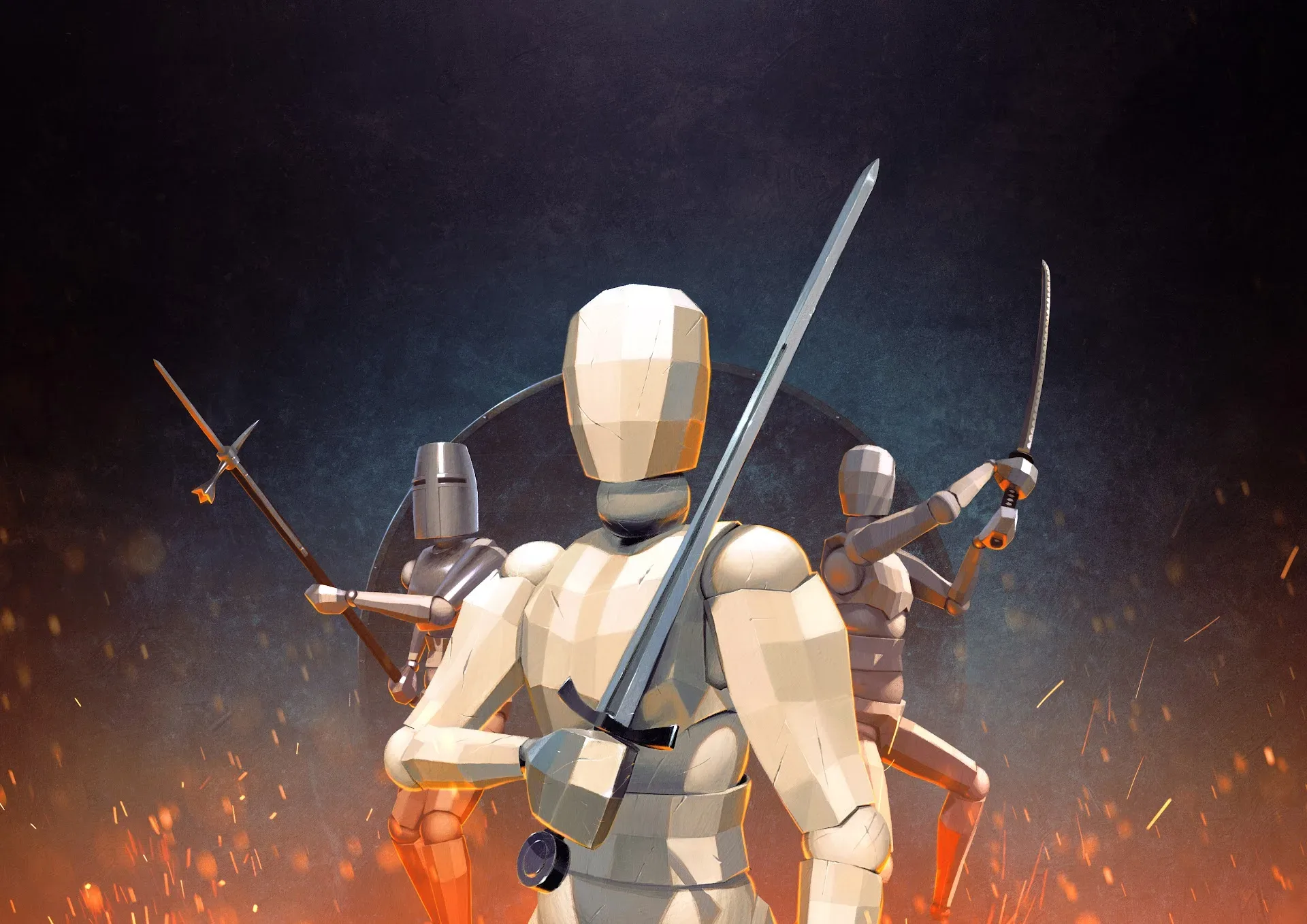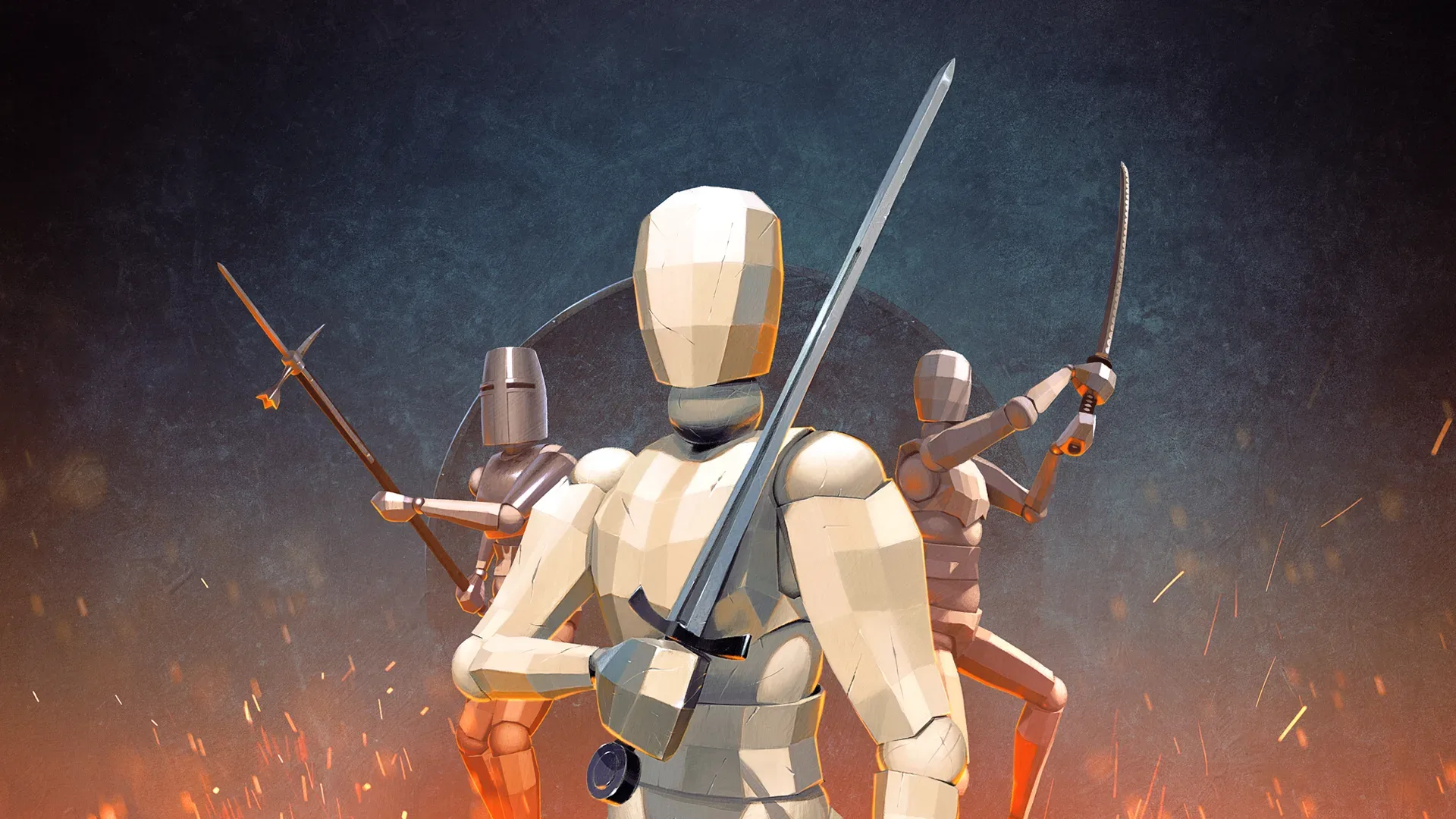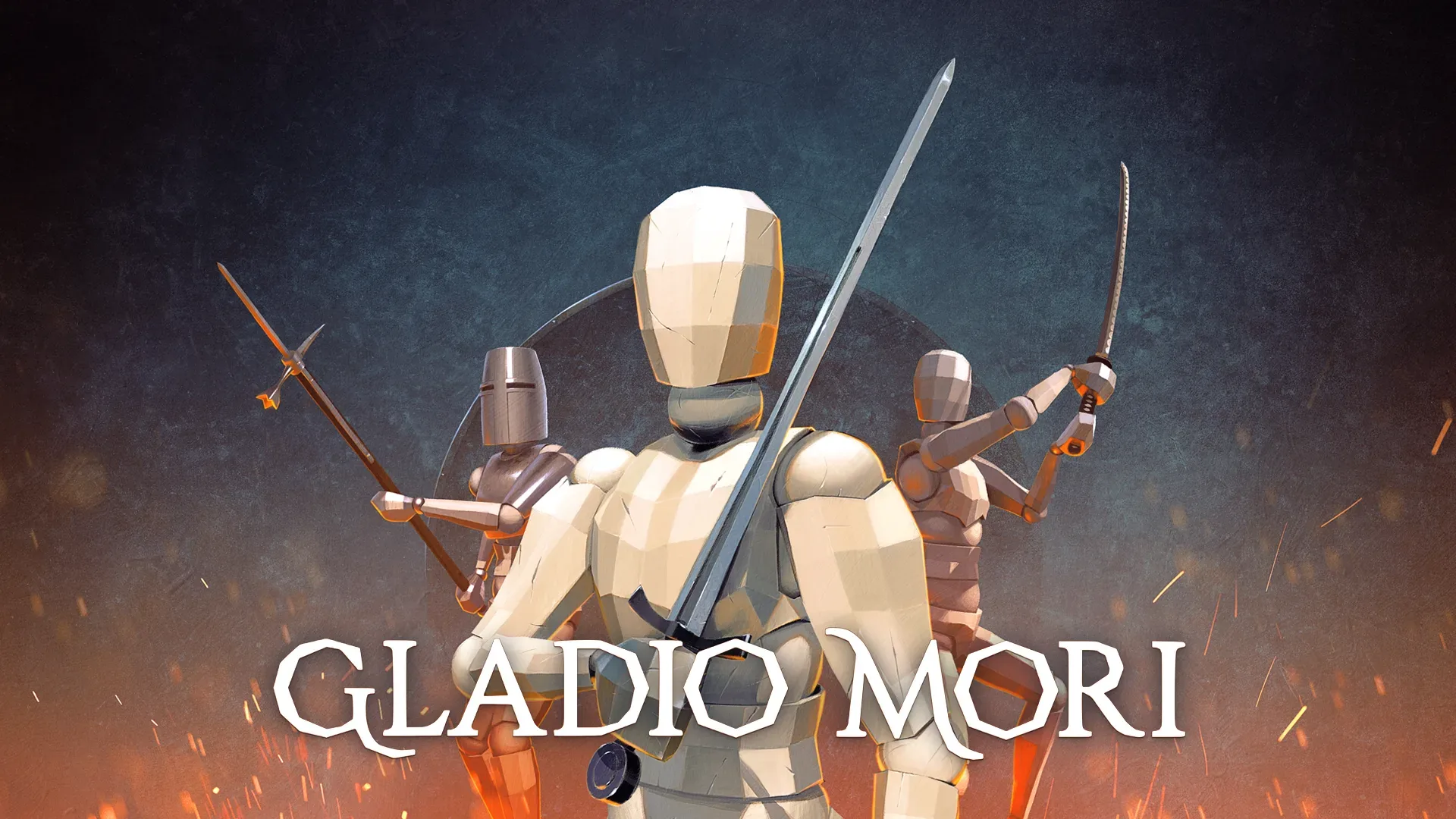
Gladio Mori has left Early Access with its full 1.0 release on PC, PlayStation 5 and Xbox Series X|S. The arena sword-fighting game arrives with crossplay across all three platforms, online matches for up to four players, local split-screen and a single-player option.
The release is notable not simply because the game is now on consoles, but because PlayStation 5 and Xbox Series X|S players can access community content through mod.io from inside the game. That includes downloadable skins, custom movesets and maps—putting a major part of the game’s player-created ecosystem on console as well as PC.
Developed by solo creator LittleLegatus under Plebeian Studio, Gladio Mori spent two years in Early Access with community input shaping its development. Bonus Stage Publishing is handling publishing duties outside China, where Korgi Digital publishes the game.
A sword fighter built around injuries, not a health bar
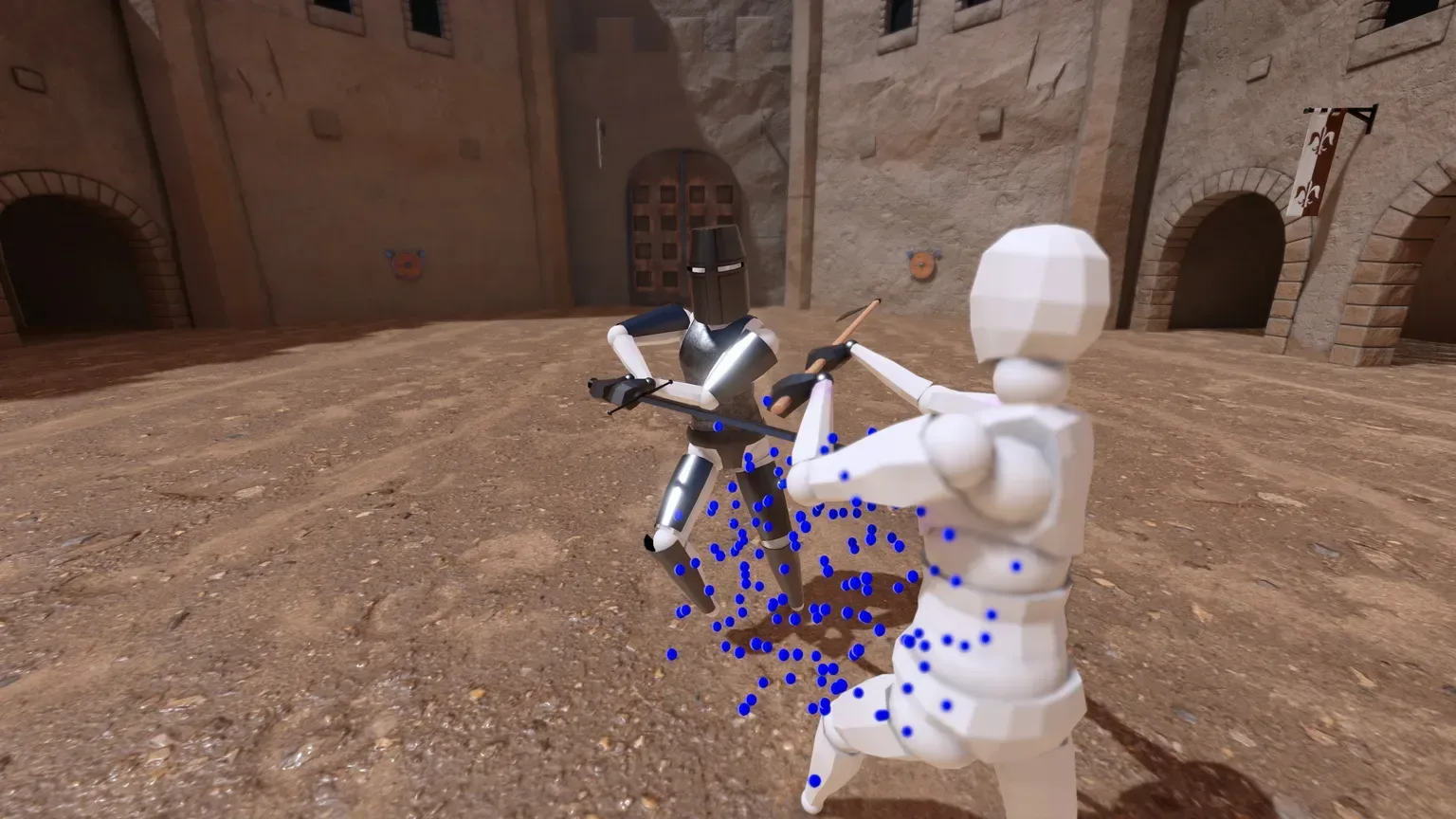
Gladio Mori approaches melee combat with a deliberately literal physical premise. It does not use conventional health bars. Rather than steadily reducing a visible meter, players aim to inflict injuries on particular body parts, and the consequences are tied to where a blow lands.
The practical effect is that a successful strike can immediately alter what an opponent can do. Severing an arm makes them drop their sword. Removing their legs immobilises them. A heart stab is an instant kill. Bleeding and dismemberment are therefore not merely visual effects layered over a standard damage system; they are central to the game’s win conditions and tactical decisions.
This also changes the value of defensive equipment. Armour is modelled so that plate can stop bladed strikes. That means a player cannot assume that a broadly aimed slash will always be useful, particularly against a well-protected target. Finding an opening in an opponent’s protection becomes a central concern.
What that means in plain terms: the game asks players to think about targets, angles and access rather than simply trading hits until one combatant’s health runs out. A weapon hand, an unarmoured area or a vital location can matter more than the total number of attacks landed. The supplied details do not establish a universal best tactic, but they do make clear that placement and armour coverage are foundational to each fight.
The moveset editor is the game’s defining creative tool
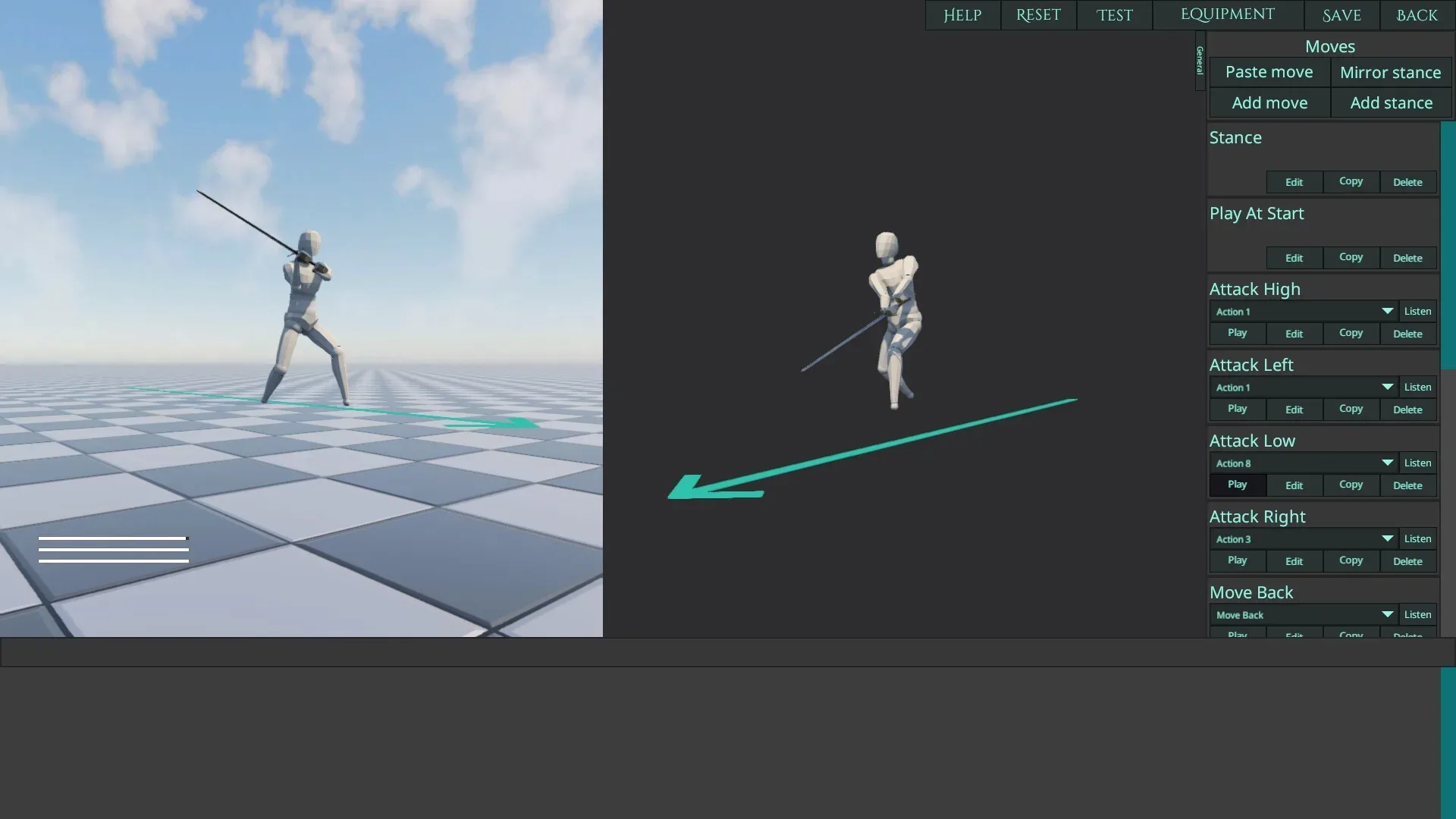
The other major pillar of Gladio Mori is a moveset editor that lets players build attacks frame by frame, try them in the arena and share the resulting creations through mod.io.
Related coverage includes Gladio Mori Reaches 1.0 on PC, PS5 and Xbox Series X|S With Crossplay and Console Mods.
In animation and game development, a frame is one incremental moment in a sequence of motion. A frame-by-frame editor, then, gives creators unusually granular control over how an attack develops: its starting pose, movement through the swing and its final position. In this game’s context, that matters because movement design is bound up with where a weapon may hit and how a fighter exposes or protects their own body.
The feature is not described as a simple cosmetic stance selector. It is a system for constructing and testing attacks, which makes it an avenue for players to experiment with the game’s physical combat model. Someone can create a move, test it in the arena, then publish it for others to use. The studio also runs moveset contests whose player designs can be incorporated into the game.
That feedback loop helps explain why the project’s community activity is more consequential than a typical collection of cosmetic add-ons. Community members have contributed movesets, skins and maps, while player feedback helped drive features including dismemberment and the stamina system. Stamina generally refers to a limit on sustained physical actions in games; here, its inclusion signals that exertion is another part of the combat design alongside injury and armour, though the available information does not detail the exact rules governing it.
Console mod access is a meaningful part of the 1.0 package
Mods are player-created additions or alterations to a game. They can range from cosmetic work, such as skins, to material that changes what people play, including maps and custom movesets. Gladio Mori has already seen mods that push beyond those basics, including a 16-player modification, a first-person mod and modifications that change limb behaviour.
Not every mod example should be mistaken for a default 1.0 feature. The standard online offering supports up to four players, while the 16-player option is specifically identified as a mod. Likewise, the existence of a first-person mod does not mean first-person play is necessarily part of the base game. The important point is that the game’s modding framework has been used for both creative additions and more ambitious mechanical experiments.
For PS5 and Xbox Series X|S owners, the built-in mod.io connection brings community skins, movesets and maps into the game on launch of the full version. That is particularly relevant for a title whose editable moves are a signature feature. Console players are not restricted to the base selection of community content while PC players explore a separate pool; the stated aim is to make the same community material available across platforms.
There is a broader platform angle here, too. PS5 is increasingly a space where both retail games and technical projects draw attention; for a separate example of recent PlayStation 5-focused technical coverage, see KytyPS5’s gyroscope-input and launcher-reporting update. Gladio Mori is different in purpose and audience, but its console mod support underscores how access to community-made material has become a significant product consideration rather than a PC-only footnote.
Crossplay, couch play and solo options
The 1.0 launch supports three ways to engage with the game: online multiplayer, local split-screen and single-player play. Online matches support up to four people, and crossplay means participants on PC, PS5 and Xbox Series X|S can play together rather than being divided by hardware family.
Crossplay is the ability for players on different platforms to join the same multiplayer pool or matches. Its immediate practical value is a wider set of potential opponents and collaborators for every platform. In a game centered on experimenting with custom movesets and sharing community content, it also means creations can have a more unified audience across the supported systems.
Local split-screen means multiple people can play on the same display rather than each needing their own system and screen. Its inclusion is distinct from online support: one serves in-person sessions, the other remote play. Single-player meanwhile gives the game an option for players who want arena time without arranging a match. The release information confirms these modes but does not provide further details about their structures or objectives.
Early Access numbers show an established audience before 1.0
The team cites several milestones from the Early Access period. Before full release, the game had sold more than 100,000 copies, generated more than 1,000 Steam reviews with a Very Positive rating, and accumulated more than 250,000 wishlists. Its demo ranked as the third most-played during Steam Next Fest in October 2024.
The mod side has its own indicator of activity: mod.io downloads were approaching one million, while the game’s Discord community stood at roughly 15,000 members. These figures are team-cited metrics, and they describe activity before the full launch rather than a post-1.0 outcome. They nevertheless provide useful context for the console rollout: Gladio Mori is arriving on PS5 and Xbox Series X|S with an existing base of community-created work rather than asking those players to wait for a mod scene to form.
The full release therefore ties together the project’s main ideas: precise sword combat where injuries have direct effects, tools for creating attacks at a frame-by-frame level, and a shared community-content pipeline across PC and current-generation consoles. For prospective players, the clearest distinction is that this is not presented as a sword game where mastery is only about selecting a character or memorising a preset combo. It is one where the mechanics of combat and the ability to reshape the moves themselves are closely connected.