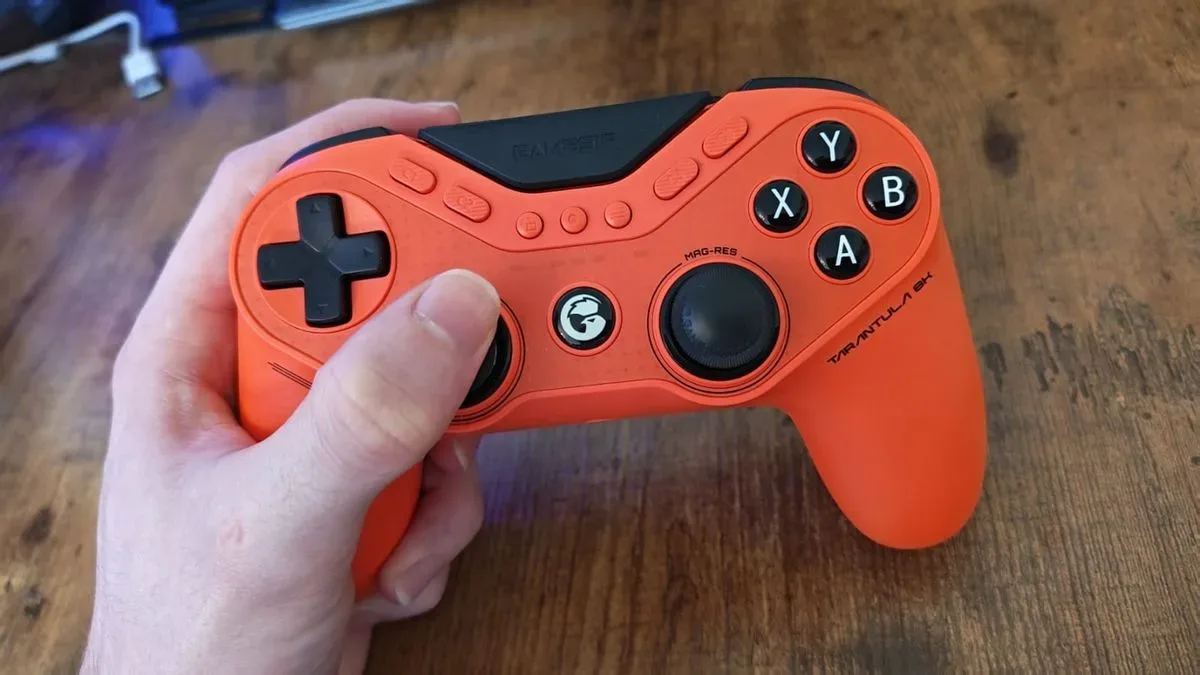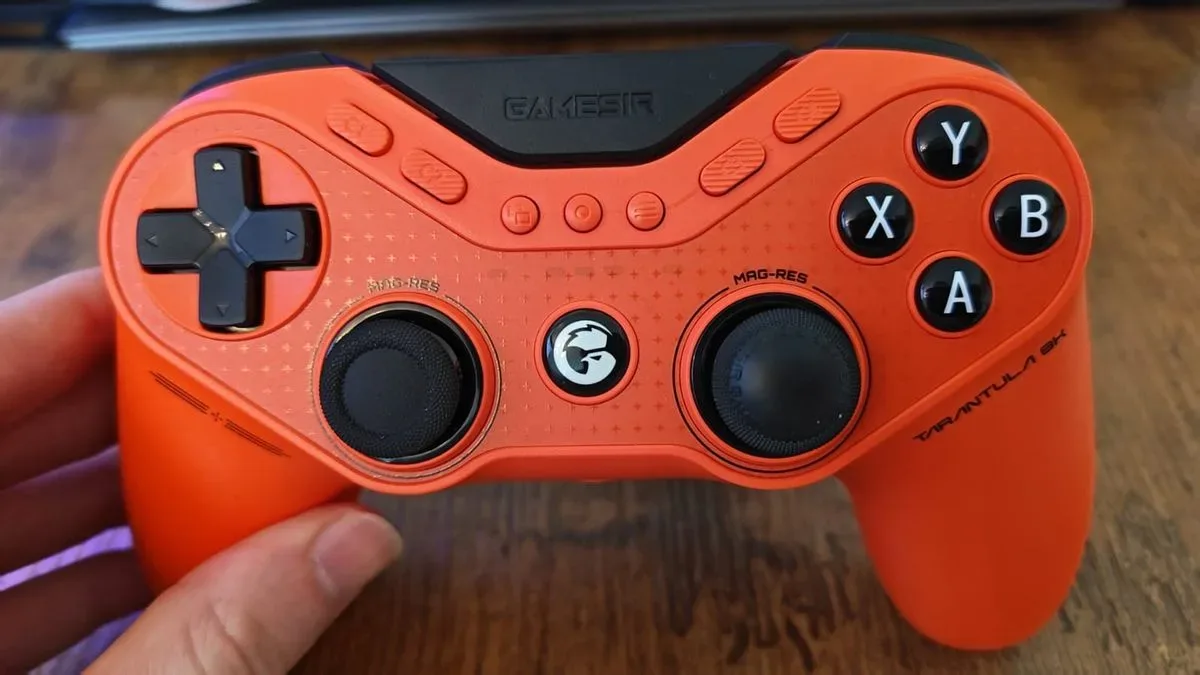
GameSir’s Tarantula 8K is a very particular kind of controller revival. It retains the symmetrical-stick layout and DualShock 4-adjacent comfort that made the earlier Tarantula Pro stand out, then turns its priorities sharply toward desktop competition: a wired PC connection, updated Gen 2 MagRes TMR thumbsticks, microswitch-style inputs, configurable profiles, and a report-rate setting that reaches 8,000Hz.
That makes the blood-orange Tarantula 8K potentially compelling for players who want a light, highly responsive pad for competitive PC games and strongly prefer both thumbsticks in the same horizontal position. But it also involves two conspicuous omissions from the older Tarantula Pro: wireless connectivity and vibration motors. Those losses affect not only convenience but also the physical and tactile character of the pad. For players who use a controller across racers, sports games, single-player adventures, and couch setups, the latest Tarantula may be more specialized rather than simply better.
The PC Tarantula 8K is listed at £79.99 / $69.99, the same price cited for its officially licensed Xbox sibling. An Ultra PC model has also been announced with 8K polling, wireless play, and rumble, but it had not launched at the time these details were reported. No launch timing was indicated for that version.
A familiar shape, now built around a narrower brief
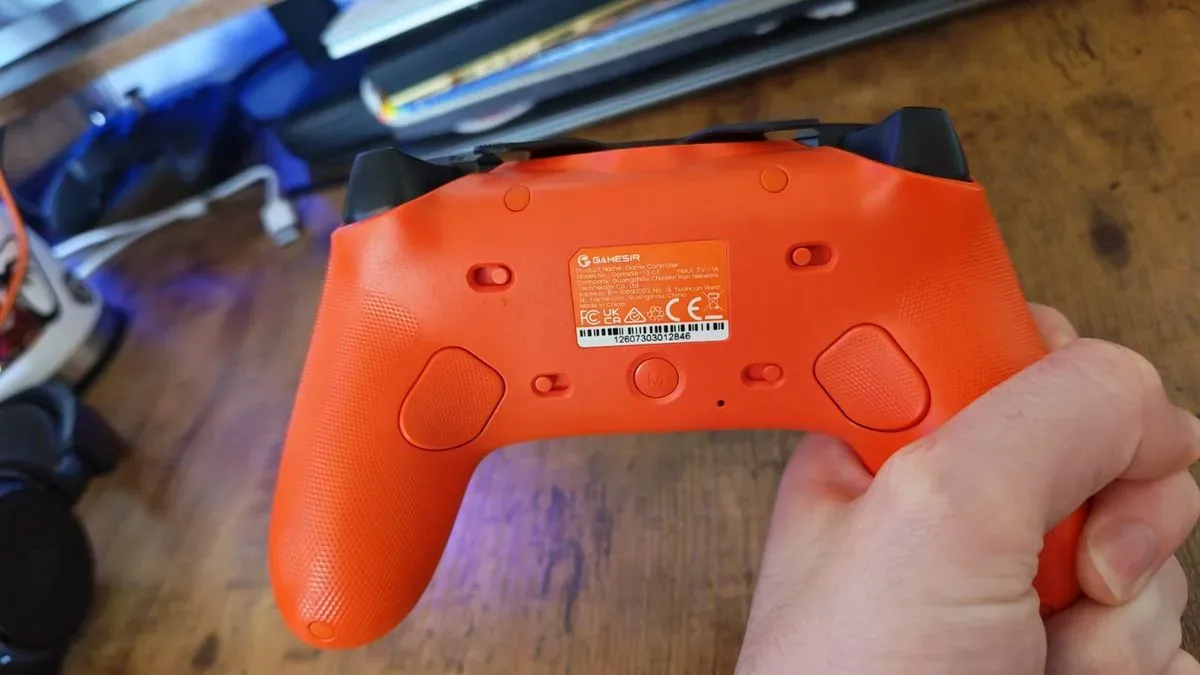
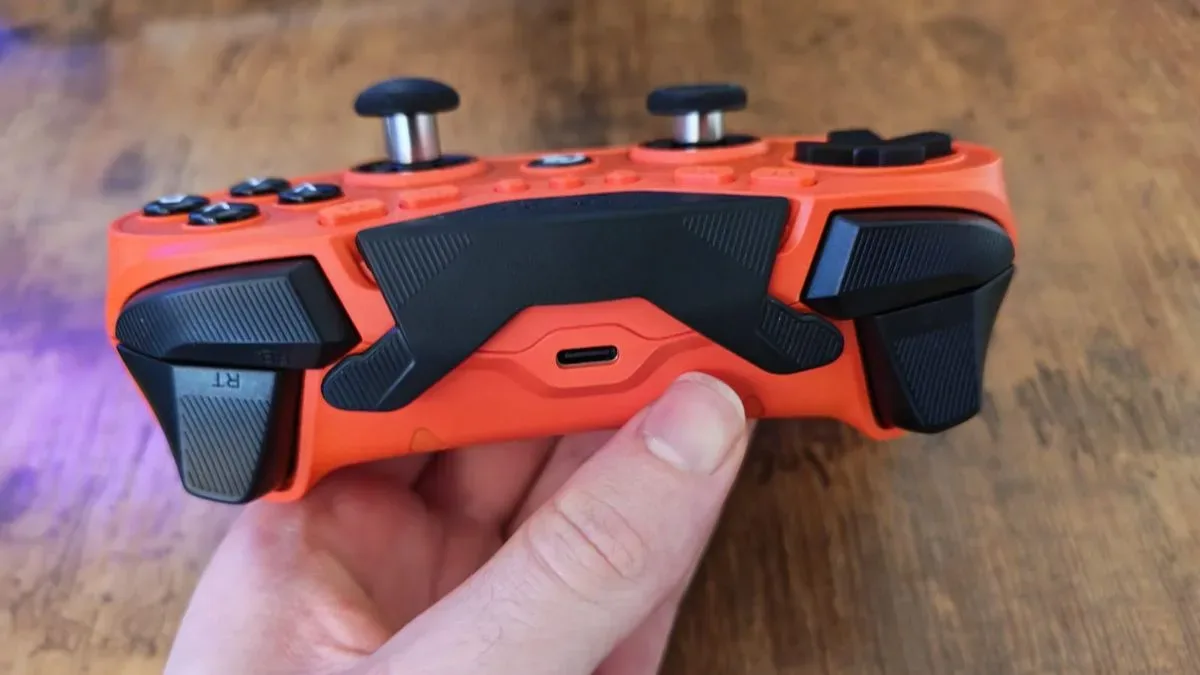
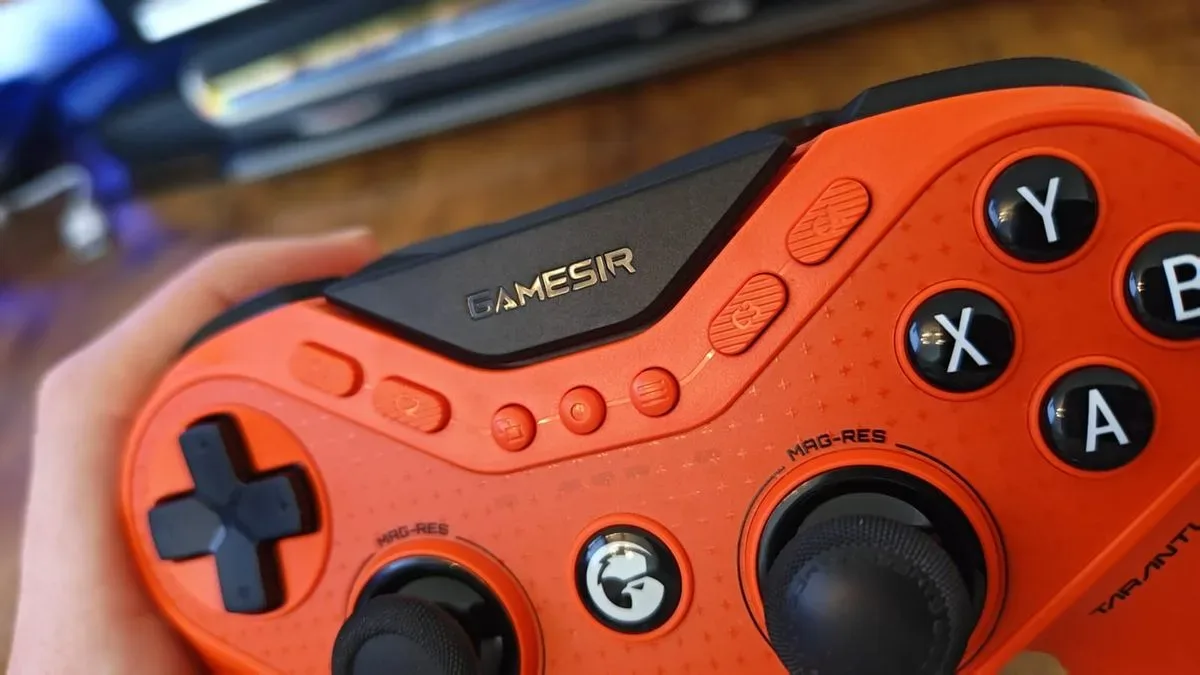
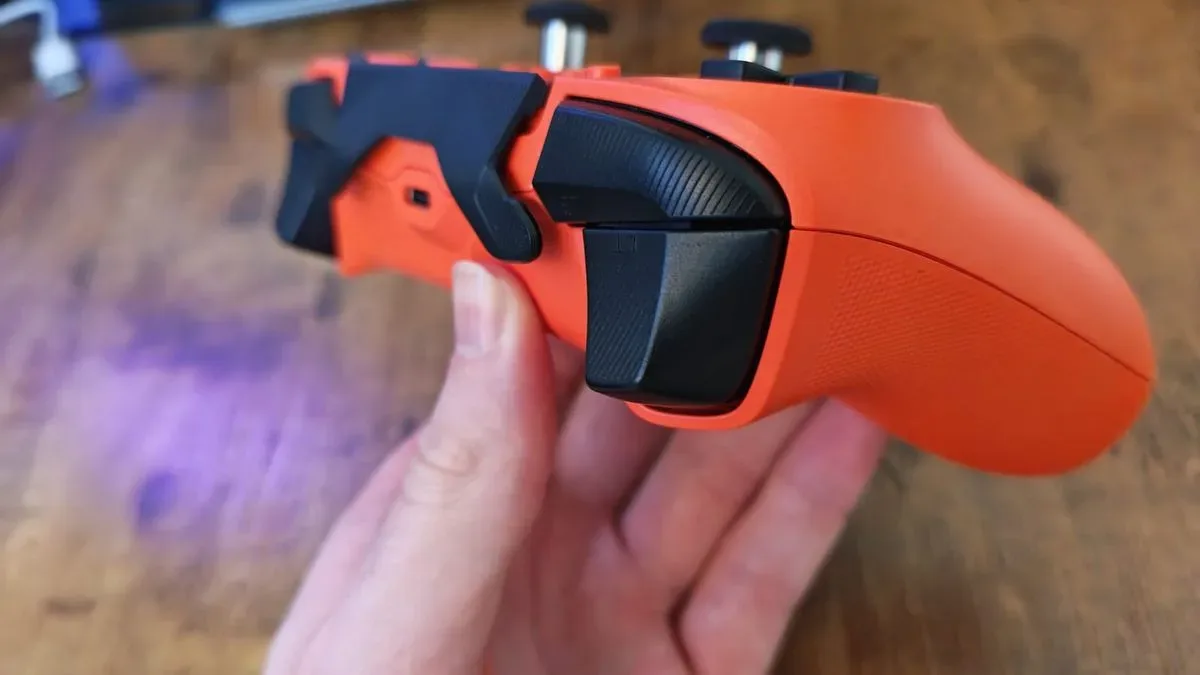
The Tarantula 8K’s core silhouette remains closely aligned with the original: long rounded grips, a four-way D-pad, symmetrical thumbsticks, and a small touchpad that can itself be customized as an additional input. Its grips retain a dotted texture, while a 3.5mm headphone jack remains in place. There are also locking switches for the rear buttons for players who would rather disable those inputs.
Ergonomics appear to be one of the most durable strengths of the Tarantula line. The original was valued as a comfortable all-purpose pad with a layout familiar to players who like the PlayStation-style stick arrangement. That does not disappear in the 8K model. The rounded grips and general hand feel remain central to its appeal, and that matters more than a specification sheet might suggest. A controller that disappears in the hands during a long session can be a better purchase than one with superior numbers but awkward contours.
GameSir has added functionality around the touchpad area as well. Along with the two rear buttons, the controller has two extra shoulder inputs that extend from the end of the touchpad. They provide something closer to a paddle-style action than two isolated buttons, and they use a clicky switch feel intended to match the rest of the controller’s more immediate input character.
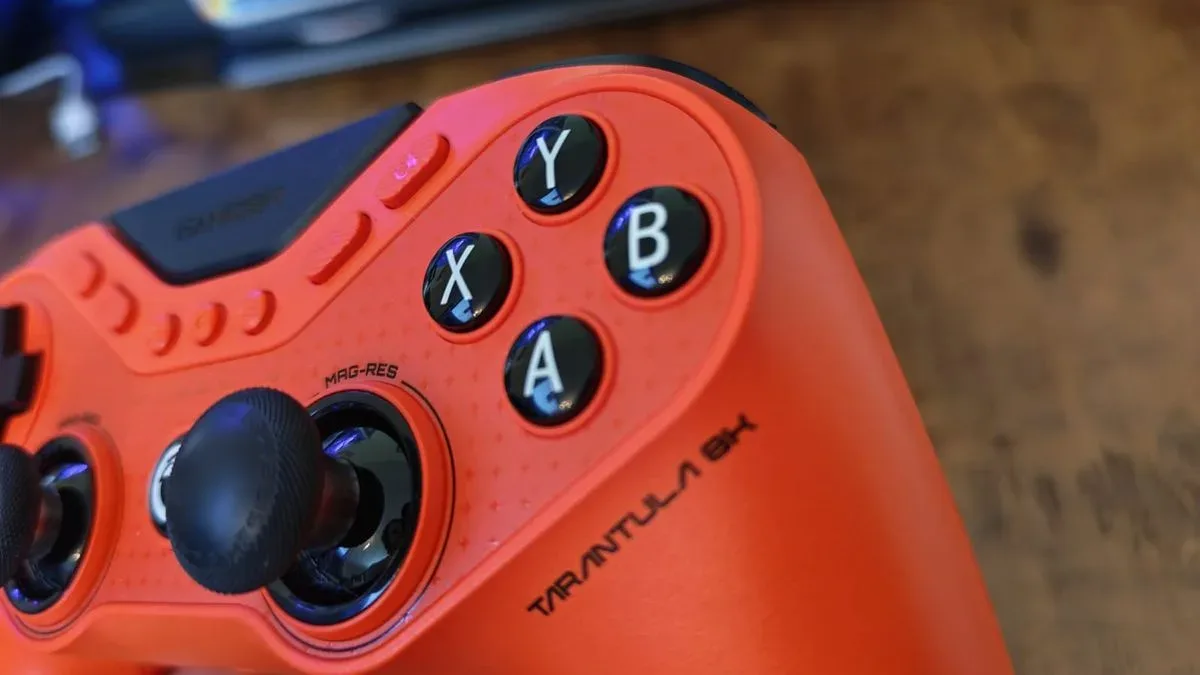
The face buttons have also changed direction. Instead of raised, dome-like membrane buttons, the Tarantula 8K uses flatter, clickier microswitch-actuated controls. The D-pad likewise delivers a pronounced click in each direction. Trigger-stop switches are included, allowing players to alter trigger travel for the type of control response they prefer.
Those are sensible choices for a competitive pad. A microswitch is a switch mechanism designed to register an input with a distinct tactile click, rather than the softer press associated with many membrane buttons. Some players like that crisp confirmation for rapid, repeatable actions; others may prefer a quieter or less aggressive feel. Neither is inherently superior, but the choice tells us whom this controller is trying to serve.
Related coverage includes GameSir Tarantula 8K Review: Elite Precision Comes at the Cost of Comfort Features.
What TMR and 8K polling actually mean
The controller uses GameSir’s updated Gen 2 MagRes TMR thumbsticks, replacing the Gen 1 modules used in the first Tarantula Pro and Cyclone 2. The stick tops are swappable, with taller and shorter alternatives included in the box. That lets players make a practical adjustment: a taller right stick can offer more physical travel for finer aim corrections, while a shorter top can favor faster movements or simply suit a player’s grip better.
TMR, or tunnel magnetoresistance, is a magnetic sensing approach used here for the thumbstick modules. In practical controller terms, the important promise is precise stick detection. It is part of the current push toward sticks designed to offer dependable performance without relying on the same traditional contact-based approach associated with familiar drift concerns. The supplied information supports that the Tarantula 8K feels notably precise, particularly in aiming scenarios, but it does not establish a long-term durability verdict. Buyers should not treat a newer sensing technology as a guaranteed lifetime result without longer-term evidence.
The other headline figure is the controller’s 8,000Hz polling—or report—rate. Polling rate describes how often a device sends its input state to a connected system per second. The GameSir Connect app offers 250Hz, 1,000Hz, 4,000Hz, and 8,000Hz choices. Put simply, a higher figure means the controller can report inputs more frequently.
That figure needs context. It is not a magic button that transforms every game into an esports final. A controller’s perceived responsiveness involves the game, PC, display, connection, settings, and player as well as the pad. The available assessment found the original Tarantula Pro’s 1,000Hz response already satisfactory, while the jump to 8,000Hz was more meaningful as an assurance that controller latency was not the obvious bottleneck than as a universal, dramatic upgrade. At the highest setting, very high sensitivity can also become unwieldy for some users.
That does not make 8K meaningless. In fast shooters, precise right-stick corrections and rapid target changes reportedly felt especially smooth. The Tarantula 8K was described as producing controller aim that comes unusually close to a mouse-like sense of directness, with right-stick flicks encouraged over using left-stick movement to help carry the reticle across a target. Competitive players who are committed to pad input may value that behavior, particularly if a symmetrical layout is non-negotiable.
Software and controls offer meaningful customization
GameSir Connect is central to getting the most from the Tarantula 8K. Beyond changing the report rate, the software offers stick deadzone controls, motion-control customization, RGB adjustments for the strip below the touchpad, and profile management. The controller supports four swappable profiles.
A deadzone is the small area around a stick’s resting center where movement is deliberately ignored. It can prevent accidental input from minute stick movement, but excessive deadzone can make an analog stick feel slow or imprecise at the start of a movement. The reported experience found the out-of-box deadzones well set, with no immediate need to change them even at the 8K setting.
Additional inputs can be programmed either through the controller’s rear M button or with deeper software configuration. The extra face buttons can be mapped to macros or game functions. A macro is a programmed input sequence assigned to one button; how useful it is will depend on the game and its rules. Players should always check a game’s competitive policies before assuming macros are acceptable in online play.
There is a practical tension in this feature set. The Tarantula 8K gives its target audience plenty to tune, but it does so in a package that is unapologetically wired. That suits a desk-bound PC setup, where a cable is generally less intrusive and where the product’s latency-conscious positioning makes the most sense. It is much less graceful for living-room PC gaming, where a cable running from a machine to a TV area can become a daily nuisance.
The light weight is both feature and compromise
The removal of vibration motors is the defining change in how the Tarantula 8K feels. The controller weighs about 180g, compared with roughly 270g for the original Tarantula. It is still described as sturdy rather than cheap, but it has much less heft in hand.
For some players, that will be exactly right. A lighter controller can feel quick, low-effort, and less tiring over competitive sessions. If vibration is distracting rather than immersive, omitting rumble is not a loss at all. The Tarantula 8K clearly seems designed for people who prioritize direct input and a sporty feel over a more weighty, theatrical presentation.
For others, however, vibration is a meaningful part of playing. Rumble can communicate contact, recoil, engine strain, road surface, or an oncoming loss of traction without requiring the player to look away from the action. In the reported testing, the absence was especially felt in Forza Horizon 6 and Tennis Elbow 4, where feedback would ordinarily help convey braking force, engine work, or on-court events. The same concern applied even when games were otherwise enjoyable and the controller’s ergonomics remained comfortable through long stretches.
This is where the Tarantula 8K stops being a straightforward sequel to the earlier all-rounder. It is not simply the old controller with faster sticks. It asks buyers to trade broad-use comfort features for a lighter wired design and a high report-rate ceiling. That is a coherent product strategy, but it is also a much more divisive one.
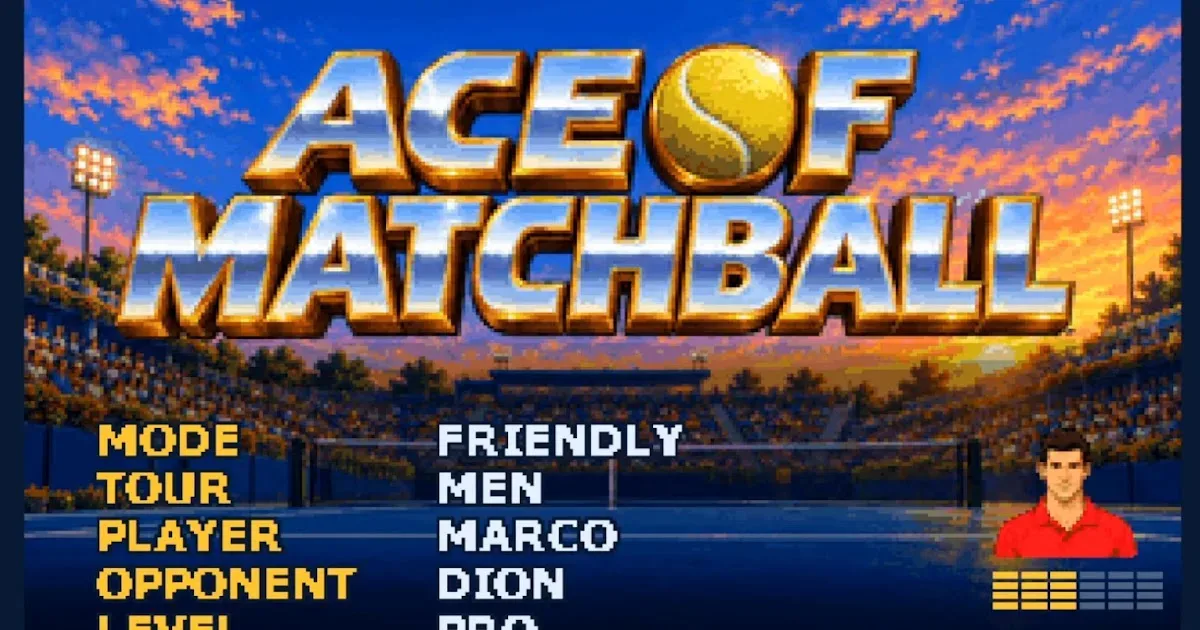
For a gaming perspective on tennis beyond the controller hardware conversation, Joking Joystick has also covered Ace of Matchball’s tennis-focused return on Amiga 1200.
Who should consider it—and who should wait
The Tarantula 8K makes the strongest case for a specific PC player: someone who plays competitively at a desk, wants symmetrical sticks, likes crisp microswitch controls, prefers a very light controller, and will genuinely make use of report-rate and profile adjustments. It also has appeal for players who regard rumble as unnecessary noise and want the most direct possible connection between stick movement and on-screen response.
- Consider it if you want wired PC play, a 180g design, symmetrical TMR sticks, trigger stops, several remappable inputs, and up to 8,000Hz polling.
- Think carefully if you divide your time between shooters and games where tactile feedback adds to the experience, such as racers, sports titles, or cinematic single-player games.
- Wait for more information if wireless play and vibration are requirements. The announced Ultra 8K PC model is intended to include both, but no release date was available.
The current model is not short on capability. It preserves the Tarantula’s comfortable shape, improves its input options, and offers serious customization. Yet its most important story is not that 8K polling exists; it is that a well-liked versatile controller has been recast as a specialist device. For the right competitive player, that focus may be the whole point. For anyone hoping for the original Tarantula Pro’s easy, do-everything charm with modernized internals, the missing wireless connection and rumble motors remain difficult to ignore.