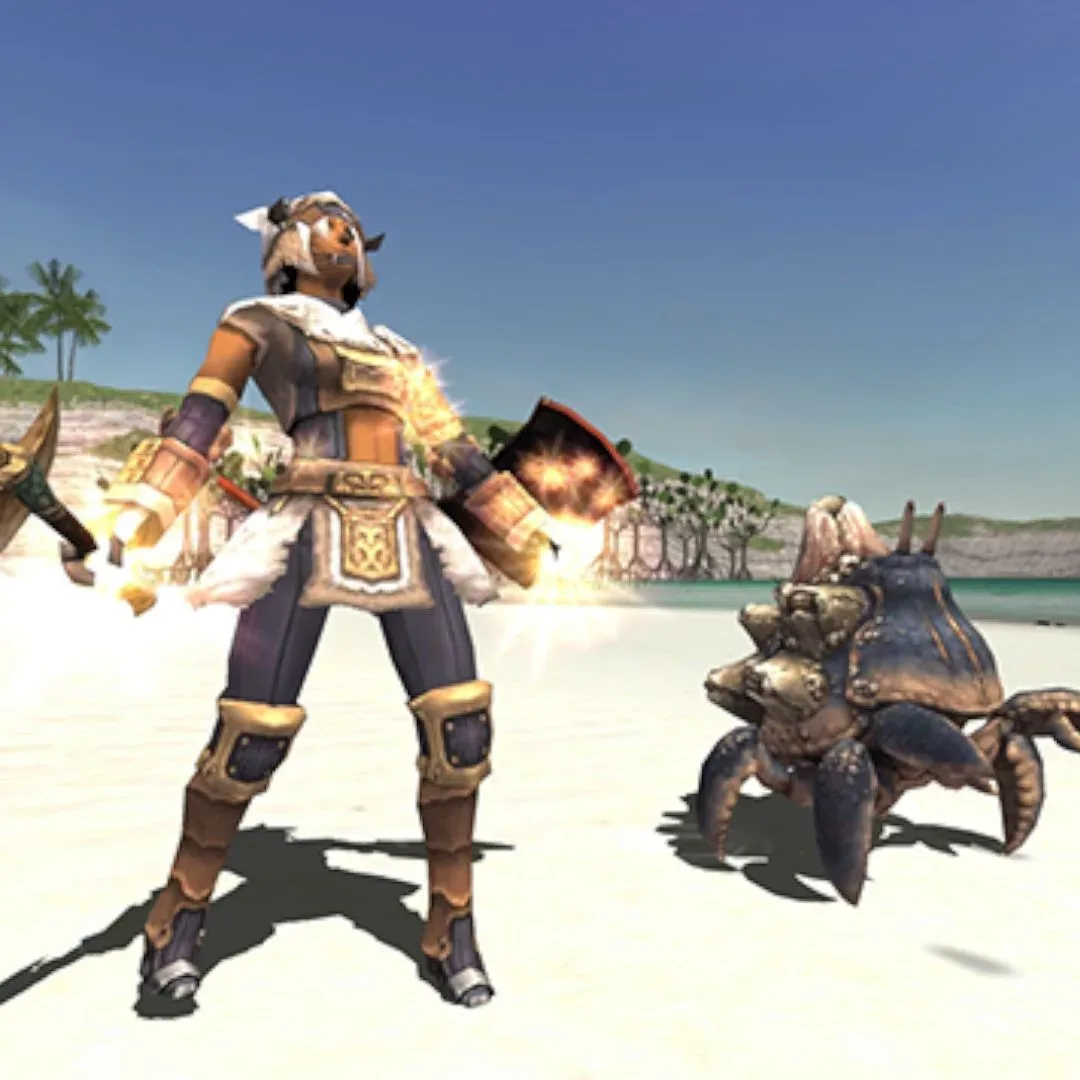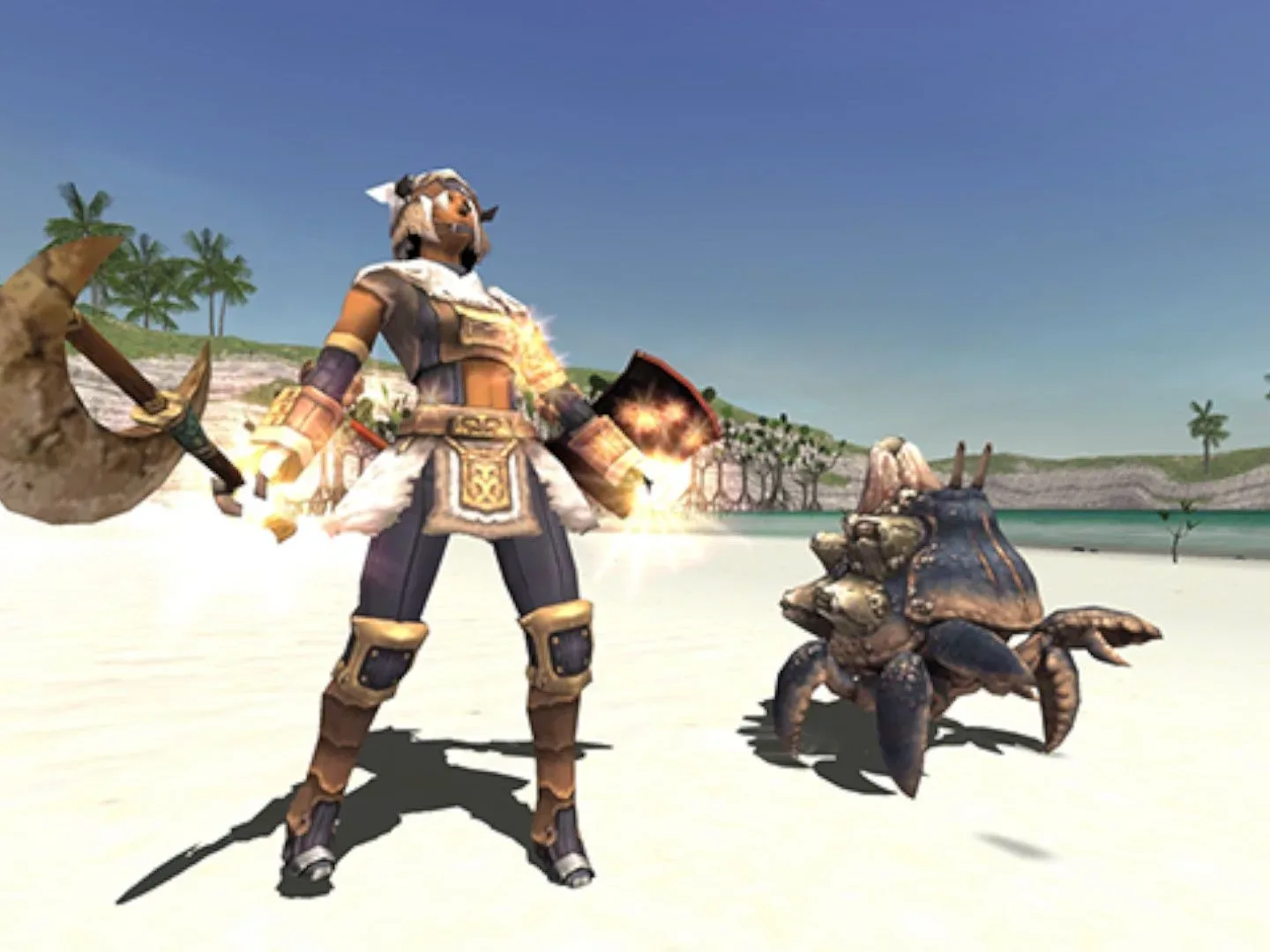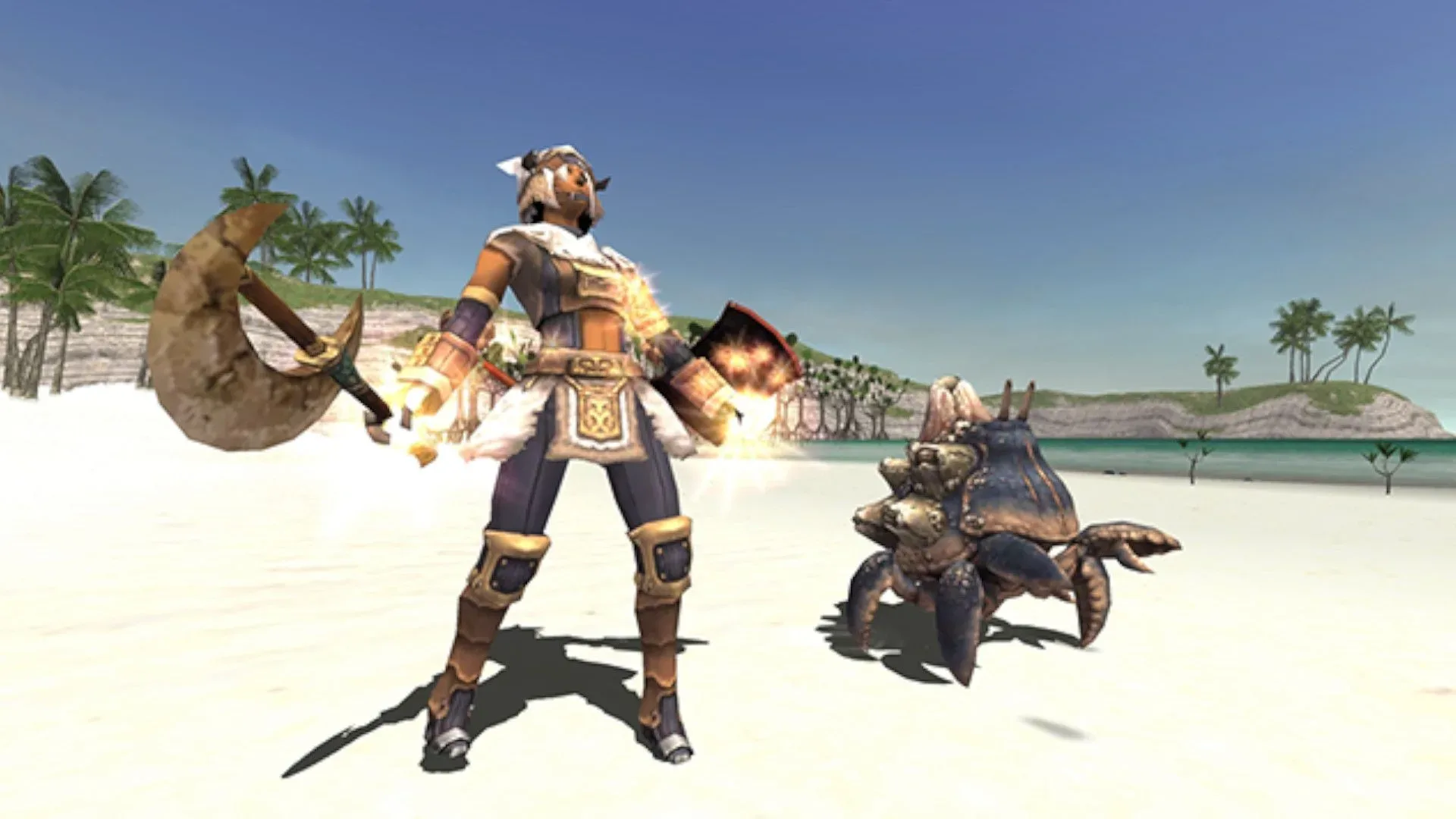
Final Fantasy 11 has substantially widened its free trial. New players can now play without a time limit and progress to level 75 before needing to upgrade. The trial previously ended after two weeks and stopped progression at level 50, two limits that made it difficult to get comfortable with an MMO built around learning its systems over time.
The revised offer is live following an announcement earlier in the year. It is not an unrestricted version of the full game: free-trial accounts are limited to the base game, cannot enter expansion content, and face several deliberate limits on social and economic activity. Still, removing the clock is a meaningful change for a long-running game whose appeal can depend on patience, experimentation and finding a group that suits a player.
What has changed in the Final Fantasy 11 free trial?
The two core changes are straightforward:
- No time restriction: trial players are no longer locked out after two weeks.
- A higher level ceiling: the trial cap has increased from level 50 to level 75.
Those revisions matter together. A level cap determines how far a character can advance, but a time limit determines how quickly a newcomer must absorb the game and decide whether to pay. Raising the cap while retaining a two-week deadline would still have put pressure on players to rush through unfamiliar systems. By eliminating that deadline, the updated trial gives people room to move at their own pace.
That is especially relevant to Final Fantasy 11’s reputation as a more intricate, player-directed MMORPG. “Player-directed” here does not mean the game has no structure. Rather, it describes an experience where players may spend more time deciding what to pursue, exploring, understanding interconnected mechanics and forming relationships with other players, instead of moving through a highly streamlined sequence of attractions.
For curious newcomers, the practical upside is simple: an early character no longer has to serve as a two-week audition. Someone can take breaks, learn gradually, or revisit the game after bouncing off its opening hours without discovering that the trial period has expired in the meantime.
What the expanded trial still does not include
The free trial remains limited to Final Fantasy 11’s base game. It does not include expansion content. A level-75 limit may sound expansive, but it should not be read as access to every part of the game’s overall content catalogue. Players considering the trial should treat it as a longer introduction to the base experience rather than a free path through all of Final Fantasy 11.
There are also restrictions intended to limit the ways a free account can interact with the game’s economy and community tools:
Related coverage includes Final Fantasy 11 Expands Free Trial With No Time Limit and a Level 75 Cap.
- Trial players cannot use the auction house.
- They cannot trade with other players.
- They cannot carry more than 100,000 gil.
- They cannot create a party.
- They can join a party created by someone who owns the full game.
Gil is the game’s currency. The auction house is a player-facing marketplace where items can be bought and sold. Preventing trial accounts from accessing that marketplace or trading directly removes obvious routes for moving currency and items between accounts. The 100,000-gil carrying limit works in the same direction.
These measures appear designed to curb gold farming: the practice of repeatedly gathering in-game currency, often for transfer or sale. In an online game, a free account with unlimited playtime can be attractive to bad actors if it can freely accumulate and move valuable currency. Limits on trading and auction-house access reduce that risk, even though they also make the trial less convenient for ordinary players.
Virtual-currency systems are increasingly part of wider conversations about player protections and clarity in games, including scrutiny of how companies present and manage digital currencies. Consumer authorities have also pressed major game companies on virtual-currency pricing and protections, although that broader issue is distinct from Final Fantasy 11’s anti-farming trial restrictions.
Party access is available, but not on trial players’ terms
The party rule is arguably the most important day-to-day limitation. Trial players cannot start their own parties, but they can accept an invitation to one launched by a player with the full game. That means social play is possible, yet a trial account depends on a subscriber to take the lead.
For a new player joining alone, this can create a practical hurdle. They cannot simply decide to organize a group themselves. For someone arriving with a friend who already owns the game, however, the limitation is more manageable: the full-game player can establish the party, guide the newcomer and help set the pace.
That arrangement reflects a wider tension in free MMO trials. Developers want prospective players to experience the social side of an online world, because that social side can be central to whether the game clicks. At the same time, unrestricted account creation and unrestricted social or economic tools can be abused. Final Fantasy 11’s approach allows trial players into subscriber-created groups while withholding the ability to initiate them.
It also makes an experienced companion particularly useful. Final Fantasy 11 is described as having esoteric systems—systems that may be unfamiliar or unintuitive without context—and an emphasis on exploration at a player’s own pace. A knowledgeable player cannot remove every friction point, but they can make the opening stages less opaque and ensure that a free-trial account has a route into group play.
Why no time limit is a larger change than it first appears
Many game trials are evaluated by their formal limits: number of levels, zones or features included. In a complex online game, time can be the most consequential limit of all. A short trial pushes a new player to optimize their first experience: pick a direction, learn efficiently, find people quickly and decide whether the game is worth subscribing to before access disappears.
That model can work for an immediately legible game. It is less friendly to one where the learning process itself is part of the experience. Final Fantasy 11’s systems and player-driven structure may ask newcomers to develop familiarity before they can fairly judge the game’s appeal. A player who only logs in occasionally, or who wants to explore without a checklist, was at a clear disadvantage under a two-week cutoff.
The unlimited trial changes the decision from “Can I understand enough in 14 days?” to “Do I want to continue within the trial’s content and account restrictions?” That is a more reasonable question for people testing an older MMO with a reputation for depth.
It does not make the game universally accessible overnight. The base-game-only boundary, market restrictions and party-creation limitation remain real constraints. Nor does an increased cap guarantee that every player will enjoy the more demanding structure. What it does is remove an artificial urgency that could prevent interested players from giving the game the time it needs.
How it compares with Final Fantasy 14’s trial model
The expanded offer will inevitably invite comparisons with Final Fantasy 14, another Final Fantasy MMORPG whose free trial is frequently discussed by its community. The two games share some familiar protective measures for trial accounts, including restrictions around trading and social functions.
But they are not presented as identical experiences. Final Fantasy 14 is characterized as a more modern, theme-park-style MMO: an approach generally associated with accessible, structured activities and a strong guided progression loop. Its prominent hooks are described as story and accessible gameplay.
Final Fantasy 11, by contrast, is characterized as crunchier and more open-ended. “Crunchy” is shorthand for a game with more systems to parse and more mechanical detail to understand. It is not automatically praise or criticism; it is a warning about expectations. Players looking for clear direction and immediate simplicity may find the older game demanding. Players who enjoy untangling systems, finding their own goals and slowly learning a world may see that same friction as the point.
That contrast is why copying the broad idea of a generous trial matters more than copying every feature one-for-one. Final Fantasy 11 does not need to become Final Fantasy 14 to benefit from a lower-pressure introduction. It needs prospective players to have enough time to discover whether its own particular rhythm works for them.
Who should try it now?
The new trial is best suited to players who are interested in Final Fantasy 11 but were put off by the old two-week deadline, as well as MMO fans willing to approach an older, more systems-heavy game on its own terms. It may also be a strong fit for friends where at least one person owns the full game and can create parties for the group.
Before starting, it is worth setting expectations accurately. The trial offers unlimited time, not unlimited access. Expect the base game only; do not expect expansion content, direct player trading, auction-house use or the ability to form your own party. Think of level 75 as a generous progression boundary, not an assurance that every system and destination is available.
For players who prefer to learn slowly, that trade-off is likely favorable. The former trial made exploration feel like it had to be completed under a deadline. The expanded version preserves guardrails around the economy and social tools, but gives the actual learning process room to breathe. For a game still operating 24 years later, that extra breathing room may be the most valuable part of the update.