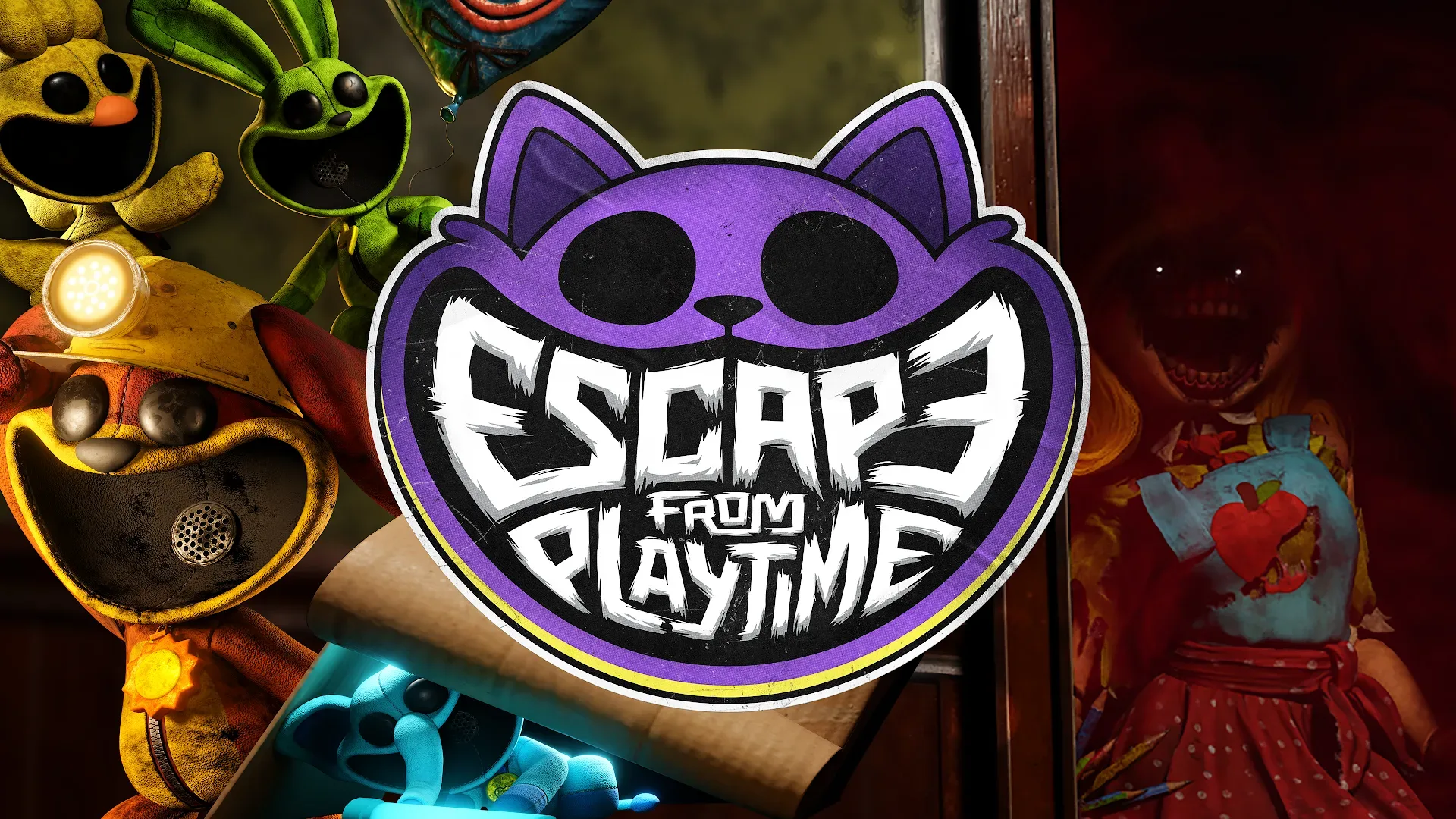
Escape From Playtime, a cooperative survival-horror game set inside the Poppy Playtime universe, has begun a limited-time open beta. The beta is available through October 4 at 6 p.m. PDT, while the game is scheduled to enter Steam Early Access on October 21, 2026.
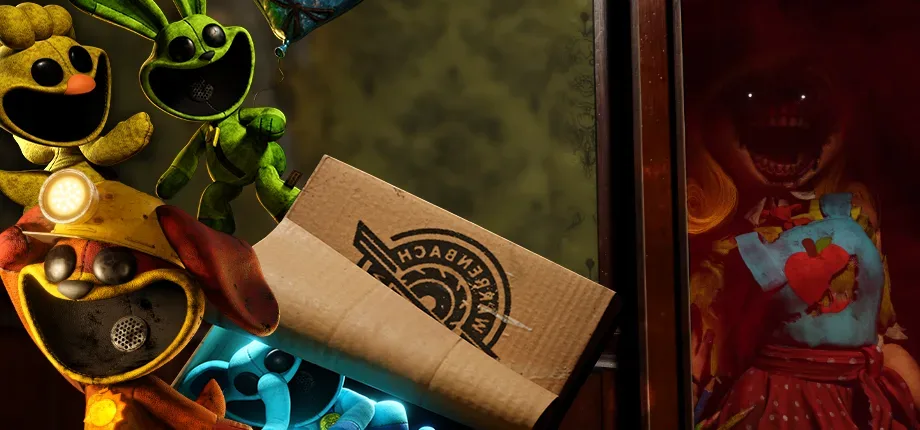
The project shifts the perspective of Playtime Co.’s troubled toy factory. Rather than placing players in the role familiar from the mainline Poppy Playtime games, Escape From Playtime casts them as the Smiling Critters, the grinning plush characters introduced in Poppy Playtime: Chapter 3. That change matters beyond appearances: the game is built around navigating the factory from a critter-sized point of view while gathering and hauling resources under pressure.
Its limited beta arrives following the 28 Games Later horror presentation, a showcase that also included other horror-game news. For a look at the wider event, see our coverage of the 28 Games Later Horror Showcase.
A factory escape built around repeatable runs
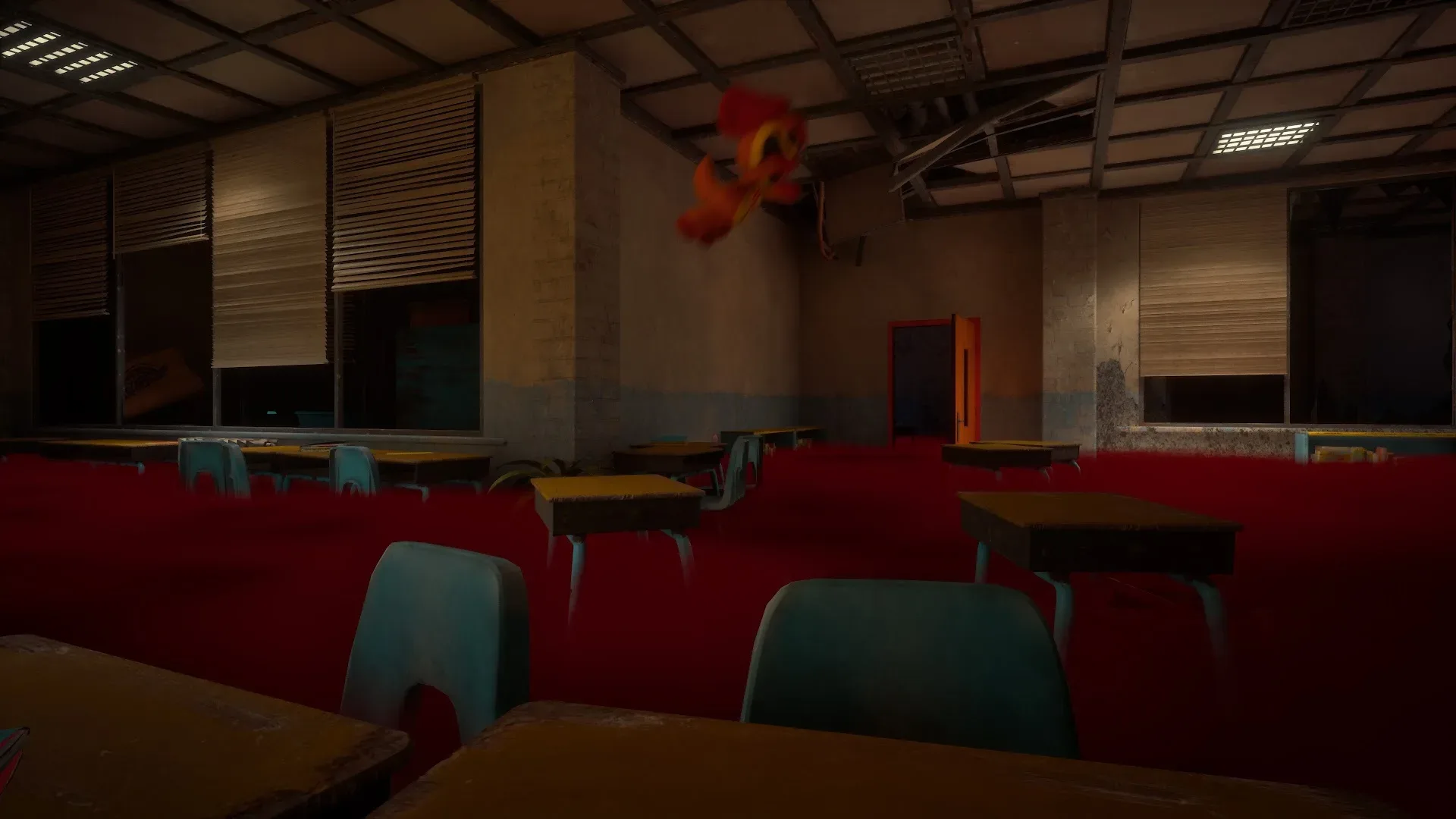
Escape From Playtime is not described as a straightforward, one-way story campaign. Its structure centers on individual runs through sections of the Playtime Co. facility that change dynamically. In practical terms, that means players should not expect every attempt to present precisely the same layout or moment-to-moment route.
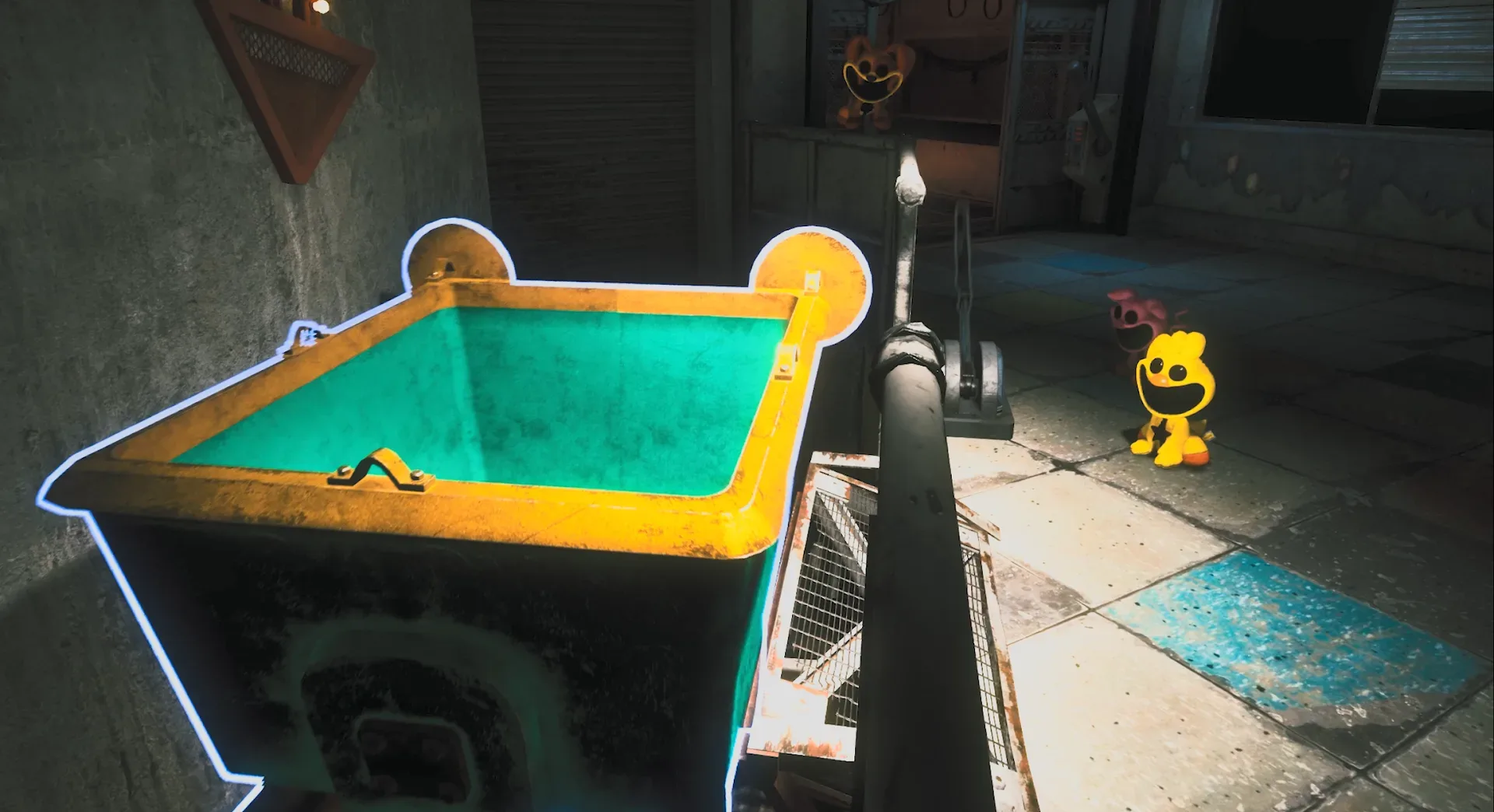
The stated objective is to transport resources for an entity called the Voice. Getting those materials from one place to another is not merely a background task: resource gathering and material hauling are core parts of each run. Teams will also encounter puzzles, acrobatic traversal, stealth situations and light combat while avoiding rejected Playtime Co. creations.
“Light combat” is worth reading literally. The announced feature set includes combat, but it is presented alongside evasion, movement, hiding and puzzle solving rather than as the game’s sole or dominant interaction. The survival-horror tension appears to come from deciding how to move through dangerous spaces, where to take supplies and when avoiding a threat is safer than confronting it.
The factory’s changing sections could be especially significant for a game organized around repeated excursions. A static route eventually becomes a set of memorized instructions; dynamic spaces can keep resource delivery and escape planning uncertain. That does not automatically mean every room, challenge or encounter is randomized in the same way, and the available details do not define the exact system. What is clear is that runs are intended to vary, rather than simply repeat one fixed sequence.
Solo play is supported, but cooperation is only one option
Escape From Playtime supports solo play as well as groups of up to four players. That makes the game approachable for someone who wants to face the factory alone, while retaining a co-op format for groups looking to divide responsibilities.
Related coverage includes Escape From Playtime Beta Runs Until Oct. 4 Ahead of 2026 Early Access.
In a team, players can cooperate, split up or betray each other. Those choices give the game a more unstable social structure than a purely cooperative objective game. Carrying resources may reward a group that coordinates its movements, while scouting, hiding and alternate routes can create reasons to separate. Yet separation can also leave a player without immediate help if a rejected creation appears or if a puzzle requires another person nearby.
The betrayal option is particularly notable because it changes how players must interpret teamwork. A teammate may be helping because the group’s objectives align, because they need protection for the moment, or because a later opportunity could benefit them more. The announcement does not detail the exact mechanics or rewards attached to betrayal, so it would be premature to assume a particular voting, extraction or elimination system. Still, its inclusion signals that trust is intended to be part of the pressure.
What proximity voice chat means here
The game also uses proximity voice chat. Unlike a conventional party-wide voice channel, proximity chat generally bases who can hear a player on how close characters are to each other in the game world. Escape From Playtime explicitly frames communication as carrying risk.
That feature can make a practical difference to group play. Players who stay close can exchange immediate information and coordinate a haul, but may have fewer opportunities to quietly investigate other routes. Players who move away may preserve independence or secrecy, but lose contact with the group. In a game that permits both teamwork and betrayal, the communication system also gives conversations an in-world consequence instead of treating voice chat as an entirely separate layer.
The announcement does not say exactly what reacts to spoken communication, how distances are measured or what controls are available for voice chat. Players should therefore treat the broader premise—not a detailed ruleset—as the confirmed information: talking can be useful, but it is not presented as consequence-free.
Tools, routes and hiding places create multiple approaches
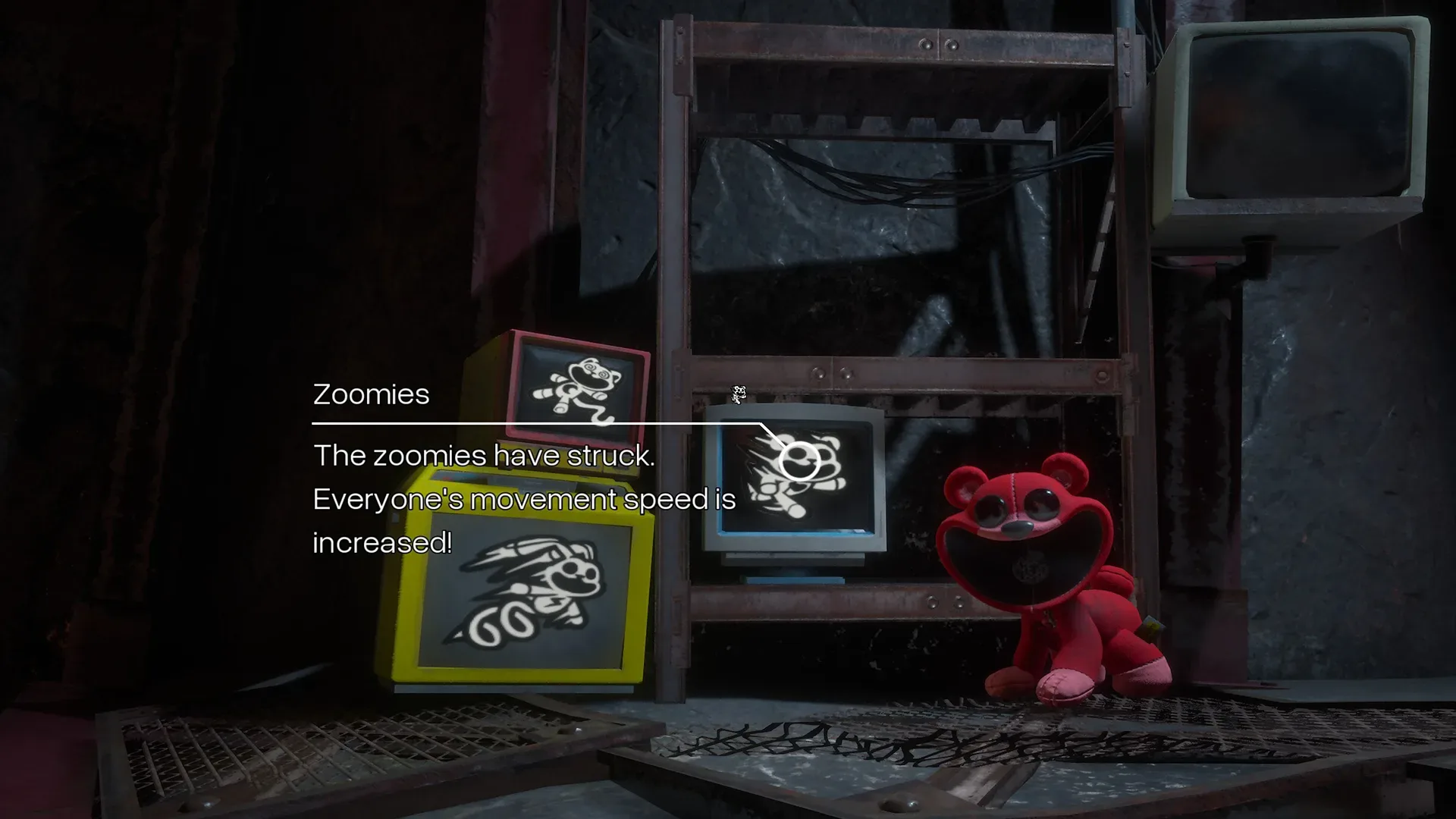
The core loop combines scavenging for tools with navigating puzzles and threats. Players will be able to use hiding places and alternate routes, which suggests that progress is not meant to depend on only one obvious path through every area. A hiding spot provides a temporary way to break line of sight or wait out danger; an alternate route can offer a different balance of distance, exposure and supplies.
For cooperative groups, those systems open up meaningful choices without requiring that every player perform the same job. One player might search for useful equipment while others focus on a material haul or puzzle. A group could remain together to reduce isolation, or split into smaller units to cover more ground. Neither approach is guaranteed to be superior based on the information announced, because the facility’s changing sections and the threats within them are part of the uncertainty.
For solo players, the same ingredients imply a different rhythm. Without teammates to watch routes, share information or assist with objectives, the value of stealth, tool scavenging and route selection may become more immediate. Solo support is confirmed, but the announcement does not specify whether objectives, threats or resource requirements adjust between solo and multiplayer runs. That is an important detail to watch for as the beta and Early Access period continue.
How Escape From Playtime connects to Poppy Playtime
The game is set in the established Poppy Playtime setting and uses the Playtime Co. factory as its central location. Its playable Smiling Critters provide the clearest direct link to Poppy Playtime: Chapter 3, where those characters were introduced.
Escape From Playtime will also connect to the broader lore over time. New lore is planned to unlock as the game receives updates. That wording suggests an ongoing model for story material rather than a single, fully static set of narrative revelations at launch. It also fits the Steam Early Access plan, where the game can evolve after its first public release.
It is important to separate what has been established from what has not. The game has confirmed ties to the wider Poppy Playtime story, the Smiling Critters and the Playtime Co. factory. However, the available information does not identify every character, explain the Voice’s identity, detail the rejected creations, or map out how future lore will be delivered. Those are questions the beta may help frame, but they remain unanswered rather than confirmed plot points.
Open beta timing and the path to Early Access
The immediate window is short: the open beta runs until October 4 at 6 p.m. PDT. Players can access it through FirstLook.gg. A new teaser trailer has also been released alongside the beta.
The next stated milestone is Steam Early Access on October 21, 2026. Early Access is a release model in which a game is made available before its eventual full version, allowing development to continue through updates. In Escape From Playtime’s case, the promise of lore arriving with updates makes that framework especially relevant: the announced version is positioned as an evolving game rather than an endpoint.
That does not establish the precise contents of the Early Access build, a roadmap, its duration, its pricing or a full-release date. None of those details have been specified here. It does establish the sequence: a brief public beta first, then the Steam Early Access launch later in October.
What players can reasonably expect from the beta
For players considering the beta, the confirmed appeal is a Poppy Playtime-themed survival-horror loop that mixes hauling, scavenging, traversal, puzzles and avoidance in sessions designed to change. The ability to play alone or with up to three other people broadens the game’s intended audience, while proximity voice chat and betrayal mechanics suggest that multiplayer tension may emerge from the group as much as from the factory itself.
The beta should not be treated as a complete account of the finished game. Its limited availability and the later Early Access date indicate that it is an opportunity to experience the current build before the next release phase, not a guarantee that every future system, area or lore element has already been shown.
For now, the clearest proposition is a dangerous trip through Playtime Co. from a newly scaled-down perspective: collect what the Voice demands, find a viable route, decide whom to trust, and try not to become another discarded thing in the factory.