Most deckbuilders ask a blunt question: can you assemble enough damage, defense, economy, or chaos to beat the next encounter? Dreadline Express appears to be asking something much more unsettling: what do you know, who do you choose to understand, and what does that knowledge make possible aboard the last train carrying humanity?
Developed by Czech solo creator Dave Konecny, Dreadline Express is planned for PC in October 2026, though a specific launch day has not been provided. Its Steam description uses the term “psychological horror Metroidbrainia,” which is suitably strange but also useful shorthand for its central idea. This is a first-person-feeling, exploration-led horror mystery where collected cards represent information. Those cards are not primarily ammunition for turn-based fights. They are tools for navigating dialogue, interpreting objects, opening routes, and pushing deeper into an opaque story.
The concept is bizarre in the best possible train-carriage way. A deckbuilder built around learning things rather than hitting things has immediate potential for a mystery game, especially one set in a confined world full of people who clearly know more than they are saying. Dreadline Express also takes that premise into moral territory: its passengers face a ritualized sacrifice, and progress may depend on deciding whose story receives help and whose does not.
A train full of unanswered questions
Dreadline Express begins with its protagonist awakening in a cabin with little memory of their past. Observation and interaction are the route to reconstruction. By examining the cabin and its surroundings, the player starts gathering details about their identity, their family, the train, the passengers, and the disaster that has left this locomotive as the final human train in existence.
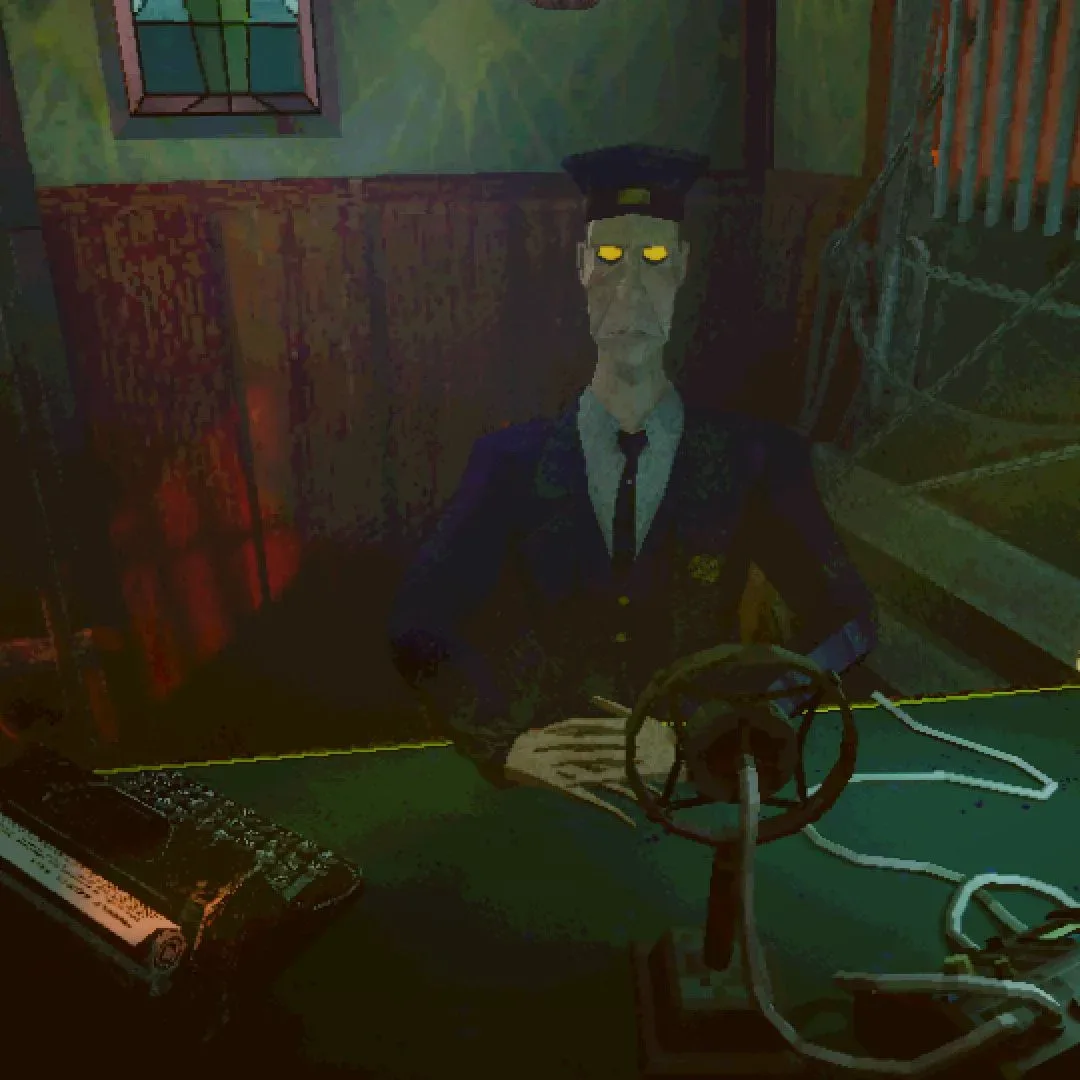
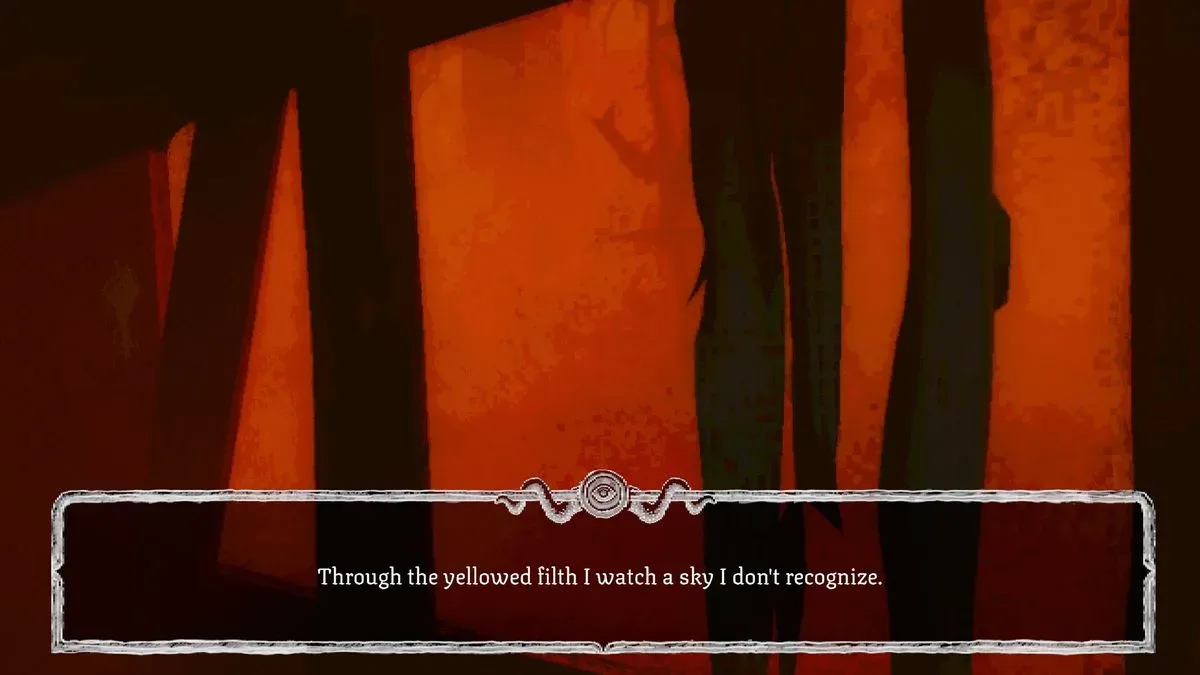
The exterior is not exactly selling a peaceful commuter experience. The view beyond the windows includes a torn-looking sky and dark tentacles moving below it. Inside, the train is shadowy, tight, and intermittently lit by stark bursts of color. Narrow corridors, flickering visuals, and swaying orange-yellow lamps create a place that sounds deliberately uncomfortable to inhabit. It is a horror environment, but one whose threat is carried as much through atmosphere and implication as through the visible weirdness outside.
That confined setting matters to the game’s premise. A train is naturally linear, but its cabins, locked doors, objects, and passengers can make linear space feel like a knot. Dreadline Express uses cards to turn that knot into an investigatory system. Players appear to be encouraged to revisit people and places once a new fact, memory, or topic has entered the collection.
Cards are knowledge, not combat moves
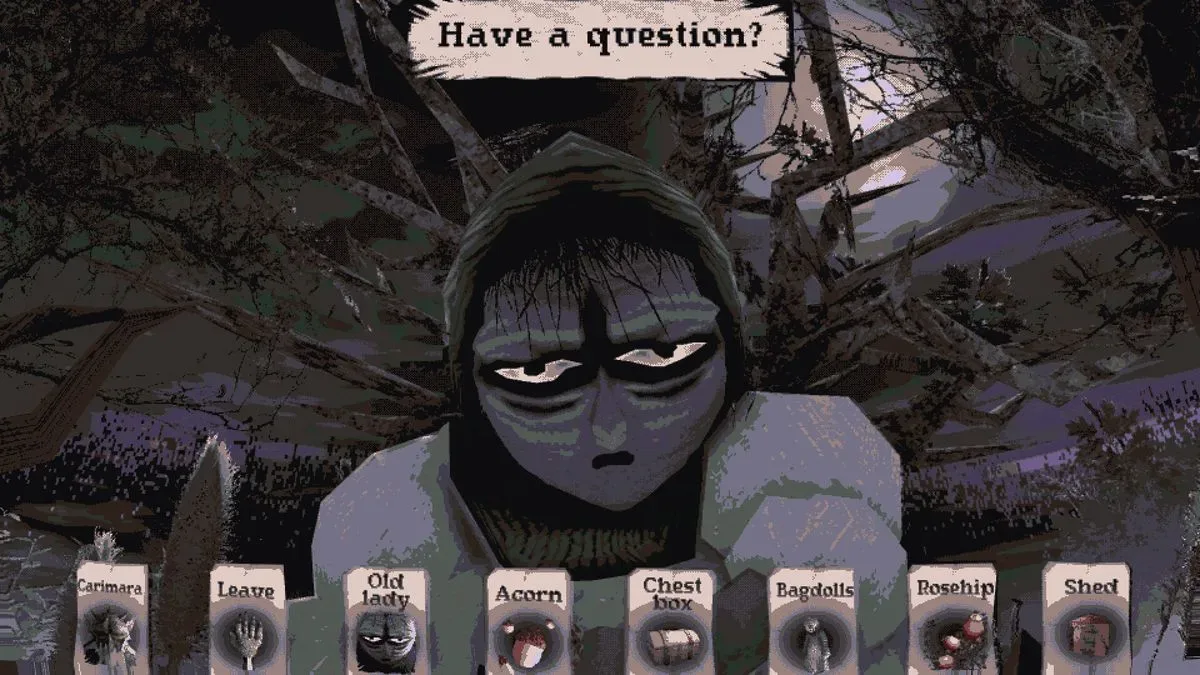
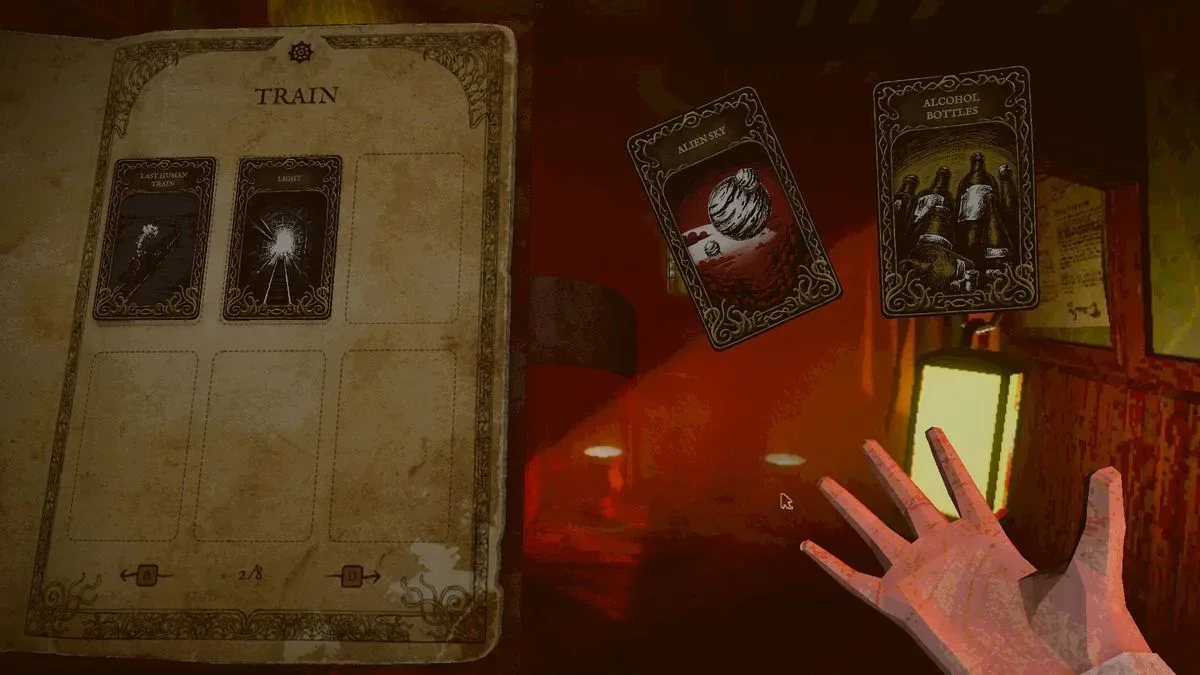
Every discovered card is added to an album organized by subject. Rather than presenting a conventional combat hand, the system lets players select cards and put them into a hand for use in the world. The available cards correspond to particular pieces of understanding: personal background, family details, aspects of the train, and information about the people traveling aboard it.
That hand becomes a kind of portable conversational context. If a character expects an introduction before speaking, equipping and using a personal card may allow the interaction to move forward. A successful exchange can then reveal another finding, which expands the card collection and potentially changes what can be attempted elsewhere. In other words, the deck is a record of accumulated knowledge, while the hand is the subset of that knowledge the player is currently ready to deploy.
This makes Dreadline Express sound closer to an adventure game inventory system than to a roguelike card battler, but with one important twist: information can be recombined. The player can reportedly change the hand freely and test different combinations against a given conversation or obstacle. Text cues above non-player characters indicate useful avenues of inquiry, such as discussing family or asking about a cult. The system should make experimentation less like randomly clicking every dialogue option and more like considering what facts a particular person might respond to.
There is a pleasing thematic symmetry in that design. Mystery games already make players build a mental deck of names, motives, places, and half-understood clues. Dreadline Express externalizes that process. It gives knowledge a card frame, files it into an album, and lets the player actively play it at moments where context counts.
What the “Metroidbrainia” label suggests
The unusual genre label points toward an exploration loop based on intellectual progression. Traditional Metroidvanias often gate paths behind a double jump, a new weapon, a key, or another tangible capability. Here, a barrier may be a door the protagonist cannot interpret, a passenger who will not engage without the correct social opening, or a topic that has not yet become understandable.
That means backtracking can serve a narrative purpose rather than merely asking players to return with a bigger toolkit. A newly obtained card may not just open a previously inaccessible route; it may recast an earlier encounter or make a suspicious detail suddenly meaningful. The strongest version of this structure would make each return visit feel like rereading a chapter after learning a secret that was hidden in plain sight.
It is also a format well suited to players who enjoy probing systems rather than being handed a single highlighted answer. The game’s structure appears designed around trying a card configuration, noting a clue, acquiring a new piece of information, and revisiting an earlier thread. The results will depend on how extensively the game supports those connections, but the foundation is far more distinctive than simply putting a deck interface into a horror game.
The conductor’s request turns knowledge into a moral problem
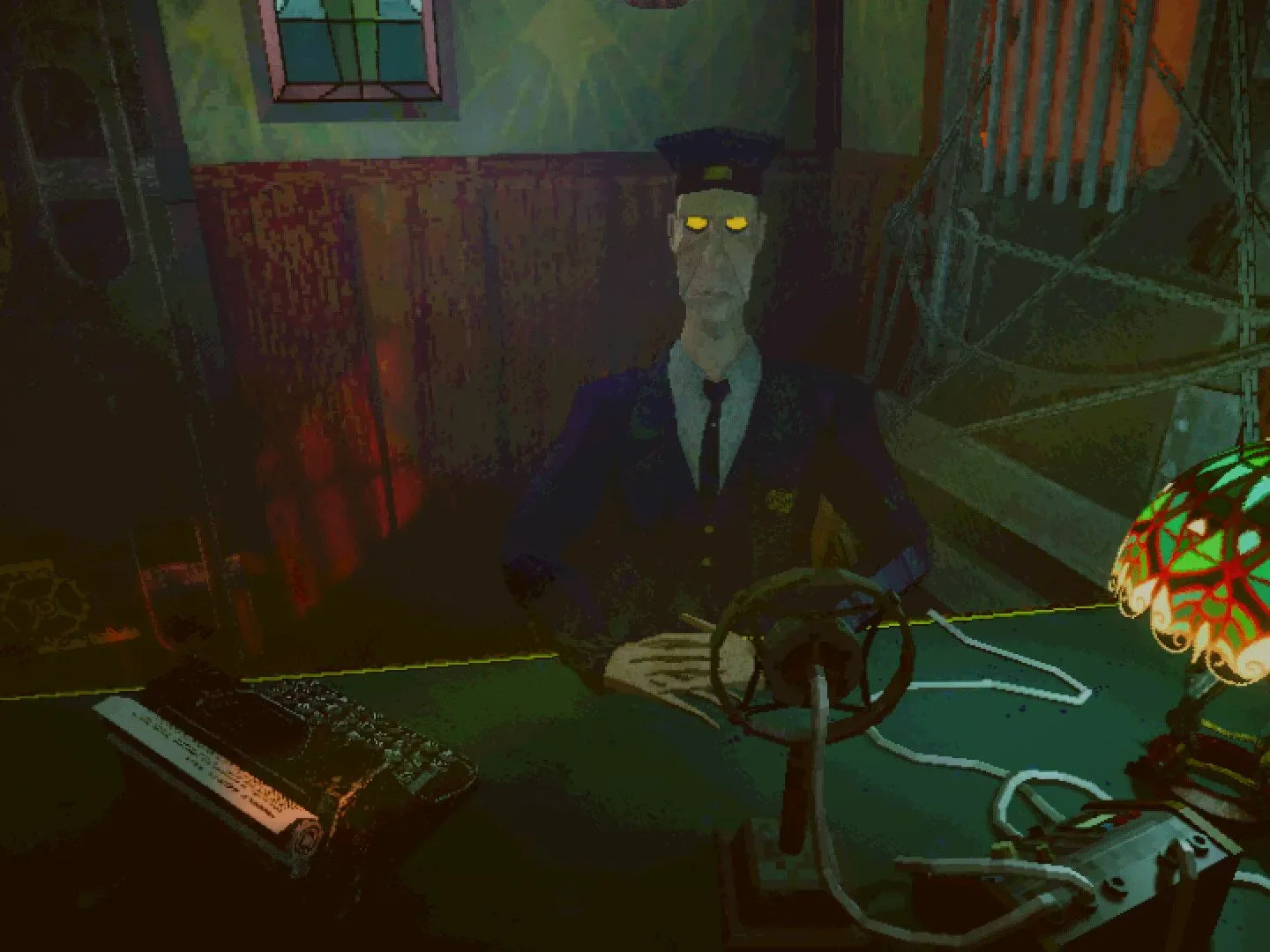
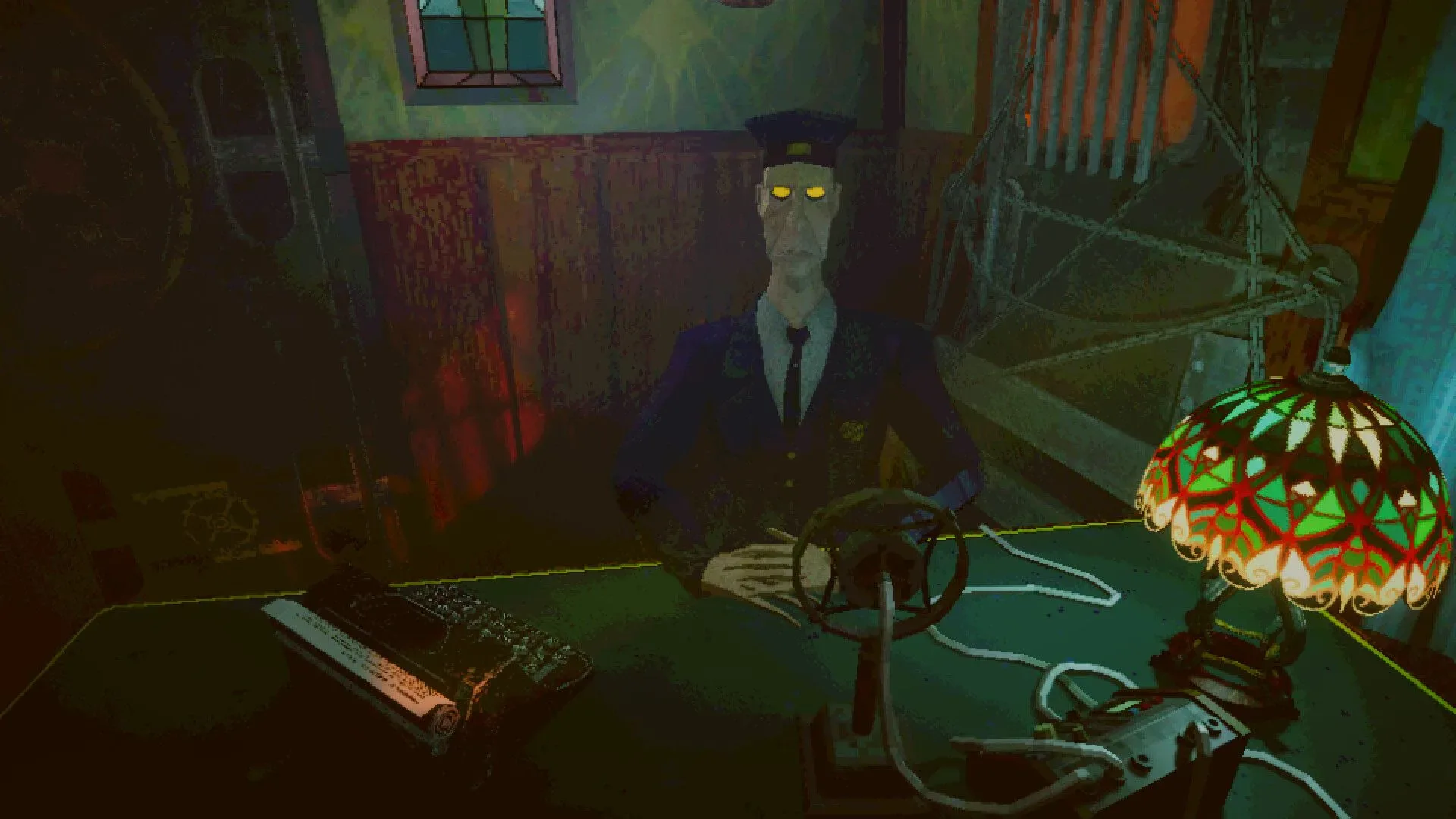
The first major pressure point comes from the Train Conductor. The protagonist is told they have been selected to help determine an appropriate sacrifice. The stated rule is brutally simple: the train cannot continue toward its still-unknown destination without one person being sacrificed, and stopping means death for everybody aboard.
Attempts to appeal for mercy using cards related to the protagonist or their family are not enough to escape the assignment. The player must move through the train and speak with its other occupants while concealing the real purpose of those conversations. Helping one passenger may contribute to another passenger’s fate. The available information frames the task not as a clean morality meter, but as a question of which characters and storylines the player chooses to pursue.
That is an effective way to connect narrative branching to the card system. If cards are knowledge, then knowledge is not neutral. Learning about someone can create an attachment, reveal a reason to protect them, expose a reason to distrust them, or simply make their path more accessible than somebody else’s. A mystery about human survival becomes a story shaped partly by attention: whom did the player take the time to know?
It also makes uncertainty central. The destination is unknown, the train’s rules are frighteningly absolute, and the people on board may have their own agendas. Even the act of satisfying an objective could bring a player closer to something they do not fully understand. That is fertile ground for psychological horror, where the scariest element is often not a creature in the corridor but the possibility that one’s choices have been built on incomplete assumptions.
Gloomy horror with a bookish rhythm
Despite the grim setting and sacrifice premise, the game has been described as unexpectedly cozy. That contrast seems to come from its presentation. Dialogue is delivered through on-screen text rather than voice acting, while the card album encourages players to pause, read descriptions, and consider what they have uncovered. It evokes the slower ritual of studying a strange book by warm light, even as the train itself remains an ominous and claustrophobic place.
That quieter pace could distinguish Dreadline Express from horror games built around constant pursuit. The tension is likely to arise through language, discovery, and difficult decisions as much as movement through the train. Its flashes of bright color amid deep gloom further suggest a stylized approach that can make individual details feel important: a light, a face, an object, or a line of text may become the next clue worth bringing into the hand.
For PC players keeping their systems ready for unusual indie releases, it is also worth remembering that supposed performance shortcuts are not always harmless; our guide explains why MSI Mode is not a secret GPU FPS switch on Windows.
An inventive mystery to watch in October
Dreadline Express has a lot to prove when it arrives. A game based on narrative card synergy needs its clues to feel logical enough for deduction, flexible enough for experimentation, and surprising enough that new combinations do more than open plainly signposted locks. Likewise, a sacrifice-centered branching story will need its passengers to be compelling enough that choosing between them hurts in the intended way.
Still, the known pieces form an unusually promising arrangement: a solitary developer’s surreal train-bound dystopia, an amnesiac protagonist, a card album built from observations, dialogue gates based on selected knowledge, and a survival dilemma that may reshape whose stories continue. With a PC release planned for October 2026 and no precise date yet confirmed, Dreadline Express is positioning itself as a horror mystery where the most valuable card may be the one that changes what the player thought they knew.