Apple’s latest run of hardware announcements has brought an OLED screen to the iPad mini and M6 silicon to both the 24-inch iMac and 14-inch MacBook Pro. The common thread is less about wholesale redesigns than a concentrated specification push: brighter screens, newer wireless standards, on-device AI claims, graphics gains and ray tracing performance all feature prominently.
For people who use Apple hardware around games, creative projects and general-purpose play, the announcements create three very different upgrade conversations. The eighth-generation iPad mini is the most visibly changed product, with a larger OLED display in a lighter body. The iMac keeps its familiar 24-inch all-in-one setup but adds M6 and updated networking. The 14-inch MacBook Pro is the most restrained revision, retaining its existing form while moving from M5 to a 12-core M6 chip.
All three devices are scheduled to become generally available on November 6, with pre-orders opening October 28 for the iPad mini and iMac and the following Wednesday for the MacBook Pro. The important caveat across Apple’s performance comparisons is that they are company-provided, scenario-specific claims rather than independently verified benchmarks.
OLED finally reaches the iPad mini
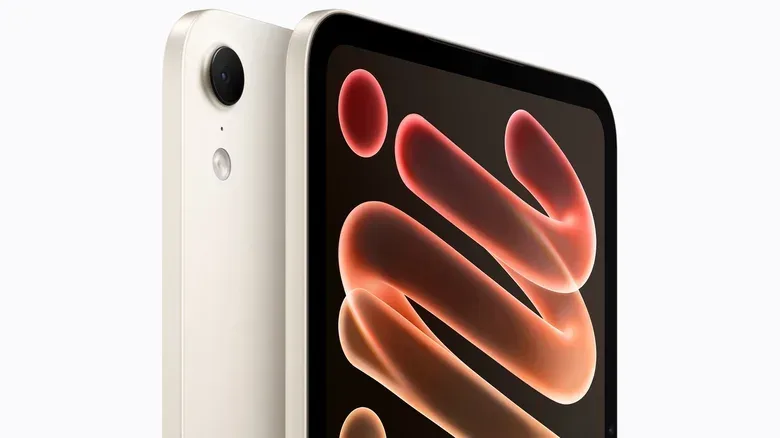
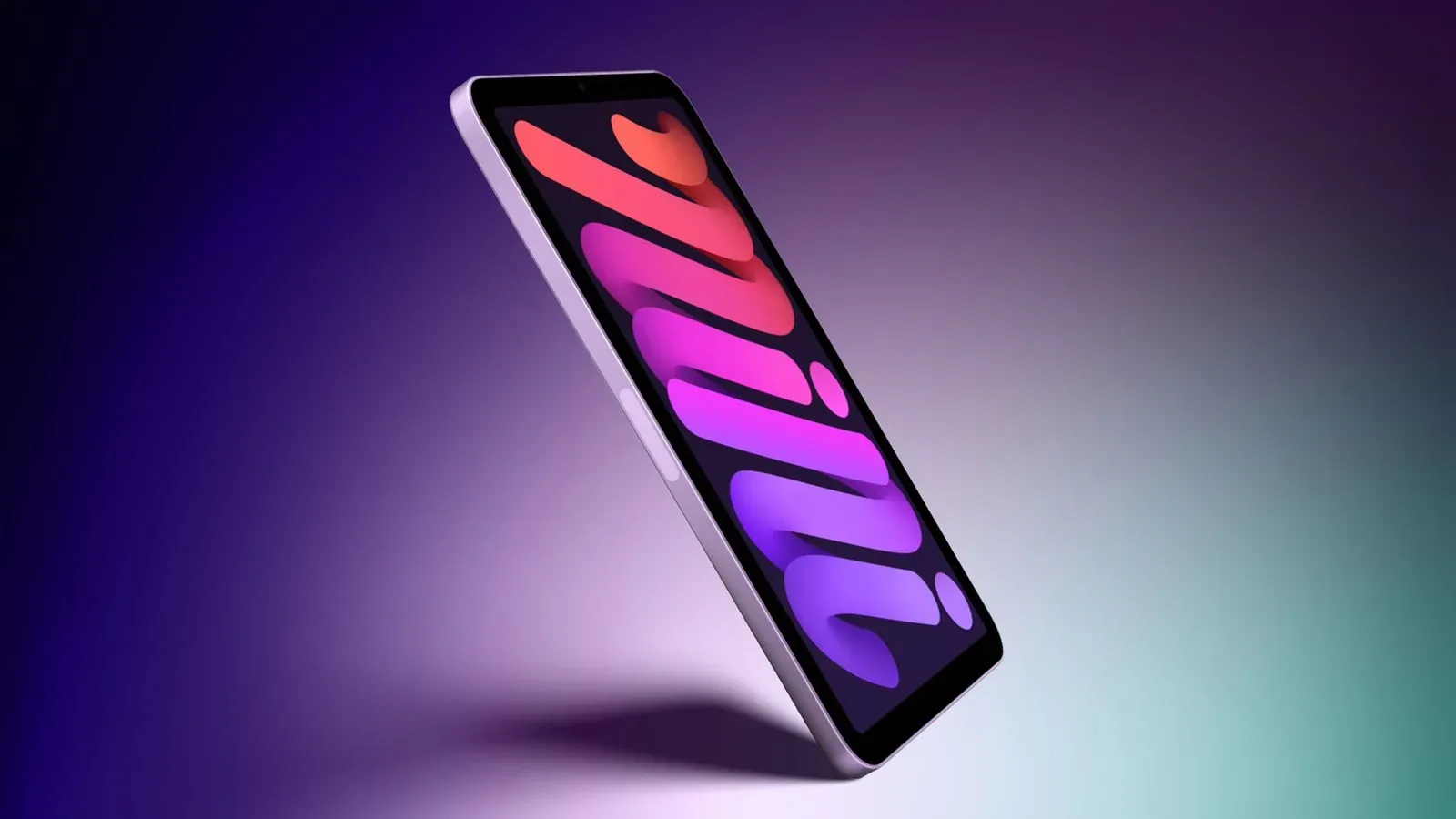
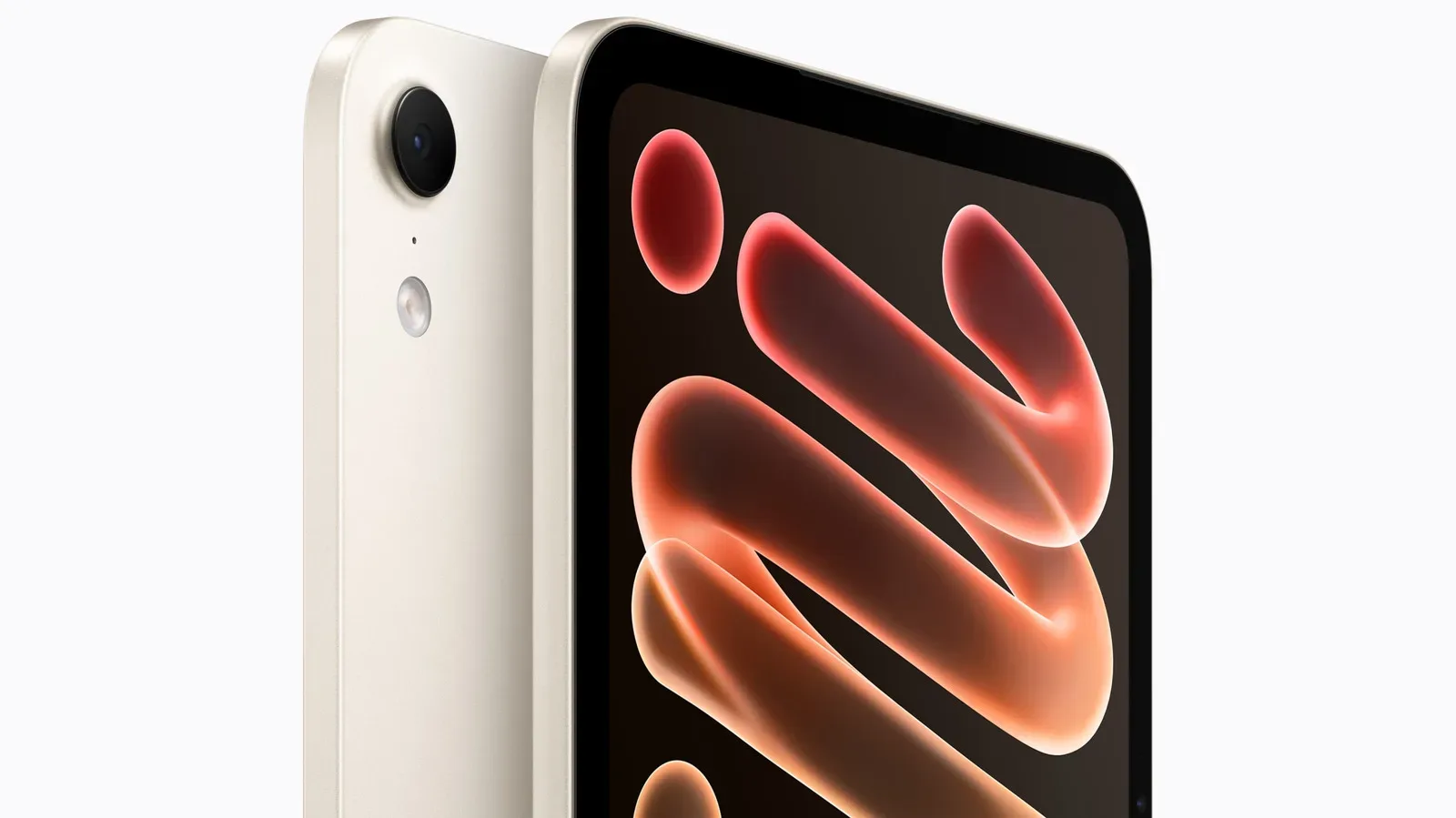
The eighth-generation iPad mini’s headline change is its 8.5-inch OLED display. That is slightly larger than the 8.3-inch panel on the previous model, even as the new tablet is marginally narrower at 5.22 inches instead of 5.3 inches. The Wi-Fi version weighs 0.56 pounds, down from 0.65 pounds, while the 5G model is listed at 0.58 pounds, compared with 0.66 pounds previously.
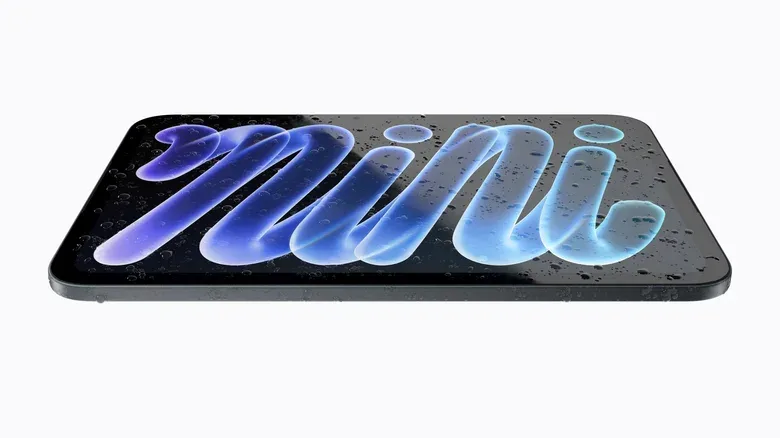
OLED, or organic light-emitting diode, differs from conventional backlit display technology because individual pixels provide their own light. In practical terms, this makes the stated 2,000,000:1 contrast ratio notable: dark interface areas and dark scenes can potentially look much more convincingly black, since pixels can be turned off rather than merely dimmed behind a shared backlight. Apple also rates the new panel for 1,200 nits of peak brightness, twice the peak figure of the preceding iPad mini.
That combination could matter particularly for portable gaming, video and artwork where shadow detail and bright highlights are part of the experience. It does not, by itself, establish how any specific game will run or look; performance still depends on the software and the device’s silicon. But the display is a meaningful visual upgrade on paper for a product built around a small, travel-friendly screen.
Storage starts at 128GB, unchanged from before. Buyers choosing 256GB or 512GB can select nano-texture glass for an extra cost. Nano-texture is a screen-surface option intended to reduce reflections. It is therefore a feature with a straightforward trade-off: it may be appealing to people often using a tablet in bright rooms or outdoors, while others may prefer the standard glass surface.
A20 Pro, networking and the missing Face ID
The new iPad mini uses the A20 Pro system-on-a-chip, the same chip found in the iPhone 18 Pro and iPhone Duo. A system-on-a-chip, commonly shortened to SoC, combines major computing components into one package. Apple says the A20 Pro can run large language models locally and supports Apple Intelligence and Siri AI. “Local” in this context means the work can be processed on the device rather than necessarily being sent to a remote server.
For games, the more conventional hardware point is the A20 Pro’s seven-core GPU. Apple says that is two more GPU cores than the A17 Pro in the prior iPad mini. A GPU, or graphics processing unit, is the section of a chip specialized for rendering images and graphics-intensive tasks. More cores do not translate into a universal frame-rate promise, but they provide additional graphics resources for developers to target.
The cellular model also receives Apple’s C2 modem, which Apple says can deliver up to 50 percent faster data speeds than the prior iPad mini. Meanwhile, the N1 networking chip brings Wi-Fi 7, Bluetooth 6 and Thread. Wi-Fi 7 is the newest Wi-Fi standard named here, while Thread is a low-power mesh networking protocol commonly associated with connected-home devices. Their presence is a form of future-facing connectivity, though the real-world benefit will depend on the networks and accessories available to each owner.
Apple has moved the 12MP Center Stage front camera to the landscape edge, a practical adjustment for video calls when the tablet is held horizontally. Center Stage is Apple’s camera framing feature. There is also a 12MP rear camera with 4K video recording at 60 frames per second and Smart HDR 4. Face ID remains absent, so anyone waiting specifically for facial biometric authentication in the mini form factor will not find it in this revision.
Durability, charging and a new audio design
The tablet has an IP67 rating. In plain language, Apple says its sealed enclosure is designed to withstand dust and immersion in up to one meter of freshwater for up to 30 minutes. An ingress-protection rating is useful context for accidents, not a reason to make submersion part of a device routine.
Battery estimates are roughly unchanged. Apple rates the iPad mini for up to 10 hours of web browsing or video viewing over Wi-Fi, or up to nine hours of browsing on cellular data. With a 35W or higher power adapter, Apple says it can recharge to 50 percent in 30 minutes. These figures are useful for comparing the company’s own models, but actual endurance is inevitably shaped by screen brightness, network use, apps and workload.
Perhaps the least conventional addition is Apple’s first Acoustic Display. The company says paired woofers work through the display, while custom tweeters sit between the glass and aluminum enclosure. Apple’s stated goal is higher volume, stronger bass and clearer highs. The architecture is intriguing for a compact tablet, but sound quality is an area where specifications and listening impressions can diverge; the announcement establishes Apple’s design claims, not how it will perform in every room, game or video.
The OLED iPad mini starts at $699, a $150 increase over the prior model’s price following an earlier increase. Its blend of an OLED panel, an A20 Pro and a lower weight makes it the biggest generational shift of the three products, but the new starting price changes the value calculation just as sharply.
M6 iMac: familiar all-in-one, faster engine
The M6 iMac preserves almost everything about the existing 24-inch desktop: a 4.5K Super Retina display, 12MP Center Stage camera, six-speaker Dolby Atmos system, at least 16GB of memory and 256GB of base storage. Its dimensions remain the same, and the color list still includes blue, green, pink, yellow, purple, orange and silver. The quoted weight is 9.7 pounds, just below the previous 9.74 pounds.
The meaningful changes are internal. Apple says M6’s dual 16-core Neural Engine can produce up to five times faster on-device AI performance than the 2024 M4 iMac in work involving Siri AI, Apple Intelligence and local large language models. A Neural Engine is dedicated silicon designed for machine-learning tasks. The advertised increase may be relevant to workflows that actually use such features; it does not mean every ordinary desktop task will become five times faster.
For broader use, Apple claims up to 1.5 times the daily-task performance of M4, up to twice the graphics performance for work such as photo editing, and up to twice the ray-tracing gaming performance. Ray tracing is a graphics-rendering technique that models how light behaves in a scene, enabling effects such as more realistic reflections and lighting. It is computationally demanding, so it has become a visible benchmark for modern graphics hardware.
That gaming claim deserves carefully bounded expectations. It is a relative comparison against the M4 iMac rather than a list of games, resolution targets or frame rates. Still, it signals that Apple sees the M6’s graphics resources and ray-tracing capacity as central to the chip’s pitch. For a fuller look at how Apple laptop design has affected the wider PC landscape and players, see our look at 20 years of MacBooks and the design choices gamers still feel.
The base M6 configuration includes a 10-core CPU, while a 12-core M6 option is also offered. Choosing the 12-core version also increases Thunderbolt 4 ports from two to four, and unlocks the nano-texture glass option. Thunderbolt 4 is a high-bandwidth connection standard used for peripherals, displays and storage, so the four-port configuration is not only a processor choice; it is also the more flexible setup for desk-bound users with several wired accessories.
The iMac also gains the N1 networking chip, bringing Wi-Fi 7, Bluetooth 6 and Thread, while a 2.5Gb Ethernet port is available as an option. That is an increase over the previous iMac’s gigabit Ethernet option. A wired 2.5Gb connection can be relevant for local-file transfers and networks equipped to support it, but it will not accelerate an internet connection beyond the speed supplied by the network.
Pricing begins at $1,499, the same starting point as the M4 model after that machine’s earlier $200 increase. The four-port model starts at $1,699. The stable price and steady exterior make this look like a clean performance refresh rather than a reason for every recent iMac owner to replace a working system.
The 14-inch MacBook Pro gets a narrower M6 refresh
Apple’s newest 14-inch MacBook Pro takes an even more focused approach. It receives the 12-core M6 and N1 networking hardware for Wi-Fi 7, Bluetooth 6 and Thread, but these appear to be the sole specification changes identified for the notebook.
Against the preceding M5 model, Apple claims up to 30 percent faster graphics performance and up to 25 percent faster AI workloads. It also cites up to 1.3 times faster ray-traced rendering in Blender, up to 1.2 times faster image processing in Affinity and up to 1.3 times faster project builds in Xcode. These named examples are useful because they clarify the kinds of workloads being used for comparison: 3D rendering, image processing and code compilation.
They also clarify why this update may land differently across users. Someone who regularly renders scenes, processes images or compiles large projects may value a measured reduction in task times. Someone moving only between web browsers, documents and lighter entertainment may see less reason to trade in an M5 model. Apple’s figures suggest generational improvements, not a fundamental redesign of the 14-inch machine’s role.
The M6 14-inch MacBook Pro starts at $1,999 with 16GB of memory and 1TB of storage, matching the M5 model’s post-increase price. For prospective buyers coming from an older MacBook Pro, the M6’s graphics, AI and networking gains create a more substantial cumulative case. For M5 owners, the decision is likely to hinge on whether their work benefits directly from the cited performance increases or from Wi-Fi 7, Bluetooth 6 and Thread support.
What this product wave actually says
Apple is presenting AI capability as a platform feature across portable and desktop hardware, but the products are not interchangeable. The iPad mini pairs a major display change with a new chip, revised camera placement, water-and-dust resistance and a new audio concept. The iMac preserves an established visual and physical design while offering more performance, faster networking and a 2.5Gb Ethernet option. The MacBook Pro is a selective processor-and-connectivity update aimed most clearly at buyers who can use incremental performance in professional applications.
For players, “up to” graphics and ray-tracing gains should be read as potential headroom rather than guaranteed game results. For creators, the Blender, Affinity and Xcode comparisons identify the intended advantage more plainly, while still needing workload-specific scrutiny. For everyday buyers, screen type, size, storage, ports, price and physical format may remain more decisive than AI terminology.
The standout is therefore the OLED iPad mini: it changes the hardware people see and hold every day. The M6 iMac and 14-inch MacBook Pro make a more conservative bet that faster silicon and newer connectivity are enough to keep familiar machines current. Whether that is compelling will depend not on a single performance multiplier, but on what each buyer’s current device cannot do.